



afinación
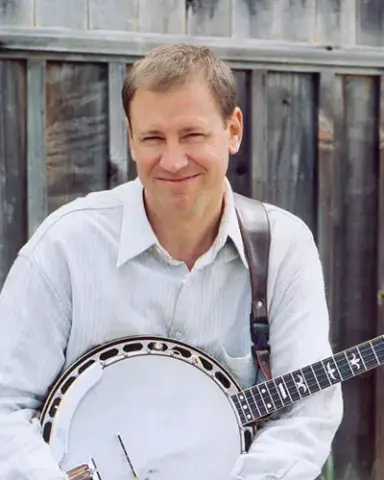
Lesson time: (2min 16sec)
Course preview
This lesson is part of the course Banjo para principiantes con Avram Siegel
Watch a preview of the full course below.
Lesson transcript:
How to Tune Your Banjo
So before we get any further, let's talk about how the banjo is tuned.
Open G Chord
The banjo is tuned to an open G chord. This means that the open strings, when played by themselves, sound like this:
- A
- G
- D
- G
- B
- D
Play an open G chord. They sound like this. I just played those just in a row like that. You could tune to my banjo while you're playing along.
Simple Tuning Method
There's a simple way to tune a banjo:
- Tune your lowest string in tune.
- Fret it at the fifth fret to match the open third string.
- Play the fourth fret on the fourth string to match the open second string.
- Fret the third fret on the second string to match the open first string.
- Finally, match the fifth fret on the first string to the fifth string.
That's a little system you can use to tune your banjo.
My Preferred Tuning Style
I like to tune the banjo like this, where I:
- Fret the third string.
- Fret the second string at the third fret.
This makes all G's and D's, resulting in a very resonant sound.
String Comparisons
I compare all the strings first to the third string:
- Third and Fourth: That was the third and the fourth.
- Third and Second: That's the third and the second.
- Third and First: That's the third and the first.
Notice the second string was fretted at the third fret, and the third at the fifth. Those are all very open sounds that you can hear when they're in tune.
Once you get used to that...
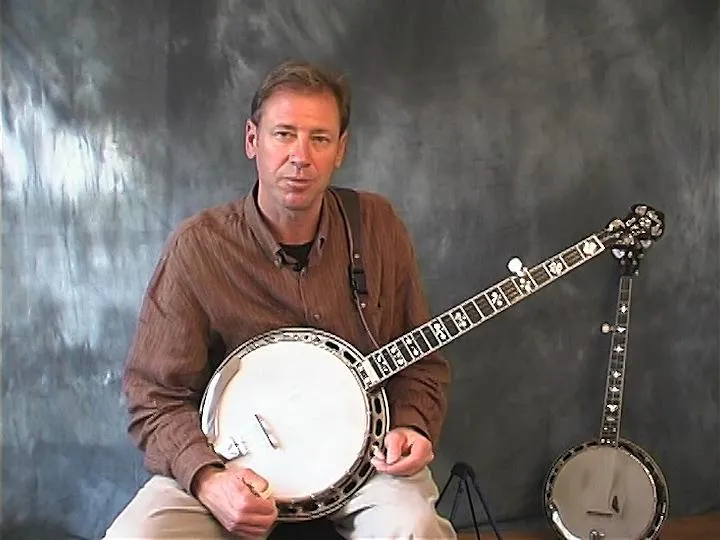
About the instructor
Avram Siegel es banjista y un pilar de la escena del bluegrass de California. Ha tocado con la Kathy Kallick Band y True Blue, entre muchos otros, y ha enseñado durante décadas: su método paso a paso ha formado a algunos de los jóvenes intérpretes más respetados del estado. En sus cursos desglosa los rolls de tres dedos al estilo Scruggs, el acompañamiento y el estilo melódico para que puedas desarrollar un timing y un tono limpios a tu propio ritmo. read more