



Paddys Rock-'n'-Roll-Piano-Grundlagen

Mit
Paddy MilnerPaddy erklärt die Rock-'n'-Roll-Form, spielt einen einfachen 12-Bar-Blues durch und bringt ihn dir zum Einstieg bei

Das steckt im Kurs
25 Lektionen (2h 34m) · 1 gratis

Transkript der Lektion
Introduction to Rock and Roll Music
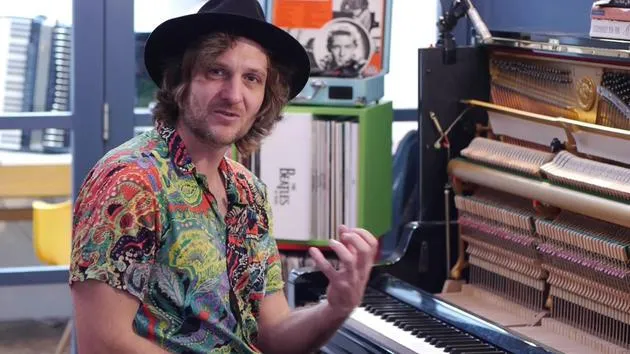
Cool! So before we jump in and look in depth at some Jerry Lee Lewis and other rock and roll ideas, let's briefly discuss what I mean by rock and roll in relation to this course.
Understanding the 12-Bar Blues Form
Essentially, we're looking at the 12-bar blues form, which, if you're not familiar with it, I'll give you a quick rundown:
- This form consists of 12 bars that repeat on a cycle.
- There are different variations, but let's use this basic structure as our foundation:
-
Four bars on chord I
- In the key of C, that would be four bars on the chord of C.
-
Two bars on chord IV
- This is the chord of F.
-
Two bars on chord I
- Back to C again.
-
One bar on chord V
-
One bar on chord IV
-
Two bars on chord I
Distinction Between Rock and Roll and Blues
Rock and Roll Piano Characteristics
So, what makes rock and roll piano different from blues and boogie woogie?
-
Simpler Palette: Rock and roll often features a simpler left hand.
- For example, you might play something straightforward like a basic rhythm pattern.
-
Right Hand Repeats: The right hand often has lots of repeated notes.
We will look at more complicated things later, but for now, think of this as the broad idea for rock and roll.
Influences
- We'll explore the style of Jerry Lee Lewis, and also get inspired by Johnny Johnson, the great piano player who accompanied Chuck Berry on all his notable tunes.
Demonstration
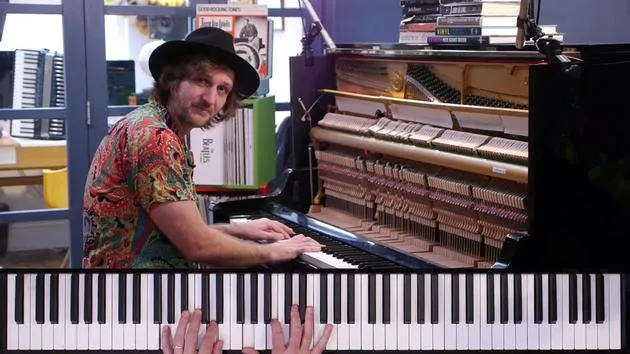
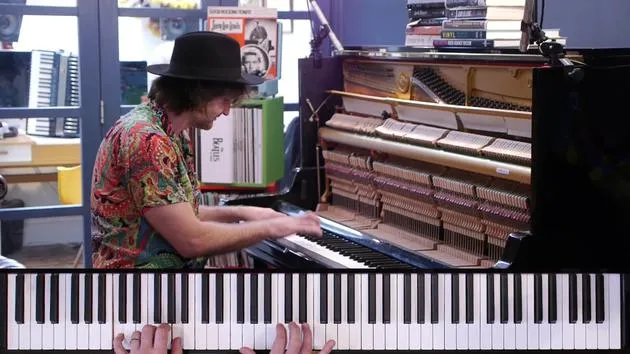
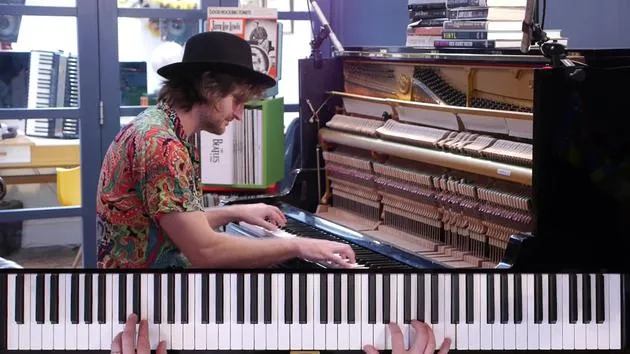
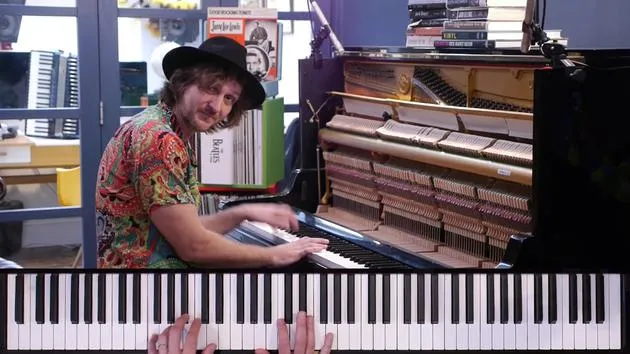
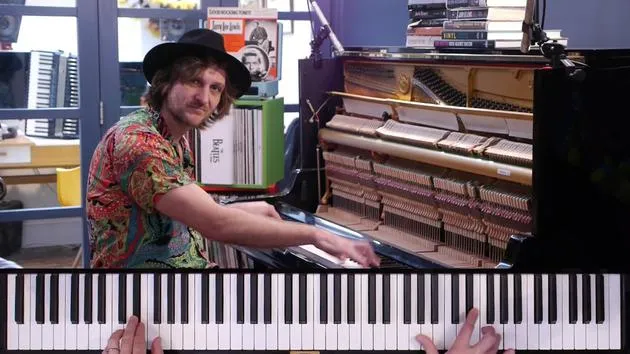
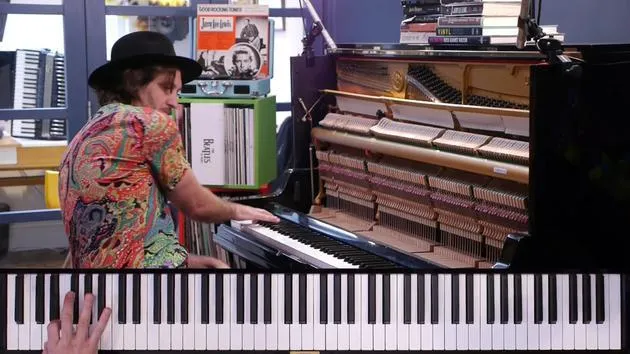
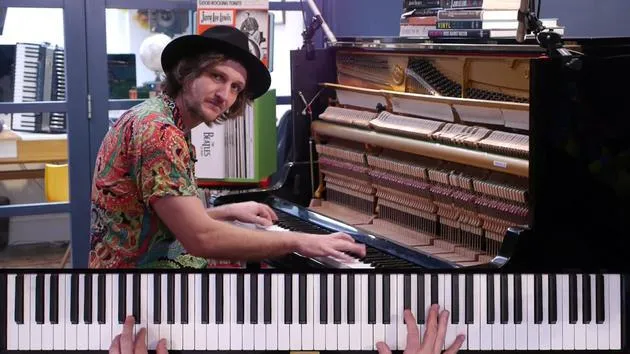
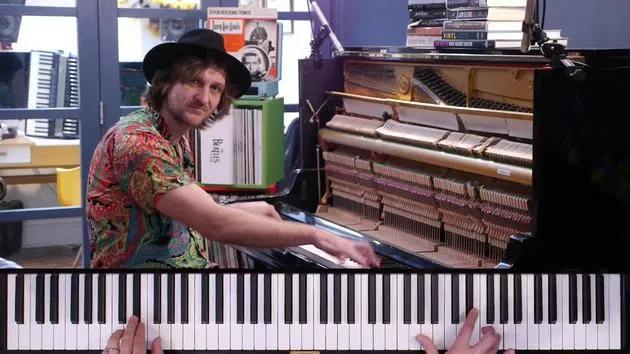
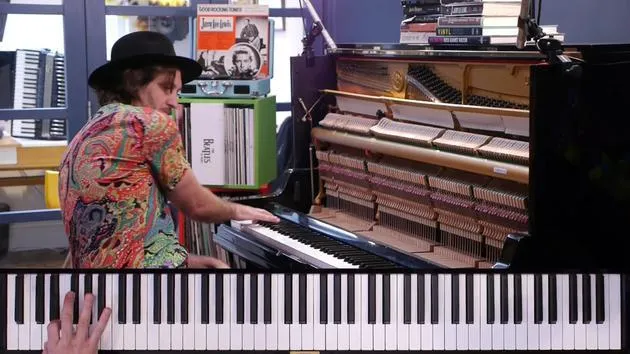
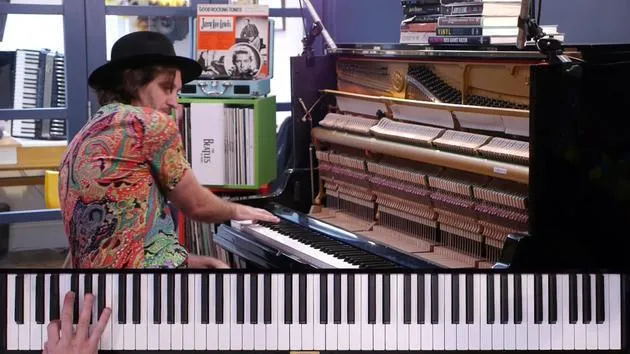
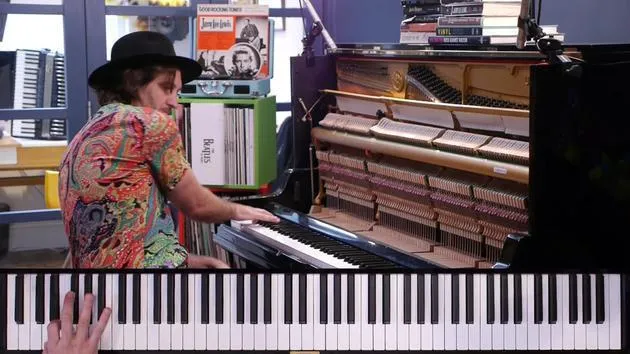
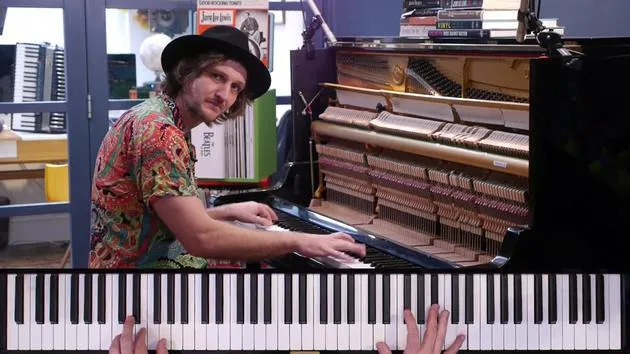
I'm going to play something now that captures the essence of rock and roll without doing anything too crazy.
- You'll hear lots of repeated notes in the right hand and a simple left hand pattern.
- If you can get your fingers around this, you'll have a good basis for exploring other ideas in the course.
Here we go:
"A one, two, a one, two."
So there you go! There's something relatively simple with lots of repeated notes. I did add a few little embellishments, for example: those little runs. But don't worry if you can't get those down right now. Just concentrate on getting the repeated notes together with the left hand.
Conclusion
And remember, with that real rock and roll attitude, we're not just "pussyfooting" around. It's about hammering it out with that spirit of rock and roll.
So, yeah, let's dive into the course!
25 Lektionen
2 Std. 34 Min. strukturierte Videolektionen
Erweiterte Videofunktionen
Verlangsamen, Passagen loopen, mitlesen
Handy, Tablet & Desktop
Üben, wo du willst
100 % Zufriedenheitsgarantie
30 Tage Geld-zurück-Garantie
Lern deinen Guru kennen
Lern deinen Guru kennen
Paddy Milner gilt als einer der besten Blues-Pianisten der Welt – derzeit ist er der Stammkeyboarder von Sir Tom Jones, nach mehreren Jahren an der Seite des großartigen, verstorbenen Jack Bruce –, aber er ist auch ein hervorragender eigenständiger Songwriter und ein unverwechselbarer Sänger. Lies einfach das Lob von Größen wie Dave Brubeck weiter unten! Sein Spiel war auf dem Soundtrack des Kinohits 'Rocketman' von 2019 zu hören.
Zweimal wurde er bei den British Blues Awards als bester Keyboarder ausgezeichnet, und als Gründungsmitglied der Ronnie Scott's Blues Explosion hat er eine langjährige Residency im weltberühmten Club Ronnie Scott's.
Seine aktuelle Band LONDONOLA spielt selbst geschriebene britische Musik mit einer kräftigen Portion New-Orleans-Geist, und sein gemeinsames Projekt JAWBONE geht seit der Veröffentlichung des gleichnamigen Debütalbums von Stärke zu Stärke.
- „Ich liebe es... da ist einer, der wirklich Klavier spielen kann" - Dave Brubeck
- „Ich kann es nur wärmstens empfehlen. Irgendwie fängt alles an, sich viel besser anzufühlen!" - Jack Bruce
- „Der beste Blues-Pianist Europas..." - Blues Access, USA
- „Beeindruckend und originell" - The Times
- „Blendend" - The Independent
In seinen Kursen zerlegt Paddy den authentischen Blues-Shuffle, Slow Blues, Boogie-Woogie, Rock 'n' Roll und das New-Orleans-Piano – bis hin zu drei klassischen Boogie-Woogie-Songs –, damit du diese Stile bei einem der Allerbesten des Fachs lernst.







