



Weitere Ideen
Mit
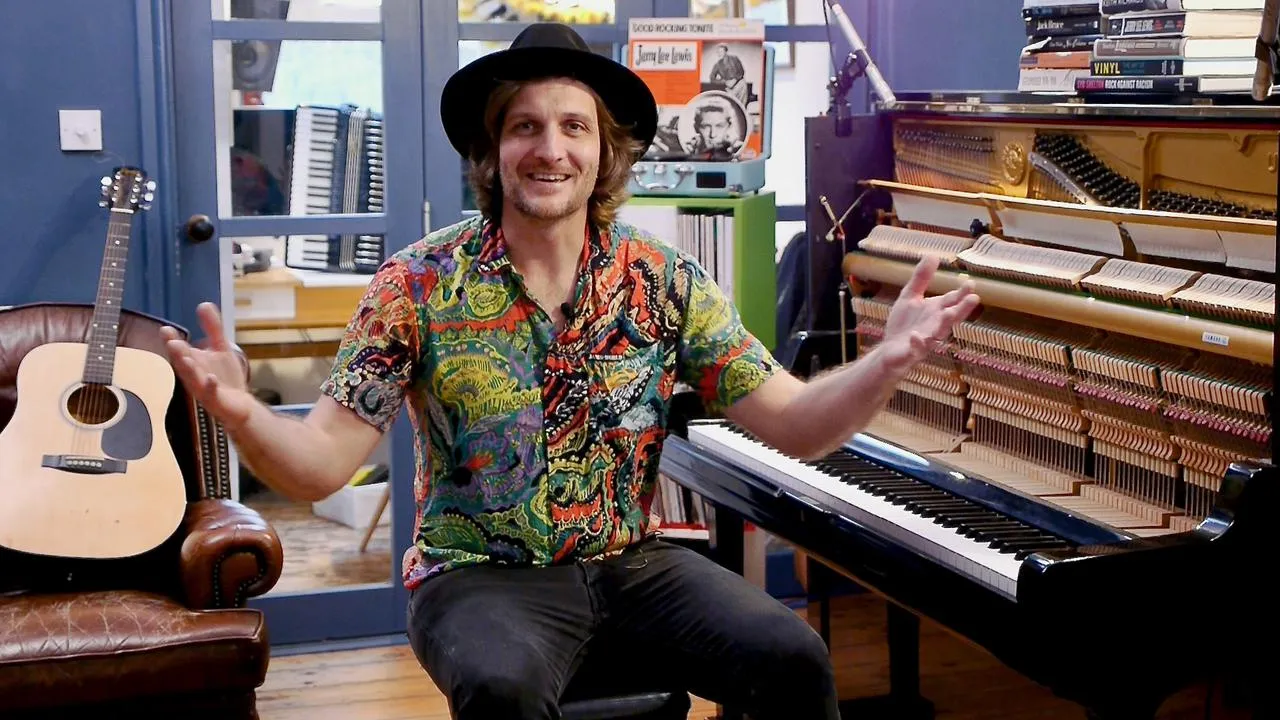
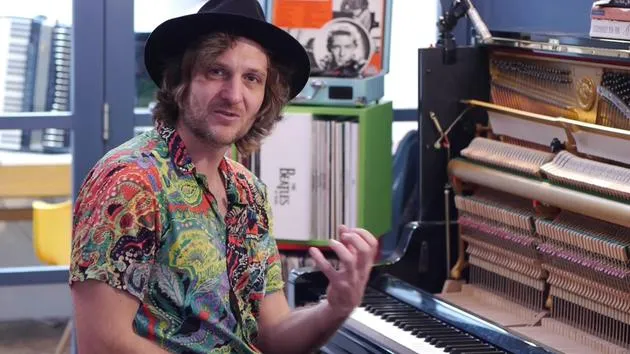
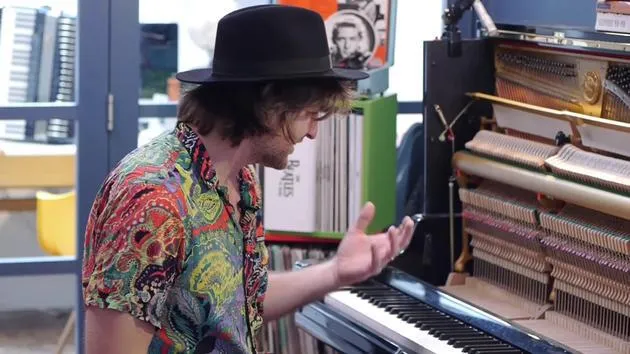
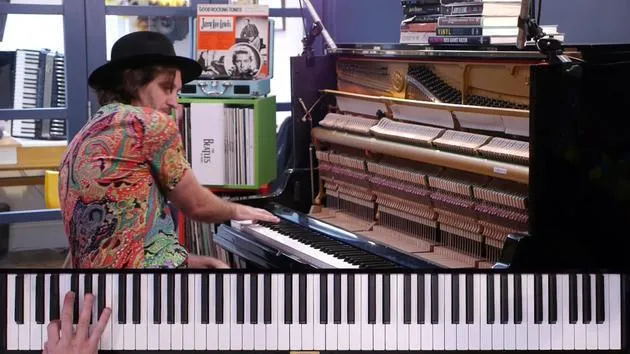
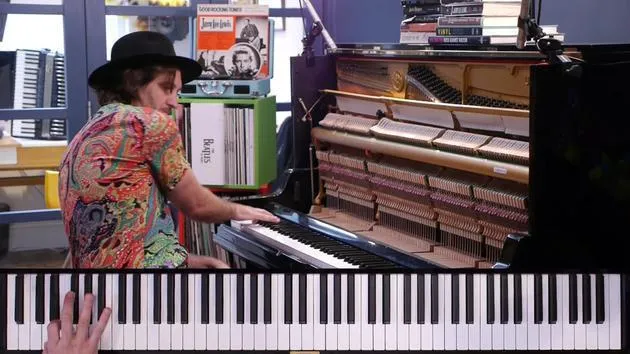
Paddy MilnerPaddy Milner erkundet weitere Kniffe von Jerry Lee Lewis in dem Stück, von Dreiklang-Verzierungen und Crushed Notes bis zu Glissandi und einem 'cha cha'-Riff.
Das steckt im Kurs
25 Lektionen (2h 34m) · 1 gratis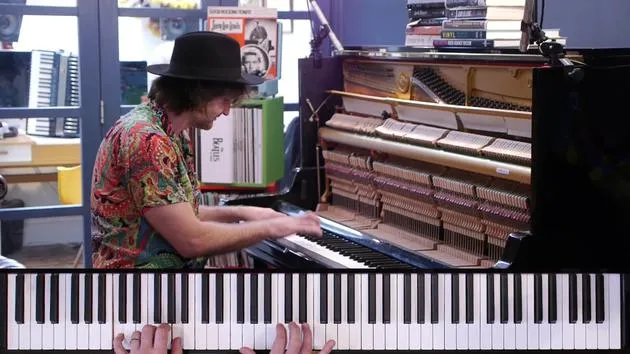
01. Wie man die Intro spielt
4:09
02. Melodie und rechte Hand
9:26
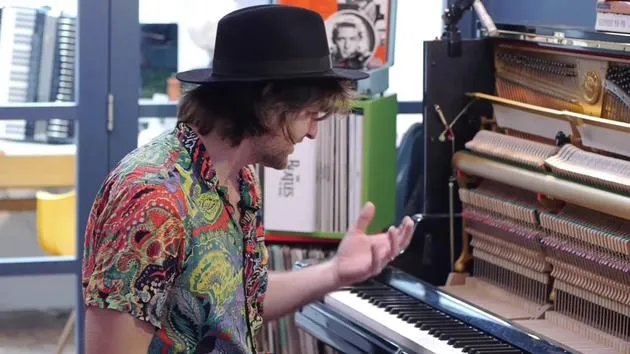
03. So spielst du das Solo
7:01
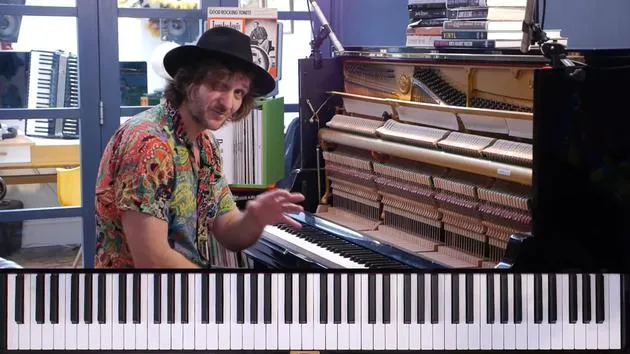
04. Rechte Hand und Turnaround
12:43
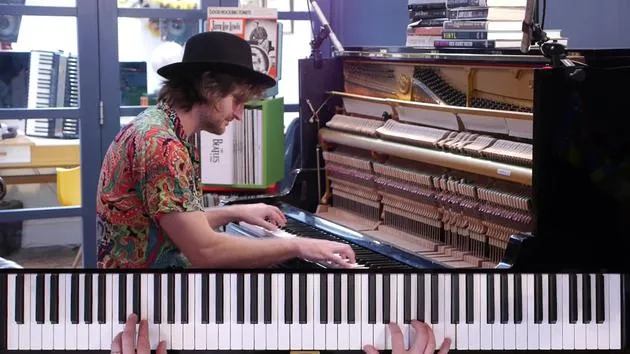
05. Weitere Ideen
Du bist hier5:42
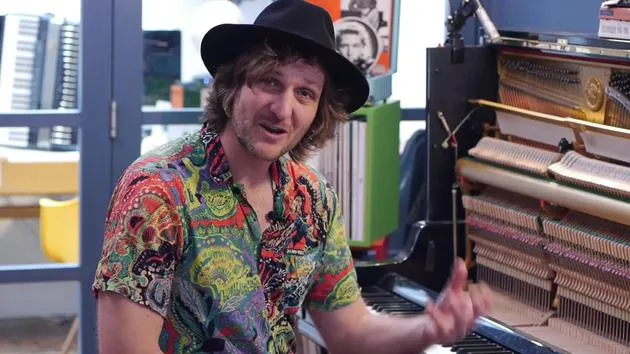
06. Wie du das Ende spielst
1:38
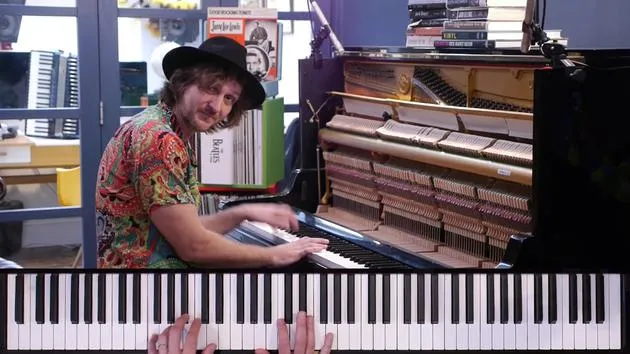
07. Jerry Lees Klavierpart erweitern
6:16
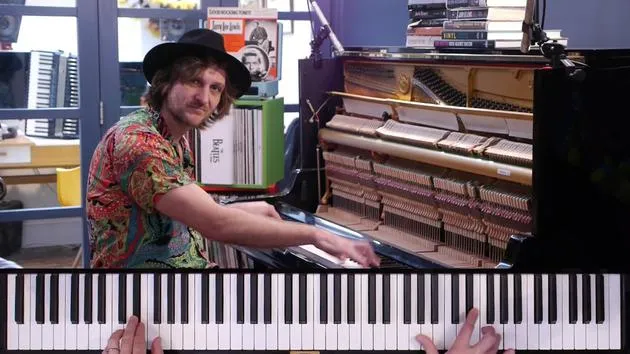
08. Jerry Lees Solo-Ideen erweitern
11:49
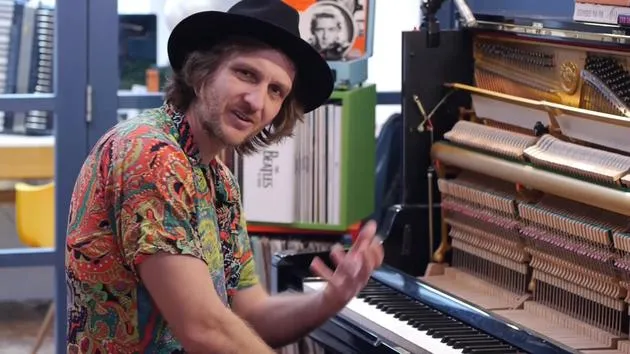
09. Crushed Notes einsetzen
7:12
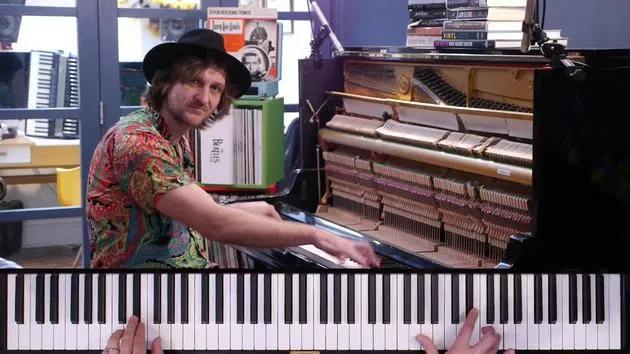
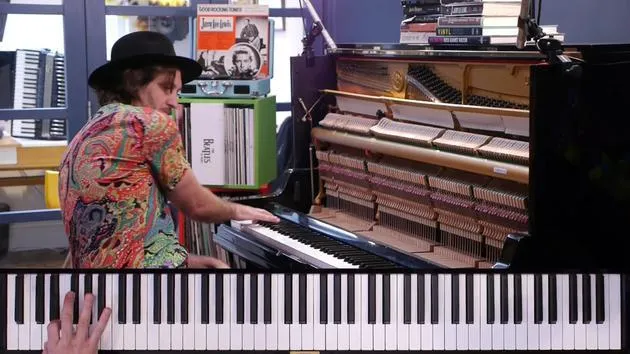
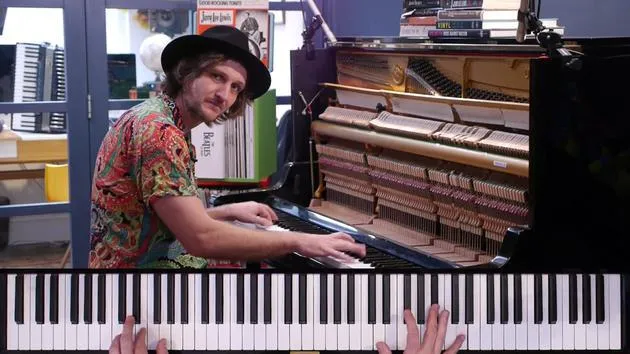
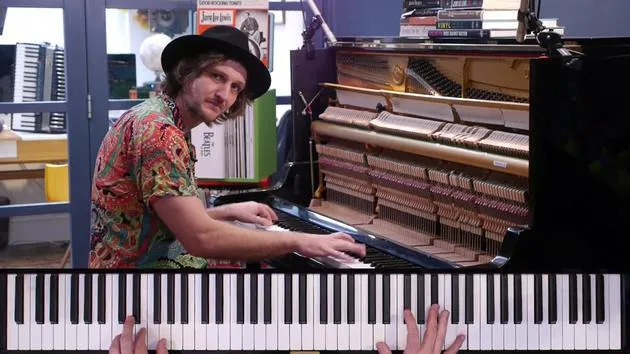
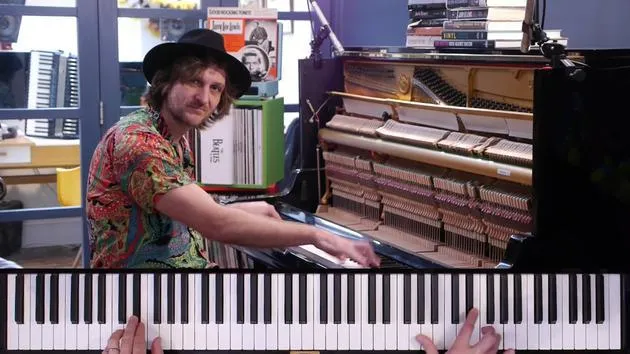
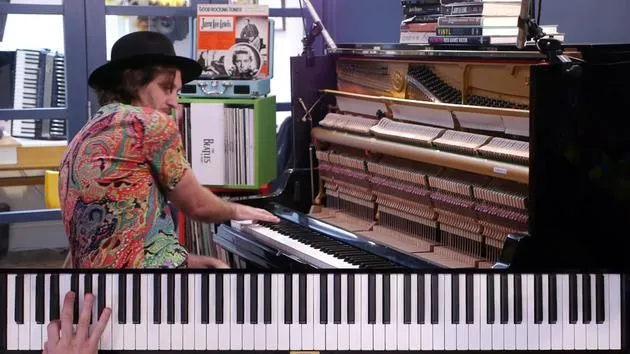
Transkript der Lektion
Exploring Jerry Lee Lewis's Techniques in "Whole Lotta Shakin'"
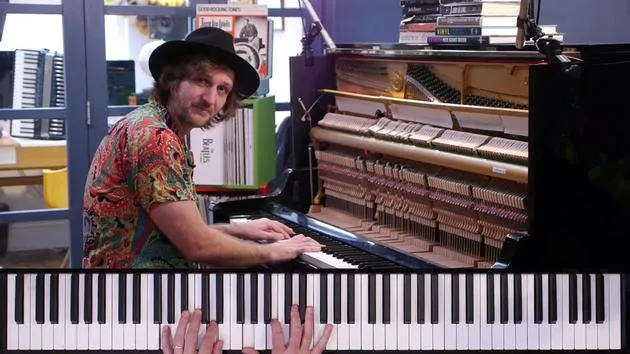
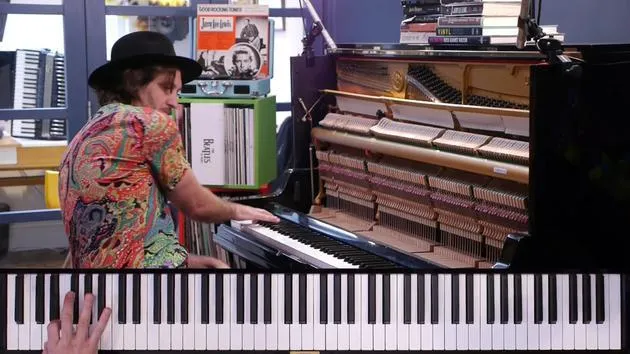
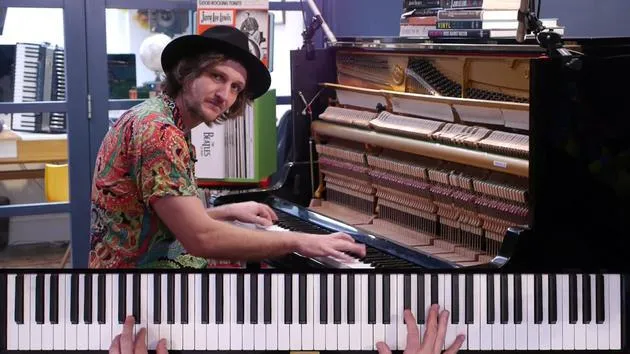
Okay, so let's look at a couple of other ideas that Jerry Lee brings out in "Whole Lotta Shakin'."
Guitar Solo Insights
- Just a little one in the guitar solo where Jerry Lee's kind of pumping away in the background.
- Then on the fourth bar, he does that nice little run up, which is something that musicians use a lot, actually.
- Often, it serves as a kind of musical joke or a musical witticism, if you like.
It's almost like the ending to Cha Cha Cha, which actually Jerry Lee does on, which show is it? I think it's the Dick Clark TV performance where at the end of "Great Balls of Fire," he actually finishes it with a cha cha cha ending rather than the typical ending.
I'm sure they included that as a bit of a musical joke.
Integration into Performance
So goodness agrees, "Great Balls of Fire" does that too, maybe not without the left hand going in the other direction, but they still do that ending.
- He uses that run in the guitar solo to lead up to the four chord, injecting a bit of energy going to that chord change.
- This technique can be applied to any song, particularly when you want to inject energy during a chord transition.
- You could even use it over various chord changes multiple times, allowing you to turn it into a bit of a theme that you develop.
Additional Techniques
Another little idea that Jerry Lee uses is in the verse after the guitar solo, perhaps, where he comes back down from the four chord.
- He includes a little figure, which is quite a hip thing to do: "Here we go!" and then back in.
This is an idea I've explored quite extensively in my shuffle and boogie courses. It's basically an embellishment of a triad, going between two notes.
From the four chord, he adds the crushed note, then he sticks a glissando, a nice quick one, going all the way up to the top C.
Practice Tips
- Have a practice of that. You might find that getting into the glissando and back out of it could take a bit of practice to return to that hand position.
- There's so much you can do with this riff. For instance, you could add a top octave to make it sound a bit fatter.
Now, I'm slightly changing the rhythmic approach there.
- Rather than playing it at the same point in the bar:
1, 2, 3, 4. 1, 2, 3, 4.
I'm going:
1, 2, 3, 4. 1, 2.
This displacement creates a nice rhythmic effect.
Experimentation
Why not play it again? Adding that octave just makes it even fatter!
25 Lektionen
2 Std. 34 Min. strukturierte Videolektionen
Erweiterte Videofunktionen
Verlangsamen, Passagen loopen, mitlesen
Handy, Tablet & Desktop
Üben, wo du willst
100 % Zufriedenheitsgarantie
30 Tage Geld-zurück-Garantie
Lern deinen Guru kennen
Lern deinen Guru kennen
Paddy Milner gilt als einer der besten Blues-Pianisten der Welt – derzeit ist er der Stammkeyboarder von Sir Tom Jones, nach mehreren Jahren an der Seite des großartigen, verstorbenen Jack Bruce –, aber er ist auch ein hervorragender eigenständiger Songwriter und ein unverwechselbarer Sänger. Lies einfach das Lob von Größen wie Dave Brubeck weiter unten! Sein Spiel war auf dem Soundtrack des Kinohits 'Rocketman' von 2019 zu hören.
Zweimal wurde er bei den British Blues Awards als bester Keyboarder ausgezeichnet, und als Gründungsmitglied der Ronnie Scott's Blues Explosion hat er eine langjährige Residency im weltberühmten Club Ronnie Scott's.
Seine aktuelle Band LONDONOLA spielt selbst geschriebene britische Musik mit einer kräftigen Portion New-Orleans-Geist, und sein gemeinsames Projekt JAWBONE geht seit der Veröffentlichung des gleichnamigen Debütalbums von Stärke zu Stärke.
- „Ich liebe es... da ist einer, der wirklich Klavier spielen kann" - Dave Brubeck
- „Ich kann es nur wärmstens empfehlen. Irgendwie fängt alles an, sich viel besser anzufühlen!" - Jack Bruce
- „Der beste Blues-Pianist Europas..." - Blues Access, USA
- „Beeindruckend und originell" - The Times
- „Blendend" - The Independent
In seinen Kursen zerlegt Paddy den authentischen Blues-Shuffle, Slow Blues, Boogie-Woogie, Rock 'n' Roll und das New-Orleans-Piano – bis hin zu drei klassischen Boogie-Woogie-Songs –, damit du diese Stile bei einem der Allerbesten des Fachs lernst.







