



Jerry Lees Solo-Ideen erweitern

Mit
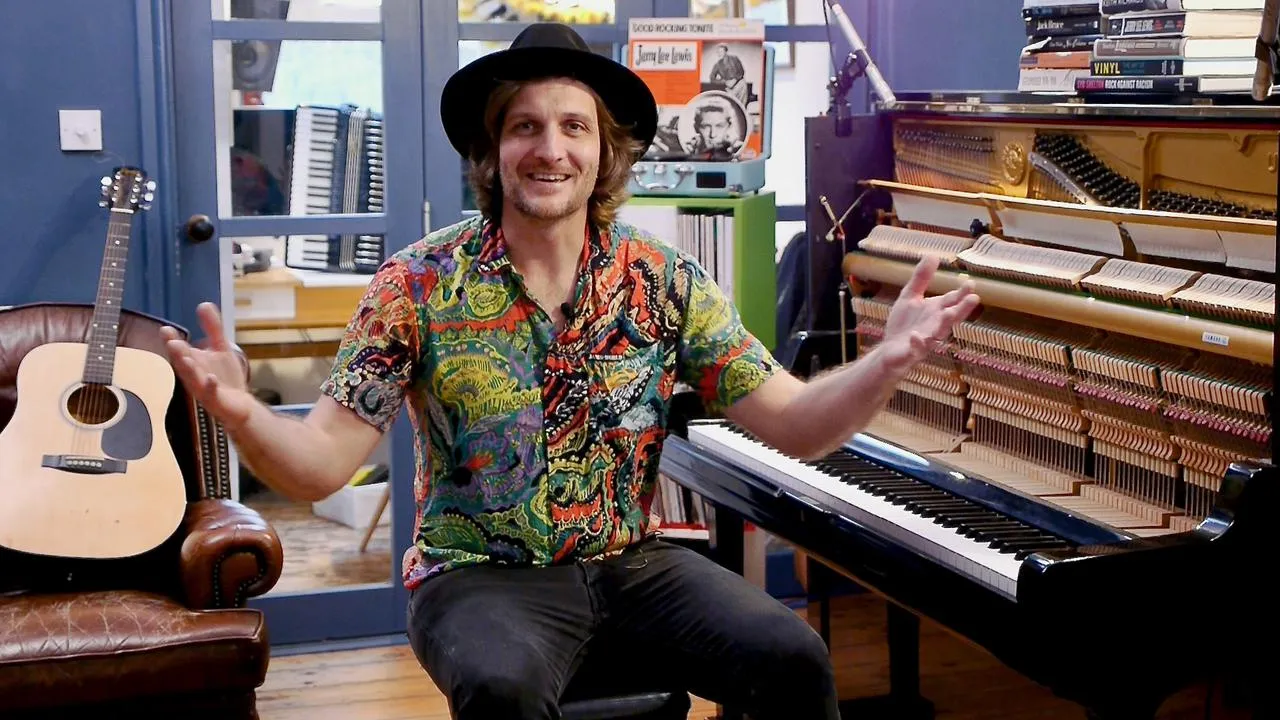
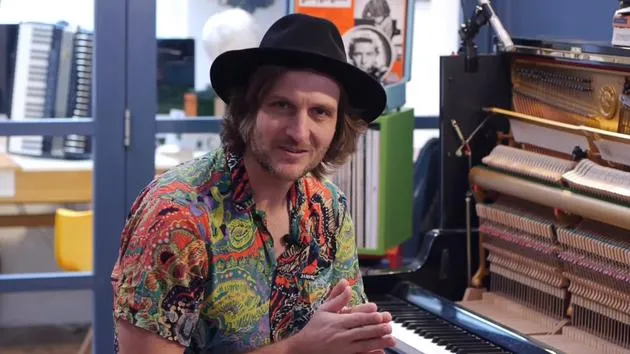
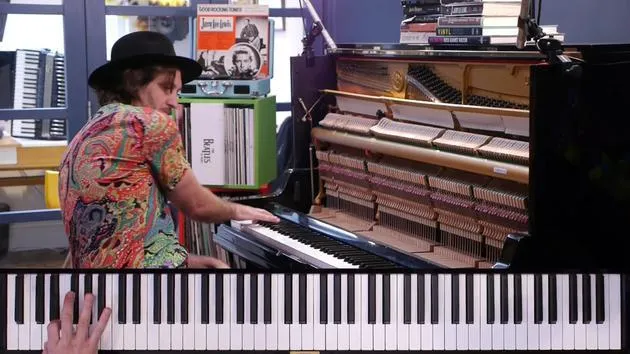
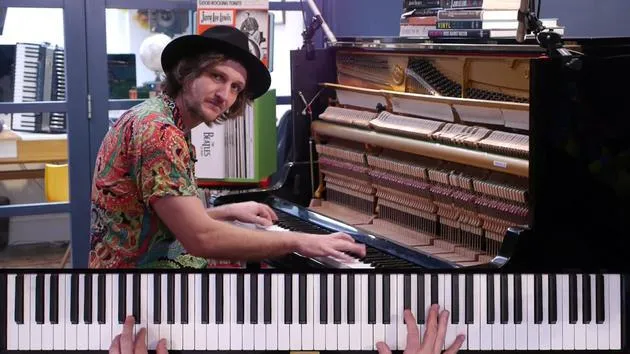
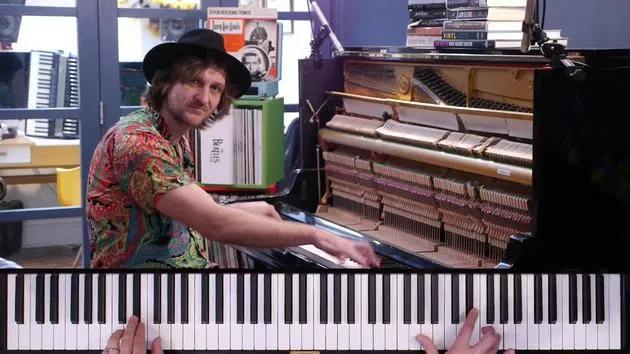
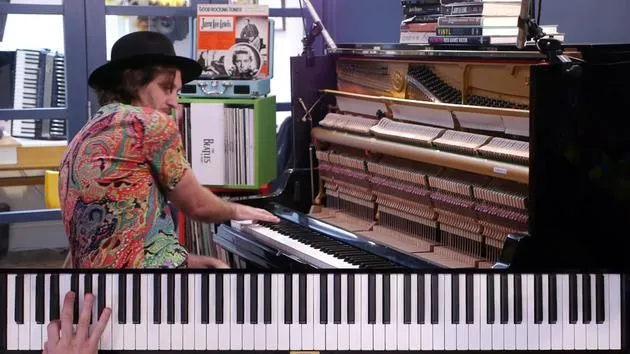
Paddy MilnerPaddy Milner nimmt Jerry Lee Lewis' Solo aus 'Whole Lotta Shakin'' und zeigt, wie man es weiterentwickelt, indem man die wiederholten Sexten variiert, Oktaven wechselt und Akzente verändert.
Das steckt im Kurs
25 Lektionen (2h 34m) · 1 gratis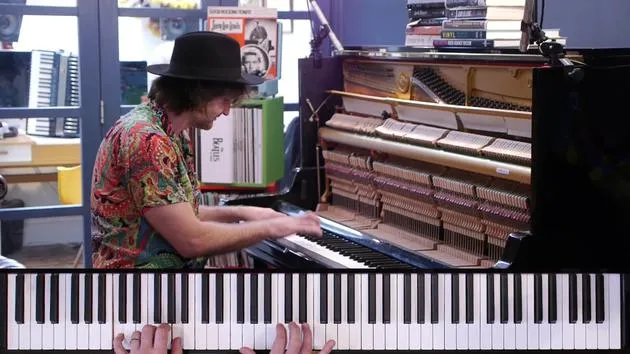
01. Wie man die Intro spielt
4:09
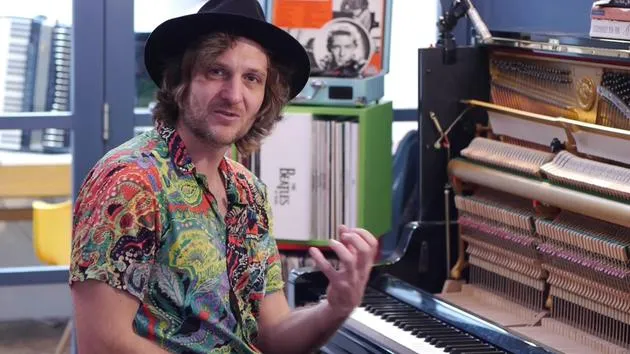
02. Melodie und rechte Hand
9:26
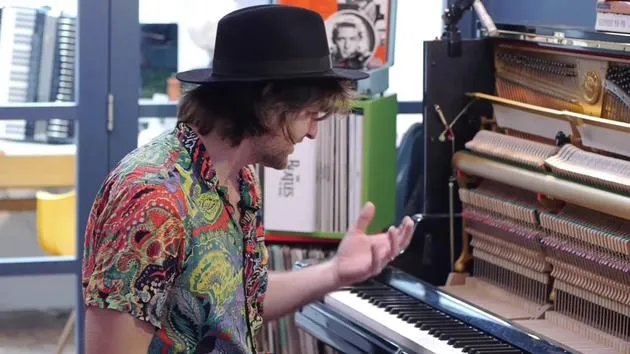
03. So spielst du das Solo
7:01
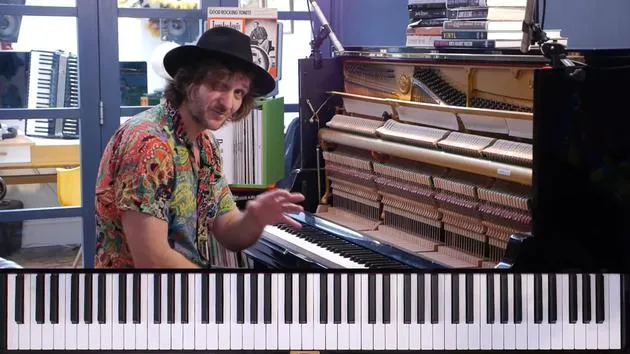
04. Rechte Hand und Turnaround
12:43
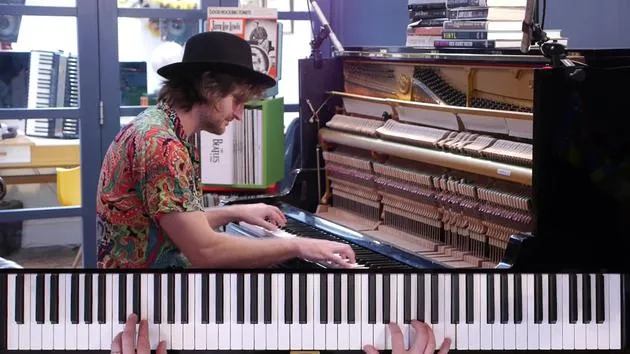
05. Weitere Ideen
5:42
06. Wie du das Ende spielst
1:38
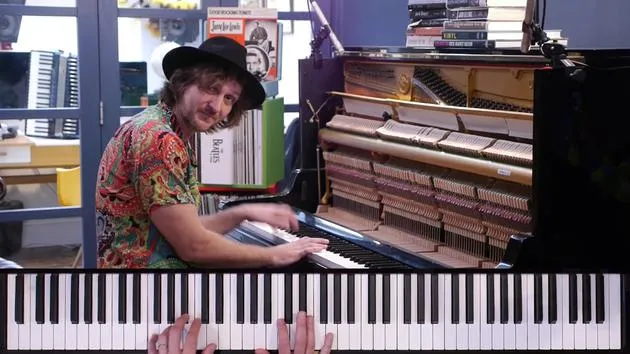
07. Jerry Lees Klavierpart erweitern
6:16
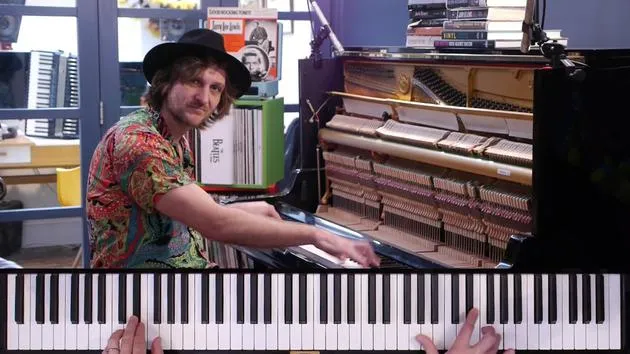
08. Jerry Lees Solo-Ideen erweitern
Du bist hier11:49
09. Crushed Notes einsetzen
7:12
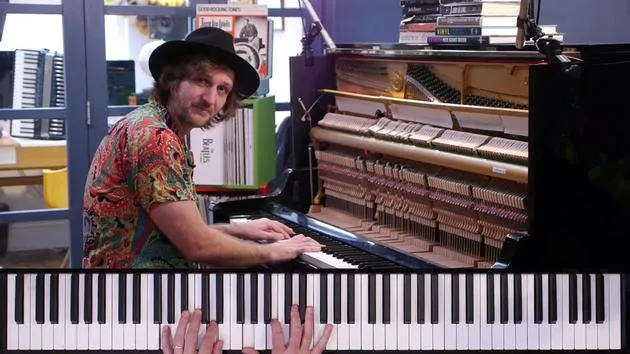
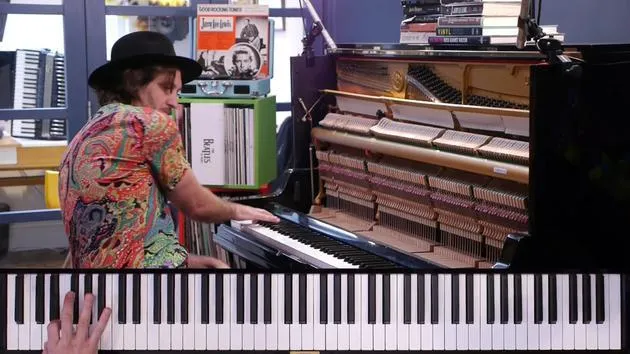
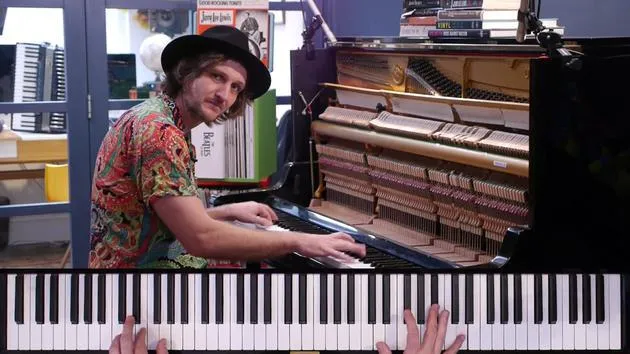
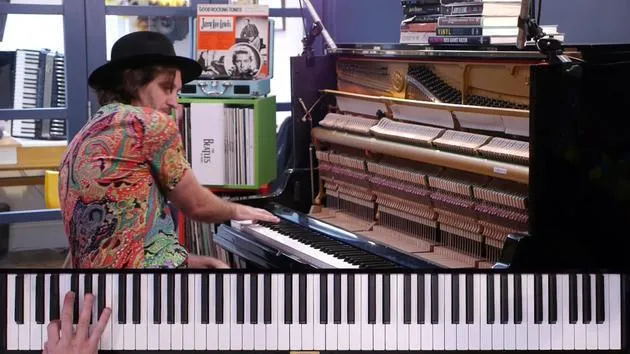
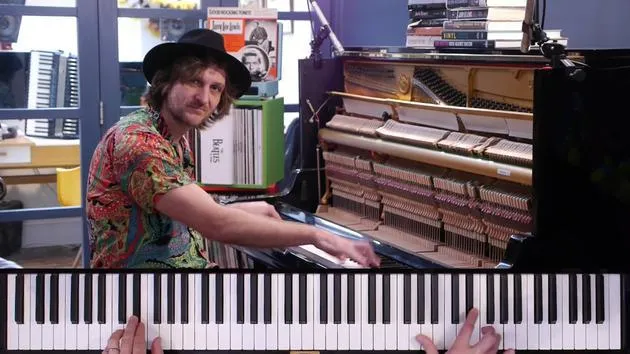
Transkript der Lektion
Exploring Solo Techniques
So let's look at some of the stuff that he uses in the solo and see what we can do with that material. There's a lot we can do!
Starting with Intervals
- He starts the solo with that repeated interval, the sixth.
- As I mentioned, he does variations:
- You can add the A to fatten it up a little bit and give it a little crunch.
- You can also add the G at the top, something he does a lot.
You often see his little finger kind of free and shaking around when watching videos.
- You can also play it with the A on top for a really big sound.
- Obviously, I'm bridging the G and the A with the thumb at the bottom.
Why not gradually intensify?
- Start with the basic interval.
- Gradually introduce the other notes for a transition into the next chord.
Experimenting with Octaves
- How about playing in different octaves?
- Down there, it sounds slightly muddier, doesn't it? But it could be useful.
You might recognize this idea from Great Balls of Fire. Yes, he uses that in the second half of his solo in that piece, which we'll look at later on in the course.
Variations and Intervals
- There are a couple of little variations of that repeated figure.
- Instead of using a sixth, why not try a different interval? For example, a fourth can be quite powerful.
Imagine Chuck Berry playing one of his licks, it's kind of the piano equivalent of that.
Accent Changes
- Change where you put that accent to make it slightly unpredictable.
- It's a nice solid lick that you can use.
Linking Passages
- Maybe consider using a little linking passage in the middle.
Experiment with:
- Repeated ideas while changing the octave to create a bit of intensity.
For example:
So, something like this...
- Again, move up the keyboard to create drive and momentum as you approach chord four.
Broken Chords and Embellishments
Let's look at another idea that Jerry Lee uses in the solo. This involves the broken chord in the seventh and eighth bars where he's working with the left hand.
Embellishing Chords
- There's a lot you can do with this idea, which essentially is an embellishment of a chord, either a C, C6, or a minor sixth.
What could we do?
- We could repeat it and add a D.
- You might play that with the sixth.
- Why not add a crushed note as well?
- Alternatively, you could just play the sixth interval depending on the sound you want to create.
Exploring Ideas
- You could perform this idea all around the twelve-bar structure.
- Perhaps shift to the four and change from a major sixth to a minor sixth, which acts like an F7,9.
Extending Ideas
-
While extending the passages, you can repeat certain phrases to build intensity:
There's that vibe in the way he executes this.
-
You could play something like this:
(Insert musical example)
- This could sound quite cool as an extended thing.
- When transitioning to chord four, keeping that major third on the C can create a clash with the F chord, but I think that's kind of cool!
Building Tension
Things don't always have to harmonically make logical sense. It's about:
- The attitude and intention behind the playing.
- Creating that bit of tension and release when resolving back to chord one.
Using Chromatic Techniques
- Here are a few ideas using that technique, perhaps working in some chromatic elements.
- You could also change chords and keep moving through different octaves.
Tip: It's quite beneficial in soloing not to necessarily keep changing your musical idea, but to actually repeat an idea. Each repetition builds intensity and excitement.
Final Thoughts
I heard a guitar solo recently, it was Jeff Beck, actually. He literally held a single note for about two choruses with a bit of feedback.
- So cool!
- Just holding that single note allowed the intensity and tension to build and build. When you finally release, it creates a great moment.
So, keep this in mind: use the same idea to build tension in your playing!
Let's look at something else next.
25 Lektionen
2 Std. 34 Min. strukturierte Videolektionen
Erweiterte Videofunktionen
Verlangsamen, Passagen loopen, mitlesen
Handy, Tablet & Desktop
Üben, wo du willst
100 % Zufriedenheitsgarantie
30 Tage Geld-zurück-Garantie
Lern deinen Guru kennen
Lern deinen Guru kennen
Paddy Milner gilt als einer der besten Blues-Pianisten der Welt – derzeit ist er der Stammkeyboarder von Sir Tom Jones, nach mehreren Jahren an der Seite des großartigen, verstorbenen Jack Bruce –, aber er ist auch ein hervorragender eigenständiger Songwriter und ein unverwechselbarer Sänger. Lies einfach das Lob von Größen wie Dave Brubeck weiter unten! Sein Spiel war auf dem Soundtrack des Kinohits 'Rocketman' von 2019 zu hören.
Zweimal wurde er bei den British Blues Awards als bester Keyboarder ausgezeichnet, und als Gründungsmitglied der Ronnie Scott's Blues Explosion hat er eine langjährige Residency im weltberühmten Club Ronnie Scott's.
Seine aktuelle Band LONDONOLA spielt selbst geschriebene britische Musik mit einer kräftigen Portion New-Orleans-Geist, und sein gemeinsames Projekt JAWBONE geht seit der Veröffentlichung des gleichnamigen Debütalbums von Stärke zu Stärke.
- „Ich liebe es... da ist einer, der wirklich Klavier spielen kann" - Dave Brubeck
- „Ich kann es nur wärmstens empfehlen. Irgendwie fängt alles an, sich viel besser anzufühlen!" - Jack Bruce
- „Der beste Blues-Pianist Europas..." - Blues Access, USA
- „Beeindruckend und originell" - The Times
- „Blendend" - The Independent
In seinen Kursen zerlegt Paddy den authentischen Blues-Shuffle, Slow Blues, Boogie-Woogie, Rock 'n' Roll und das New-Orleans-Piano – bis hin zu drei klassischen Boogie-Woogie-Songs –, damit du diese Stile bei einem der Allerbesten des Fachs lernst.







