



Rechte Hand und Turnaround
Mit
Paddy Milner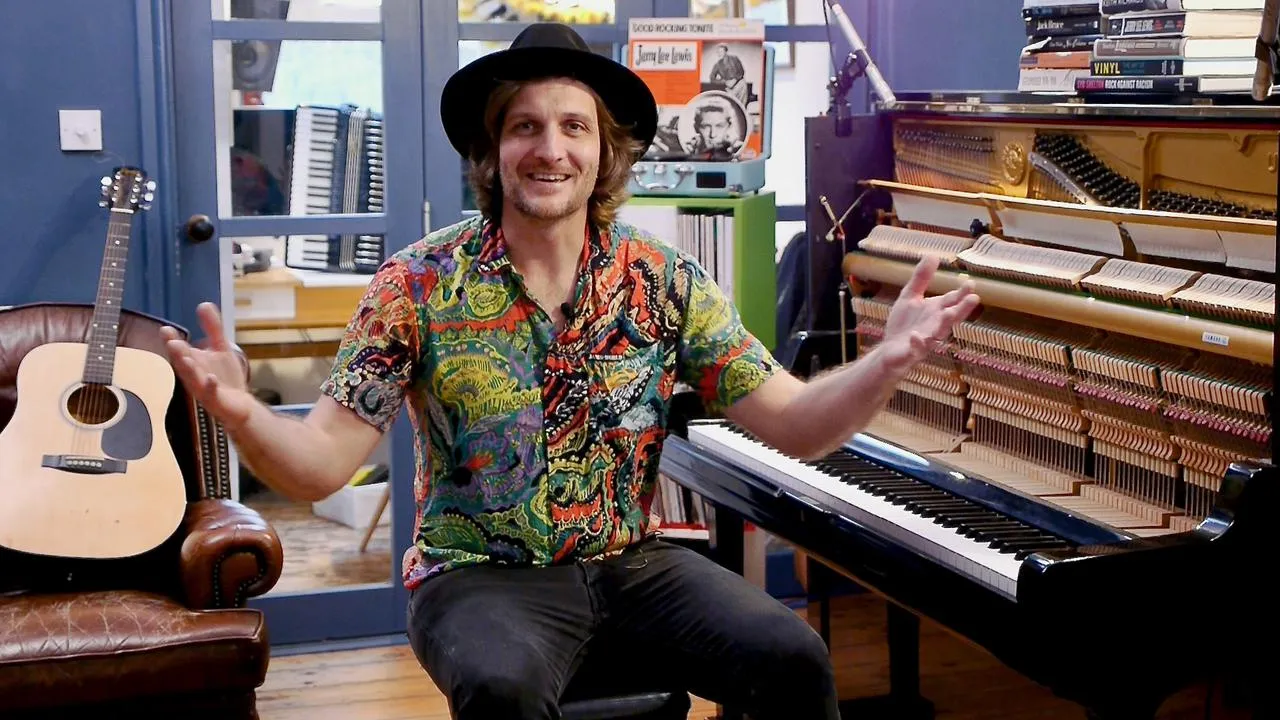
Das steckt im Kurs
25 Lektionen (2h 34m) · 1 gratis
01. Wie man die Intro spielt
4:09
02. Melodie und rechte Hand
9:26
03. So spielst du das Solo
7:01
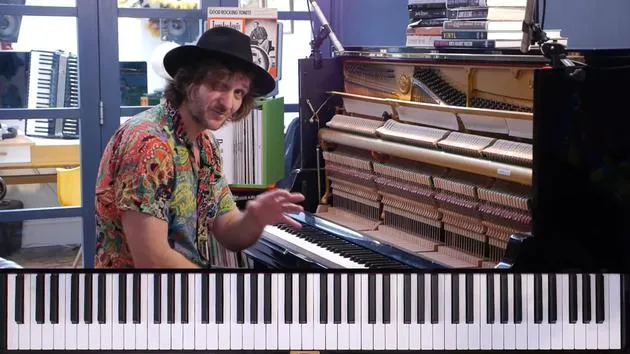
04. Rechte Hand und Turnaround
Du bist hier12:43
05. Weitere Ideen
5:42
06. Wie du das Ende spielst
1:38
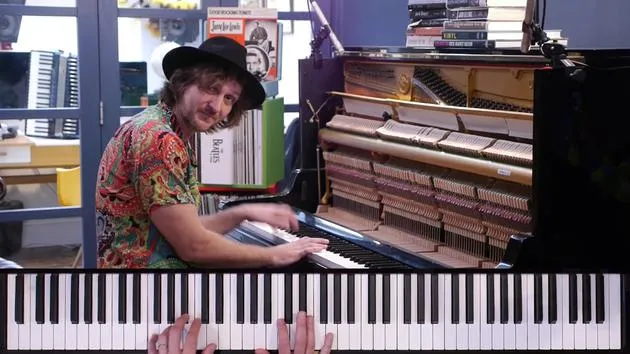
07. Jerry Lees Klavierpart erweitern
6:16
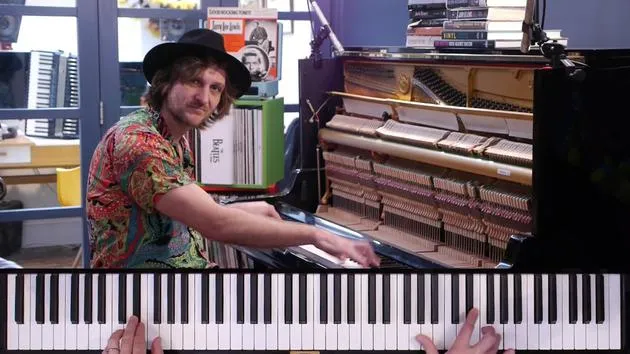
08. Jerry Lees Solo-Ideen erweitern
11:49
09. Crushed Notes einsetzen
7:12
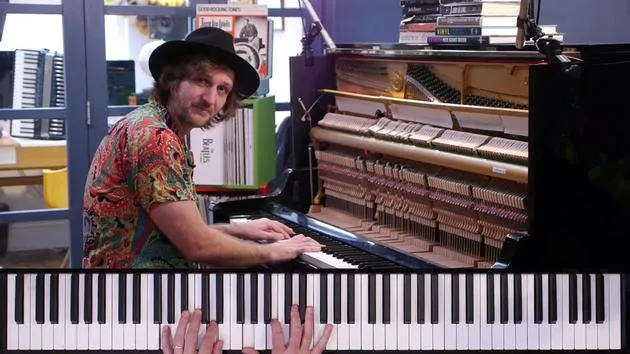
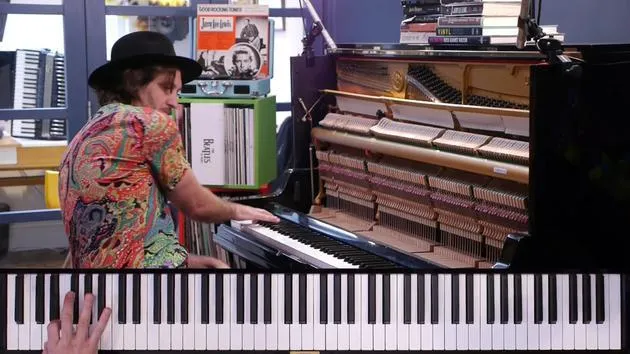
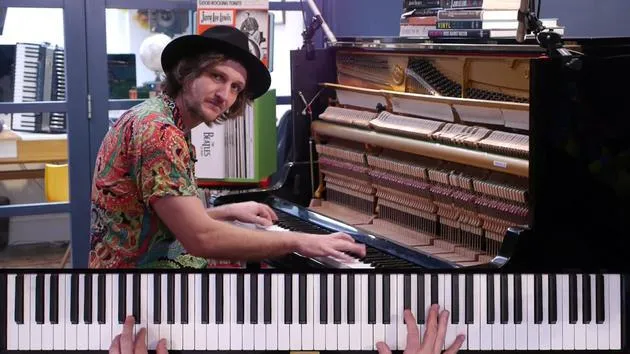
Transkript der Lektion
Analyzing the Right Hand Technique
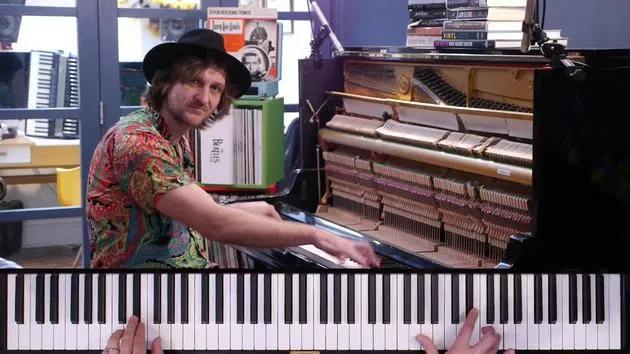
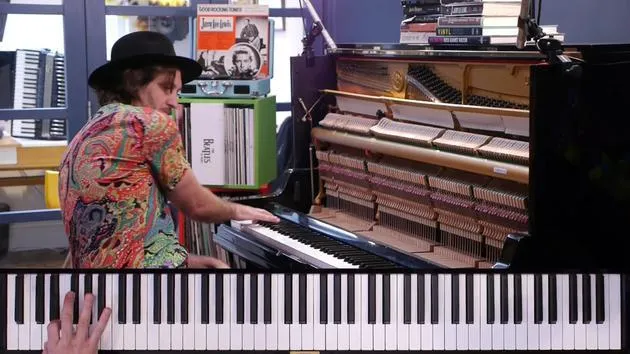
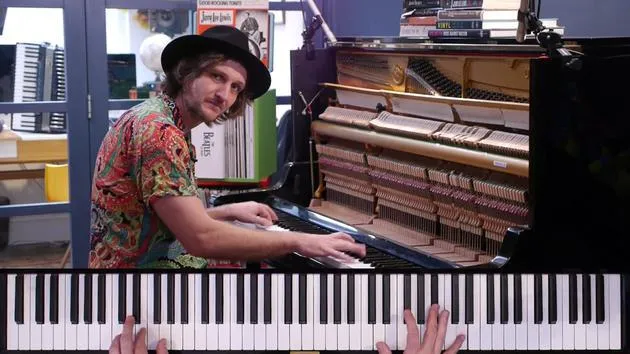
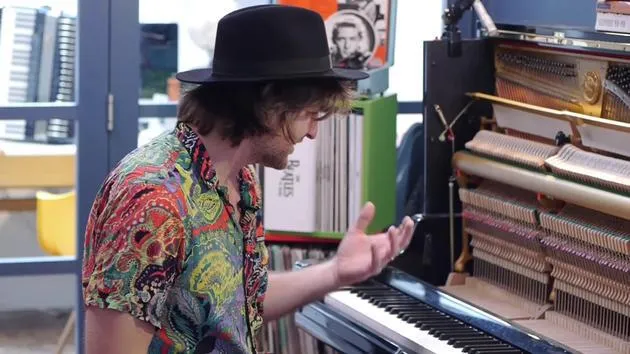
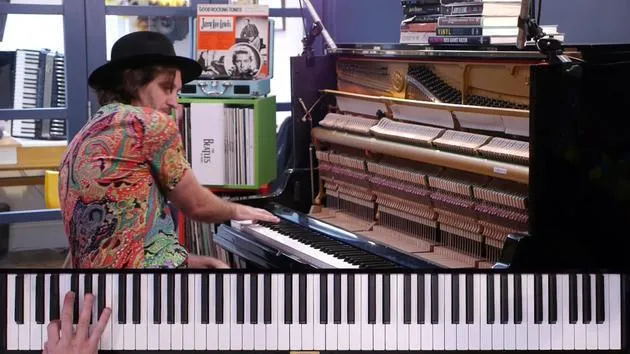
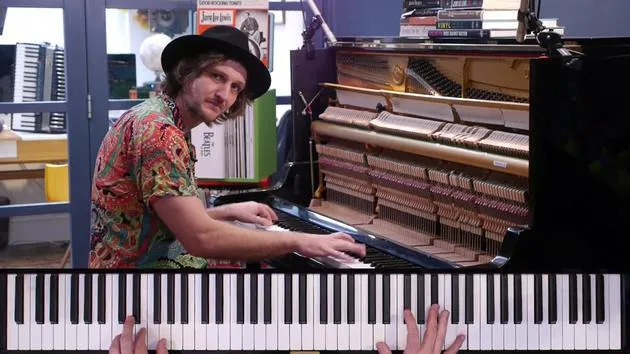
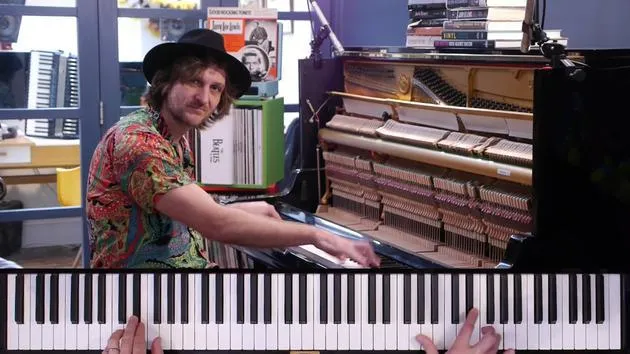
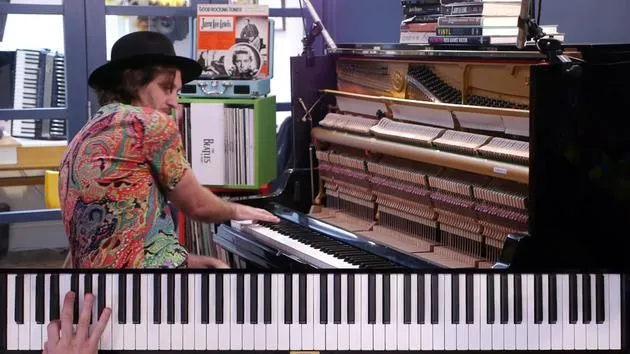
Let's go back and analyze the right hand technique in the solo.
Breaking It Down
At the start of the solo, he's essentially just repeating that note again, a very rock and roll thing to do! This might stem from a guitar player's habit of playing repeated notes, reminiscent of Chuck Berry, for example.
- Notes Played: G and C (G and E flat)
- Interval: Minor sixth
- Musical Influence: The clash between minor and major is very typical of blues, gospel, and American music.
Jerry Lee often returns to this theme. Sometimes, he may use an expanded variation, like the G and A, but in the recording, it sounds like it's literally just that interval. It results in a more open sound, played with genuine attitude.
Technique and Practice
Then he comes down and repeats the same thing an octave lower, possibly including a touch of that A. It can be tricky to discern, but for now, let's focus on playing that sixth interval as triplets.
Tips for Technique
- Keep the wrist loose: Avoid using your whole arm for the movement.
- Practice: Start at a slower tempo. Use a metronome to gradually speed up until you can match the record's tempo.
Even Jerry Lee might struggle to maintain that speed for a long duration, it's intense!
Glissando Technique
When transitioning to a glissando, follow this technique to avoid excessive wear on your fingers:
- Downward Gliss: Use your thumbnail.
- Upward Gliss: Use whichever finger you prefer; I often use my third finger.
With practice, you should be able to slide smoothly up and down the keys. However, exercise caution, many years ago, I found my practice sessions resulted in blood on the keys!
The Jerry Lee Rundown
After the glissando, he executes a rundown, another signature Jerry Lee move.
- Notes: E flat and G together.
- Ending Note: It's tricky on the recording; he may have unintentionally played a B. However, it doesn't significantly affect the intent of the phrase.
Hand Positions and Technique
- Different hand positions are involved throughout this section:
- Position 1: [Description]
- Position 2: [Description]
- Position 3: [Description]
Remember to start at a slow tempo and gradually increase the speed.
Boogie Woogie Influences
In the left hand, he incorporates a broken chord:
- Tracks and Variations: There are always different ways to interpret these chords, whether it sounds like a C at the bottom or an A in between.
When coming down from the four chord:
- Notes: Include a little ninth, which could also be played as a sixth, either choice won't alter the attitude of the song.
Moving to the Five
Now we reach the five chord, another of Jerry Lee's favorite figures:
- Execution: Play this with attitude! Really dig into the keys.
- Fingers Used: D with specific finger positioning.
At the end of this measure, he makes a minor variation by changing the G to the A, something Jerry Lee frequently employs.
The Turnaround
Now, we approach the turnaround, which is unmistakably Jerry Lee's signature style:
- Simple Rhythm: It features rhythmic interplay between the two hands, forming a recognizable pattern.
Once you've solidified this section, you'll return to the main feel that initiated the song.
Conclusion
So there you have it, the solo comprises several elements to weave together.
Key Takeaway
Remember, it's crucial to maintain a fluid flow throughout. Jerry Lee wasn't confined by different sections; he played as the music came to him in the moment. Aim to replicate that spontaneity and energy in your improvisation, making this a solid foundation for exploring your own ideas.
Now, let's delve into that next!
25 Lektionen
2 Std. 34 Min. strukturierte Videolektionen
Erweiterte Videofunktionen
Verlangsamen, Passagen loopen, mitlesen
Handy, Tablet & Desktop
Üben, wo du willst
100 % Zufriedenheitsgarantie
30 Tage Geld-zurück-Garantie
Lern deinen Guru kennen
Lern deinen Guru kennen
Paddy Milner gilt als einer der besten Blues-Pianisten der Welt – derzeit ist er der Stammkeyboarder von Sir Tom Jones, nach mehreren Jahren an der Seite des großartigen, verstorbenen Jack Bruce –, aber er ist auch ein hervorragender eigenständiger Songwriter und ein unverwechselbarer Sänger. Lies einfach das Lob von Größen wie Dave Brubeck weiter unten! Sein Spiel war auf dem Soundtrack des Kinohits 'Rocketman' von 2019 zu hören.
Zweimal wurde er bei den British Blues Awards als bester Keyboarder ausgezeichnet, und als Gründungsmitglied der Ronnie Scott's Blues Explosion hat er eine langjährige Residency im weltberühmten Club Ronnie Scott's.
Seine aktuelle Band LONDONOLA spielt selbst geschriebene britische Musik mit einer kräftigen Portion New-Orleans-Geist, und sein gemeinsames Projekt JAWBONE geht seit der Veröffentlichung des gleichnamigen Debütalbums von Stärke zu Stärke.
- „Ich liebe es... da ist einer, der wirklich Klavier spielen kann" - Dave Brubeck
- „Ich kann es nur wärmstens empfehlen. Irgendwie fängt alles an, sich viel besser anzufühlen!" - Jack Bruce
- „Der beste Blues-Pianist Europas..." - Blues Access, USA
- „Beeindruckend und originell" - The Times
- „Blendend" - The Independent
In seinen Kursen zerlegt Paddy den authentischen Blues-Shuffle, Slow Blues, Boogie-Woogie, Rock 'n' Roll und das New-Orleans-Piano – bis hin zu drei klassischen Boogie-Woogie-Songs –, damit du diese Stile bei einem der Allerbesten des Fachs lernst.







