



Erster Solo-Abschnitt & Turnaround
Mit
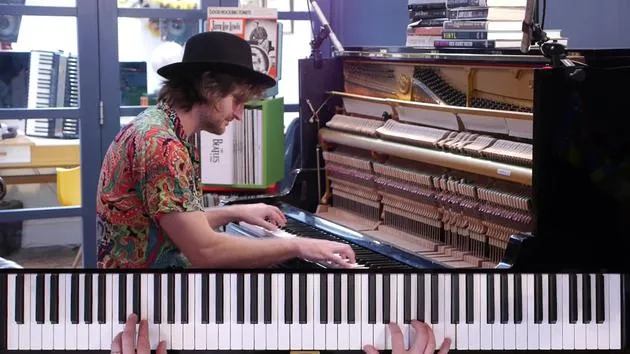
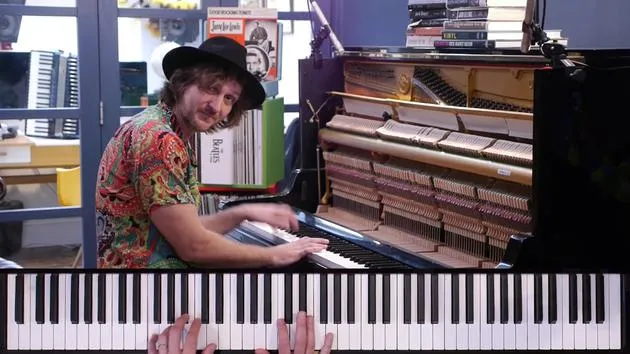
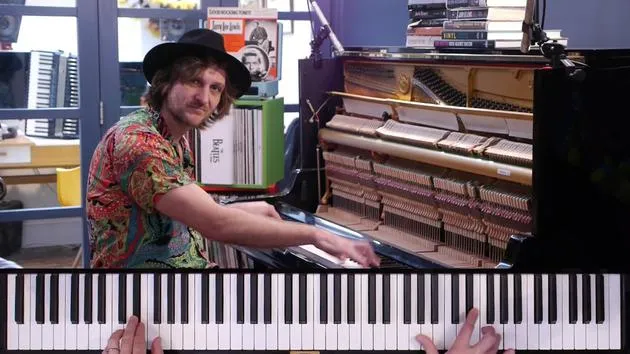
Paddy MilnerDas erste Solo beginnt mit vielen wiederholten Noten, ähnlich wie bei Whole Lot of Shakin und typisch für Rock-'n'-Roll-Stücke
Das steckt im Kurs
25 Lektionen (2h 34m) · 1 gratis
Transkript der Lektion
Music Lesson: Analyzing the First Solo Section
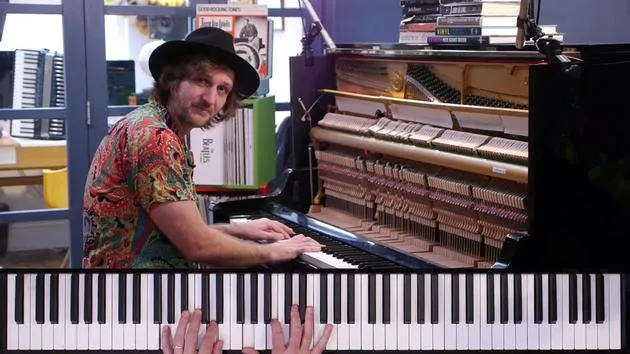
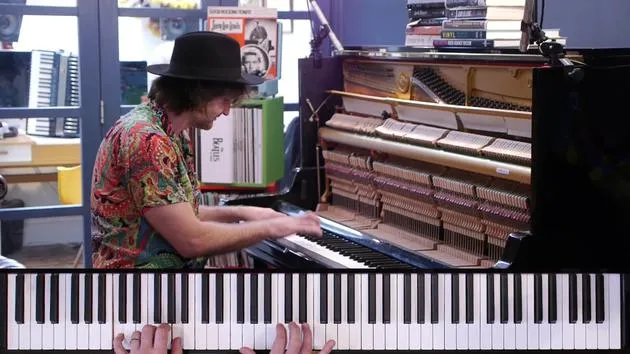
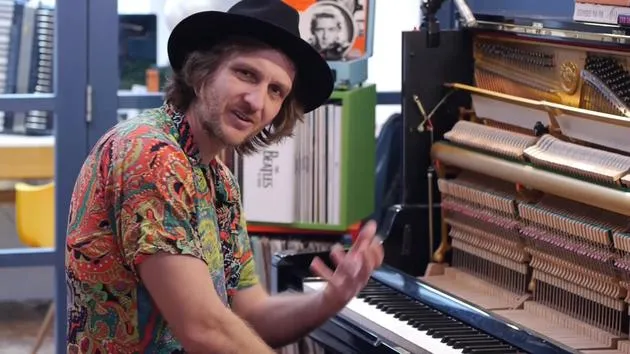
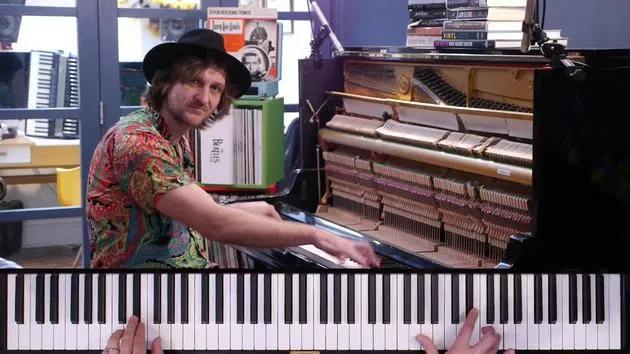
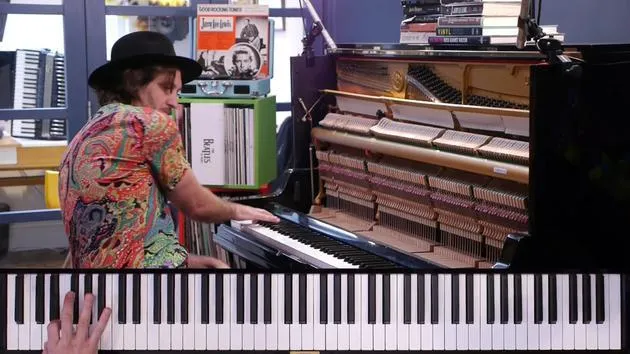
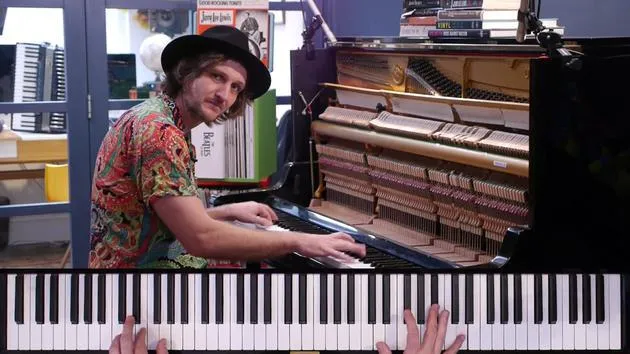
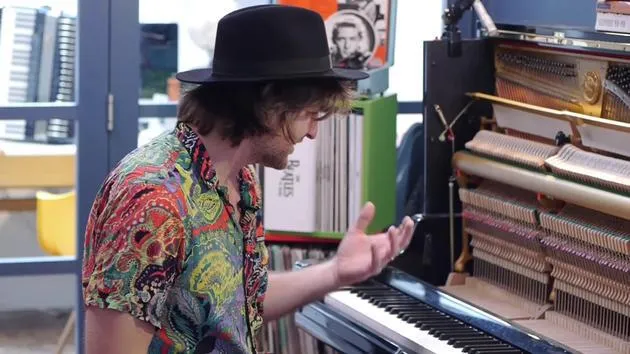
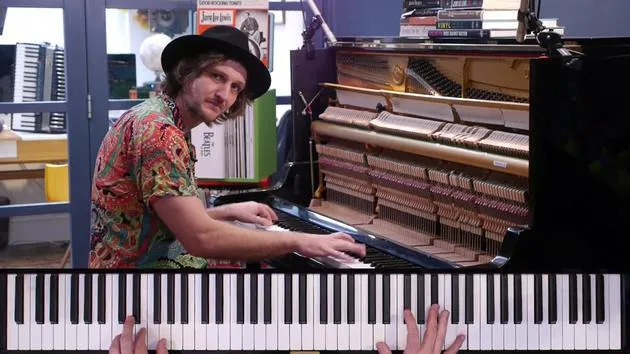
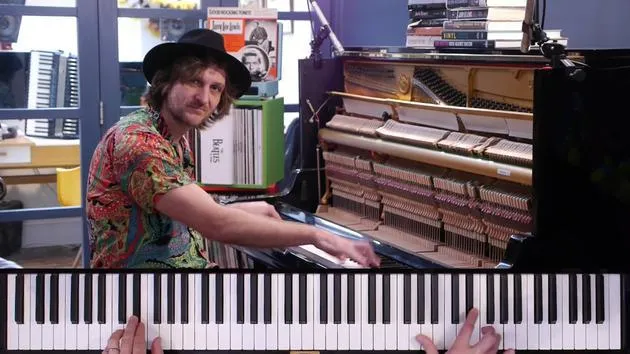
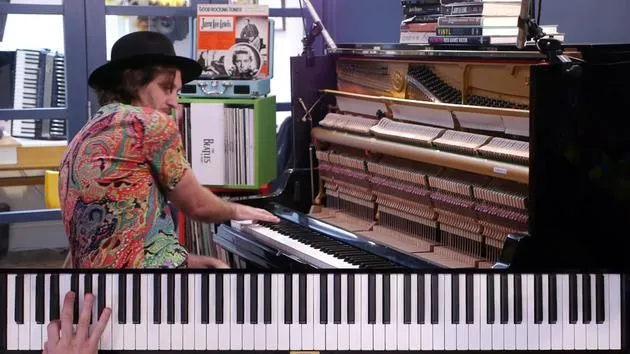
Okay, so the first solo section starts with a lot of repeated notes. Again, it's reminiscent of Whole Lot of Shakin' Goin' On, a characteristic element of rock and roll.
Solo Breakdown
-
Left Hand Technique:
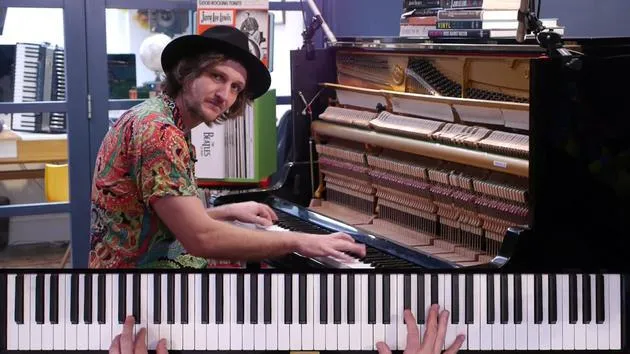
He uses the same left hand that he does on Whole Lot of Shakin' Goin' On and applies it throughout the entire solo in the right hand. -
Solo Performance:
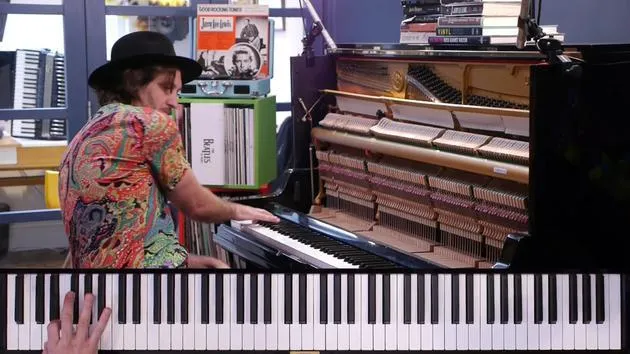
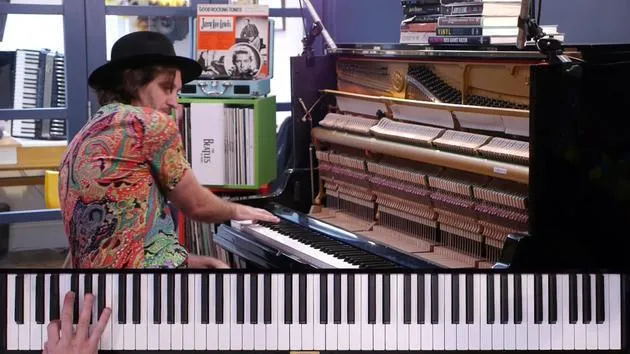
"I'll play the solo once so you can hear it. And then we'll break it down."
So from the five one, then we're back into the next verse.
Key Elements of the Solo
-
Repeated Notes:
What's he doing there? Well, he starts with these repeated notes on the 5th and the 7th. I think at the start he might have a little crushed note, who knows, maybe it was intended or maybe not. -
Interpretation:
"I think it's either he fumbled it or he intended it. I'm not sure. Either way, it doesn't matter."
The progression is: 2, 1, 2, 3. Nice loose wrist there. -
Rundown:
He does a rundown, which again might not have been intended. It sounds like...
"Starts with whether he actually intended to play. I don't know. But on the record, it sounds like it."
Chord and Riff Variations
-
Chord 4:
We hit the chord IV, which is a nice variation on the riff that Pinetop Smith introduced in his famous Pinetop's Boogie Woogie, which we have looked at in the blues courses as well. -
Original Riff:
The original Pinetop riff would have been built on a ninth chord, a seven-nine chord.
However, he puts in a little passing chord, a chromatic idea that makes it really hip.
Further Exploration
-
Typical Jerry Lee Glissandi:
He incorporates some of his classic repeated glissandi. Followed by a little pentatonic idea at the end. -
Classic Turnaround:
Then that very classic Jerry Lee turnaround at the end, this time obviously in the key of G.
"That's a good thing to develop, learning all these things in different keys."
Practice Recommendations
-
Key Variations:
"Make sure you learn that in G."
We've already learned it in Whole Lot of Shakin' in the key of C. Why not also learn it in B flat, E flat, or any other key, like D flat? -
Jam Session Preparedness:
After all, you never know what situation you might be in. You could be at a jam session, or someone might call a tune in an unexpected key. Often, guitar players might play sharp keys like E, A, D, or B, so you need to be prepared to play in all those keys.
Summary of Essential Techniques
To summarize:
- Repeated Notes: Work on getting these down.
- Loose Wrist: Important for fluidity.
- Rundown: Focus on the fingering, which can feel slightly awkward at first.
- Glissandi: Make sure these are strong and pronounced.
- Turnaround: Practice forming this in different keys.
Final Thoughts
Once you've integrated all the elements of the solo, try to put the entire thing together at a slow tempo. Start with the right hand on its own, ensuring there's no hesitation between each idea.
Gradually increase the tempo until you've got everything together and can play the whole solo fluidly.
Cool! Good luck with that, and let's look at the next solo section, which takes us into another verse. I think you'll find that really cool.
25 Lektionen
2 Std. 34 Min. strukturierte Videolektionen
Erweiterte Videofunktionen
Verlangsamen, Passagen loopen, mitlesen
Handy, Tablet & Desktop
Üben, wo du willst
100 % Zufriedenheitsgarantie
30 Tage Geld-zurück-Garantie
Lern deinen Guru kennen
Lern deinen Guru kennen
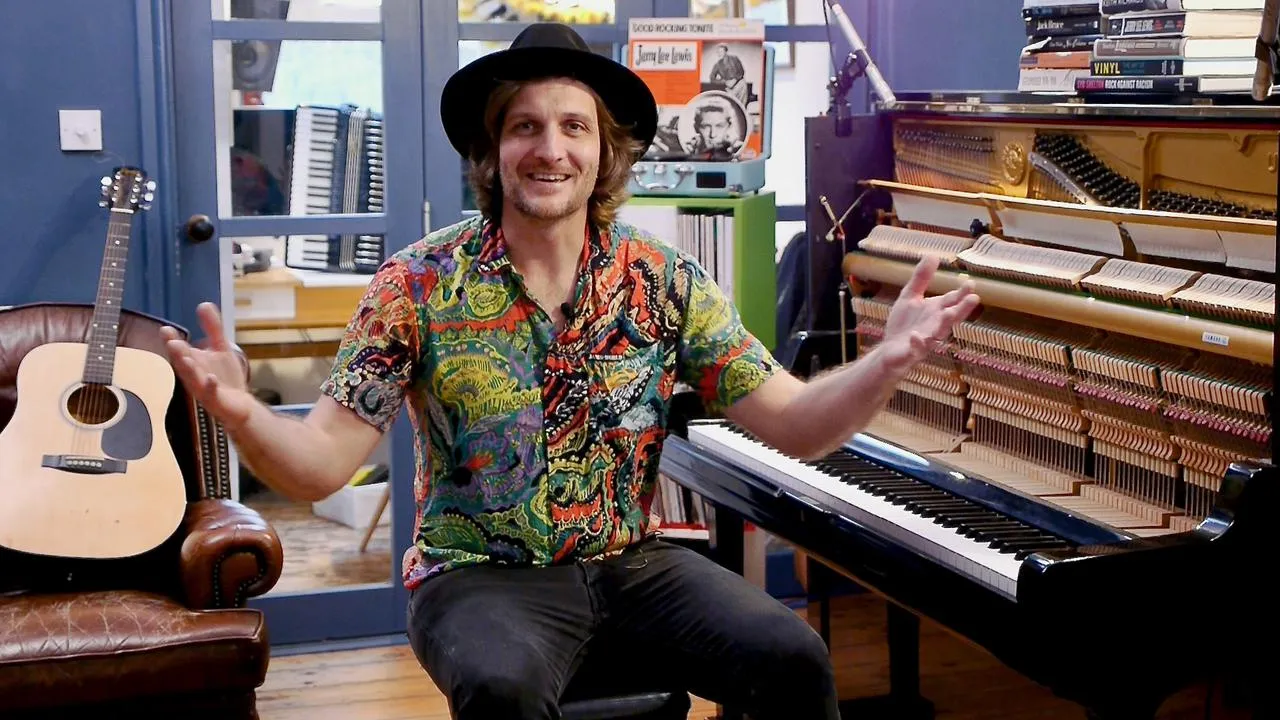
Paddy Milner gilt als einer der besten Blues-Pianisten der Welt – derzeit ist er der Stammkeyboarder von Sir Tom Jones, nach mehreren Jahren an der Seite des großartigen, verstorbenen Jack Bruce –, aber er ist auch ein hervorragender eigenständiger Songwriter und ein unverwechselbarer Sänger. Lies einfach das Lob von Größen wie Dave Brubeck weiter unten! Sein Spiel war auf dem Soundtrack des Kinohits 'Rocketman' von 2019 zu hören.
Zweimal wurde er bei den British Blues Awards als bester Keyboarder ausgezeichnet, und als Gründungsmitglied der Ronnie Scott's Blues Explosion hat er eine langjährige Residency im weltberühmten Club Ronnie Scott's.
Seine aktuelle Band LONDONOLA spielt selbst geschriebene britische Musik mit einer kräftigen Portion New-Orleans-Geist, und sein gemeinsames Projekt JAWBONE geht seit der Veröffentlichung des gleichnamigen Debütalbums von Stärke zu Stärke.
- „Ich liebe es... da ist einer, der wirklich Klavier spielen kann" - Dave Brubeck
- „Ich kann es nur wärmstens empfehlen. Irgendwie fängt alles an, sich viel besser anzufühlen!" - Jack Bruce
- „Der beste Blues-Pianist Europas..." - Blues Access, USA
- „Beeindruckend und originell" - The Times
- „Blendend" - The Independent
In seinen Kursen zerlegt Paddy den authentischen Blues-Shuffle, Slow Blues, Boogie-Woogie, Rock 'n' Roll und das New-Orleans-Piano – bis hin zu drei klassischen Boogie-Woogie-Songs –, damit du diese Stile bei einem der Allerbesten des Fachs lernst.







