



Melodie und rechte Hand

Mit
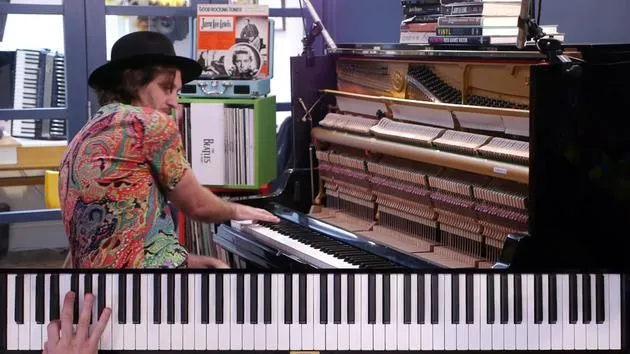
Paddy MilnerFangen wir an, das Stück aufzuschlüsseln und den Klavierpart in C-Dur anzuschauen. Werde vertraut mit dem Rhythmus, der Artikulation und wie du das Stück authentisch spielst

Das steckt im Kurs
25 Lektionen (2h 34m) · 1 gratis
01. Wie man die Intro spielt
4:09
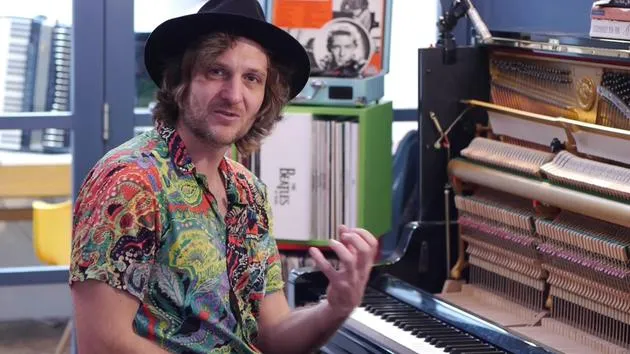
02. Melodie und rechte Hand
Du bist hier9:26
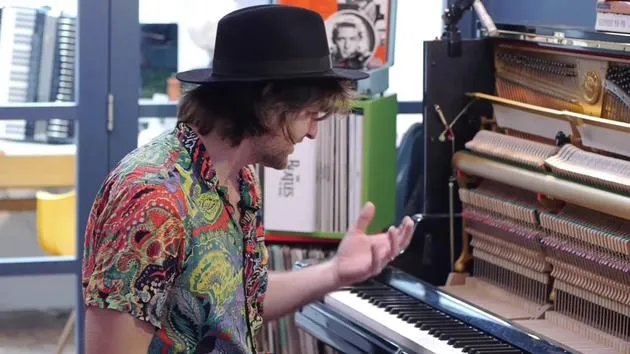
03. So spielst du das Solo
7:01
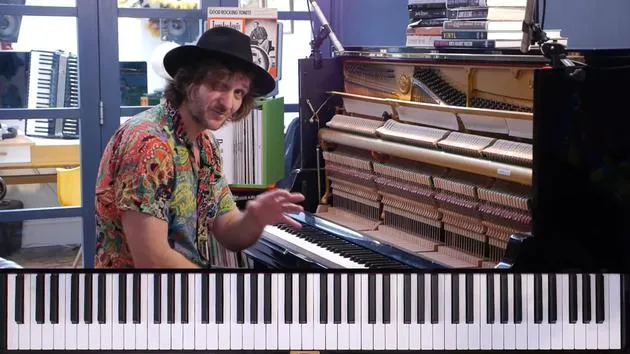
04. Rechte Hand und Turnaround
12:43
05. Weitere Ideen
5:42
06. Wie du das Ende spielst
1:38
07. Jerry Lees Klavierpart erweitern
6:16
08. Jerry Lees Solo-Ideen erweitern
11:49
09. Crushed Notes einsetzen
7:12
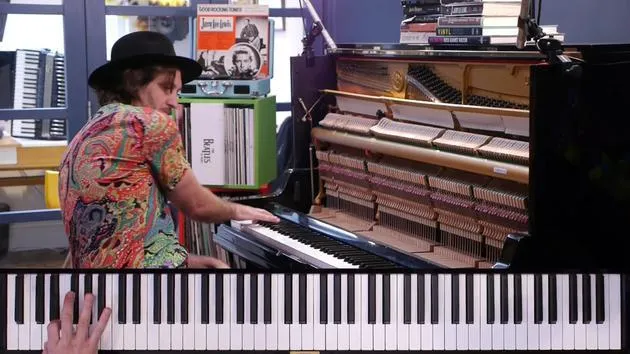
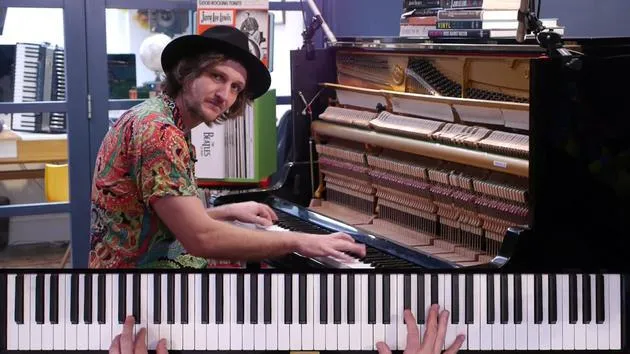
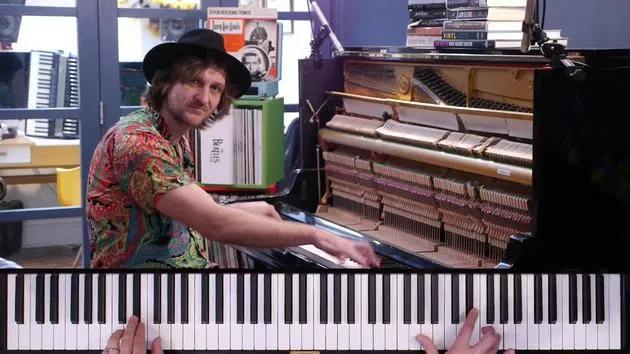
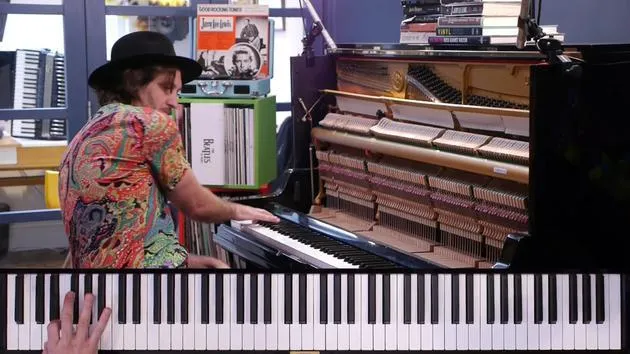
Transkript der Lektion
12-Bar Blues Piano Lesson
Introduction
So, I'm going to just play around the whole 12 bars so you can have a listen to the main feel of the tune.
Count: 2 1, 2, 3, 4.
Breaking It Down
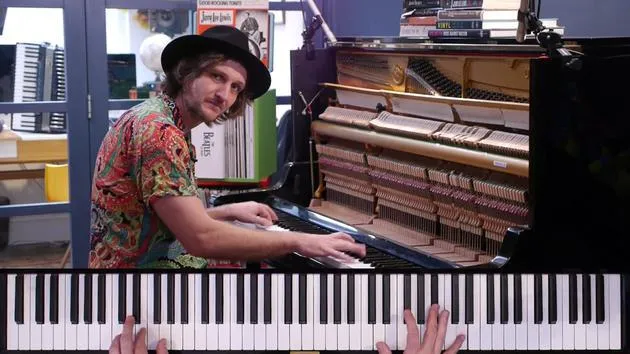
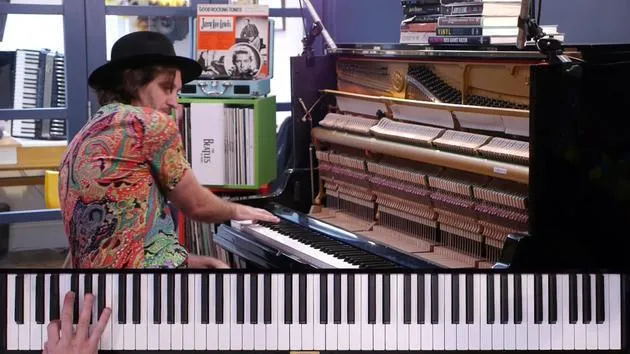
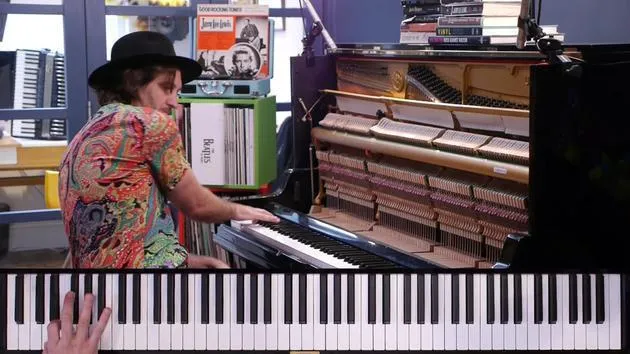
Let's start breaking it down and look at that piano part.
Right Hand
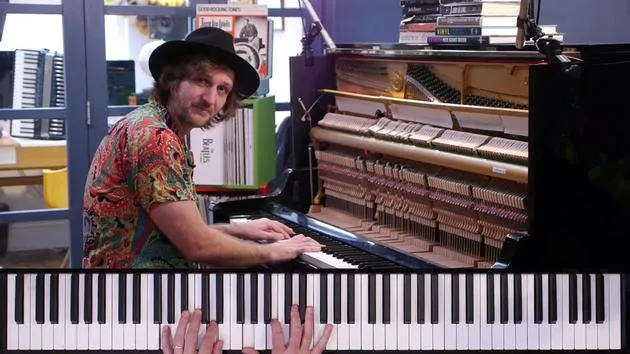
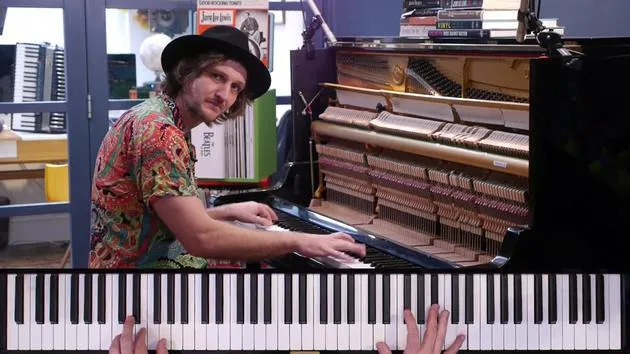
- In the right hand, we're simply playing triads with the third on the top.
Left Hand
- In the left hand, we are essentially outlining a kind of C6 chord, always playing the bottom C with it, which gives it a nice sort of weight.
- We play those chords on the downbeats, while the right hand plays on the upbeats (the off beats).
Chord Progression
When we move up to chord four:
-
The right hand plays the inversion of F, while the left hand continues as it had been on chord one (the chord of C).
-
There's a nice lead-up to chord 4, which adds direction.
-
Chord Progression Summary:
- Chord 1: C
- Chord 4: F
- Chord 1: C
- Chord 5: G (1 bar)
- Chord 4: F (1 bar)
- Chord 1: C (2 bars) with a turnaround (which we'll look at in due course).
Feel and Rhythm
Is It Straight or Swung?
So, there are a few things we should talk about regarding this feel.
- Question: Is it straight? Is it swung? Is it a shuffle?
Let's have a listen.
It's slightly swung, isn't it? It almost sounds a bit like ska or something. It's definitely swung, but not really dotted.
Listening Practice
- Have a listen to how Jerry Lee plays it and try to find that nice balance of how long or how dotted you make that feel.
- It's kind of a heavily swung feel, which I describe as somewhere in the middle:
- The bass is quite heavy, but it's not overpowering.
- Likewise, the right hand is quite solid, but it's not rigid.
Articulation
- Listen to how Jerry Lee articulates the notes:
- Is he playing long notes or short notes?
- He strikes a balance, embodying a smoothness with a nice fat bottom end.
The Importance of Original Recordings
This is crucial in rock and roll; it gives a solid foundation at the bottom end. I can't emphasize enough how important it is to listen to the original recordings and recreate those feels.
Anticipating Chord Changes
There's something quite interesting that helps propel the music along:
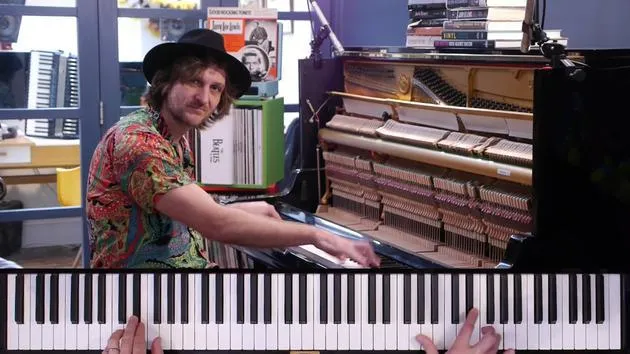
- Jerry Lee often anticipates the chord change with the right hand.
For example:
- If we are going from C to F, notice how it happens just before the beat.
Here's a quick demonstration:
- Two bars of C going up to F...
Practice Tips
- So, if you can try to practice that and get it down, that's a good starting point for playing this song.
- Essentially, all the verses are more or less the same with a couple of little embellishments we'll look at as we go along.
Using a Metronome
- If you're finding it difficult to play that figure at speed, use a metronome. Start at half speed.
- As you feel comfortable, you can increase the tempo gradually.
Identifying Trouble Spots
You might find that you come unstuck when changing chords.
- Practice going between two chord changes, like from 5 to 4.
Momentum and Flow
Notice when Jerry Lee moves from the I chord to the IV chord with that run-up, he plays it a little heavier, providing momentum to go.
- It's all about making the music flow; it's not just about mechanically playing the notes, it's about how the music is breathing.
Conclusion
This approach is a testament to Jerry Lee's all-around musicality. He is truly an incredible piano player and musician.
25 Lektionen
2 Std. 34 Min. strukturierte Videolektionen
Erweiterte Videofunktionen
Verlangsamen, Passagen loopen, mitlesen
Handy, Tablet & Desktop
Üben, wo du willst
100 % Zufriedenheitsgarantie
30 Tage Geld-zurück-Garantie
Lern deinen Guru kennen
Lern deinen Guru kennen
Paddy Milner gilt als einer der besten Blues-Pianisten der Welt – derzeit ist er der Stammkeyboarder von Sir Tom Jones, nach mehreren Jahren an der Seite des großartigen, verstorbenen Jack Bruce –, aber er ist auch ein hervorragender eigenständiger Songwriter und ein unverwechselbarer Sänger. Lies einfach das Lob von Größen wie Dave Brubeck weiter unten! Sein Spiel war auf dem Soundtrack des Kinohits 'Rocketman' von 2019 zu hören.
Zweimal wurde er bei den British Blues Awards als bester Keyboarder ausgezeichnet, und als Gründungsmitglied der Ronnie Scott's Blues Explosion hat er eine langjährige Residency im weltberühmten Club Ronnie Scott's.
Seine aktuelle Band LONDONOLA spielt selbst geschriebene britische Musik mit einer kräftigen Portion New-Orleans-Geist, und sein gemeinsames Projekt JAWBONE geht seit der Veröffentlichung des gleichnamigen Debütalbums von Stärke zu Stärke.
- „Ich liebe es... da ist einer, der wirklich Klavier spielen kann" - Dave Brubeck
- „Ich kann es nur wärmstens empfehlen. Irgendwie fängt alles an, sich viel besser anzufühlen!" - Jack Bruce
- „Der beste Blues-Pianist Europas..." - Blues Access, USA
- „Beeindruckend und originell" - The Times
- „Blendend" - The Independent
In seinen Kursen zerlegt Paddy den authentischen Blues-Shuffle, Slow Blues, Boogie-Woogie, Rock 'n' Roll und das New-Orleans-Piano – bis hin zu drei klassischen Boogie-Woogie-Songs –, damit du diese Stile bei einem der Allerbesten des Fachs lernst.







