



Durchgang durch die wichtigsten Klavierparts
Mit
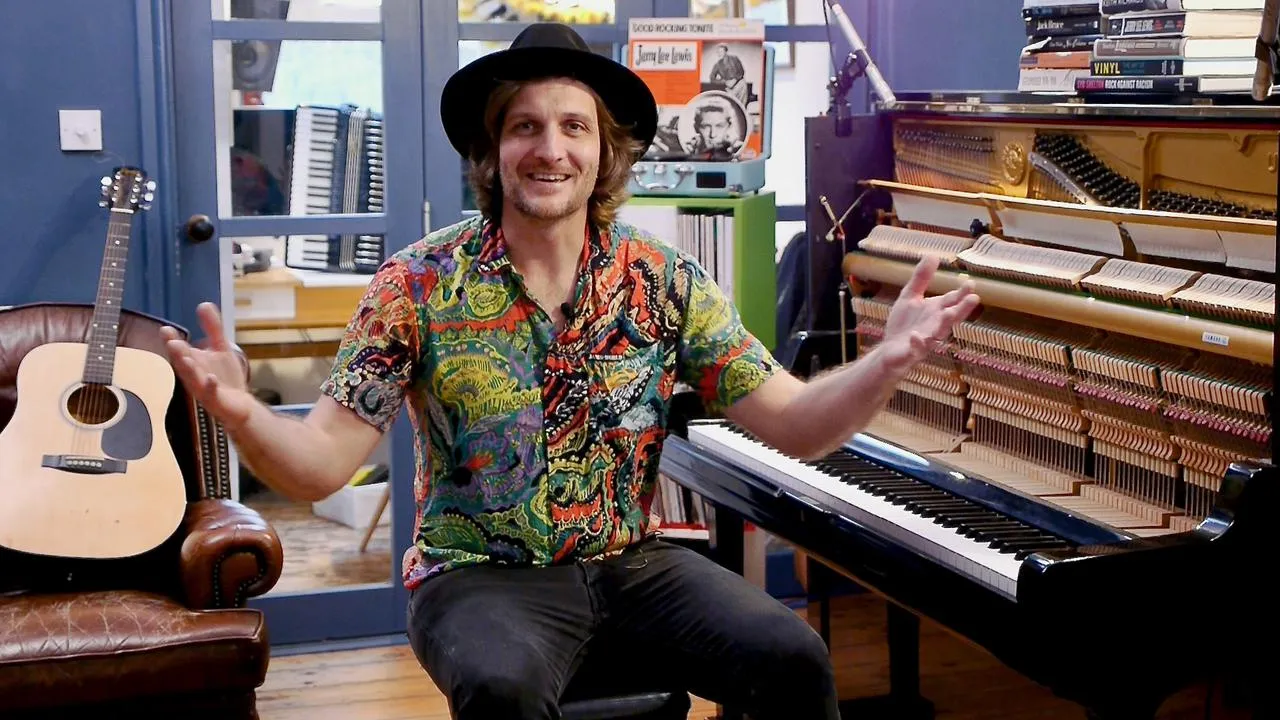
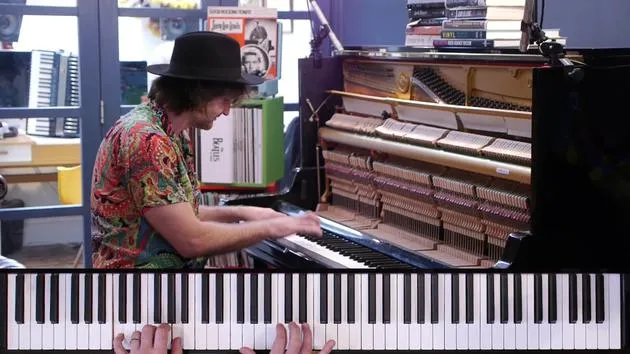
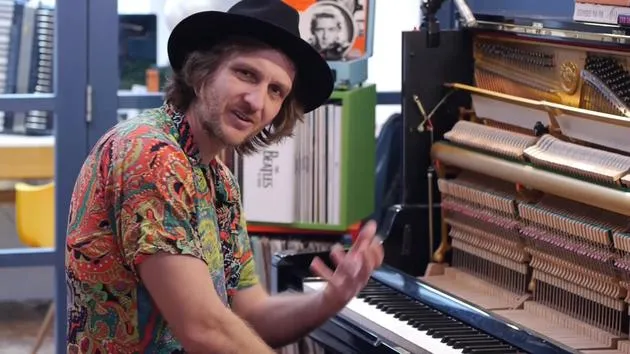
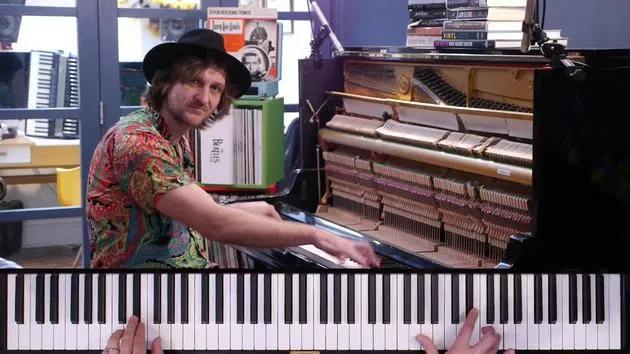
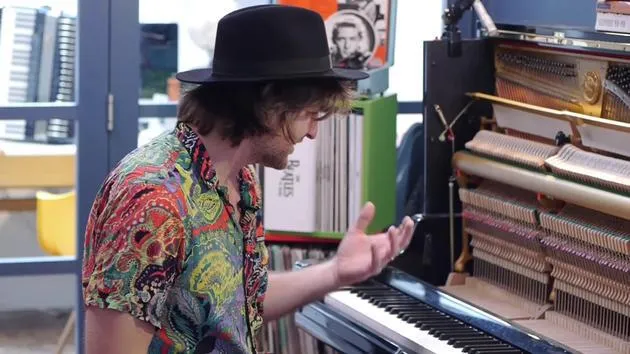
Paddy MilnerPaddy Milner geht die wichtigsten Klavierparts von „Great Balls of Fire“ durch und zerlegt Jerry Lee Lewis' Intro sowie die dahinterliegenden Akkorde C, F und G.
Das steckt im Kurs
25 Lektionen (2h 34m) · 1 gratis
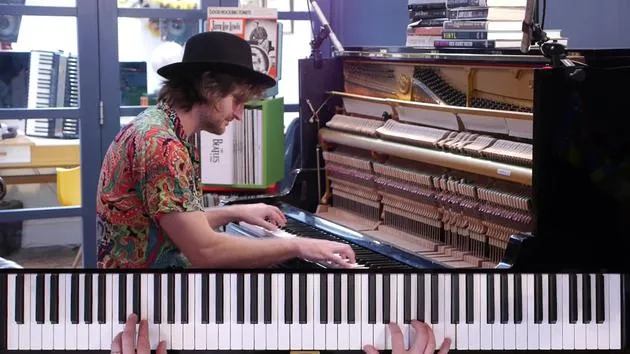
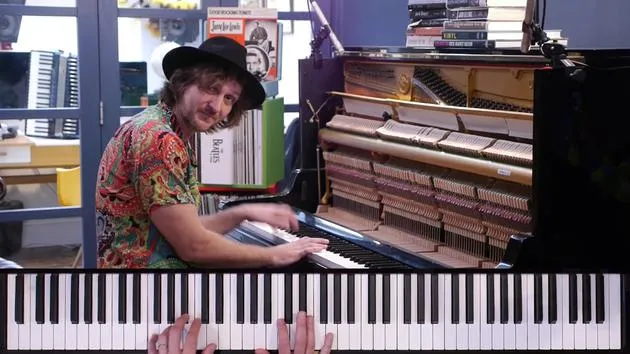
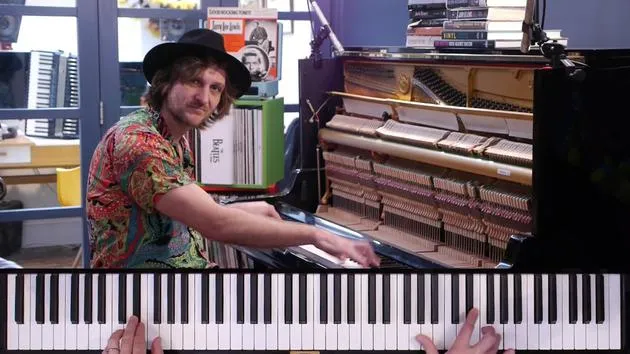
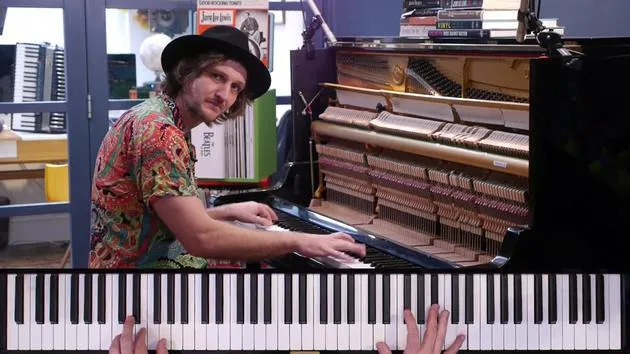
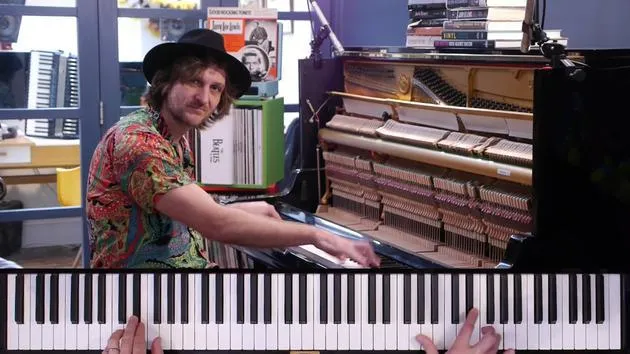
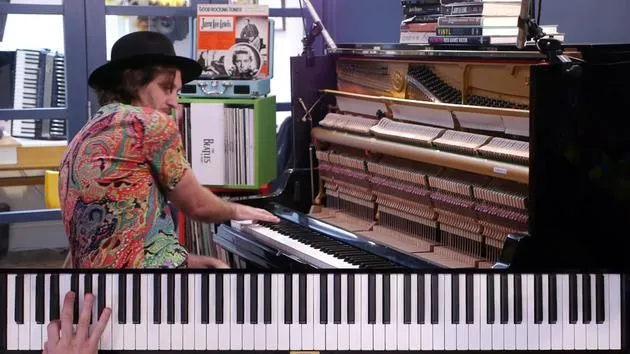
Transkript der Lektion
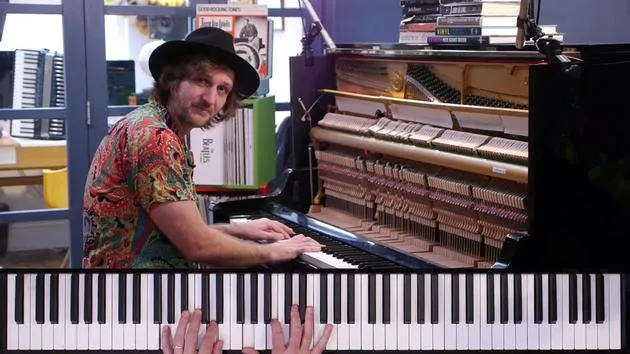
Great Balls of Fire - Lesson Breakdown
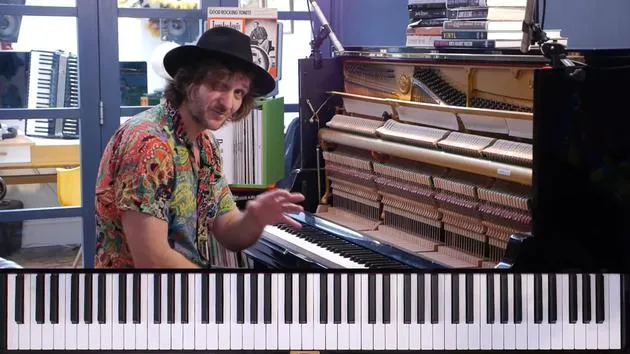
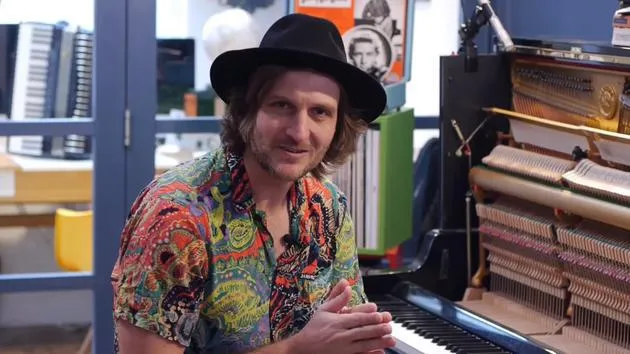
Okay, let's jump in and look at Great Balls of Fire. Let's break that down and see what Jerry Lee is actually doing.
Introduction
This is this iconic introduction. If you watch some of the videos of Jerry Lee, he often plays that with two hands. So there's no reason to think he did otherwise on the recording.
"Check my nerves and you round my brain."
It goes down the octave there to lead up to the F. First of all, we're in the key of C. The chords that he uses in this tune are C, F, and G. That's what this introduction is based on.
So leading up to the C:
"Shame of nerves and you rub my brain, so much of love drives a man insane."
Now that one leading to the G sort of starts on the E. Although maybe it sounds like one of the guitarists is starting on the F, coming down. There's some discrepancy in some performances; he plays it differently.
"So if you check out different performances of Great Balls Of Fire, you'll see he does play that introduction a little differently."
So don't be too precious about whether you go or come back down. But just nice and big:
"Shake my nerves and you round my brain."
It's obviously a big start to the tune:
"Goodness of gracious, Great balls of fire."
And then he goes into the verse.
Left Hand Technique
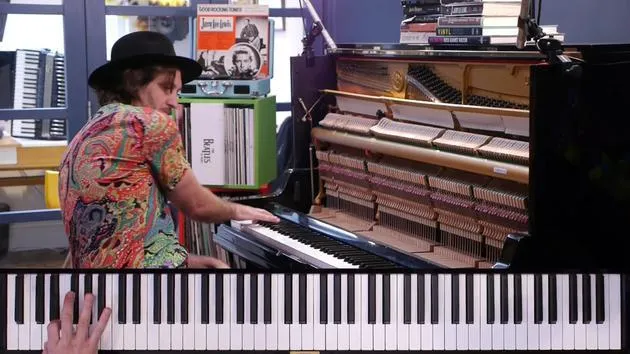
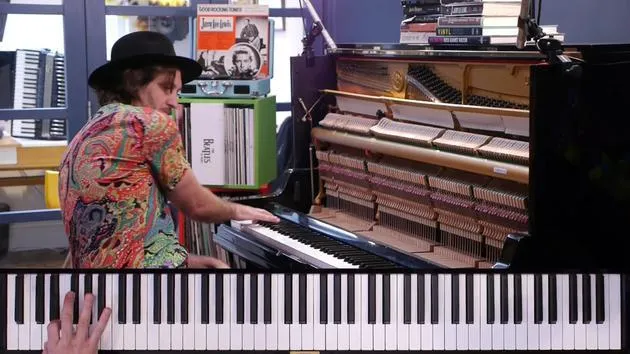
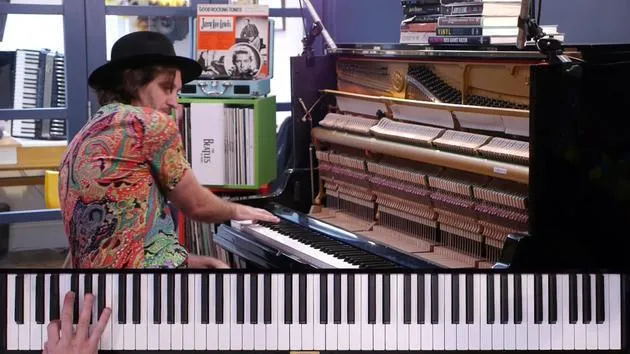
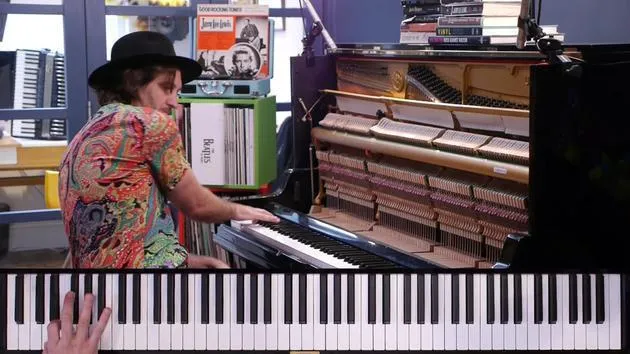
The basic left hand he uses throughout the tune, apart from the solo, is essentially outlining a C6 chord, and then the same on the F and G chords.
So again, just:
- It's all about getting this left hand solid.
- If you're finding it tricky, start at a slow tempo.
- When it feels comfortable at that tempo, increase the speed of the metronome.
I recommend using a metronome. You'll notice this time the feel is definitely a straight feel. It's not a whole lot of shaking or whining.
"Listen to the way it's played. It's not really staccato and short."
It needs to be nice and fat and solid sounding. It shouldn't be weak or quiet; it needs to be firm but not too overblown, so it doesn't lose its feel. It's got to have somewhere to go, especially in that solo section where he brings in this other left hand, which you can really hear on the record.
If you're struggling to change chords and maybe hesitating, practice just going between the two chords. You might do this while concentrating on something else, like looking out the window, or reading a paper. This way, you'll be able to get that left hand really automatic and intuitive under your fingers. This is important for this music and for styles like boogie woogie and blues.
Right Hand Technique
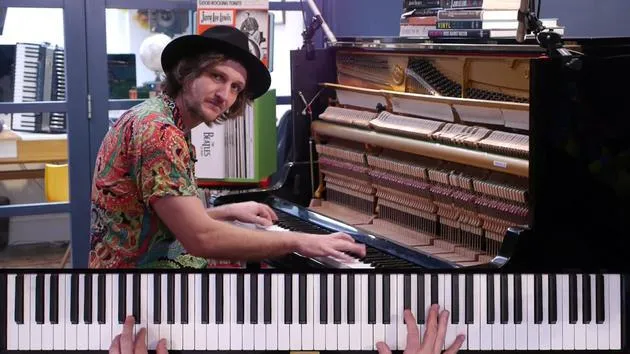
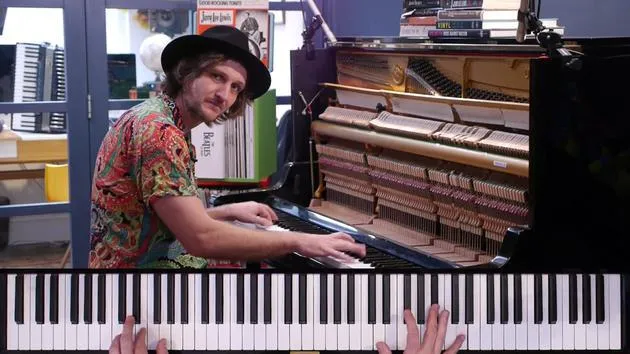
Let's look at what he's doing in the right hand in that first verse. He comes in using that idea introduced in Whole Lot of Shakin', which is essentially an embellishment of the C chord.
So that's it. And then a glissando. On the F chord, he's playing a nice sort of fat voicing, which is a variation of the F7,9.
He's using:
- The third,
- The seventh,
- The ninth,
Then a little trill to outline the seventh of the F chord.
There's a nice G chord, so G7 to that F7,9 kind of sound:
"Great balls of fire."
Then we go up to the four chord for the kind of bridge. He's either playing that or he's got the G on top. But I think it's then another trill up there.
I put a little grace note in there, but I'm not sure whether that's in the recording , it's really down in the mix.
Then there's that other riff again, and then another glissando and then another trill.
Bridge Section
Then we're into the breaks:
"Kind God, tell this world that you mine, mine, mine."
Actually, I think on this first bridge, he plays it with a sharp five. It's like a G7, but with that sharp five, which gives it a nice crunch.
He plays it three times, then he's back to that idea. He resolves it instead of.
"So again, these are all sort of small details that perhaps don't make a great deal of difference, but the main thing is that he's using that."
It doesn't really matter at the end there.
Solo Section
Yes, and then he plays this on the four. Then we're into the solo section.
He's got a mixture of ideas running through. He's got a lot of trills, or you could use that. It doesn't particularly matter which inversion he's using, whether he's using that or on the five.
Feel free to interchange those. Find the ones you like or the ones that feel natural under your fingers.
With those trills, there are those little embellishments you can do as well that sound pretty cool, either chromatically or with two notes, that kind of thing.
25 Lektionen
2 Std. 34 Min. strukturierte Videolektionen
Erweiterte Videofunktionen
Verlangsamen, Passagen loopen, mitlesen
Handy, Tablet & Desktop
Üben, wo du willst
100 % Zufriedenheitsgarantie
30 Tage Geld-zurück-Garantie
Lern deinen Guru kennen
Lern deinen Guru kennen
Paddy Milner gilt als einer der besten Blues-Pianisten der Welt – derzeit ist er der Stammkeyboarder von Sir Tom Jones, nach mehreren Jahren an der Seite des großartigen, verstorbenen Jack Bruce –, aber er ist auch ein hervorragender eigenständiger Songwriter und ein unverwechselbarer Sänger. Lies einfach das Lob von Größen wie Dave Brubeck weiter unten! Sein Spiel war auf dem Soundtrack des Kinohits 'Rocketman' von 2019 zu hören.
Zweimal wurde er bei den British Blues Awards als bester Keyboarder ausgezeichnet, und als Gründungsmitglied der Ronnie Scott's Blues Explosion hat er eine langjährige Residency im weltberühmten Club Ronnie Scott's.
Seine aktuelle Band LONDONOLA spielt selbst geschriebene britische Musik mit einer kräftigen Portion New-Orleans-Geist, und sein gemeinsames Projekt JAWBONE geht seit der Veröffentlichung des gleichnamigen Debütalbums von Stärke zu Stärke.
- „Ich liebe es... da ist einer, der wirklich Klavier spielen kann" - Dave Brubeck
- „Ich kann es nur wärmstens empfehlen. Irgendwie fängt alles an, sich viel besser anzufühlen!" - Jack Bruce
- „Der beste Blues-Pianist Europas..." - Blues Access, USA
- „Beeindruckend und originell" - The Times
- „Blendend" - The Independent
In seinen Kursen zerlegt Paddy den authentischen Blues-Shuffle, Slow Blues, Boogie-Woogie, Rock 'n' Roll und das New-Orleans-Piano – bis hin zu drei klassischen Boogie-Woogie-Songs –, damit du diese Stile bei einem der Allerbesten des Fachs lernst.







