



Zweiter Solo-Abschnitt & Turnaround
Mit
Paddy MilnerWerfen wir einen Blick auf das zweite Solo, das eine große Steigerung über der I-Stufe ist und richtig in die IV-Stufe explodiert. Demonstration und Analyse.
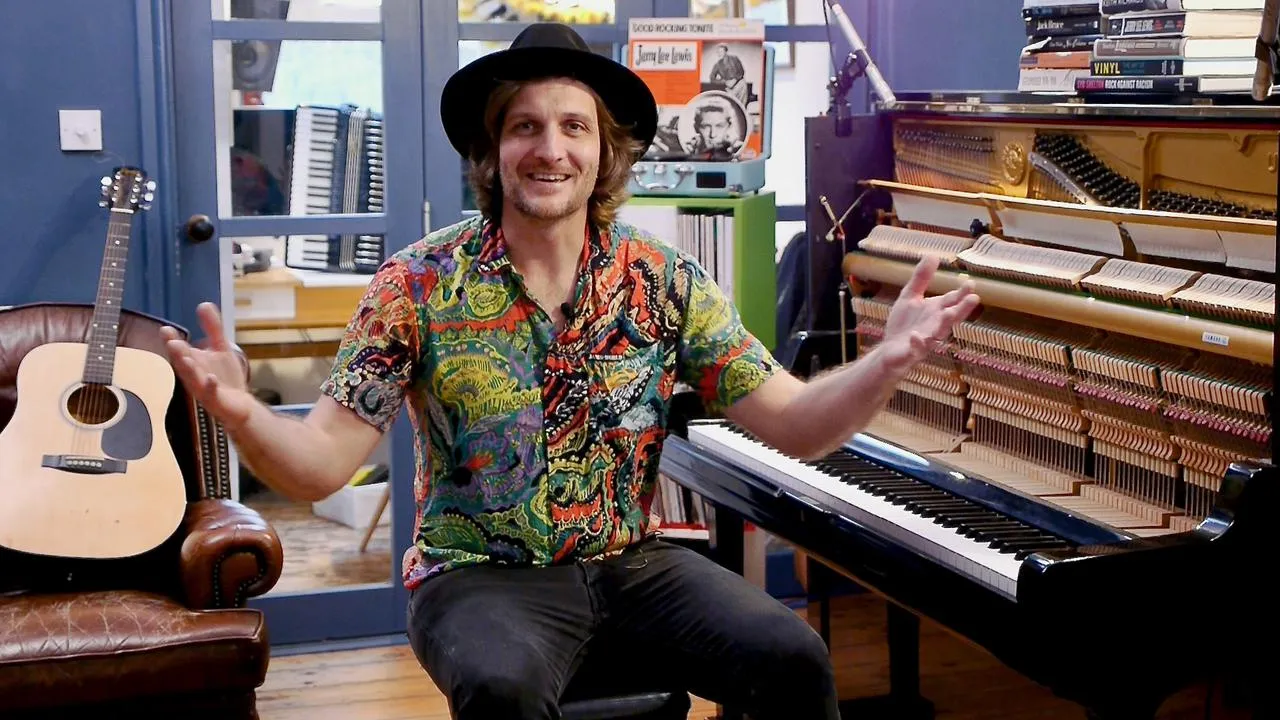
Das steckt im Kurs
25 Lektionen (2h 34m) · 1 gratis
Transkript der Lektion
Music Lesson: Analyzing the Solo Section
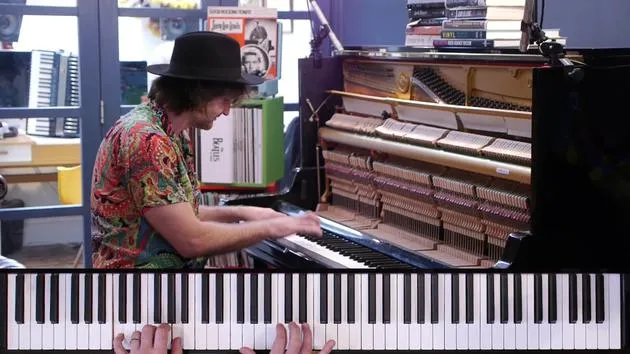
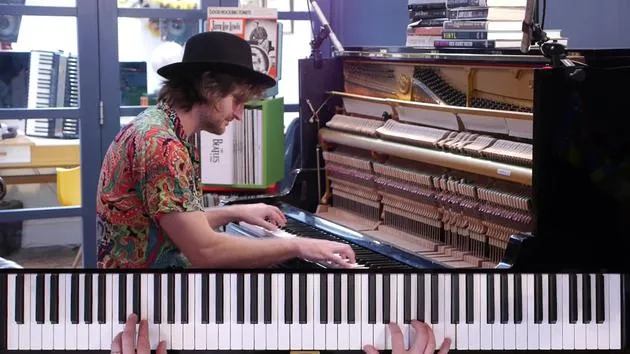
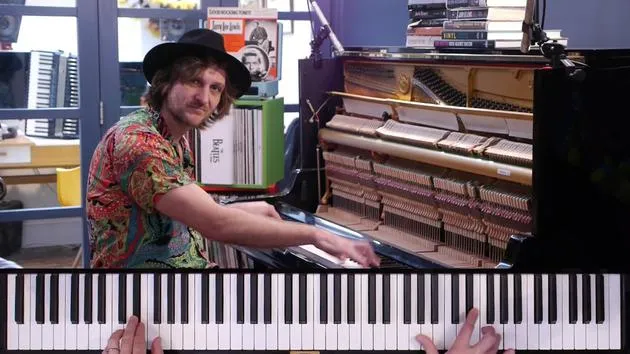
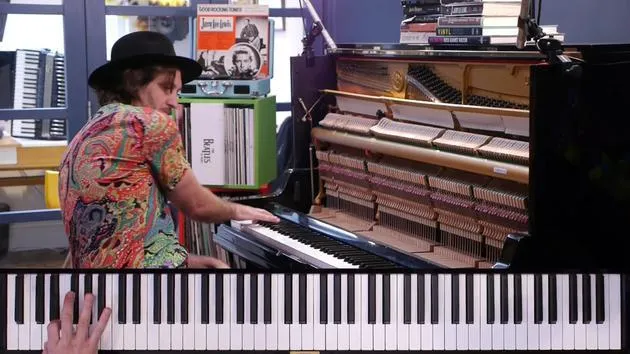
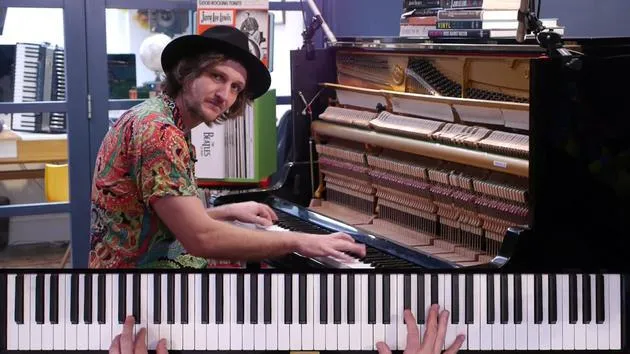
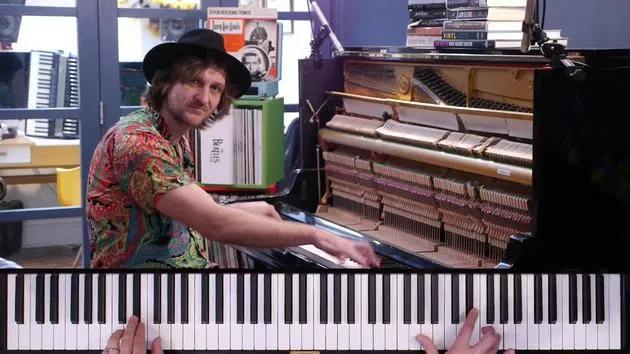
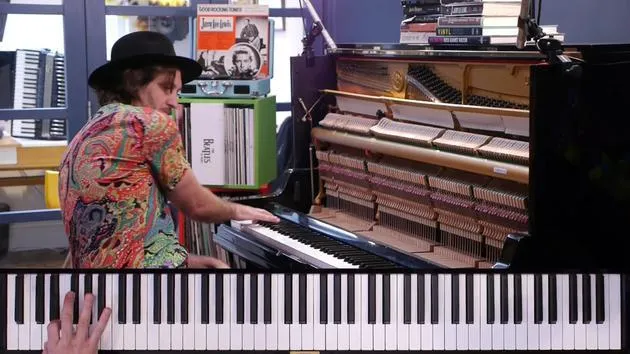
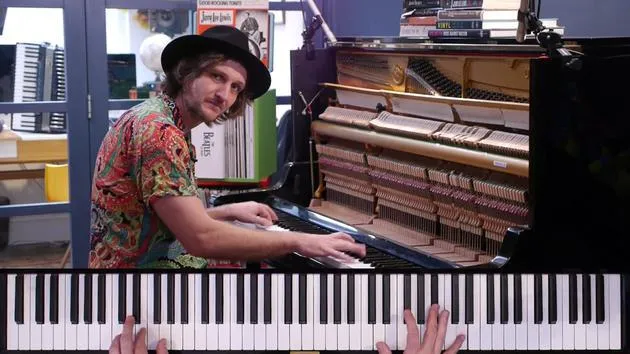
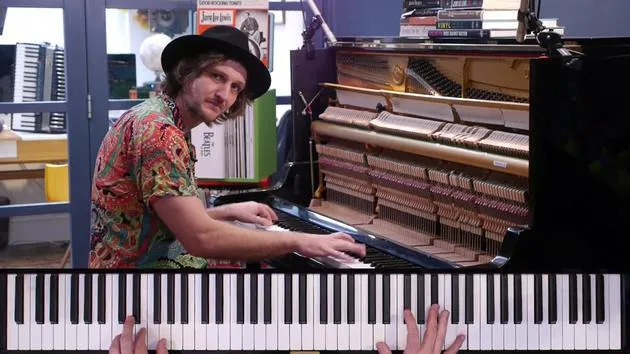
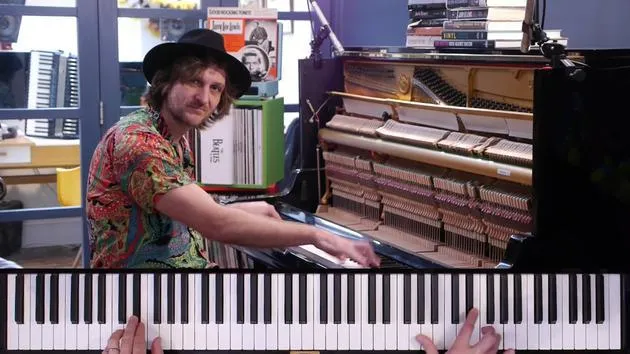
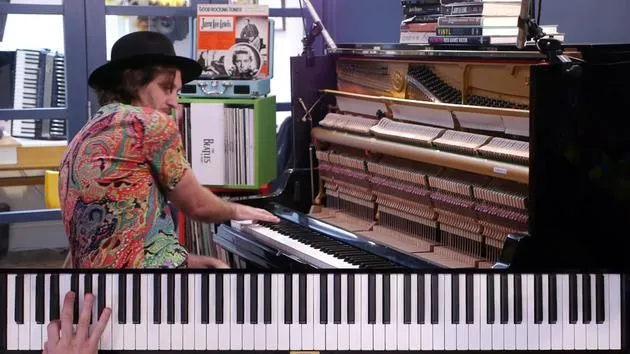
Okay, so let's look at this next solo section, which essentially is a big build on chord one.
Chord Build and Transition
- Chord Seven: He makes a seventh chord and really sort of explodes into chord four with some cool ideas.
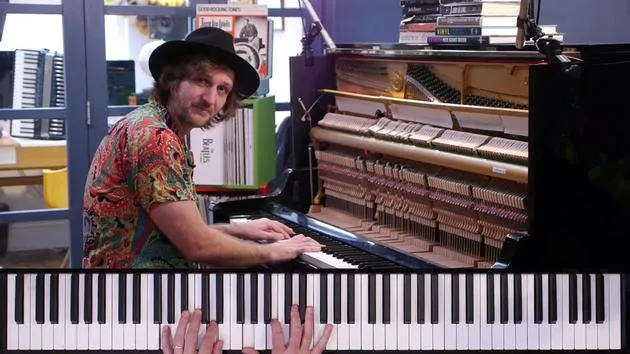
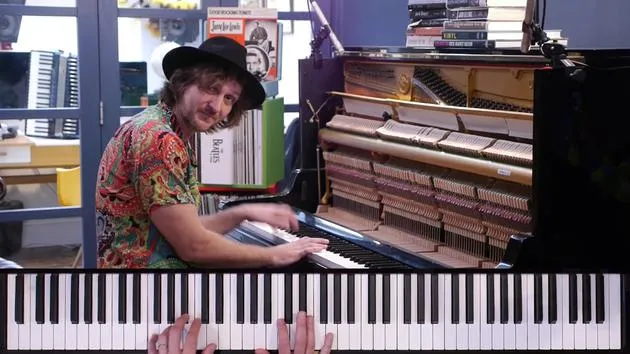
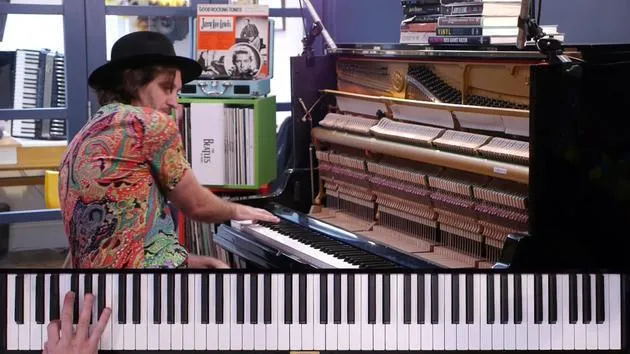
- First Playthrough: I'll play it for you once, and then I'll break it down so you can learn it note for note. We'll break that down even further so you can look at the individual ideas and develop your own improvisations using them.
Here we go: 2, 1, 2, 3, 4.
And then he's into another verse.
Breakdown of the Section
What have we got?
- Build Up: We've got a big build, or maybe he goes to the seventh.
- Recording Insight: On the recording, he may sort of hit that circumstance, maybe by mistake. We don't know. It doesn't matter, because it's all about the energy and the vibe, which again sort of recalls the introduction.
Whether that's conscious or not, who knows?
Glissandi Technique
It almost sounds there that he was actually going to go for one of those notes, because he starts it, but instead opts for the glissando.
So, then he does that.
- He either voices it like that, or it might just be,
- I sort of naturally put that D on the top.
Again, it doesn't particularly matter for the vibe of the solo, as long as it's all played with the right attitude.
Important Tips for Performance
- Glissandi: Make sure with the glissandi that you get right to the top of the piano. It's almost accelerating as it goes as well.
- Repeated Notes: Here, that last one he plays a little quicker to give him time to get up to the top.
Previously it's:
- One, two, three.
- This one just anticipates it.
Final Rundown
So, the rundown at the end is essentially kind of going down a sort of G minor 6.
- 2, 3.
- He's alternating between that third to that.
Then it's the same thing all the way down. You could carry that on.
Practice Guidance
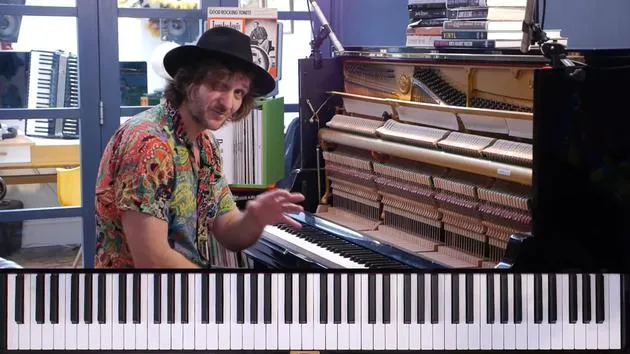
So, yeah, you can practice that bit by:
- Essentially using two hand positions with that little run up to it:
- 2, 3, 1, 2, 3, 4.
- 2, 2, 3, 4.
And into the thing.
For me, that's just a really hip thing.
Left Hand Technique
In fact, on the left hand there, he's playing octaves not.
25 Lektionen
2 Std. 34 Min. strukturierte Videolektionen
Erweiterte Videofunktionen
Verlangsamen, Passagen loopen, mitlesen
Handy, Tablet & Desktop
Üben, wo du willst
100 % Zufriedenheitsgarantie
30 Tage Geld-zurück-Garantie
Lern deinen Guru kennen
Lern deinen Guru kennen
Paddy Milner gilt als einer der besten Blues-Pianisten der Welt – derzeit ist er der Stammkeyboarder von Sir Tom Jones, nach mehreren Jahren an der Seite des großartigen, verstorbenen Jack Bruce –, aber er ist auch ein hervorragender eigenständiger Songwriter und ein unverwechselbarer Sänger. Lies einfach das Lob von Größen wie Dave Brubeck weiter unten! Sein Spiel war auf dem Soundtrack des Kinohits 'Rocketman' von 2019 zu hören.
Zweimal wurde er bei den British Blues Awards als bester Keyboarder ausgezeichnet, und als Gründungsmitglied der Ronnie Scott's Blues Explosion hat er eine langjährige Residency im weltberühmten Club Ronnie Scott's.
Seine aktuelle Band LONDONOLA spielt selbst geschriebene britische Musik mit einer kräftigen Portion New-Orleans-Geist, und sein gemeinsames Projekt JAWBONE geht seit der Veröffentlichung des gleichnamigen Debütalbums von Stärke zu Stärke.
- „Ich liebe es... da ist einer, der wirklich Klavier spielen kann" - Dave Brubeck
- „Ich kann es nur wärmstens empfehlen. Irgendwie fängt alles an, sich viel besser anzufühlen!" - Jack Bruce
- „Der beste Blues-Pianist Europas..." - Blues Access, USA
- „Beeindruckend und originell" - The Times
- „Blendend" - The Independent
In seinen Kursen zerlegt Paddy den authentischen Blues-Shuffle, Slow Blues, Boogie-Woogie, Rock 'n' Roll und das New-Orleans-Piano – bis hin zu drei klassischen Boogie-Woogie-Songs –, damit du diese Stile bei einem der Allerbesten des Fachs lernst.







