



Western-Swing-Soli
Mit
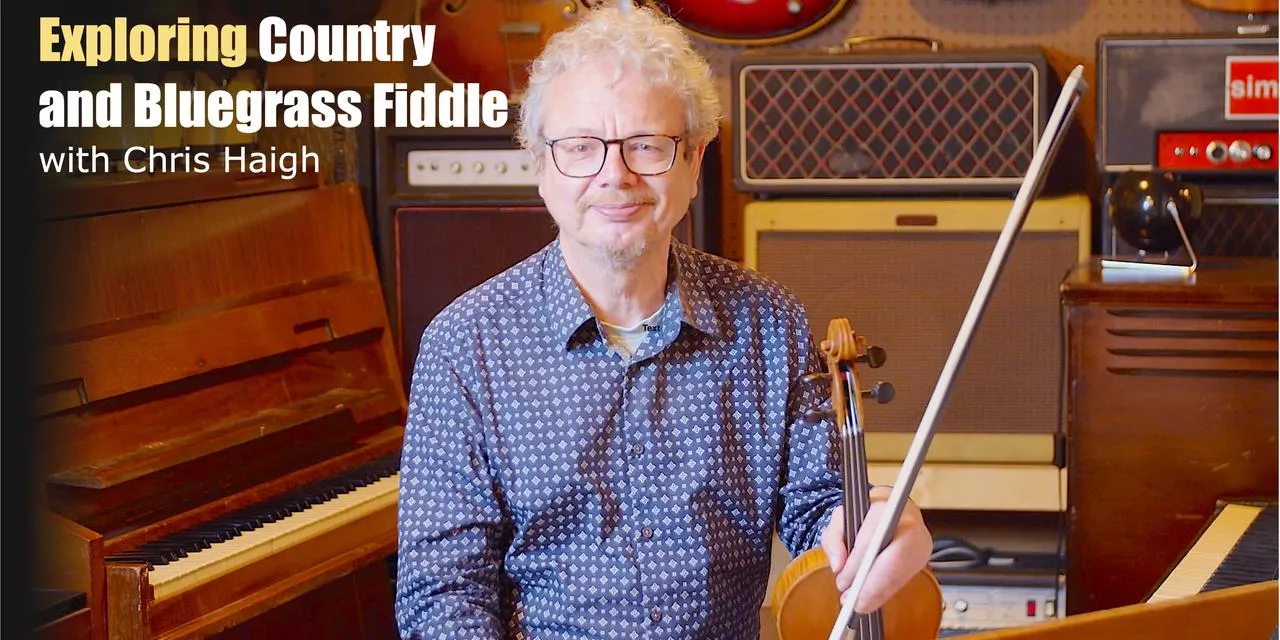
Chris HaighChris Haigh zeigt, wie du die Dramatik und die improvisierten 'Hot Jazz'-Soli des Western Swing im Stil von Bob Wills in dein Fiddle-Spiel bringst.
Das steckt im Kurs
25 Lektionen (1h 30m) · 1 gratis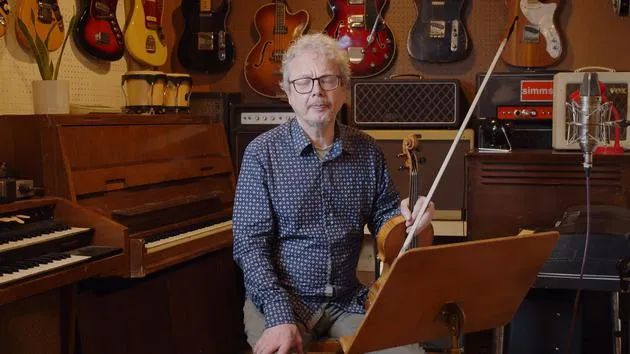
01. Der Georgia Shuffle
5:42
02. Whiskey Before Breakfast (Performance)
0:44
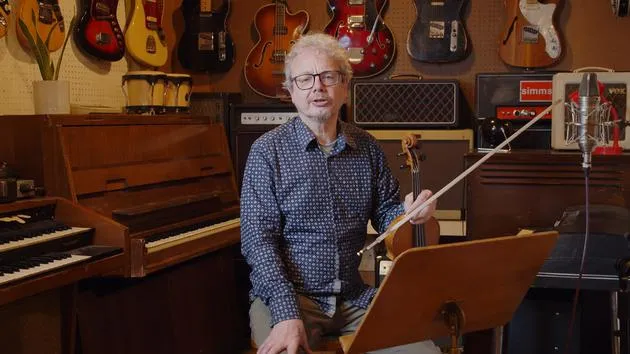
03. Double Stops in Wednesday Night Waltz
8:34
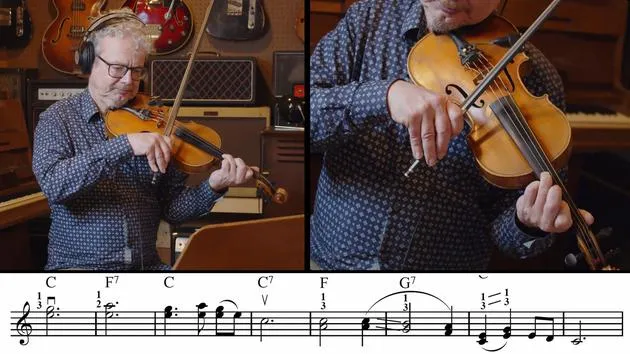
04. Wednesday Night Waltz (Performance)
0:54
05. Mehr Doppelgriffe: Cheatem County Breakdown
4:06
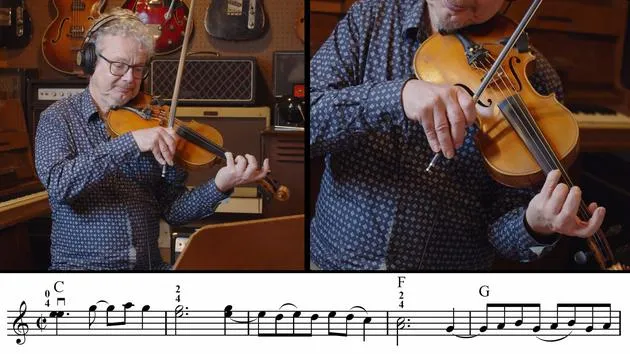
06. Cheatem County Breakdown (Darbietung)
0:44
07. Singende Cowboys: Yellow Rose of Texas
5:34
08. Yellow Rose of Texas (Vortrag)
0:22

01. Western Swing: Beaumont Rag
9:50
02. Beaumont Rag (Interpretation)
1:12
03. Bob Wills - Red River Valley
5:25
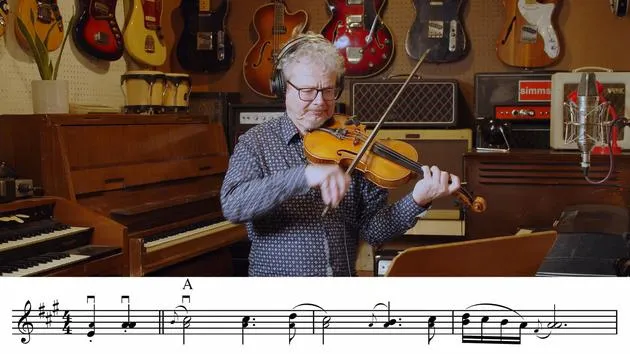
04. Red River Valley (Performance)
0:33

05. Twin Fiddling: Tonleiter, Goodbye Liza Jane
3:35
06. Western-Swing-Soli
Du bist hier5:06
07. Goodbye Liza Jane (Solo-Performance)
1:17
08. Western-Swing-Licks
9:19
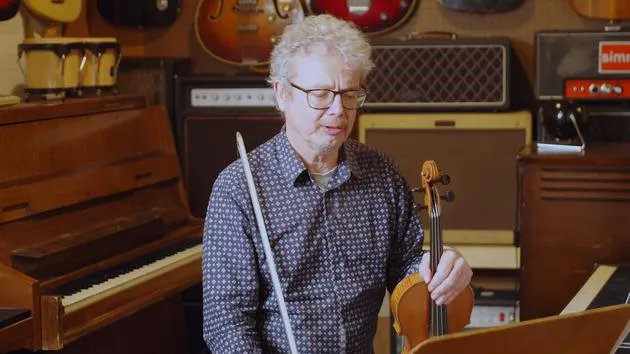
09. Girl I Left Behind Me (Solo-Durchgang)
2:33
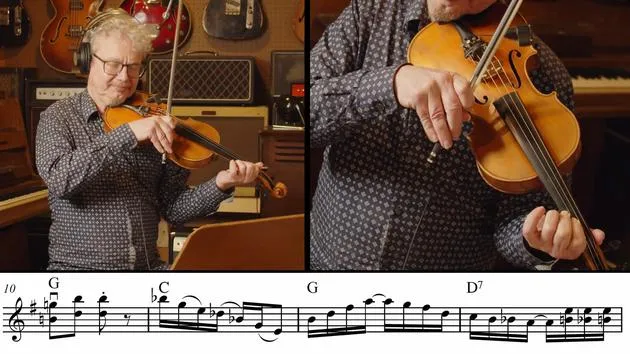
10. Girl I Left Behind Me (Solo-Performance)
0:28


Transkript der Lektion
Western Swing Soloing Lesson
Hi, everyone!
In this lesson, we're going to look at Western swing soloing. This is the hot jazz improvised soloing that the other fiddlers would do in Bob Wills' band.
The Dramatic Nature of Western Swing
Western swing gets really exciting and challenging because Bob Wills expected his soloists to be dramatic and to always surprise him. There's a story that he was quite a demanding band leader; he once told off one of his pedal steel players for not being exciting enough. In response, the pedal steel player threw his instrument off the stage and said, "Was that exciting enough?" before leaving the band.
Key Characteristics of Western Swing Fiddling
- Dramatic Soloing: Fiddlers must incorporate musical tricks to create tension and excitement.
- Expression: The essence lies in surprising the audience with every solo.
Approaches to Soloing
In this lesson, we'll look at three approaches:
- Using the Major Blues Scale
- Using Scales and Arpeggios
- Using Specific Licks or Riffs
1. Major Blues Scale
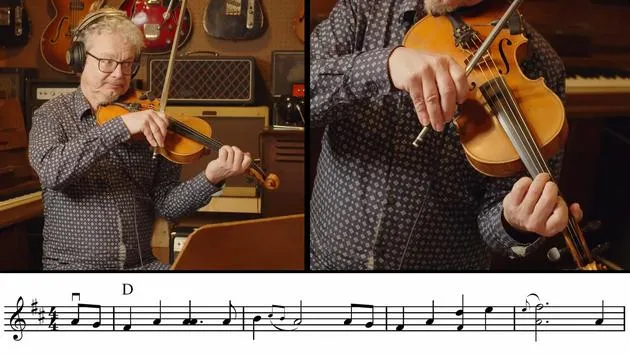
Let's start with the major blues scale, which for D major sounds like this.
Note: I won't go into detail about explaining the major blues scale, as I have many videos on my YouTube channel, The Fiddle Channel, dedicated to this topic.
This scale forms the basis of a lot of country music improvisation.
Example with Chain Bowing
The first example involves using chain bowing to make it swing:
I'll play it again.
1, 2, 3, 4...
This approach works over the D major chord and also the 4 and 5 chords, giving you that bluesy feel. Any phrase created using this scale will work fine.
Instead of merely going up and down the scale, try different parts of the scale to develop a phrase.
Here's another example:
I'll play it again.
1, 2, 3, 4...
Notice the swinging bowing. We have that rhythmic element, da ba da ba da ba da, implemented with chain bowing, and there's a bit of syncopation at the end of the phrase.
2. Scales and Arpeggios
As another approach, rather than using a single scale, you can utilize scales and arpeggios for the individual chords.
- For a D major chord, you could either go up a scale or an arpeggio.
- For an A major chord or a G chord, you can apply the same technique.
This method allows for greater flexibility when transitioning between chords.
Example with Multiple Chords
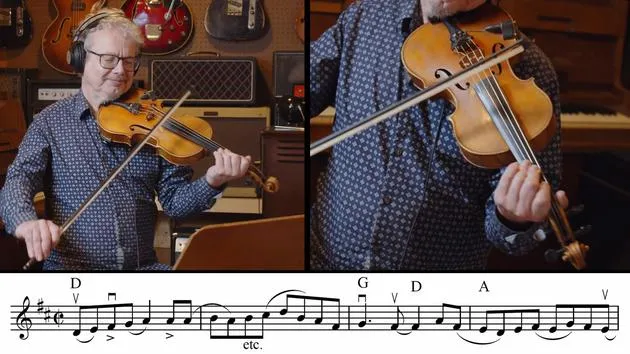
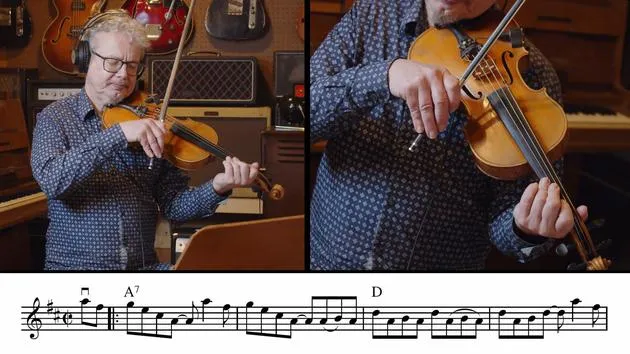
Here's a phrase that goes through three different chords and incorporates both scales and arpeggios:
I'll play it again.
1, 2, 3, 4...
3. Licks or Riffs
Lastly, rather than completely improvising, consider using licks or riffs that you have learned and prepared earlier. These often provide the dramatic ideas needed for soloing.
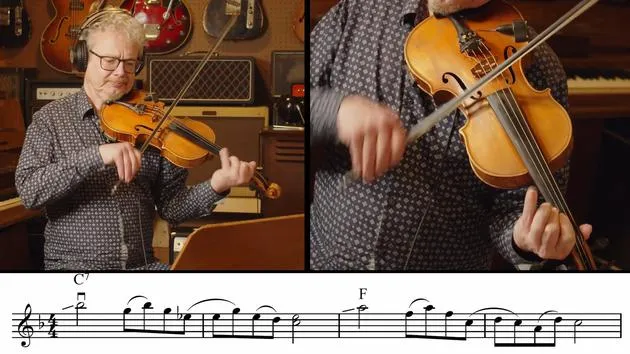
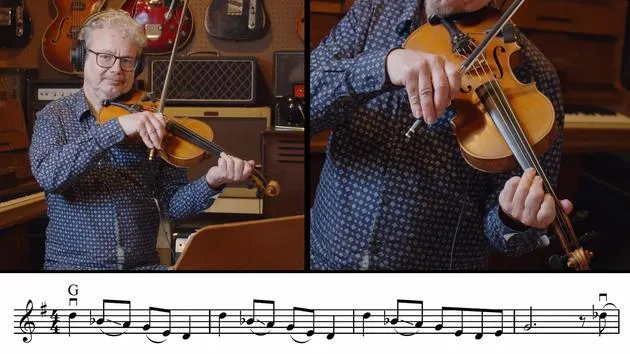
Here's a lick in G:
We're going from an E to A to B flat, which is a big jump and a surprise.
When you learn a lick like this, try to transpose it to different keys. For instance, the same lick in D sounds like this:
Here it is in D...
As I mentioned, it's essential to learn licks not just for a single tune, but memorizing them allows you to use them whenever needed, regardless of the tune or key.
Assignment
Your assignment is to use the backing track for Red River Valley and try to work out little bits of solos that utilize these three approaches:
- The major blues scale
- Scales and arpeggios
- One or two riffs that you may already know or try the one we just covered.
Happy practicing!
25 Lektionen
1 Std. 30 Min. strukturierte Videolektionen
Erweiterte Videofunktionen
Verlangsamen, Passagen loopen, mitlesen
Handy, Tablet & Desktop
Üben, wo du willst
100 % Zufriedenheitsgarantie
30 Tage Geld-zurück-Garantie
Lern deinen Guru kennen
Lern deinen Guru kennen
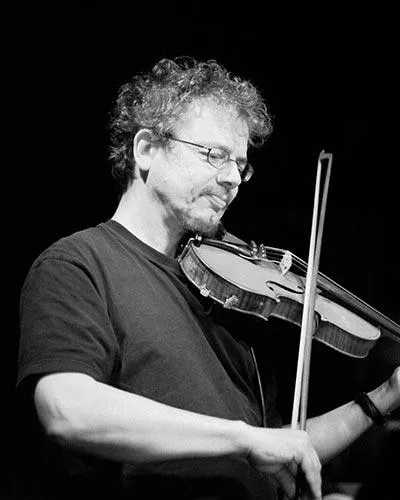
Chris Haigh ist seit 25 Jahren professioneller Fiddle-Spieler mit Erfahrung in vielen verschiedenen Genres. Er hat auf über 75 Alben gespielt und dabei mit Künstlern wie Alison Moyet, Bob Geldof, All About Eve, Michael Ball, David Soul, Oumou Sangare, The Quireboys, Riverdance, Morcheeba, James Galway und Steps zusammengearbeitet.
Er hat Swing-Jazz mit The Kimbara Brothers, Diz Disley, Le Jazz, The Hot Club of London und den Quecumbar Allstars gespielt und leitet die siebenköpfige sowjetische Swing-Band The Kremlinaires.
Chris gibt Unterricht und Workshops zur Jazzgeigen-Technik und hat Jazzgeige an den Universitäten Middlesex, Brunel und Newcastle sowie am Truro College unterrichtet. Zu seinen Veröffentlichungen zählen neun Fiddle-Bücher, darunter The Fiddle Handbook.
Außerdem betreibt er Fiddling Around (fiddlingaround.co.uk), vermutlich die umfassendste und meistbesuchte Quelle für Fiddle-Wissen im Netz.







