



Mehr Doppelgriffe: Cheatem County Breakdown
Mit
Chris HaighNimm dir die Doppelgriffe auf der Fiddle über Cheatem County Breakdown vor und stütze dich dabei auf Arthur Smiths Stil des zweiten über dem vierten Finger und sein synkopiertes Feeling.
Das steckt im Kurs
25 Lektionen (1h 30m) · 1 gratis
01. Der Georgia Shuffle
5:42
02. Whiskey Before Breakfast (Performance)
0:44
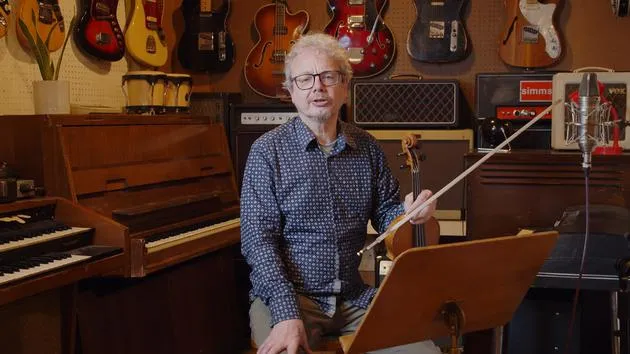
03. Double Stops in Wednesday Night Waltz
8:34
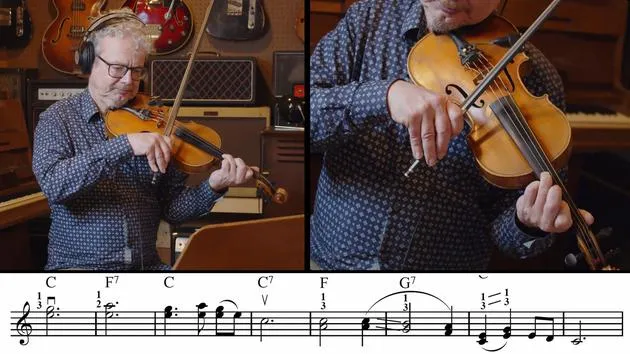
04. Wednesday Night Waltz (Performance)
0:54
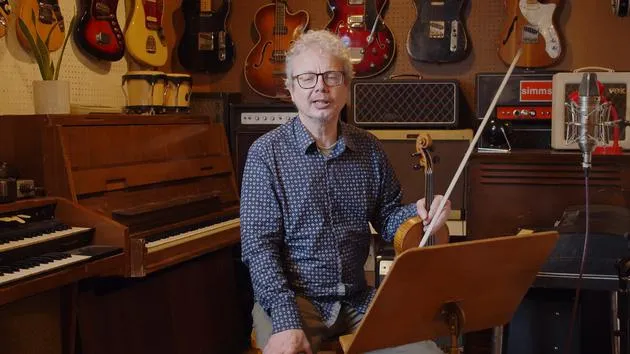
05. Mehr Doppelgriffe: Cheatem County Breakdown
Du bist hier4:06
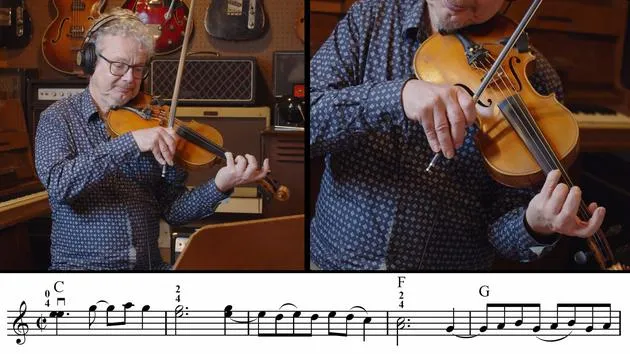
06. Cheatem County Breakdown (Darbietung)
0:44
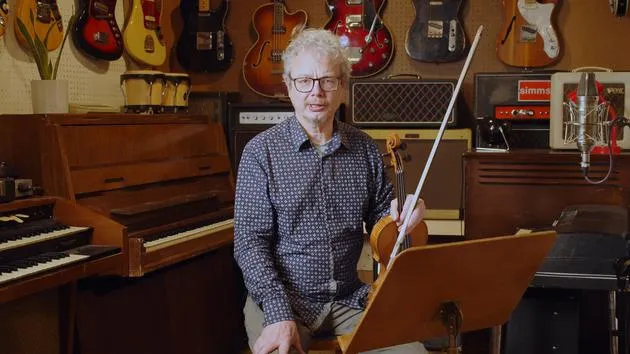
07. Singende Cowboys: Yellow Rose of Texas
5:34
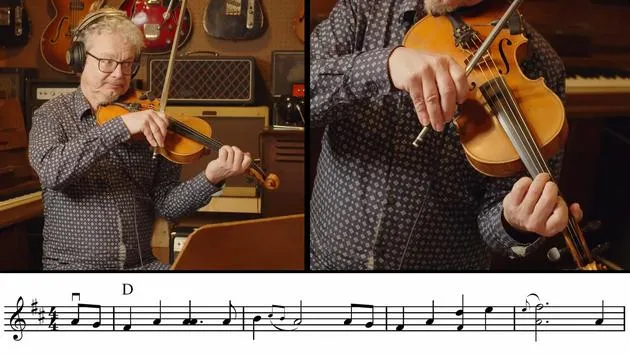
08. Yellow Rose of Texas (Vortrag)
0:22
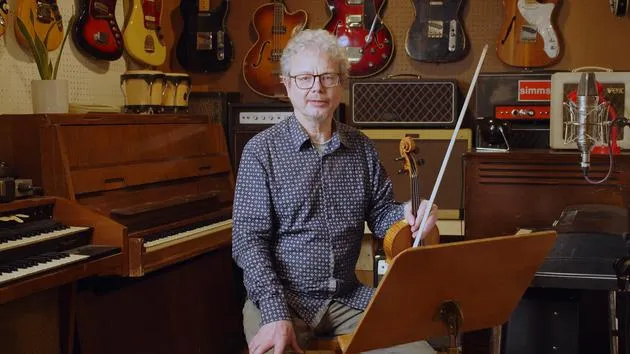
01. Western Swing: Beaumont Rag
9:50
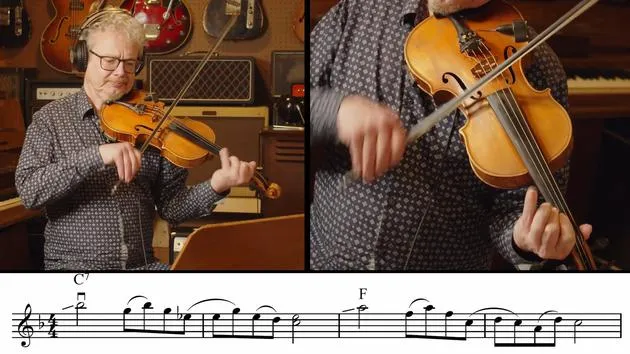
02. Beaumont Rag (Interpretation)
1:12
03. Bob Wills - Red River Valley
5:25
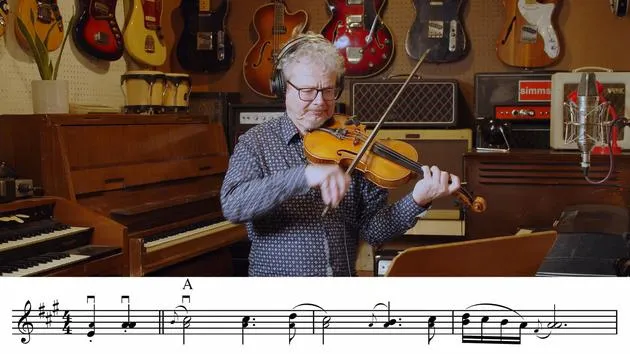
04. Red River Valley (Performance)
0:33
05. Twin Fiddling: Tonleiter, Goodbye Liza Jane
3:35
06. Western-Swing-Soli
5:06
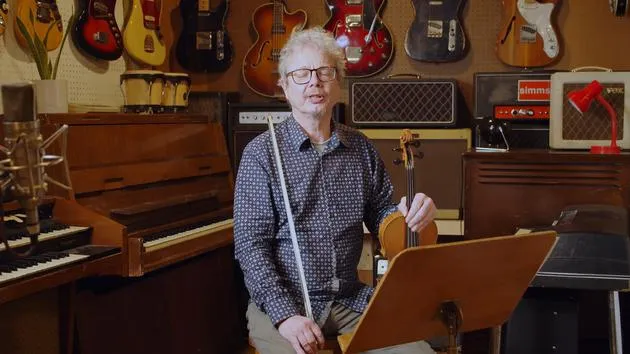
07. Goodbye Liza Jane (Solo-Performance)
1:17
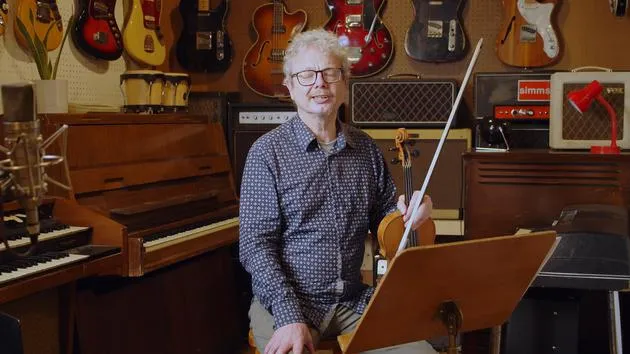
08. Western-Swing-Licks
9:19
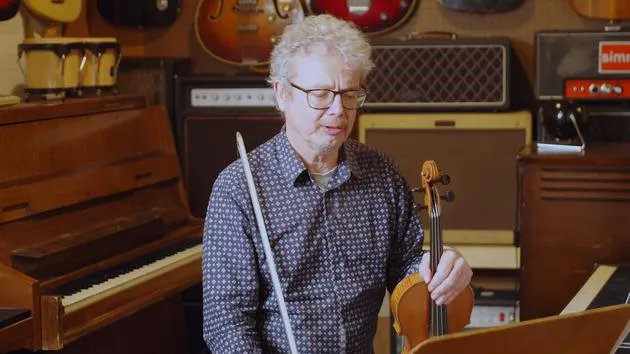
09. Girl I Left Behind Me (Solo-Durchgang)
2:33
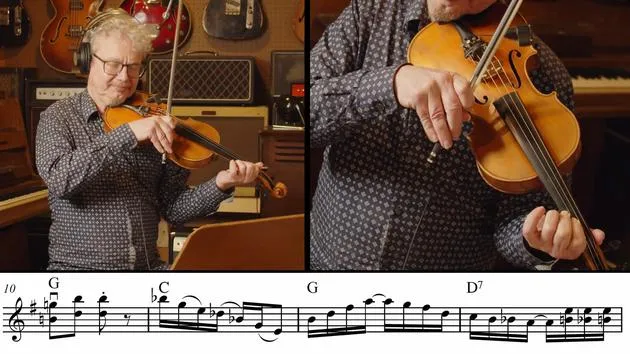
10. Girl I Left Behind Me (Solo-Performance)
0:28
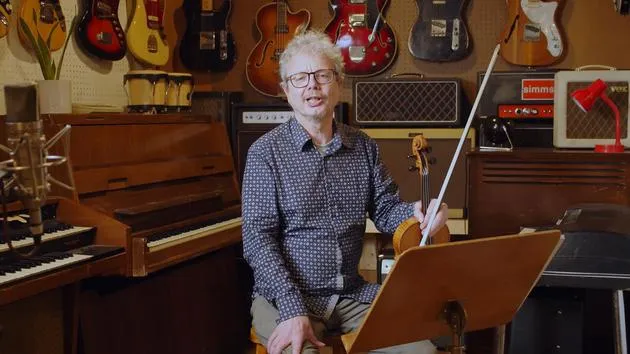
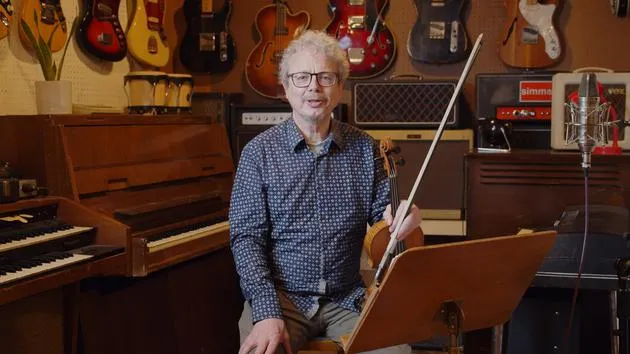
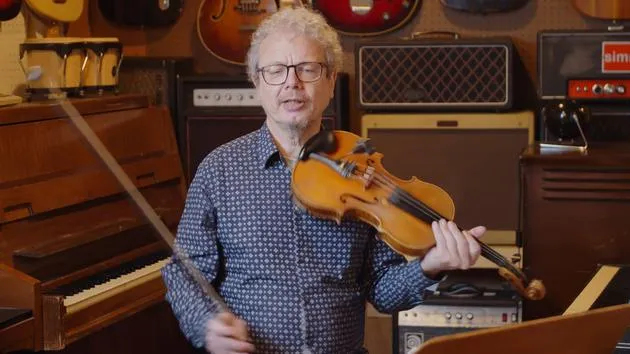
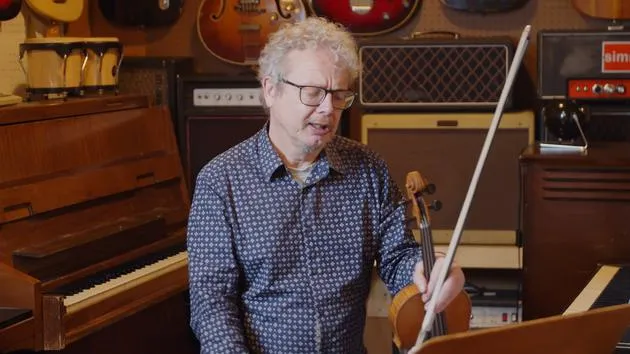
Transkript der Lektion
Music Lesson: Double Stops in American Fiddling
Hello! In this lesson, we're going to look at more double stops. I have to say that double stops are where a lot of the challenge of American fiddling lies.
Spotlight on Arthur Smith
We're going to examine the playing of Arthur Smith, often referred to as "Fiddling Arthur Smith." He was one of the early stars of the Grand Ole Opry, making his debut in 1927, and he was particularly skilled in double stops.
The Tune: Cheetham County Breakdown
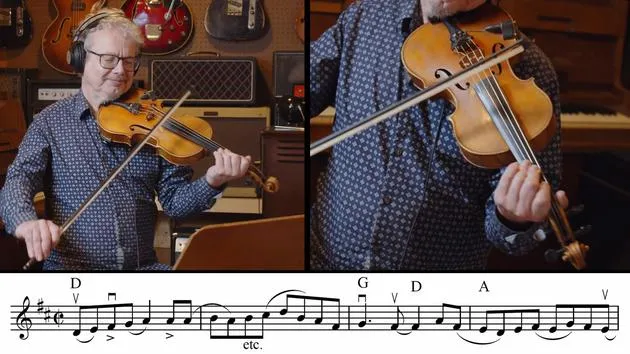
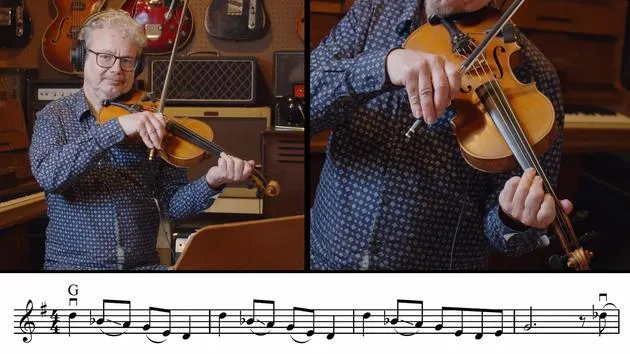
One of the tunes we're going to play, which featured prominently in his performances, includes a whole load of second over fourth finger combinations.
- Second Finger: Goes down first
- Fourth Finger: Then placed on the string
Stretch and Positioning
You may find that your fourth finger interferes with the second finger when playing on the E string. If this happens, you'll need to adjust your hand position to ensure it's at the right angle.
Another Common Technique
We also have open over four, which is another prevalent technique in American fiddling.
- The open E string and the fourth finger play the same note simultaneously.
Again, it's crucial to have your hand positioned well so that your finger is pointing straight down, avoiding any unwanted sounds.
Playing the Tune
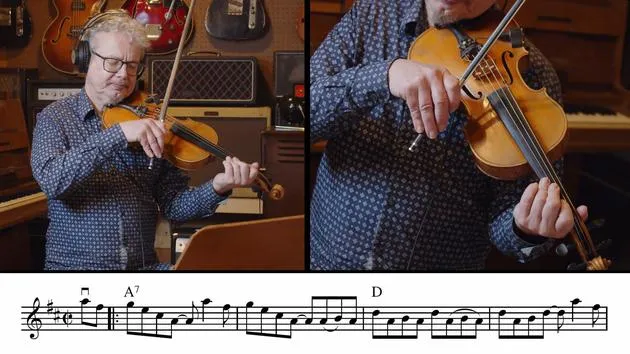
Let's go straight into the tune, Cheetham County Breakdown.
Cheetham County, which can be spelled in various ways, is actually named after a county just west of Tennessee.
I'm going to play this tune nice and slow, and we'll follow with some backing:
- Count: 1, 2, 3, 4.
Important Elements
- You'll notice that not only do we have these double stops, but there is also a significant amount of syncopation in this tune, which is something we've already covered.
Practice Exercise
Now, let's try the same thing, but this time slightly faster and with backing.
For your assignment in this lesson:
- Go back over some of the tunes we've covered and play slow versions while creating some double stops.
- Focus on finding either open over fourth or second over fourth harmonies like we've practiced.
Happy fiddling!
25 Lektionen
1 Std. 30 Min. strukturierte Videolektionen
Erweiterte Videofunktionen
Verlangsamen, Passagen loopen, mitlesen
Handy, Tablet & Desktop
Üben, wo du willst
100 % Zufriedenheitsgarantie
30 Tage Geld-zurück-Garantie
Lern deinen Guru kennen
Lern deinen Guru kennen
Chris Haigh ist seit 25 Jahren professioneller Fiddle-Spieler mit Erfahrung in vielen verschiedenen Genres. Er hat auf über 75 Alben gespielt und dabei mit Künstlern wie Alison Moyet, Bob Geldof, All About Eve, Michael Ball, David Soul, Oumou Sangare, The Quireboys, Riverdance, Morcheeba, James Galway und Steps zusammengearbeitet.
Er hat Swing-Jazz mit The Kimbara Brothers, Diz Disley, Le Jazz, The Hot Club of London und den Quecumbar Allstars gespielt und leitet die siebenköpfige sowjetische Swing-Band The Kremlinaires.
Chris gibt Unterricht und Workshops zur Jazzgeigen-Technik und hat Jazzgeige an den Universitäten Middlesex, Brunel und Newcastle sowie am Truro College unterrichtet. Zu seinen Veröffentlichungen zählen neun Fiddle-Bücher, darunter The Fiddle Handbook.
Außerdem betreibt er Fiddling Around (fiddlingaround.co.uk), vermutlich die umfassendste und meistbesuchte Quelle für Fiddle-Wissen im Netz.







