



Bob Wills - Red River Valley
Mit
Chris HaighChris Haigh stellt Bob Wills und die Western-Swing-Fiddle vor und nutzt Red River Valley, um das heiße, jazzig gefärbte Solospiel hinter dem Stil zu erkunden.
Das steckt im Kurs
25 Lektionen (1h 30m) · 1 gratis
01. Der Georgia Shuffle
5:42
02. Whiskey Before Breakfast (Performance)
0:44
03. Double Stops in Wednesday Night Waltz
8:34
04. Wednesday Night Waltz (Performance)
0:54
05. Mehr Doppelgriffe: Cheatem County Breakdown
4:06
06. Cheatem County Breakdown (Darbietung)
0:44
07. Singende Cowboys: Yellow Rose of Texas
5:34
08. Yellow Rose of Texas (Vortrag)
0:22
01. Western Swing: Beaumont Rag
9:50
02. Beaumont Rag (Interpretation)
1:12
03. Bob Wills - Red River Valley
Du bist hier5:25
04. Red River Valley (Performance)
0:33
05. Twin Fiddling: Tonleiter, Goodbye Liza Jane
3:35
06. Western-Swing-Soli
5:06
07. Goodbye Liza Jane (Solo-Performance)
1:17
08. Western-Swing-Licks
9:19
09. Girl I Left Behind Me (Solo-Durchgang)
2:33
10. Girl I Left Behind Me (Solo-Performance)
0:28
Transkript der Lektion
Bob Wills and Western Swing Fiddle Playing
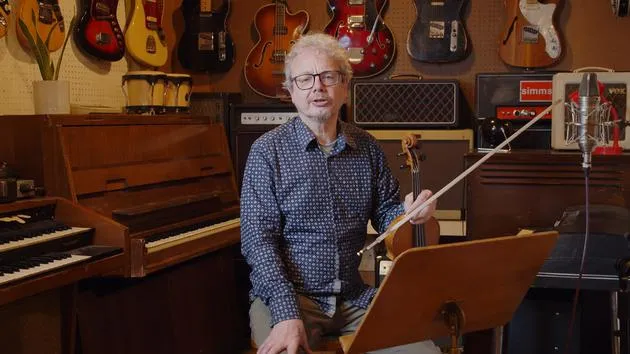
Now we've mentioned that Bob Wills was probably the key performer and band leader in Western Swing, and he was himself a fiddle player. However, a lot of people don't realize that you hear a lot of hot, swinging jazz solos from the fiddle in Western Swing.
Bob Wills' Role in Fiddle Playing
- Old Fashioned Ranch Dance Fiddler: Bob Wills was known for his particular western style, but he didn't play any of the jazz solos.
- Collaborative Solos: The solos were performed by other fiddle players that he brought into the band. They would often play two fiddles together on stage, but the soloing would be from another fiddle player.
Bob Wills' Unique Fiddle Style
Bob Wills himself had a very particular style of fiddle playing that is well worth studying, learning, and replicating. Let's explore some of the features of his fiddle playing:
-
Melodic Playing: When playing actual melodies, particularly old western melodies, it was usually Bob who would play them himself. An example of this is Red River Valley, although he had many traditional tunes he would perform.
-
Techniques Used:
- Open string drones
- Forefinger and open string double notes
- Hammer-ons
For instance, in a slow melody:
- A C# note would be preceded by a first finger,
- A B note would be preceded by an open A, which are examples of what we call hammer-ons.
Exploring "Red River Valley"
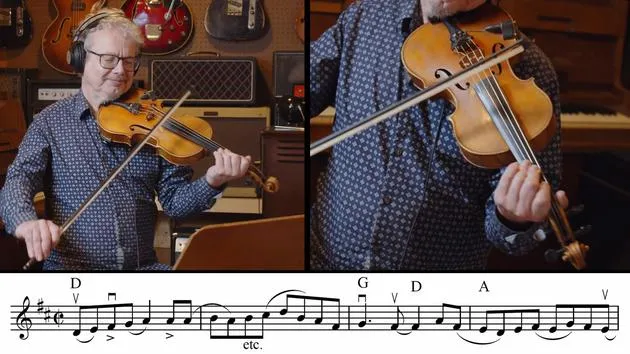
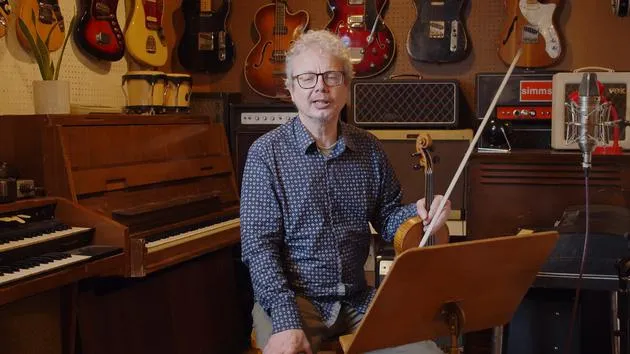
Let's go through the basic tune of Red River Valley, and then examine how to add distinctive elements to it.
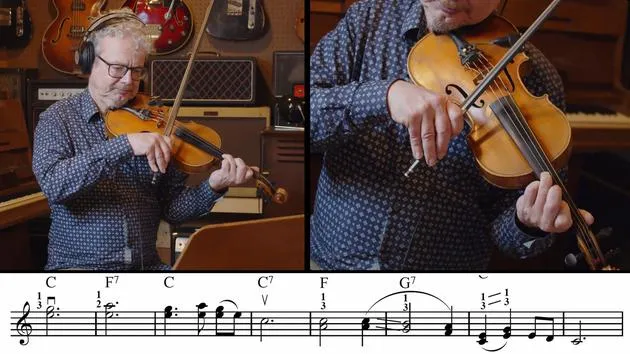
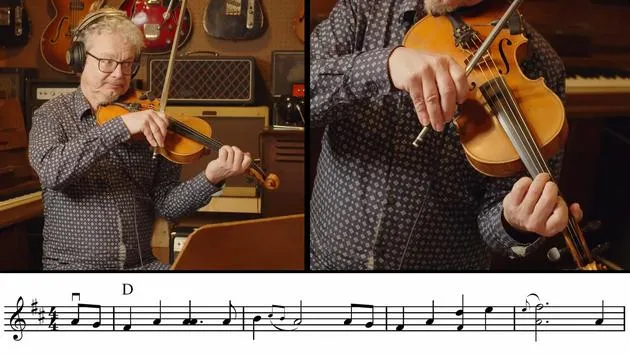
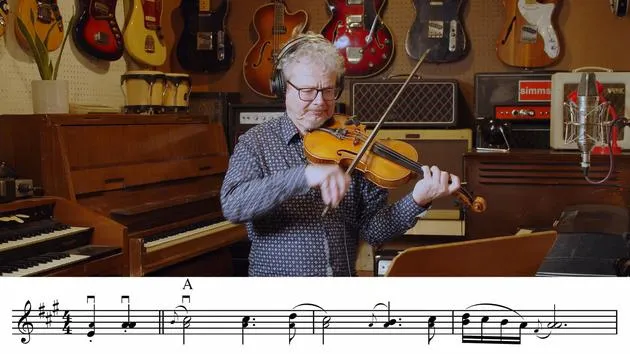
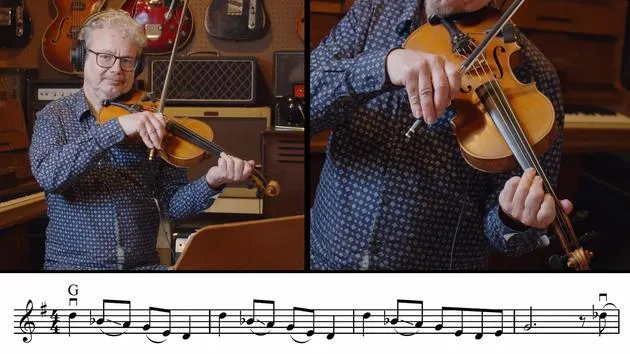
The melody goes like this:
Now, as usual with this kind of tune, when you play it just like that, it sounds okay , a recognizable melody , but it doesn't sound very Western. So, it's what we add onto this tune that's important.
Adding Depth to the Melody
-
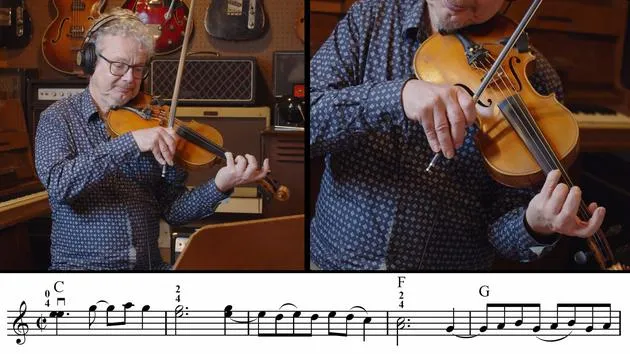
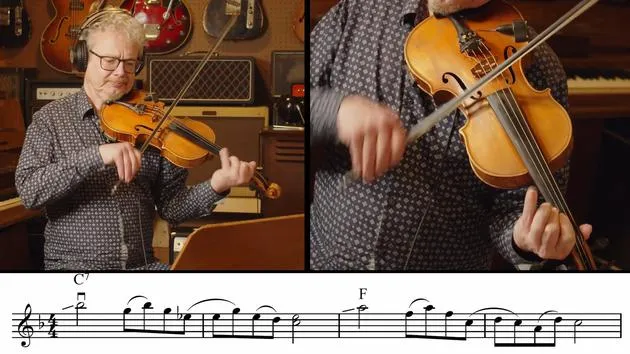
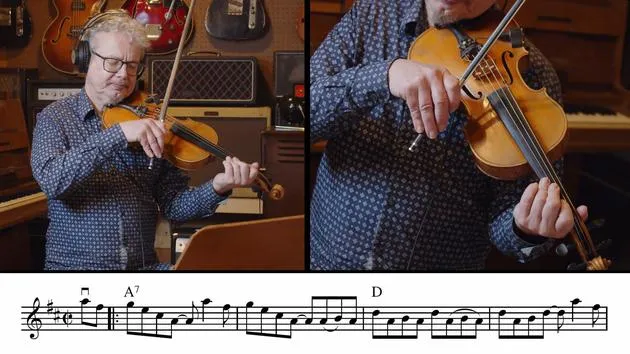
Start with a Drone:
- An open A drone over the E.
- Use the fourth finger, playing two to double the A, while keeping that fourth finger on.
-
Hammer-ons and Grace Notes:
- Hammer on first finger, second finger and keep the fourth finger on through the next couple of notes.
- Incorporate little grace notes.
This section can be quite tricky. Maintain the fourth finger for a big stretch, applying:
- Little double grace notes
- Hammer-ons
- Double stops
When you do it slowly and labor it like this, it might sound a bit odd, but when performed smoothly, it sounds great.
Practice it Slowly
Let's try the whole thing slowly:
One, two...
That little thing at the end is a very common way of approaching a long note. Even though it might not seem to change much, adding that flick of a note in the second bar enhances the melody a lot.
I feel that deserves a special name, which I should invent because no one else has given it a name yet. You'll notice this technique appears often in bluegrass playing and Western swing.
Assignment for This Lesson
Your assignment for this lesson is to:
- Listen to "Faded Love," which is probably the best example of Bob Wills's playing in this style.
- Compare it with Red River Valley.
- Also, try learning "Faded Love," because it's a great tune!
25 Lektionen
1 Std. 30 Min. strukturierte Videolektionen
Erweiterte Videofunktionen
Verlangsamen, Passagen loopen, mitlesen
Handy, Tablet & Desktop
Üben, wo du willst
100 % Zufriedenheitsgarantie
30 Tage Geld-zurück-Garantie
Lern deinen Guru kennen
Lern deinen Guru kennen
Chris Haigh ist seit 25 Jahren professioneller Fiddle-Spieler mit Erfahrung in vielen verschiedenen Genres. Er hat auf über 75 Alben gespielt und dabei mit Künstlern wie Alison Moyet, Bob Geldof, All About Eve, Michael Ball, David Soul, Oumou Sangare, The Quireboys, Riverdance, Morcheeba, James Galway und Steps zusammengearbeitet.
Er hat Swing-Jazz mit The Kimbara Brothers, Diz Disley, Le Jazz, The Hot Club of London und den Quecumbar Allstars gespielt und leitet die siebenköpfige sowjetische Swing-Band The Kremlinaires.
Chris gibt Unterricht und Workshops zur Jazzgeigen-Technik und hat Jazzgeige an den Universitäten Middlesex, Brunel und Newcastle sowie am Truro College unterrichtet. Zu seinen Veröffentlichungen zählen neun Fiddle-Bücher, darunter The Fiddle Handbook.
Außerdem betreibt er Fiddling Around (fiddlingaround.co.uk), vermutlich die umfassendste und meistbesuchte Quelle für Fiddle-Wissen im Netz.







