



Lead Sheet
James Barratt walks through the Grade 8 rock piece 'Lead Sheet', from its aggressive overdriven octave chords to the riff in F sharp.

What's in the course
43 lessons (3h 55m) · 1 free
01. Intro to Approaches to improvisation
1:00
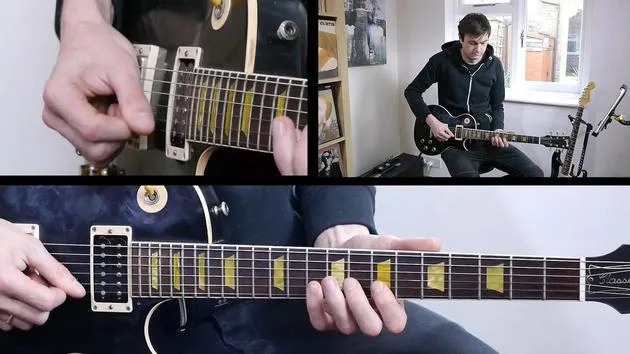
02. Embelleshing a melody
5:36

03. Challenge: Submit your melody
0:26
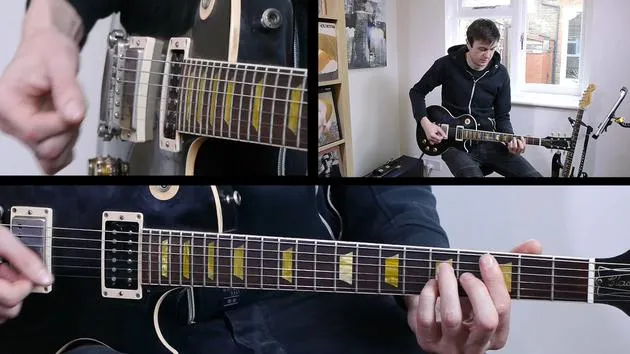
04. 7th chords
6:38

05. Composing your solo
8:53
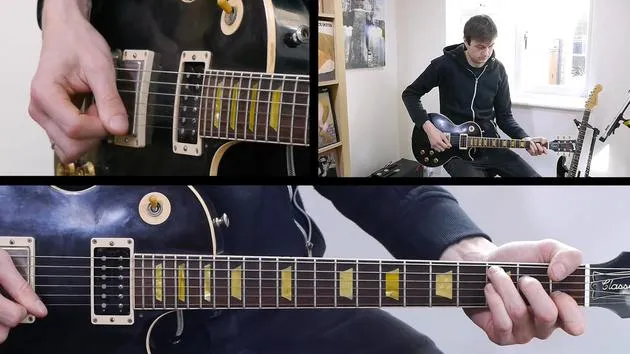
06. Advanced strumming and embellishments
5:40
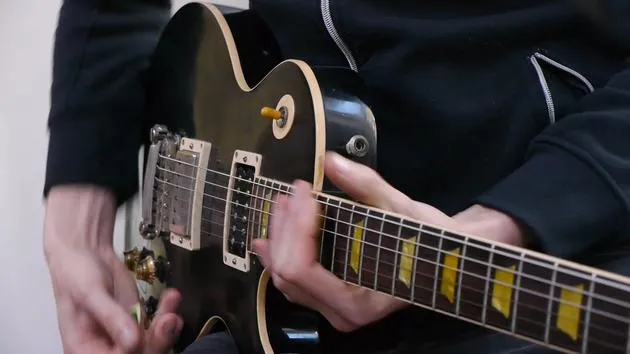
07. Comping on different music styles
8:36
08. Further extensions and sus chords
4:19
09. Mixing Rhythmic and Melodic comping
4:24


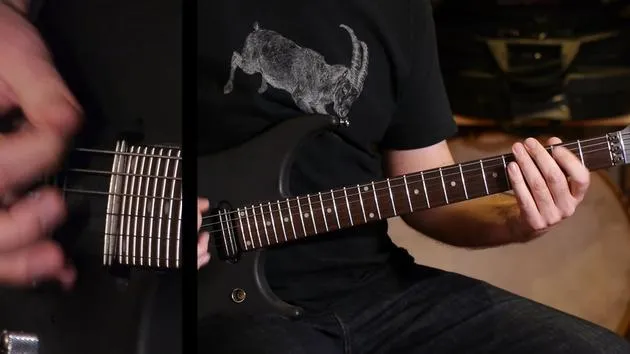














Lesson transcript
Music Lesson: Lead Sheet Breakdown
Hello, guys!
Again, we're going to check out Lead sheet. I absolutely love playing this track! This is so much fun when you get this under your fingers heavily. It's kind of Radiohead against the Machine-inspired, maybe slightly more old school stuff like Led Zeppelin. Certainly, you can hear those kinds of influence in this piece. Regardless, it's just great fun to play.
Getting Started
So stomp on that overdrive pedal and get a great gainy sound up, and let's tackle it straight away. We're coming in really aggressively. You can see the dynamic marking at the beginning of the piece: F. No surprises there; it's a rock piece.
- Opening Octave Chords: Just be nice and confident with those opening octave chords.
- Rhythm: It will be nice and tight rhythmically because the drummer is doing the same accents on the snare to start the song.
The Riff
Then you're into this really, really cool riff in F sharp. I absolutely love this! An important thing to note in this is the little staccato notes that you get. It does make a difference.
- 16th Note Rests: The little 16th note rests that they've notated in there are really important.
- Punchiness: Make sure you don't let this riff ring too much, as it can take away that punchiness.
I'll just demonstrate that: if we play it as written, with all the staccato and the note choppy bits in it, you can see what a difference having those rests and having that staccato note in the middle of that phrase makes to the kind of grooviness of this piece.
Muting and Picking
So, just be really careful with your muting and your pressure to get that staccato. I'm sure you'll have that sounding great in no time!
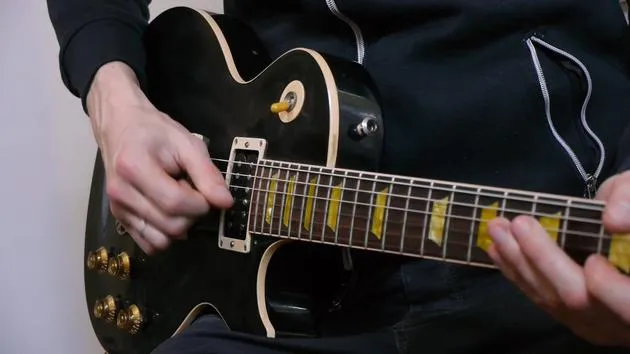
A little bit tricky picking-wise as well, actually, because you're crossing more than one string. We've got a bit of string skipping going on with the right hand, so it's something to be careful of. Make sure you're comfortable with the picking, because there are some odd rhythms in there as well.
Legato Phrases and Variations
You've got some lovely legato phrases at bar three as a variation on the riff. I actually did the first note there, where we go from the blues note down. I did it as a slide rather than a pull-off, but you can do it either way.
- Second Repeat Bar: Just be careful of that string skipping that we've got with the right hand.
Now, at B, you might be looking at the tab thinking, "What the hell is going on?" We have all sorts of squares and circles.
Tapping Techniques
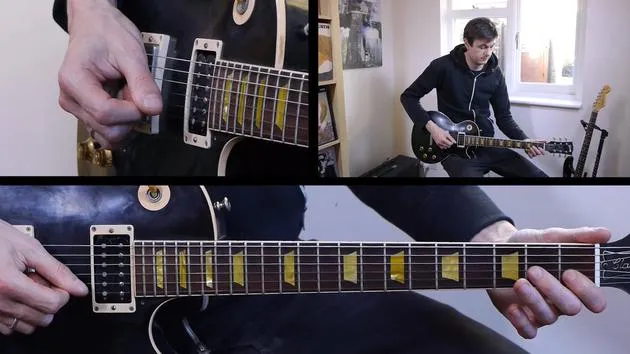
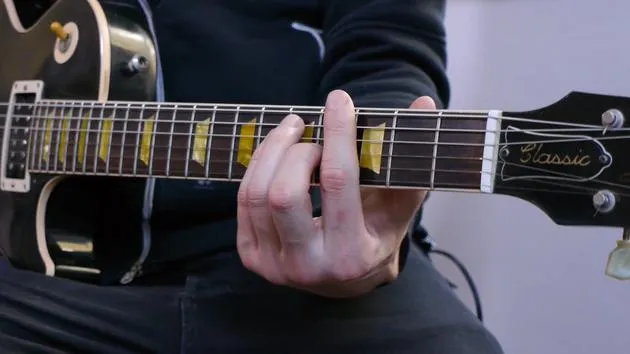
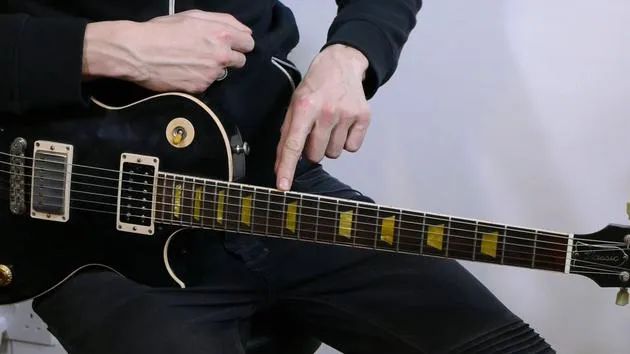
That is some tapping going on here. So any number encased in a square box tells us that we're hammering on from nowhere with our left hand.
- No Right Hand Involvement: Rather than picking those first two notes as normal with our right hand, we're actually hammering onto those strings from nowhere.
- Avoid Ringing: You've got to be really careful that the other strings don't start ringing out.
We're finishing that phrase with a circle-encased note, which is a right-hand tap. So:
- Left hammer-on
- Left hammer-on
- Right hammer-on
Continuing the Tapping
And we continue that way. No traditional picking in this section at all until we get to the very final bar before it leads into that riff. We've even got some slides going on with the tapping hand, so you've just got to be really accurate with your hammer-ons and quite aggressive too.
Important: Avoid allowing previous notes to ring through. If I leave my first and third fingers on, we kind of end up with a ringy chord, which we don't want.
Practicing Dynamics
Play, release, play the next note. Play, release the next note. So, that's perhaps something you just want to practice with, focusing on those three notes to begin with.
Varying Your Playing
Noted in the repeat of that, we're told to vary what we're playing. I did a very simple variation here. All I did was vary the rhythm, which I think is perfectly acceptable to do.
I changed it from:
- Original rhythm
- To a different rhythm.
I treated these kind of small sections of development as the second verse of a song. It still wants to be familiar, but with variations.
C Section
At the C section, we are repeating the riff note for note that we had at the beginning of the song, no changes there.
Watch Out: One little thing to look out for is that 24-bar section at bar number 18.
Guitar Solo
Now for the fun bit: the guitar solo! Depending on your persuasion, you might look at this and think, "Great, this is dead easy!" or you might think, "Oh my God, I've only got one chord to play over!"
You've just got that straightforward F sharp minor riff going on with the bass, and we're playing over it for 12 bars.
- Be Creative: You've got to be a bit creative here; you don't want it to sound boring on the second and third repeats.
- Scale Choices: Vary some of the scales you use, all based around F sharp (F sharp natural minor scale, F sharp minor pentatonic scale, etc.).
Building the Solo
It's important for your solo to build as it progresses rather than just staying in one position for 12 bars.
Note: You have access to my solo transcribed out, so you can see exactly what I did note for note.
Breakdown Section
To finish, we have this breakdown section. You've just got to really lock in with the quarter-note tempo here, as the drummer starts going off on his solo.
Final Riff
The last riff is one of the coolest in the track, definitely Rage against the Machine inspired!
- Getting the Vibe: You can get a nice wide vibrato going on, which really suits the style of this piece.
- Muted Triplet Ideas: Pay attention to getting the separation between muted and accented notes with your right hand.
Conclusion
In conclusion, take these things nice and steady, nice and slow. Don't just jump in head-first and try to get through the whole piece, take it a section at a time!
- Nitty-Gritty Details: Focus on getting all the little nitty-gritty details that are notated in there, and it'll be sounding great in no time.
Best of luck with it, and let's have a look at the next one!
43 lessons
3h 55m of structured video lessons
Advanced video features
Slow down, loop a passage, follow along
Mobile, tablet & desktop
Practise wherever you are
100% satisfaction guarantee
30-day money-back guarantee







