



Mind The Gaps
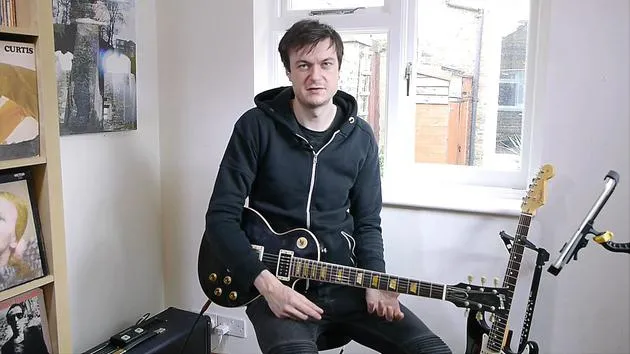
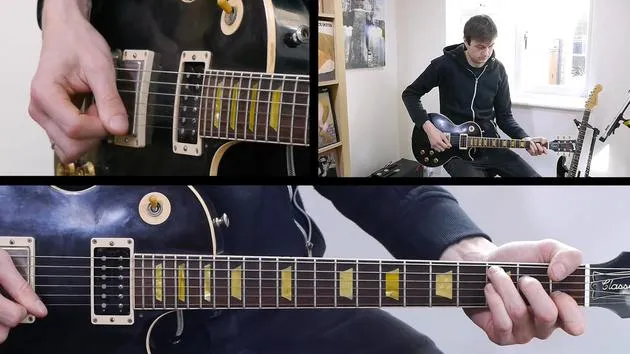
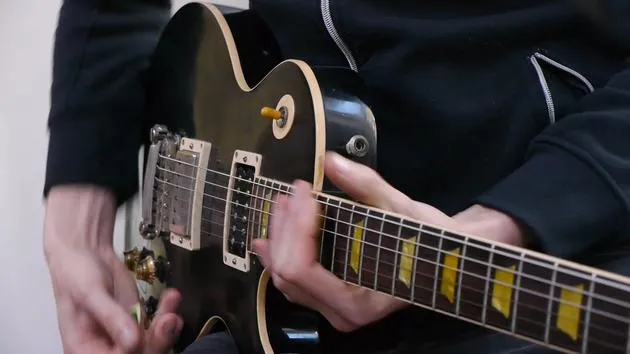
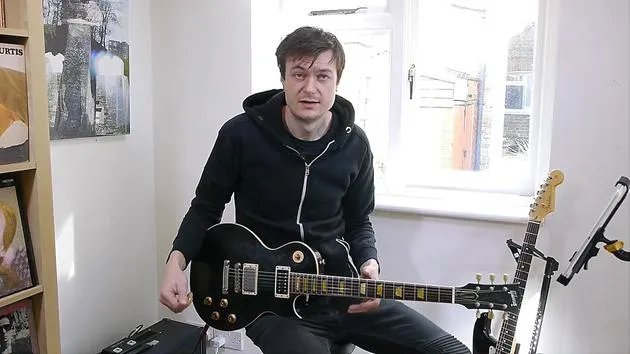
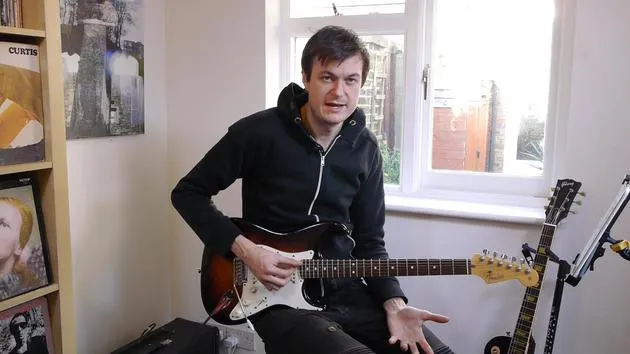
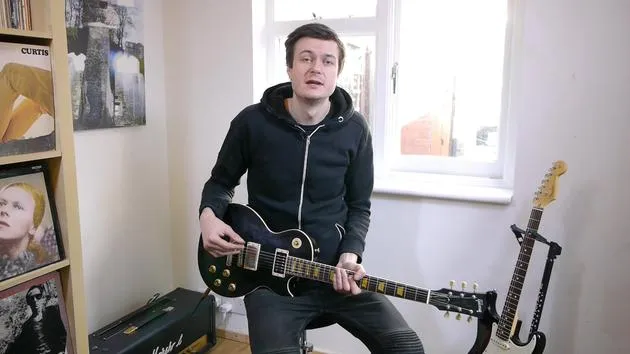
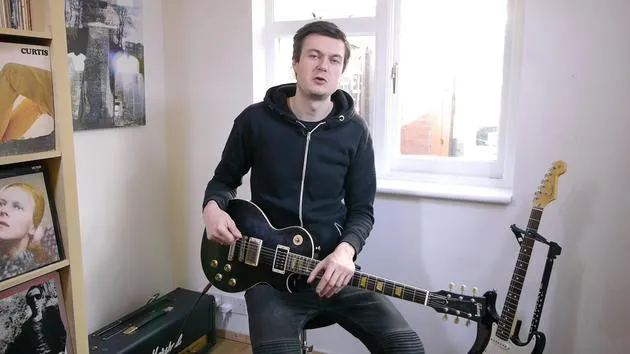
James Barratt gives his pro perspective on the Rockschool Guitar piece Mind The Gaps. Don't forget to check the overview and walkthrough in your book too!

What's in the course
43 lessons (3h 55m) · 1 free
01. Intro to Approaches to improvisation
1:00
02. Embelleshing a melody
5:36
03. Challenge: Submit your melody
0:26
04. 7th chords
6:38
05. Composing your solo
8:53
06. Advanced strumming and embellishments
5:40
07. Comping on different music styles
8:36
08. Further extensions and sus chords
4:19
09. Mixing Rhythmic and Melodic comping
4:24

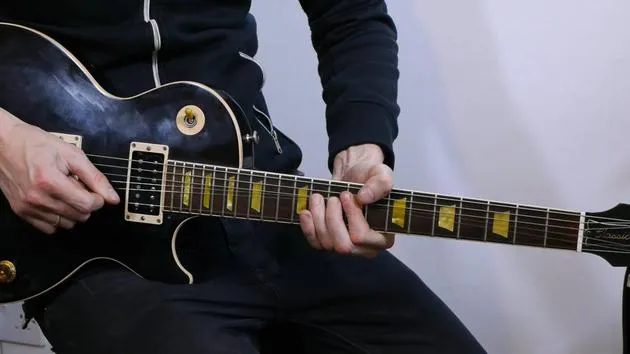
Lesson transcript
Mind the Gaps - Music Lesson
Introduction
Hi everyone! Let's check out Mind the Gaps together. This is a super funky track that's really fun to play. In the Rock School full version, you've actually got Larry Carlton on guitar, so no pressure in following in those pretty amazing footsteps! This track is heavily inspired by the Tower of Power and Average White Band, so if you really dig this, it's worth exploring their back catalogs to find some cool music.
Getting Started
Let's dive straight into the track.
Chord Basics
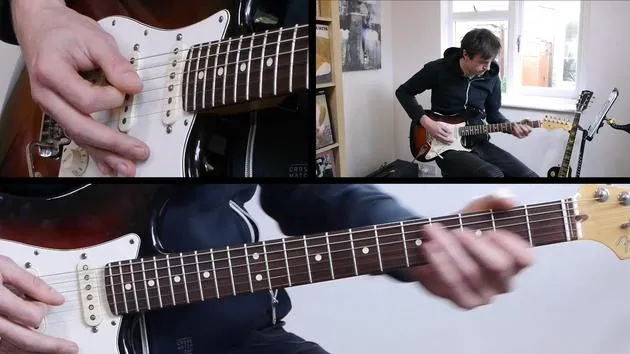
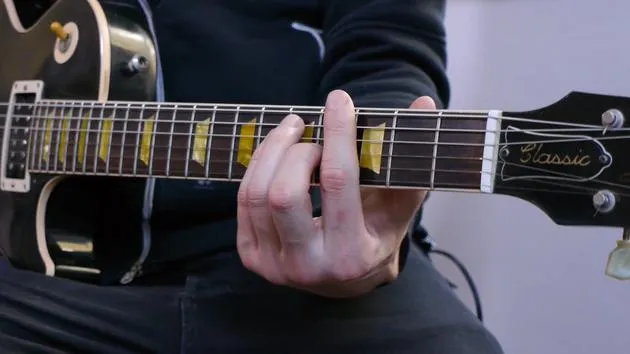
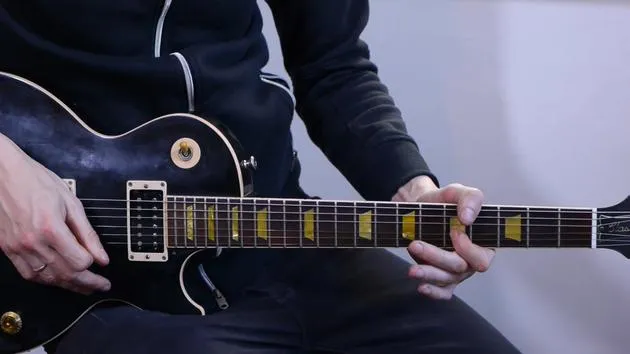
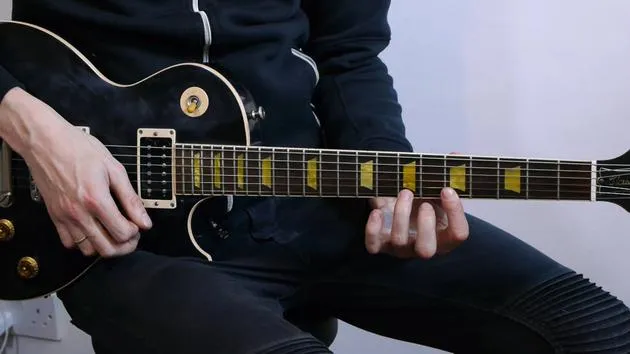
- We begin with suspended chords.
- It's important to distinguish between:
- The chord itself (the triad).
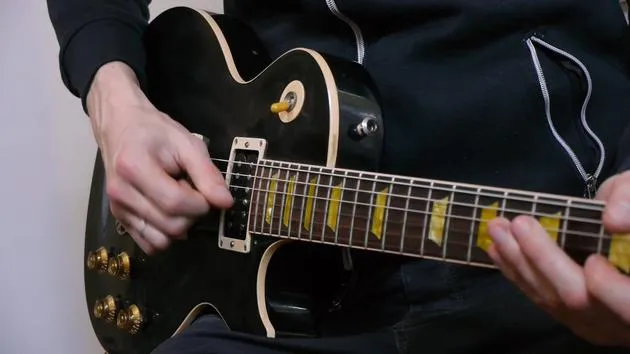
- The percussive "chaka chaka" sounds created with left-hand pressure.
Key Points:
- Aim for an even touch.
- Watch for accents; dig in a little harder on some chords.
- Consistency in the percussive element and strong timing are crucial.
Moving to Section B
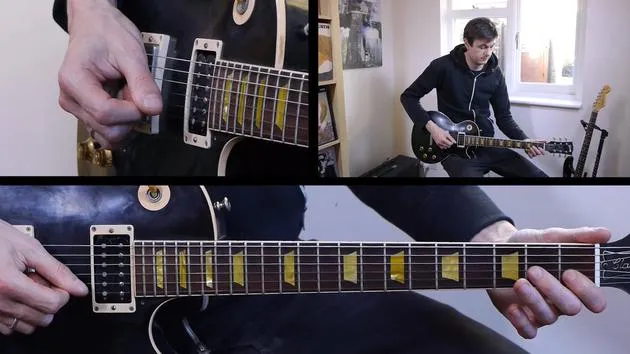
In section B, we have a wicked single-note riff that's really catchy.
- This is the song I find myself humming all day after practicing.
- It's relatively simple, yet memorable, this shows that something simple can be quite effective!
Riff Details
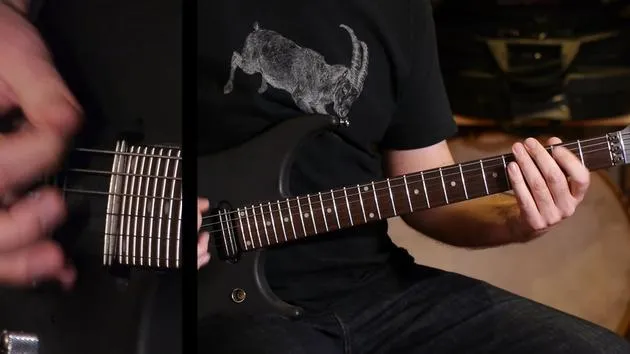
- Focus on the octave ideas: very staccato.
- Look for staccato dots throughout the score; they enhance the track's urgency and funkiness.
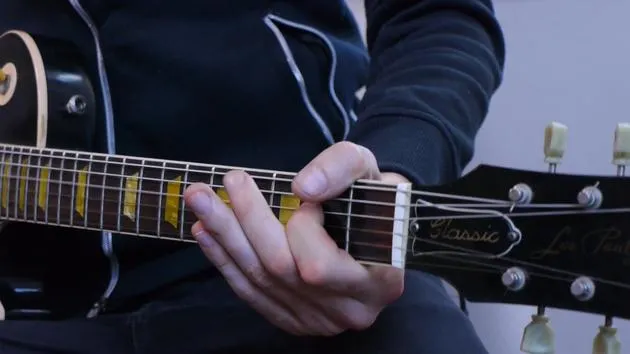
- Watch your fingering, use your little finger if needed, it can be tricky but worth it.
Section C
When we move to section C, the piece lifts considerably.
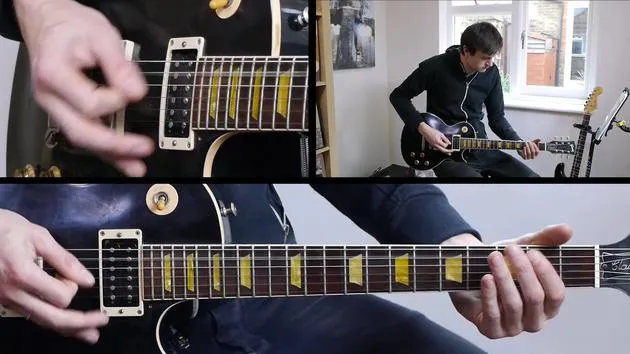
- Consider using an overdrive pedal for a little boost; I found a very mild overdrive works well here.
- This section features great double-stop phrases and stylistic slides.
Finger Techniques
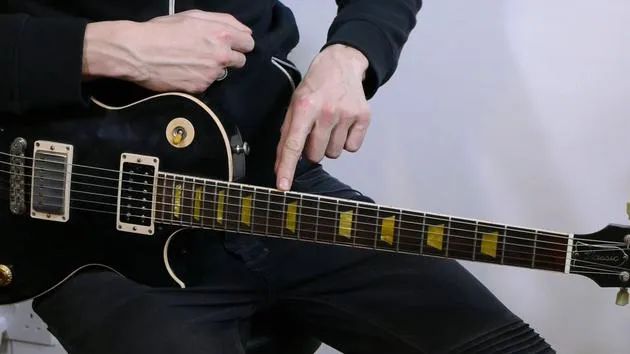
- I experimented with different fingers for the slide, and the second finger felt comfortable for me.
- It's all about experimenting to find what works best for you.
Rhythmic Focus:
The rhythms here are syncopated, typical for funk.
- Keep a close eye on the top line for rhythmic accuracy, especially for specific 16th notes within phrases.
Experimentation Ideas
In bar 17, I thought adding a bit of muting worked great, worth a try!
Moving on, we have more slides and tricky rhythms, including triplet semiquavers.
- Pay close attention to those syncopated rhythms as well.
Chord Exploration
Towards the end of section C, you'll encounter some interesting chords that highlight the jazz element of the track.
- Chords to Note:
- E flat major 7
- D7 (sharp 5, sharp 9)
- B flat dominant 7 (sharp 9)
These voicings align well with your technical exercises, allowing you to kill two birds with one stone!
Rhythm Practice:
- Ensure you're precise with the rhythm:
- 1, 2, 3, 4, and
- 1, 2, and 3, 4 and 1.
You can even try a cheeky slide off some chords, works really well!
Solo Time
Transitioning into the Solo
We're now in 12/8 time, this feels different from the earlier 4/4 sections.
- Practice alternating between these time signatures to prepare for the transition.
Solo Construction:
- I focused on complementary phrases for each chord change.
- Outline unusual notes to avoid clashes in your lead playing.
Chord Considerations:
- Keep an eye on extensions like D7 (sharp 5) and F11.
- Make sure to highlight the note that corresponds to the chord being played.
Final Notes on the Solo
I've transcribed my solo for you, detailing my thought process for each choice.
- This solo is a bit challenging, but it's worth spending time on.
- Focusing on chord changes helps create natural phrasing instead of just playing up and down scale shapes.
Accented Chords
We transition from the solo to some accented chords, which are mirrored in the backing track.
Dynamic Marking:
- At the G section, we drop to mp (moderately quiet) for the bassist's solo.
Outro Section
As we return to our intro funky chords, we've got a structural marking called DS Alcoder.
- I varied the repeated riff to keep it interesting.
Final Riff:
- The ending features a tricky section starting on the second 16th note of the bar.
Exercise:
- Practice taking this lick at a comfortable tempo to build confidence.
Conclusion
Overall, this is a really funky, fun tune to jam. Best of luck with it!
Tips for Success
- Take things slow.
- Break the song into bite-sized sections.
- Pay attention to subtle details like accents, staccato, bends, and vibrato.
If you get all those elements right along with the fundamental phrases, it will sound authentic and great.
Have as much fun with this as I did learning it, and see you for the next lesson!
43 lessons
3h 55m of structured video lessons
Advanced video features
Slow down, loop a passage, follow along
Mobile, tablet & desktop
Practise wherever you are
100% satisfaction guarantee
30-day money-back guarantee







