



Tapping
James Barratt breaks down tapping, the flashy wide-interval technique heard all over Van Halen and 80s rock, and how to keep it sounding clean.

What's in the course
46 lessons (3h 57m) · 1 free
01. Intro to Approaches to Improv
1:00
02. Embelleshing a melody
5:36
03. Challenge: Submit your melody
0:26
04. 7th chords
6:38
05. Composing your solo
8:53
06. Further extensions and sus chords
4:19
07. Comping in two different musical styles
8:36
08. Mixing Rhythmic and Melodic comping
4:24
09. Rhythmic improv & comping
9:55
10. Advanced strumming and embellishments
5:40

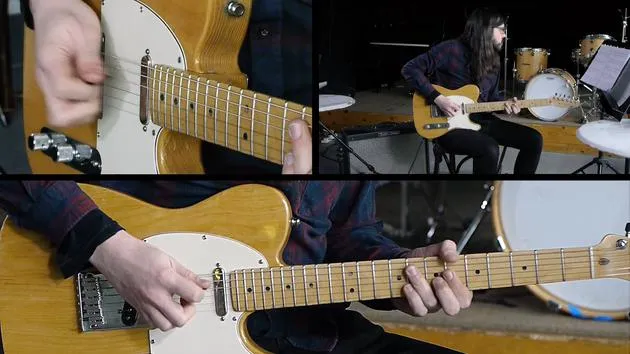
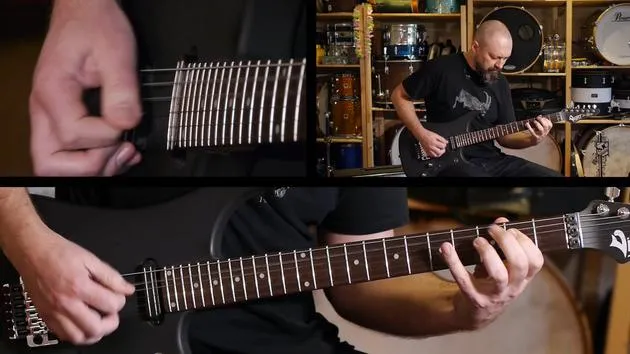
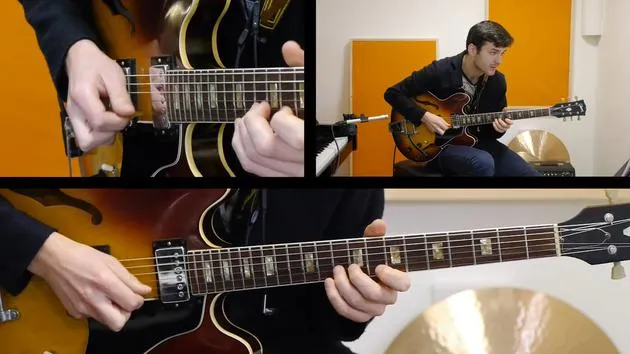
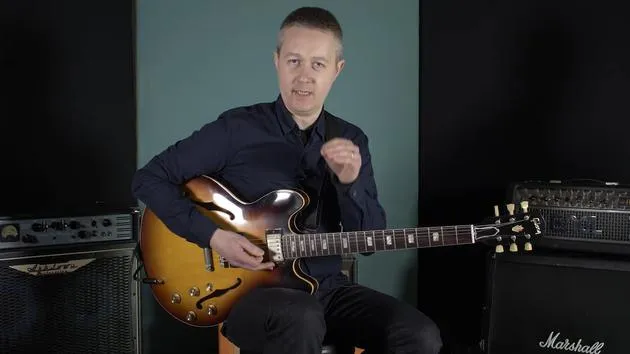





Lesson transcript
Tapping Technique: A Detailed Exploration
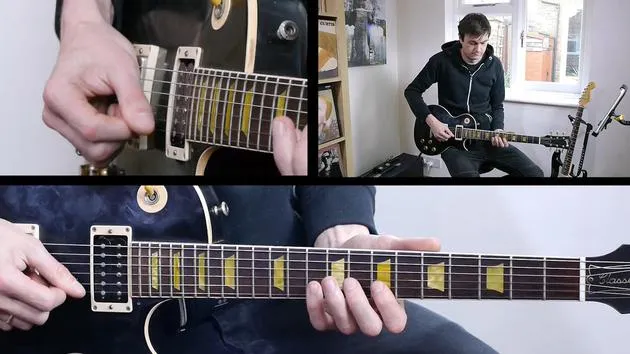
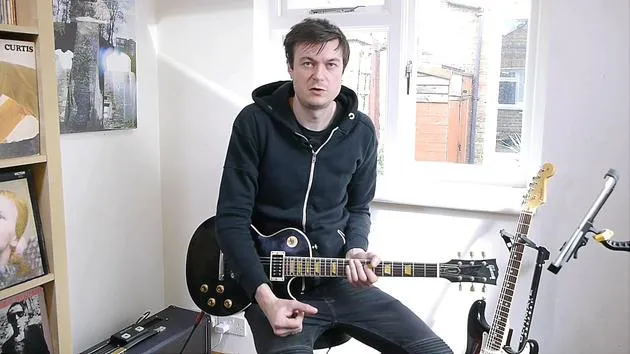
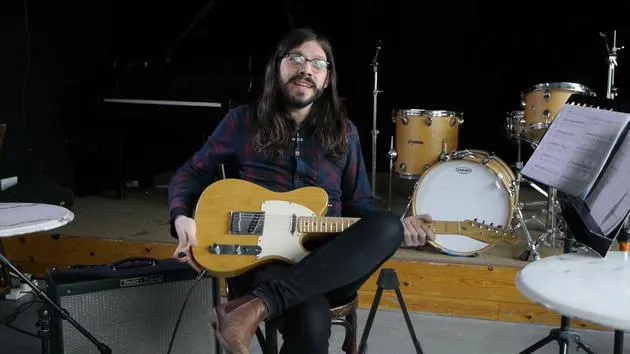
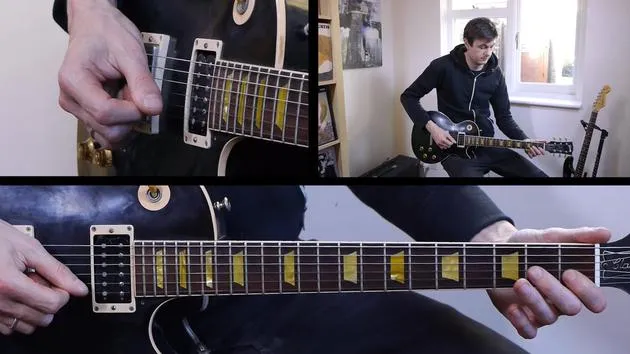
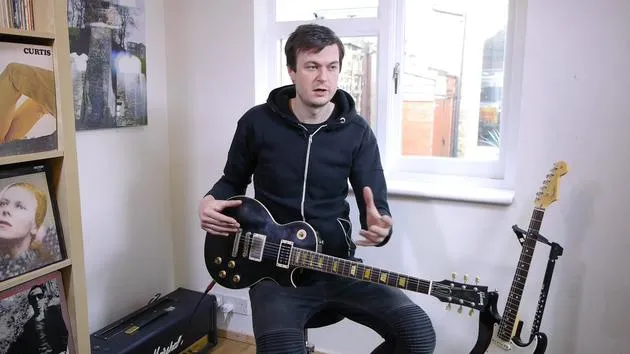
Okay then, so let's check out tapping technique now in a little bit more detail. Tapping is a really distinctive-sounding technique. If you're into bands like Van Halen, you've heard it all over the place. Or perhaps extreme bands like that. Any bands from the 80s or any rock band that have maybe slightly flashy solos, it's a technique that you'll find a lot in those genres.
The Advantages of Tapping
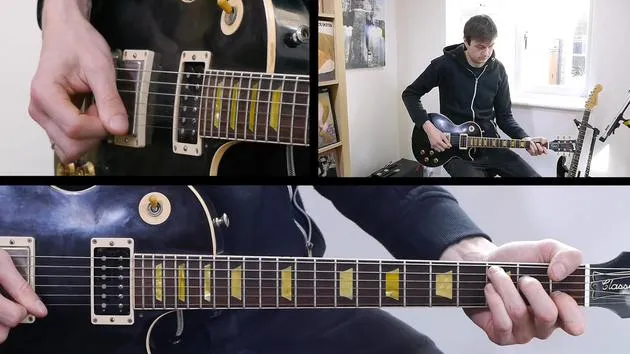
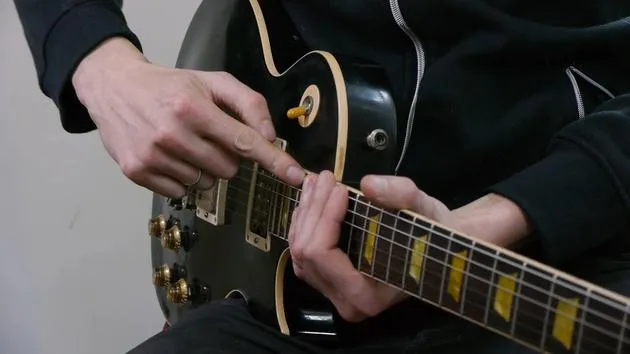
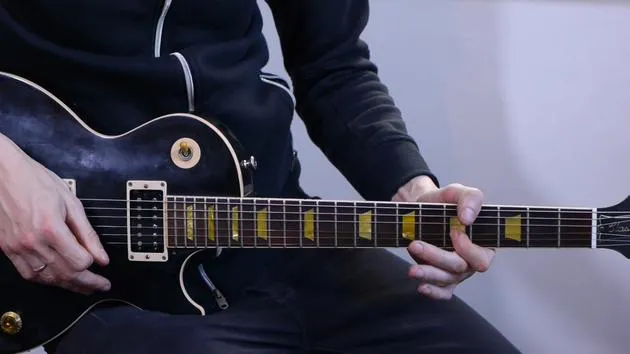
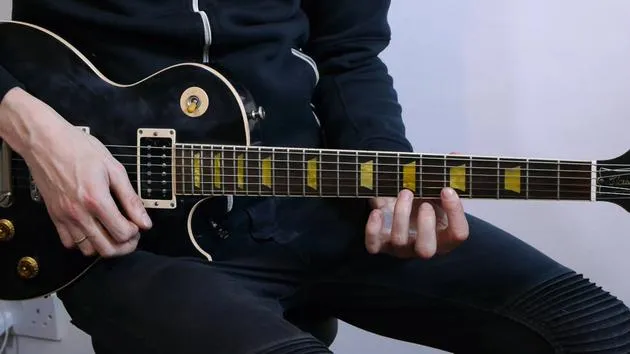
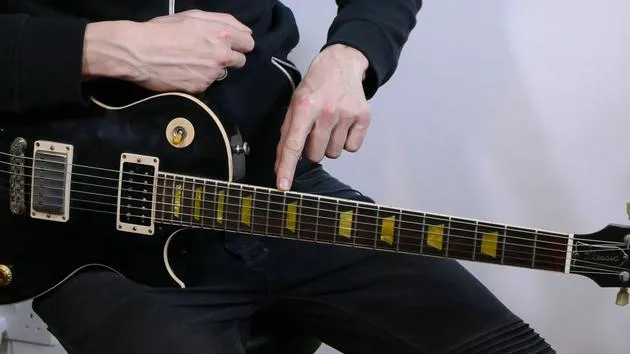
One cool thing about tapping is that it allows us to achieve really wide intervals on the guitar. For instance, my left hand could technically be fretting down here. Picking notes at random might sound terrible, but I can, with my right hand, attack the highest note on the guitar. This allows me to achieve a huge interval if I want to.
Common Tapping Phrases
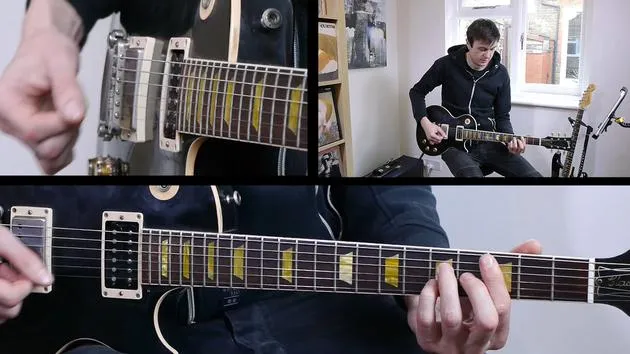
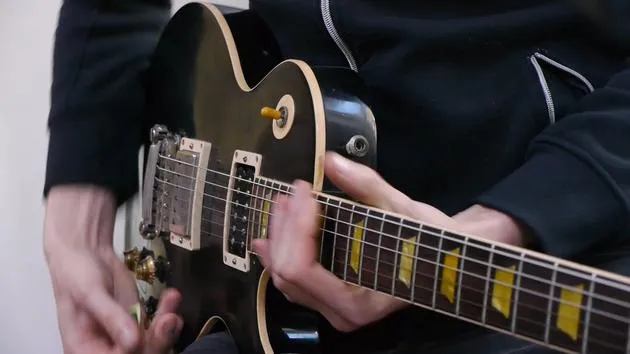
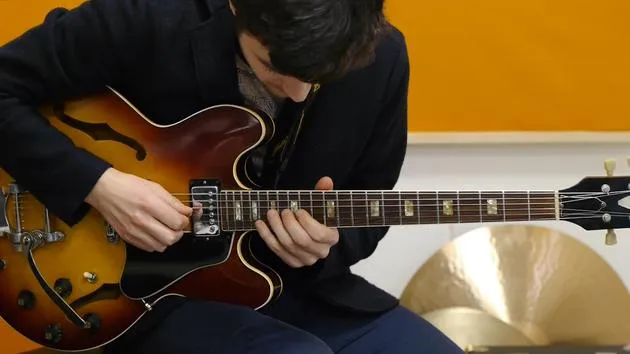
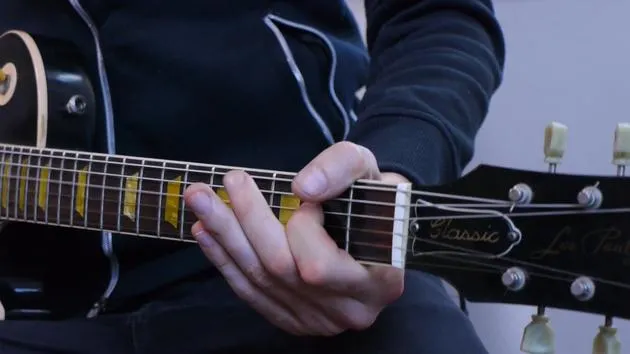
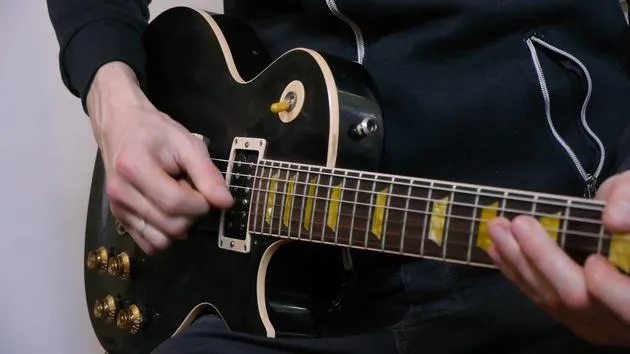
The examples I'm going to show you are some common tapping phrases you might come across. We're going to look at it on a single string. The finger I use is my middle finger to tap the fretboard with my right hand. Some players will tuck their pick into their middle finger like that because they want to use their first finger. That's fine if you're comfortable getting that down quickly.
Transitioning Between Techniques
It's crucial to think about the transition from perhaps picking to tapping. For example:
- I'm holding my pick with my first finger and thumb.
- To switch to tapping with my first finger, I have to transition my fingers.
Whereas, I prefer to keep hold of my pick as normal and tap with my middle finger. But it's up to you! You can experiment with these things as there's not really a right or wrong finger to use. Some players even use multiple fingers at the same time for right-handed tapping.
My Personal Preference
As someone who doesn't do vast amounts of tapping, my personal preference is to use my little finger. It feels very smooth for me transitioning from one picking technique into tapping and back again.
Tapping Exercise on the B String
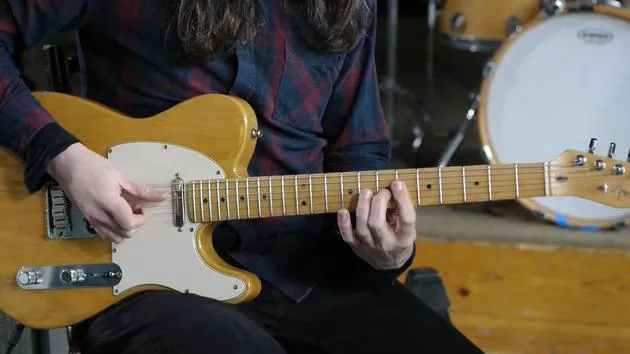
The phrase we're going to look at begins with a tapped note on the 12th fret. We'll focus on the B string here. It doesn't really matter what string we use, but let's stick with the B string for consistency.
Keeping Other Strings Quiet
It's essential to keep all the lower strings quiet. You can actually use your palm; if you know you're staying on one string, rest the palm of your right hand on these lower strings to prevent them from ringing out. So, we can rest there, keeping those quiet.
Hammer-On and Pull-Off
Here's how it goes:
- Hammer-on: With your right hand, hammer on to the 12th fret.
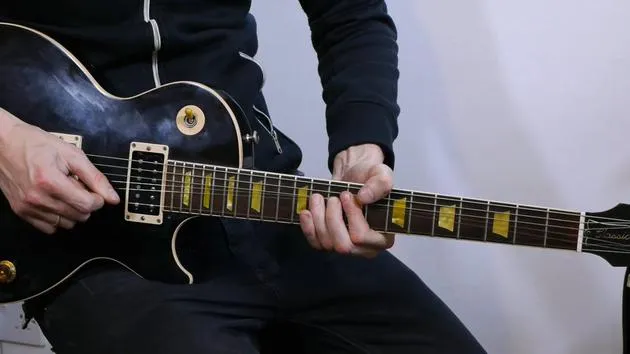
- Pull-off: Have your first finger ready at the 5th fret on the same string, then pull off to that note with your right hand.
This technique requires a lot of effort from the right hand. It may sound somewhat like a siren.
Achieving Volume Control
You want to achieve a really equal volume siren effect between any two notes on the guitar. We want a powerful hammer-on and a clean pull-off without any unwanted strings ringing out.
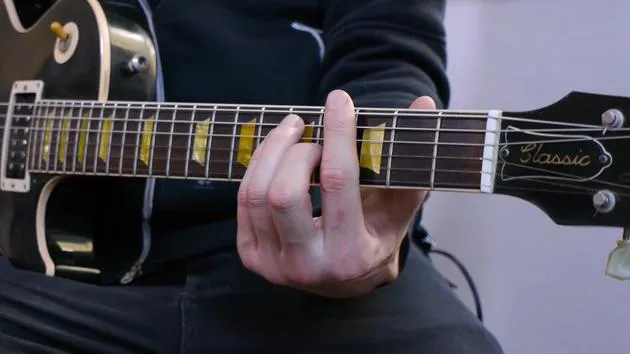
- I'm using my first finger to mute the E string.
- I'm also using the palm of my right hand to keep the lower strings quiet.
Adding More Elements
Now, a common addition is a hammer-on with the left hand to repeat the sequence:
- Tap with the right hand,
- Pull off to the first finger,
- Hammer on with the third finger.
You can achieve some impressive speed with these techniques. Tapping feels quite natural, allowing you to speed up effortlessly.
Grouping Notes
This technique produces a deliberate rhythm. For a basic grouping, we can create a sequence of three notes:
- 1, 2, 3, 1, 2, 3.
If you aim for a four-note grouping, a kind of semi-quaver feel, you can do the following:
- Pull off to the third finger on 8.
- Pull off to the first finger on 5.
- Hammer on again.
Equal Volume and Clean Sounds
You can slow it down to hear the notes at equal volume with no unwanted strings ringing out. If you haven't muted your strings well, you'll notice an underlying ringing sound.
When tapping, especially in a rock song or solo, the gain will be dialed up, and the guitar can resonate and create unnecessary noise. Thus, it's vital to mute the strings you don't want to hear, allowing the desired notes to sound clean.
Conclusion
So, that is tapping in a nutshell. I hope you enjoyed that! You'll see this featured in many songs in the Rock School series, so have fun experimenting with this exciting technique.
Let's take a look at the next topic!
46 lessons
3h 57m of structured video lessons
Advanced video features
Slow down, loop a passage, follow along
Mobile, tablet & desktop
Practise wherever you are
100% satisfaction guarantee
30-day money-back guarantee







