



Advanced strumming and embellishments
James Barratt shows how to make your strum patterns more musical by weaving in single notes, little arpeggios and chord accents.

What's in the course
46 lessons (3h 57m) · 1 free
01. Intro to Approaches to Improv
1:00
02. Embelleshing a melody
5:36
03. Challenge: Submit your melody
0:26
04. 7th chords
6:38
05. Composing your solo
8:53
06. Further extensions and sus chords
4:19
07. Comping in two different musical styles
8:36
08. Mixing Rhythmic and Melodic comping
4:24
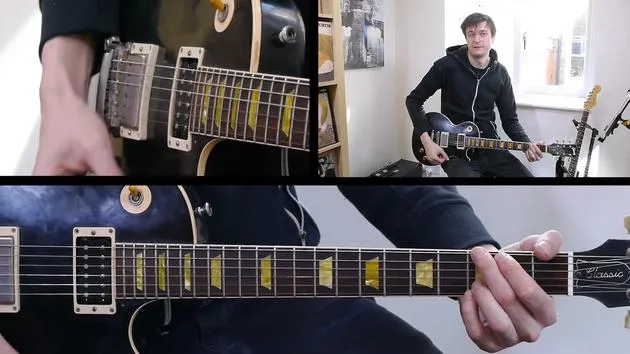
09. Rhythmic improv & comping
9:55
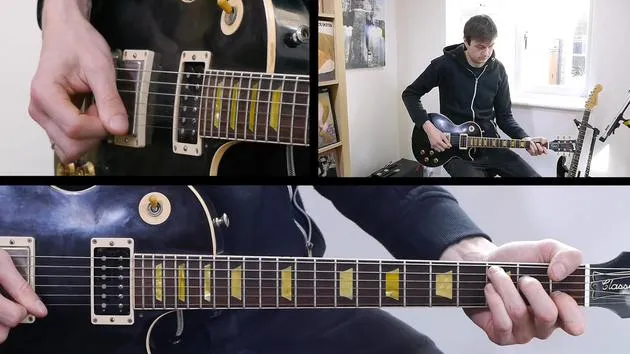
10. Advanced strumming and embellishments
You are here5:40
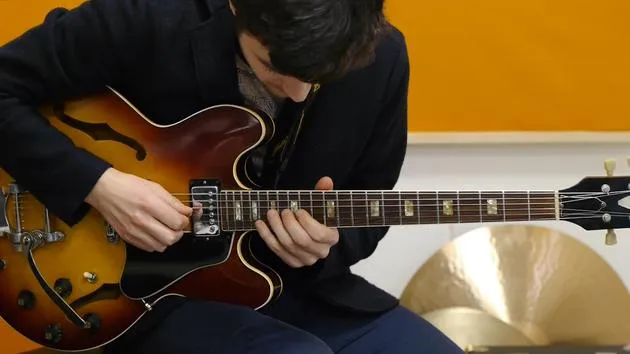
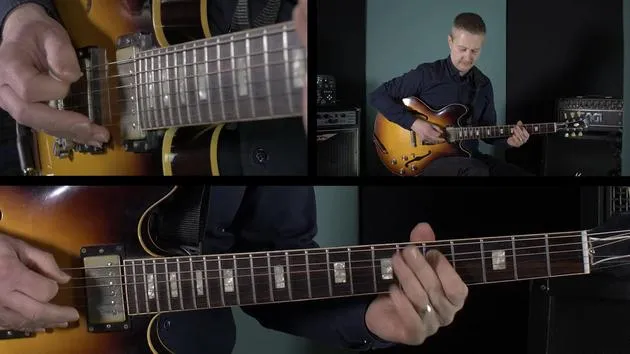
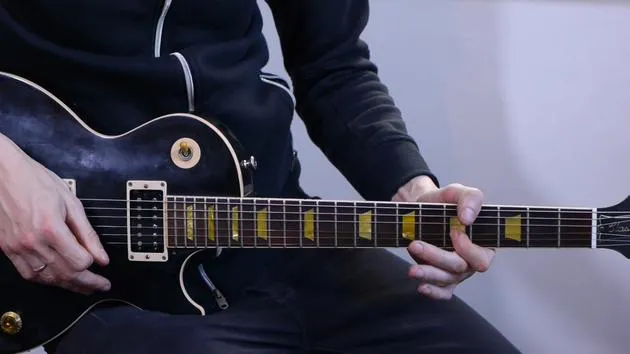
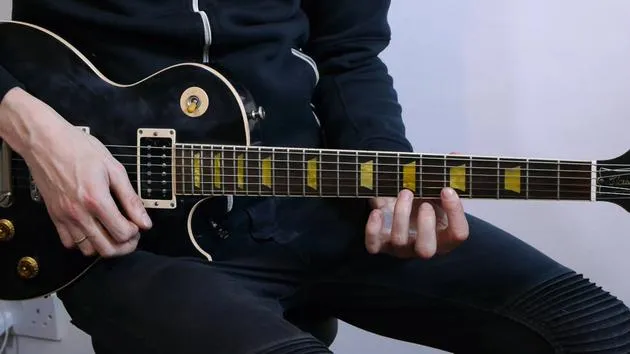
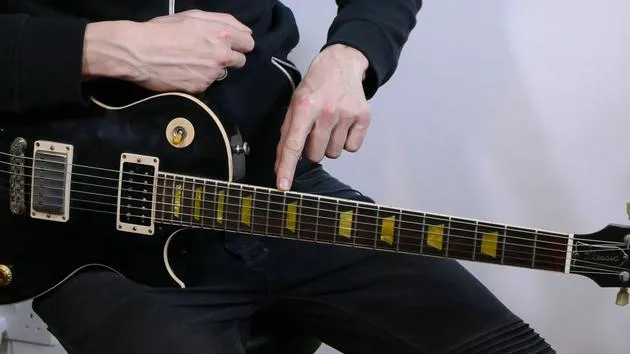
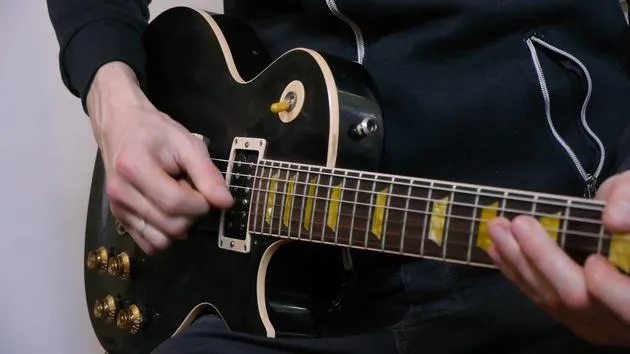
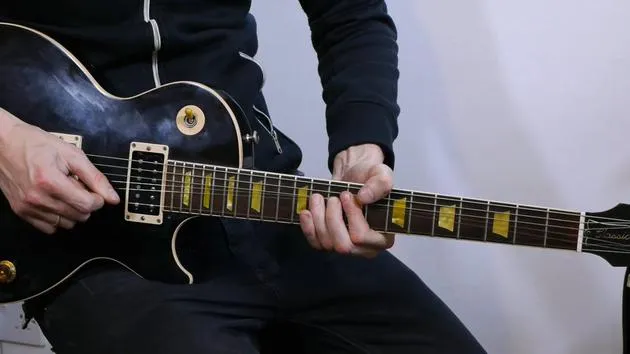
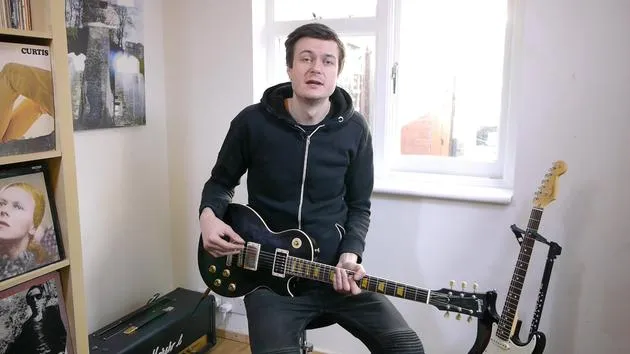
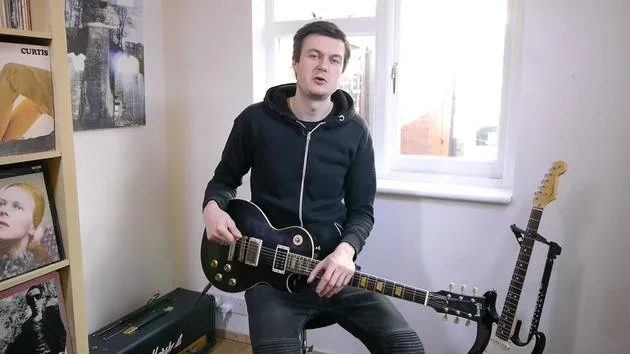
Lesson transcript
Enhancing Strum Patterns
Okay, so moving on from strum patterns, let's take things up a notch and think about how we can make these even more interesting.
Varying Strumming
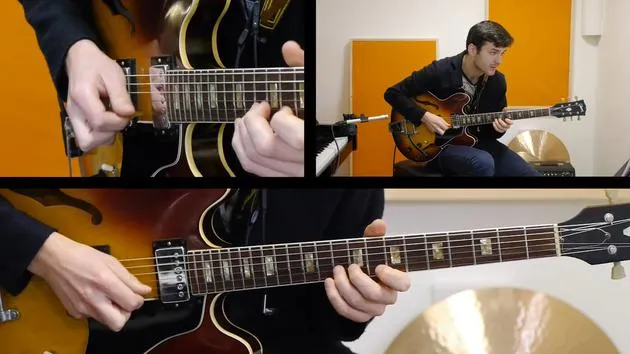
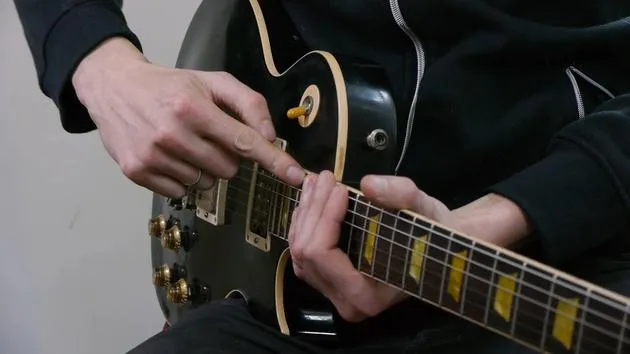
One way to easily enhance your strum patterns without adding any new notes to the chords is to vary whether you're strumming the strings and essentially playing a chord. You can incorporate single notes within the chord, kind of like arpeggios.
Example on G
Let's try this out with a simple example on G:
- Count: 1, 2, 3, 4.
- What I'm doing rhythmically is an 8th note pattern, combining:
- Single notes of my chord
- Chord accents
- A little arpeggio on the top
You can even reverse the order of these elements; there's no problem there!
Dynamic Effect
You can hear the dynamic achieved by this technique. You get a really musical rhythm guitar part with nice movement, rather than just strumming a chord. Not that there's anything wrong with that, but now we have added a bit of movement to our rhythm guitar.
Applying to Different Chord Changes
Let's check this out with some chord changes:
- Count: 2, 3, 4.
- Just taking that exact carbon copy strum pattern and applying it to some different chords sounds really musical.
Important Note
You may have noticed something important:
- Even though we are working with an eighth note pattern, the strum pattern has completely changed.
- The direction of the notes in the sequence dictates the strum pattern.
There's not really a right or wrong here. Still aim for beat one to always feature a strong downstroke.
Example of Strumming
In my last example, I ended up with three upstrokes in a row. This is due to the travel direction of my picking hand, allowing me to return to the bass note for beat one.
- I perform two full strums on the chord.
- Then a bass note on its own.
- Finally, my little arpeggio on top with three upstrokes, directing me back toward the bottom string.
Further Embellishments
Let's take this one step further. We'll demonstrate the concept on a C major chord:
C Major Chord
- We are going to take our second finger off on the C major chord, creating a suspended second chord.
- As soon as we strum it, we will hammer on again, producing nice movement within the chord change.
Instead of just a straight strum, you'll get this added complexity.
More Chord Examples
You can do this with various chords, such as:
- Minor chords: It doesn't have to be a specific note in the chord.
- For example, with an A minor chord, we can do it in the middle of the chord using two notes.
This is a simple way to inject movement into a seemingly basic strum pattern or chord progression. It gives it that little bit of life!
Incorporating Arpeggios
Incorporate this technique within the arpeggio concept we discussed earlier.
Transition to A Minor
Let's apply this to an A minor chord. Again, this method provides a relatively simple way of taking a standard chord progression and making it sound more musical.
Picking Patterns
Because of the arpeggios featured earlier, my picking pattern changed based on the direction of the arpeggio. Keep this in mind:
- If you add single notes, you don't have to stick to the down, up, down, up format for chord-based 8th note patterns.
- You can vary these however feels comfortable!
Try It Out
There are many ways you can pick those notes. So why not try these ideas with the examples in the PDF?
- If you'd like to video your practice, send them in for feedback. It would be great to see what you're doing!
46 lessons
3h 57m of structured video lessons
Advanced video features
Slow down, loop a passage, follow along
Mobile, tablet & desktop
Practise wherever you are
100% satisfaction guarantee
30-day money-back guarantee







