



Comping in two different musical styles
Learn to adapt your rhythms and chord voicings for different styles, comparing tight funk comping on the top strings with a rock approach.

What's in the course
46 lessons (3h 57m) · 1 free
01. Intro to Approaches to Improv
1:00
02. Embelleshing a melody
5:36
03. Challenge: Submit your melody
0:26
04. 7th chords
6:38
05. Composing your solo
8:53
06. Further extensions and sus chords
4:19
07. Comping in two different musical styles
You are here8:36
08. Mixing Rhythmic and Melodic comping
4:24
09. Rhythmic improv & comping
9:55
10. Advanced strumming and embellishments
5:40
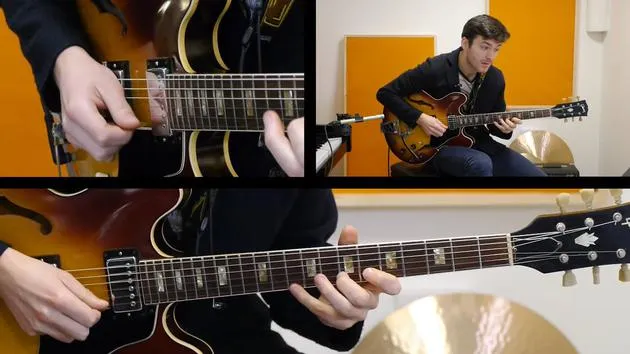
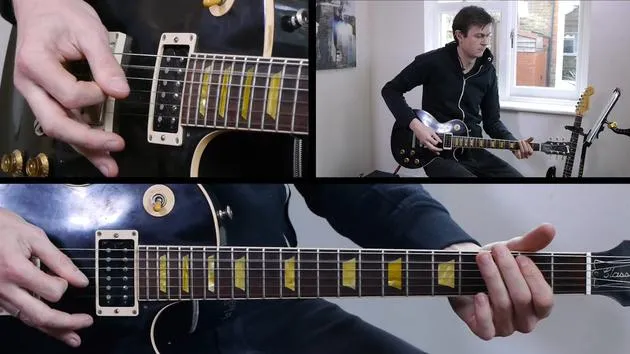
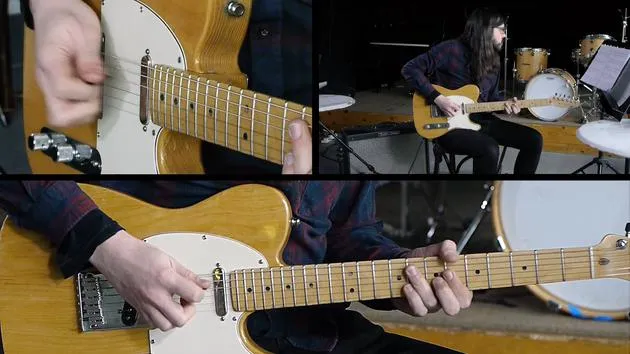
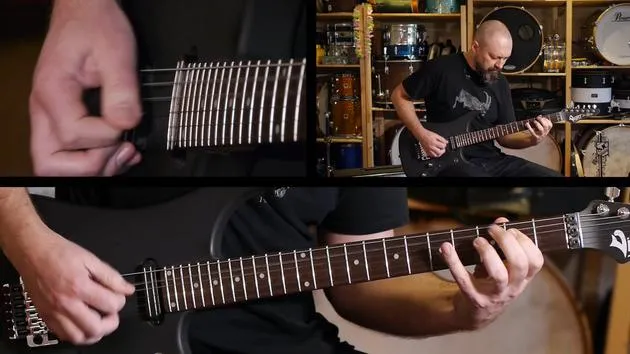
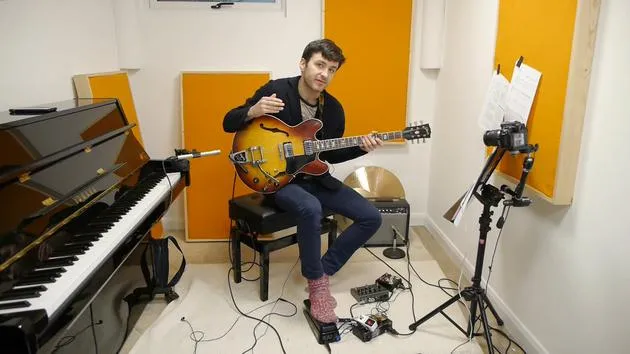
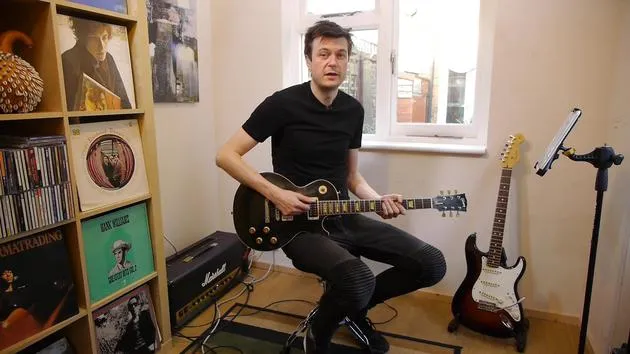
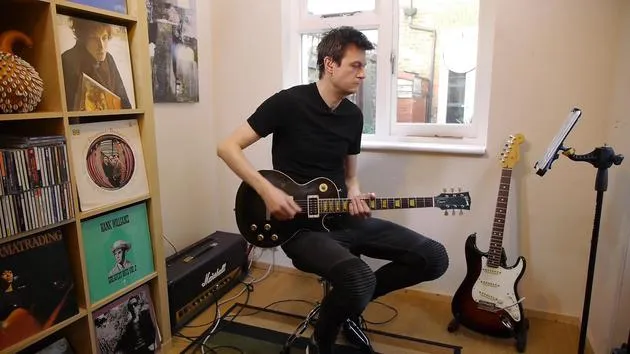
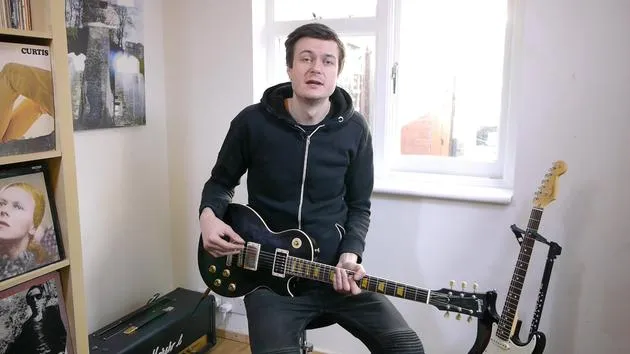
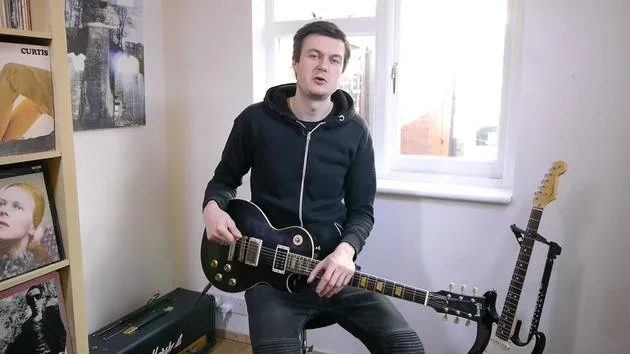
Lesson transcript
Understanding Comping Styles: Funk vs. Rock
Alright then, guys. As you become more competent with the concept of comping, the types of chords and the routes you choose will be dictated by the style of music you're playing.
Funk Example
Let's take funk as our first example. If you're playing a funk piece, it probably isn't suitable to create a rhythm part based on open chords.
Chord Progression
Consider this simple chord progression: A minor to D minor.
- Open position chords down here won't sound particularly funky.
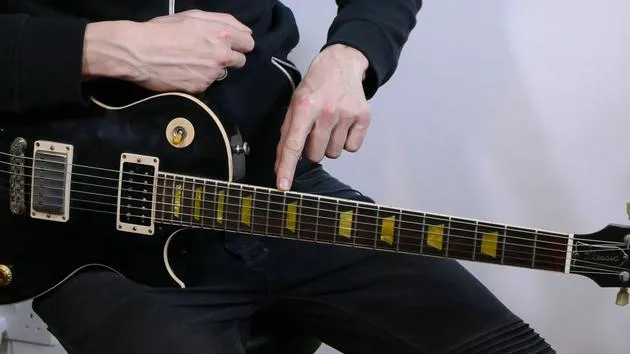
- Funk comping usually lives on the thinnest three strings: the G, B, and E strings.
Instead, you want to play mini chunks of chords that sound great.
Chord Voicings
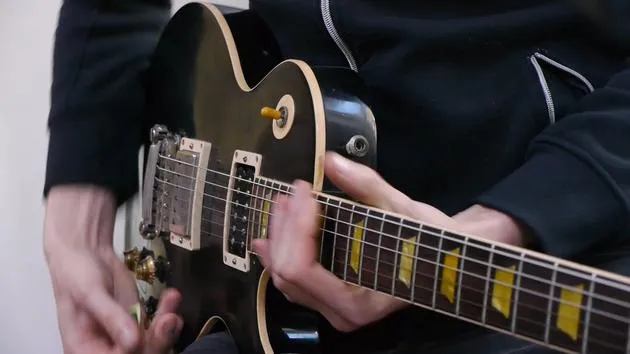
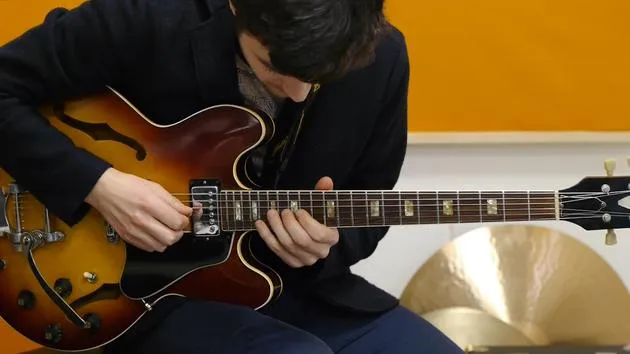
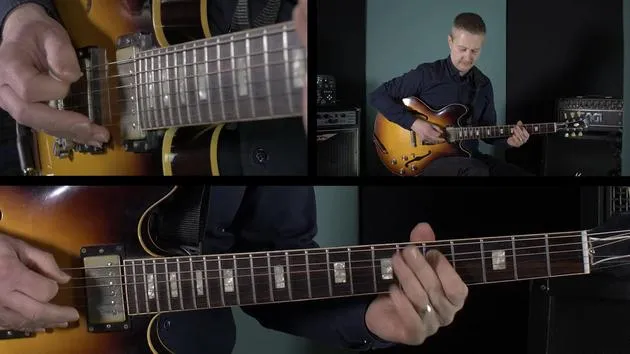
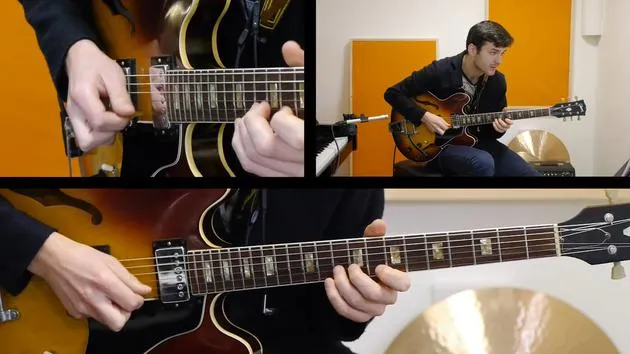
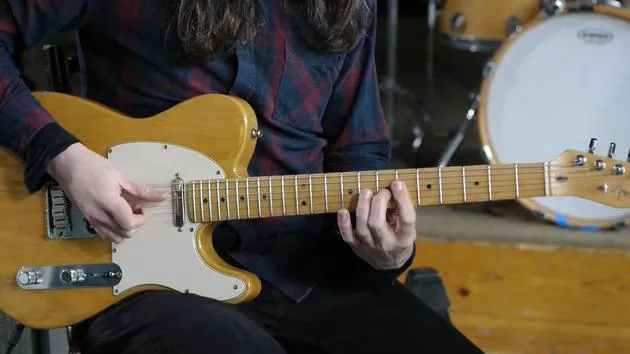
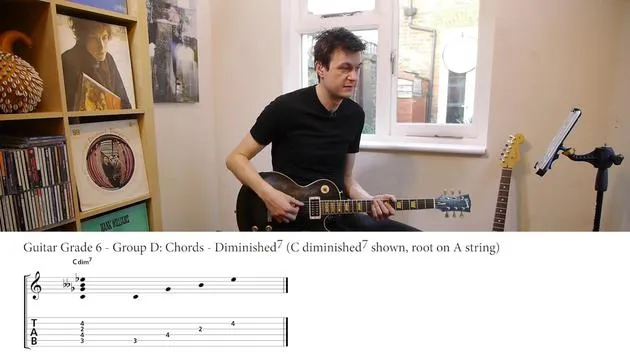
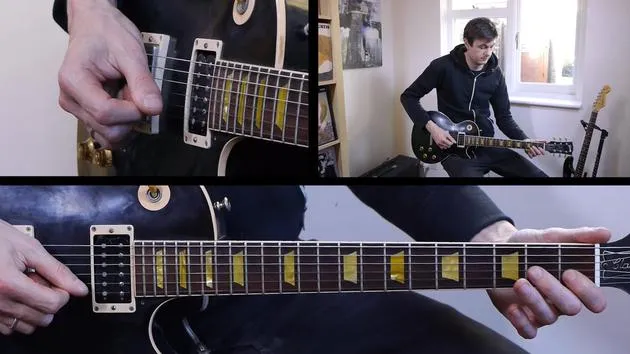
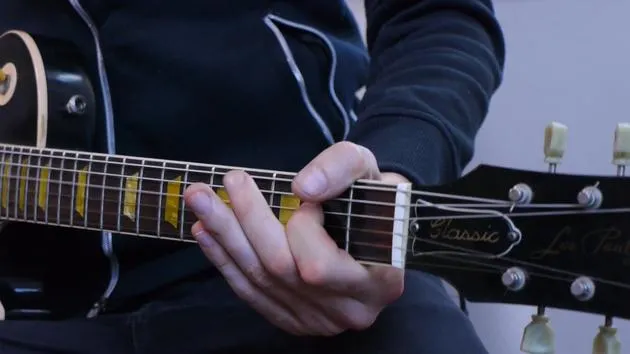
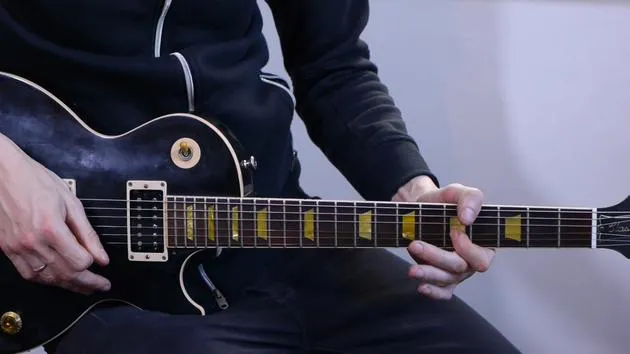
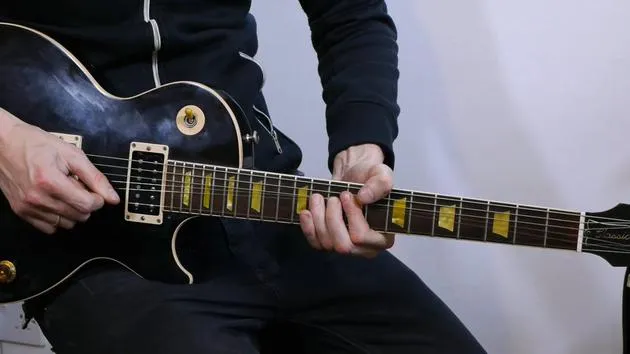
My A minor chord voicing will be this:
- Bowing across the fifth fret on the G, B, and E strings.
It's derived from a common barre chord shape, but we're just using the top half of it.
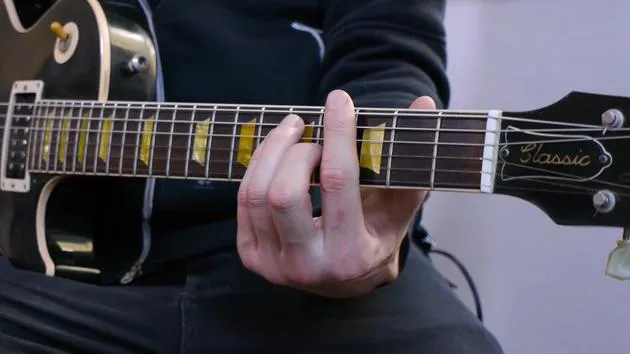
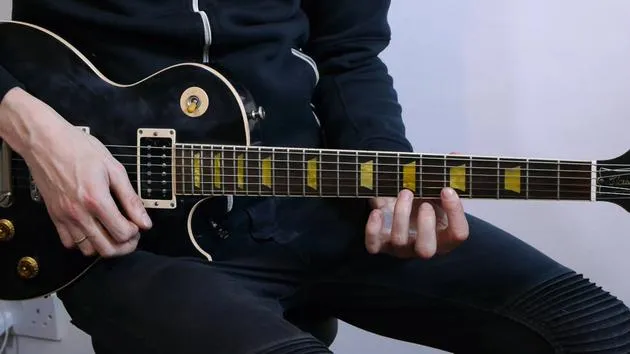
For my D minor, I'll play a D shape on the fifth fret, taken from the common D minor shape, which you're all likely familiar with.
- It'll actually be a D minor 7 I'm playing.
Funk Strumming
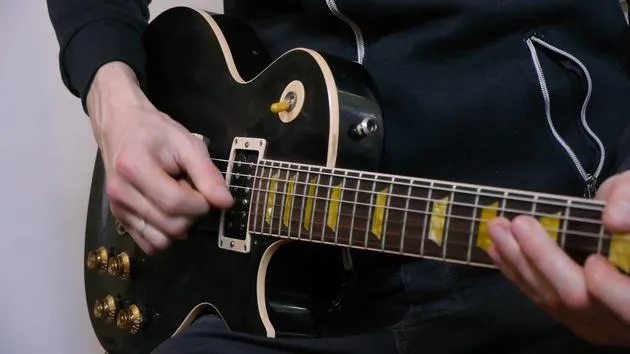
Let's try it out. We'll use the same strum pattern but with the voicings on the top three strings:
Two, three, four...
You can instantly hear how much more stylistic it sounds playing that funk part on the top three strings, as opposed to the wrong position or lower strings, which can sound quite muddy.
Funk parts should cut through, which they do when played on the top three strings.
Benefits of Funk Comping
- It's beneficial if you're a funk fan or looking to expand your chord library.
- Funk comping encourages you to rethink chord voicings in terms of the top three strings.
The fact that these voicings are small allows for finger freedom to embellish those chords.
Simple Embellishments
In my example, I added simple embellishments. I went for a minor 9 idea over A minor and added the same note over the D minor 7 chord.
- This creates movement within the parts without evolving into a melody.
- It adds groove, bounce, and interest to the rhythm part.
Keep Voicings Close
One last tip for funk: try to avoid moving too much between chord voicings.
- I intentionally chose A minor and D minor 7 because they're very close.
- There's only one note difference between them, which is excellent.
Think like a piano player, keep voicings very close to avoid jarring sounds.
Transitioning to Rock
Now, let's apply these ideas in a rock context.
Sound Differences
The first change will be the sound:
- Funk sound tends to be quite clean.
- For rock, expect a more dirty and driving sound.
Chord Voicings in Rock
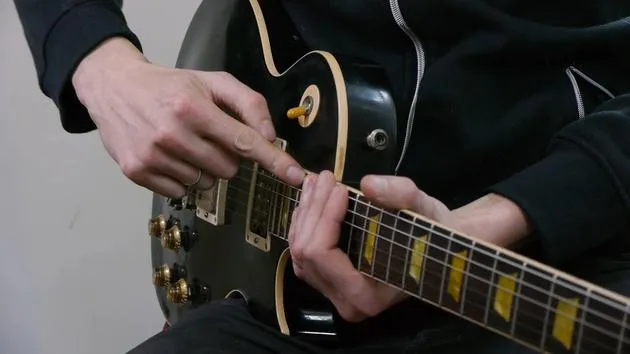
In a rock context, rather than extending the voicings like in funk, we make them smaller and often use power chords rhythmically.
- 8th note based rhythm is common, contrasting with the 16th notes found in funk.
- While playing the same progression, we focus on power chords rather than extensions.
Right-Hand Technique
How we attack the chords with the right hand differs:
- For driving rock, aim for all downstrokes if tempo allows it.
A cool trick with power chords is to create inversions. For example, keeping the A in the bass for the D power chord gives a dirty, aggressive sound that can be quite useful.
Explore Further
If you're looking for more stylistic ideas in funk or rock, or any genres within the rock school syllabus, check out the performance pieces.
You'll find many great ideas from the tutors and analyses that are worth exploring, even pieces that you may not be initially interested in.
Conclusion
Enjoy experimenting and developing as a guitarist. Let's move on to the next topic!
46 lessons
3h 57m of structured video lessons
Advanced video features
Slow down, loop a passage, follow along
Mobile, tablet & desktop
Practise wherever you are
100% satisfaction guarantee
30-day money-back guarantee







