



Striped Shirt
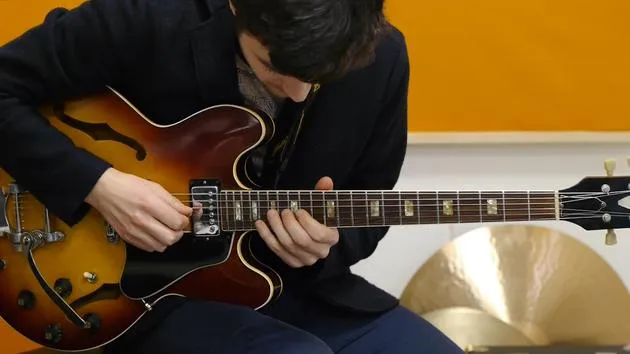
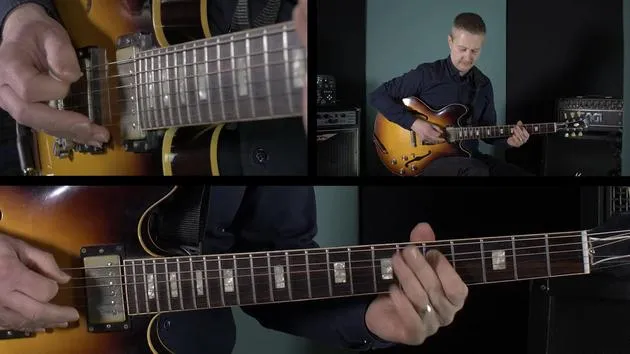
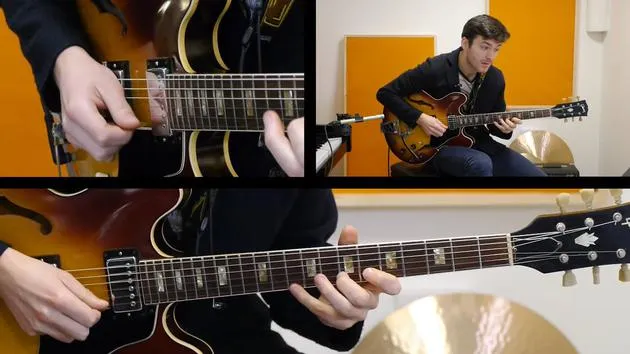
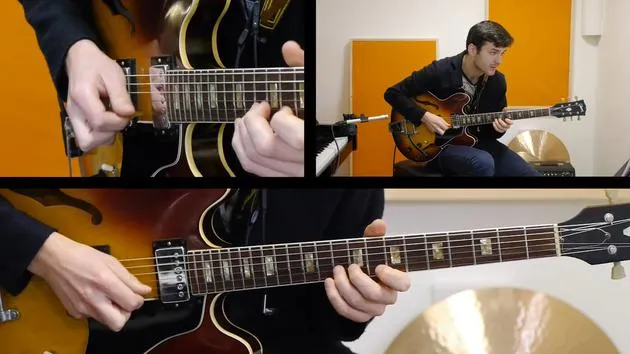
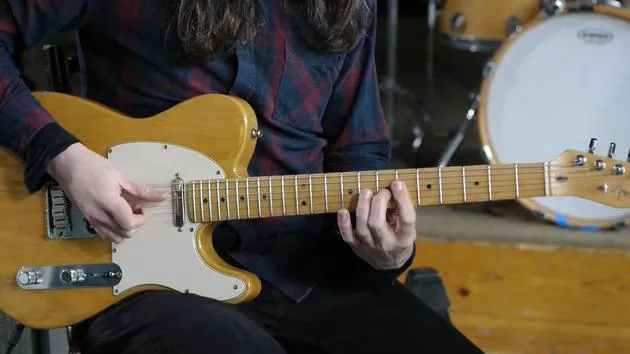
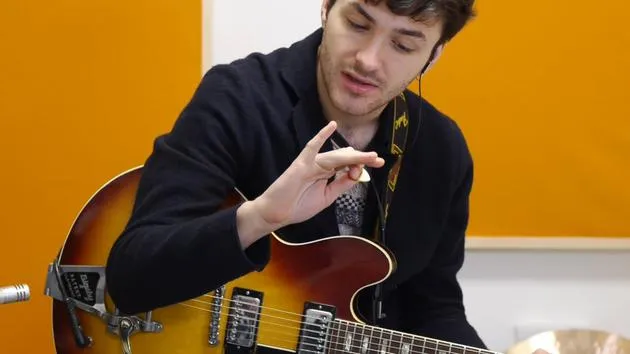
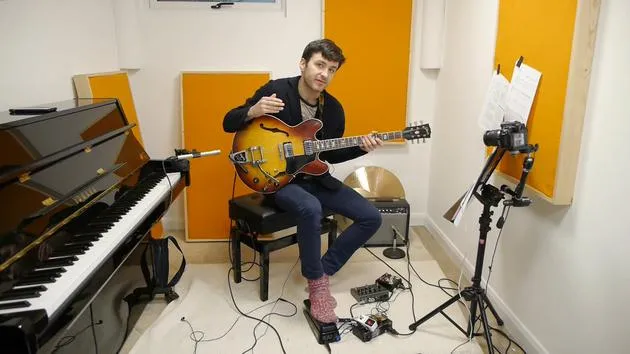
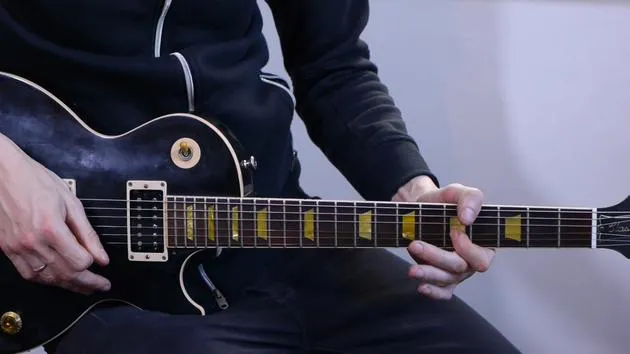
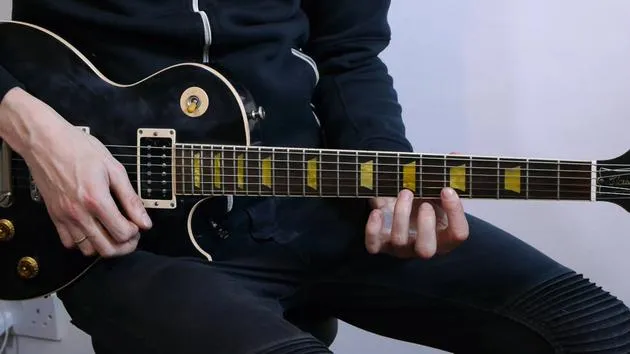
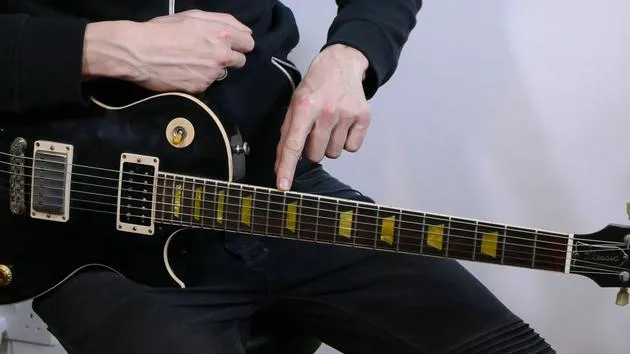
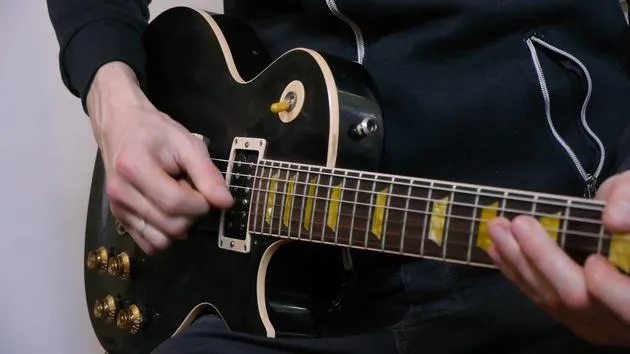
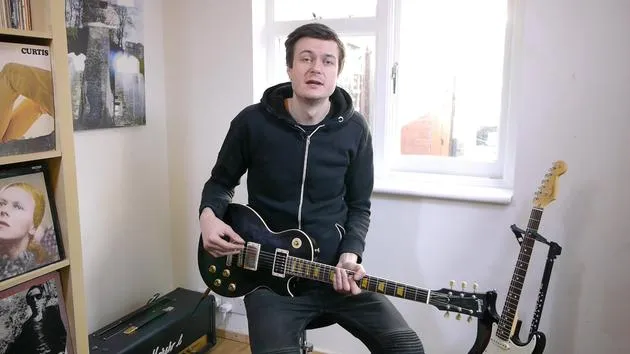
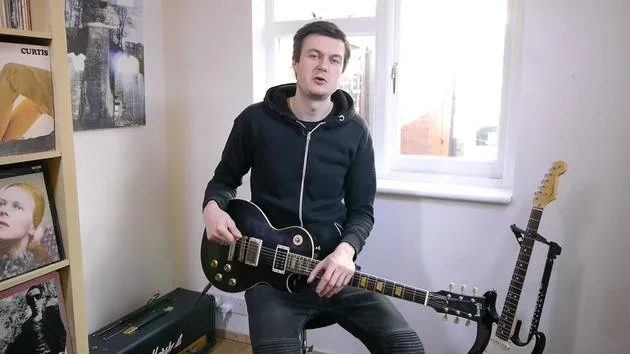
Rob Luft shares his take on the Rockschool Grade 6 piece 'Striped Shirt', a Pat Metheny-inspired fusion number in 6/8 played on a Gibson 335 with slap-back delay.

What's in the course
46 lessons (3h 57m) · 1 free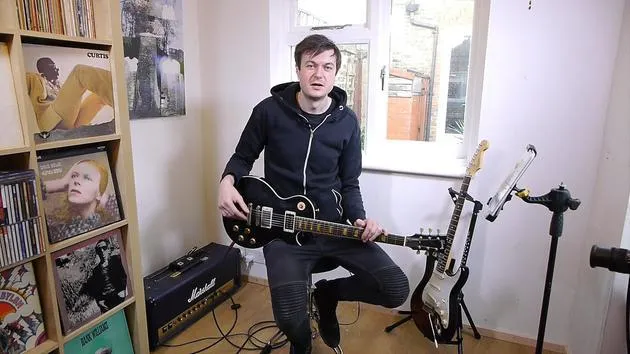
01. Intro to Approaches to Improv
1:00
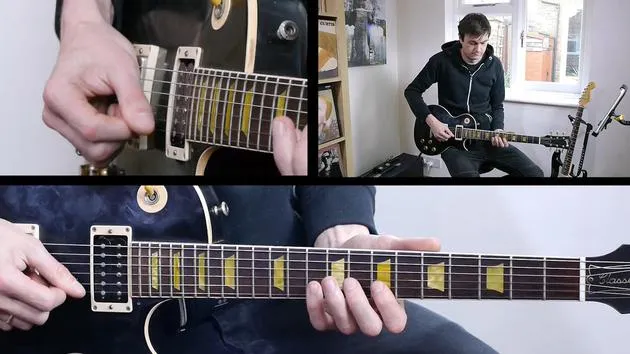
02. Embelleshing a melody
5:36
03. Challenge: Submit your melody
0:26
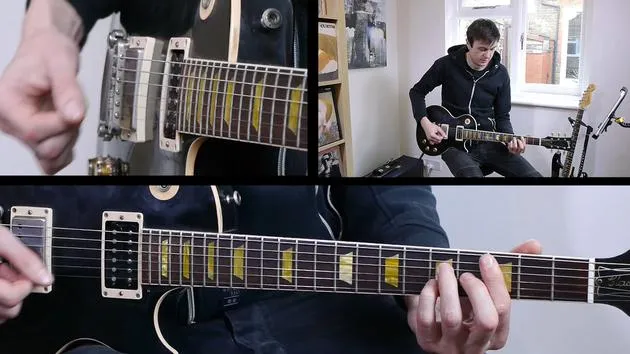
04. 7th chords
6:38
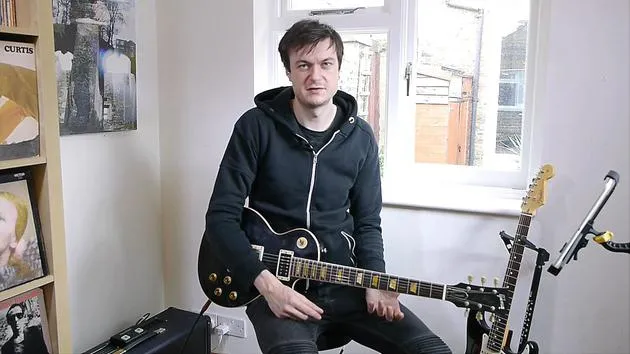
05. Composing your solo
8:53
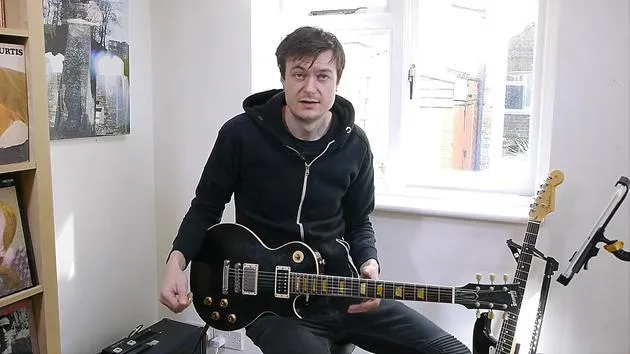
06. Further extensions and sus chords
4:19
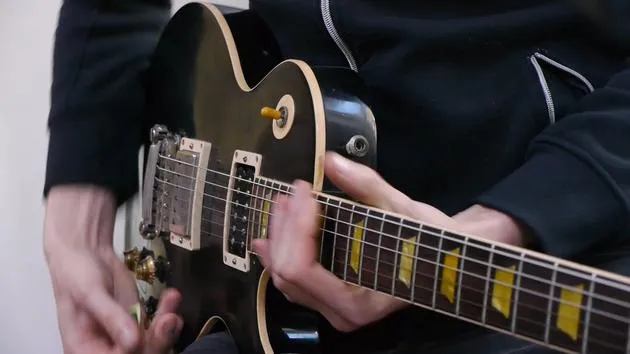
07. Comping in two different musical styles
8:36
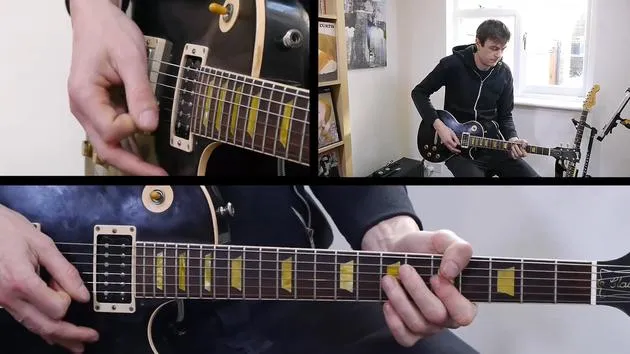
08. Mixing Rhythmic and Melodic comping
4:24
09. Rhythmic improv & comping
9:55
10. Advanced strumming and embellishments
5:40
Lesson transcript
Striped Shirt Music Lesson
Introduction to Striped Shirt
- Featuring Larry Colton on guitar, known as one of the great fusion guitarists of the 20th century.
- Inspired by the legendary Pat Metheny, another landmark American jazz guitarist, particularly in the realm of jazz fusion from the late 1900s.
- The name "Striped Shirt" is a nod to Pat's signature striped T-shirt, which he still wears on stage.
Getting Into the Music
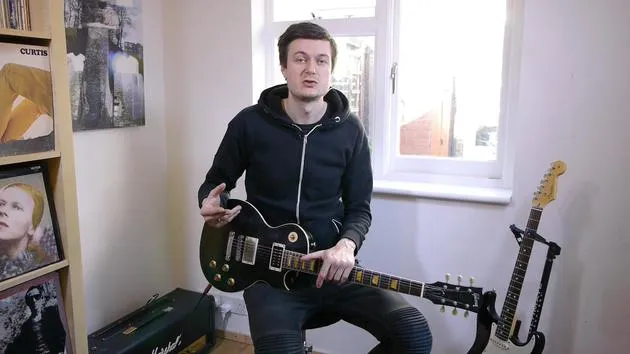
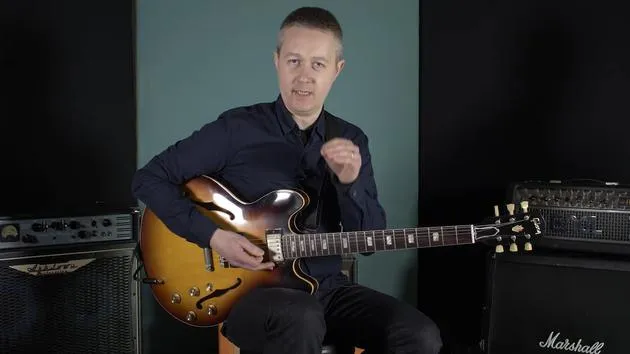
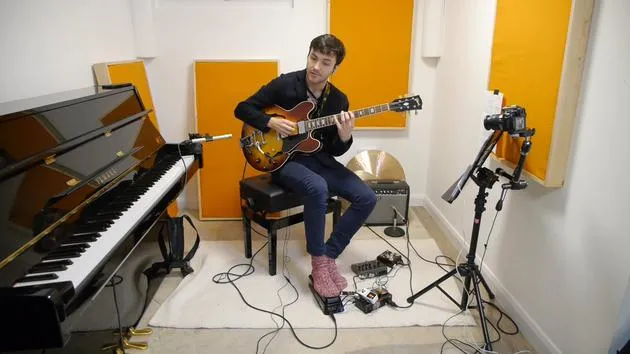
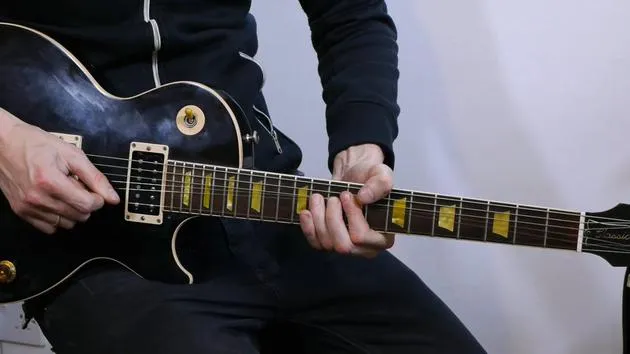
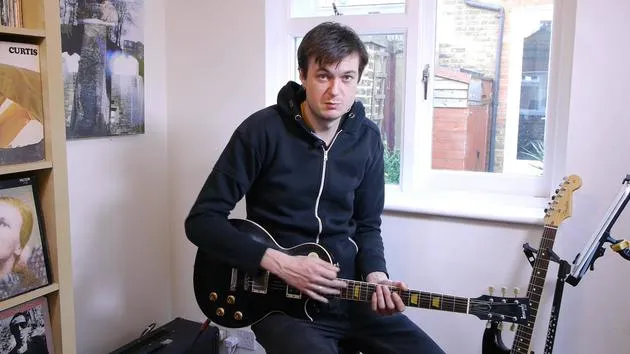
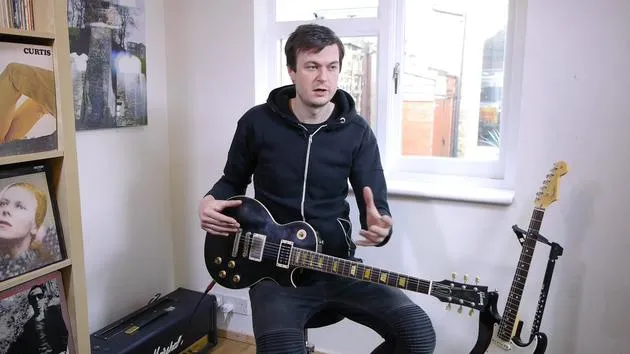
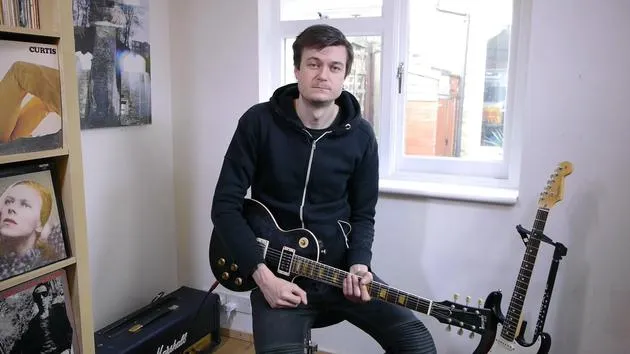
- Instrument: I'm using a Gibson 335 guitar, which offers a warm, dark sound for jazz.
- Delay Effect:
- Utilizes a delay pedal, providing a "slap back" effect.
- Every note played echoes, enhancing the depth of the guitar tone.
- Note: Many amplifiers lack this effect, so an external pedal may be necessary.
Time Feel
-
We are in 6/8 Time:
- This means there are 6 quavers (8th notes) per bar.
- The count feels like:
1, 2, 3, 4, 5, 6
instead of the typical1, 2, 3, 4.
-
Complex Structure:
- The piece employs a 4 over 6 feeling with dotted quavers and dotted 8th notes in bar 5.
- A suggested counting pattern:
1, 2, 3, 4, 5, 6
(Repeated for practice)
-
Polyrhythm:
- The goal is to feel both three (with the right hand) and two (with the left hand) simultaneously.
Chords Overview
-
Bar 1: Features a slash chord, A major with a B in the bass.
-
Bar 2: Shifted up a fret to B flat over C.
-
The B flat triad is in its second inversion.
-
Explanation of Inversions:
- Root Position: Starting from the root note.
- First Inversion: Starting from the third.
- Second Inversion: Starting from the fifth.
-
-
C9SUS4 & B9SUS4:
- B flat over C creates a unique sound.
Challenging Sections
- Bar 28: A tricky line begins on the upbeat of Bar 27, leading into the solo section.
- Bar 29: Features a C minor nine pattern moving down a semitone to B minor 9.
- These small four-note patterns are common in Metheny or Larry Carlton's styles.
Improvisation Tips
-
Solo in Bar 32: Consider using the earlier phrase as inspiration.
-
Additional Scale Suggestions:
- Bluescale and Dorian Mode are present, particularly in bars 30 and 31.
-
Modes Explained:
- Dorian Mode: The second mode of A major, contains the B minor pentatonic scale.
- Aeolian Mode: Comes from D major and lacks the G sharp.
-
Improv Techniques:
- Explore breaking scales into thirds rather than relying solely on pentatonic or blues scales.
Recommended Resources
- Technical Exercises: Check out the exercises provided in this course for better understanding of modes.
- Influential Guitarists: Explore works from Frank Gambale, Larry Carlton, John McLaughlin, Al Di Meola, and flamenco guitarist Paco de Lucia.
Listening Suggestions
- Pat Metheny's "Bright Size Life" featuring Jacob Astorias and Bob Moses; released on ECM in the 1970s.
- Other Guitarists: Look into John Schofield and Bill Frisell for additional inspiration.
Conclusion
- Technical Challenge: Although this piece is complex, it provides deep insights into jazz styles, particularly influenced by Pat Metheny.
- Questions: Don't hesitate to reach out to your teacher for any clarifications. Enjoy your journey with this piece!
46 lessons
3h 57m of structured video lessons
Advanced video features
Slow down, loop a passage, follow along
Mobile, tablet & desktop
Practise wherever you are
100% satisfaction guarantee
30-day money-back guarantee







