



Walking Basses
Looking at how walking basses are employed on boogie-woogie tunes
What's in the course
24 lessons (2h 1m) · 2 free
01. Introducing Basses & Practice Tips
2:23
02. Building Boogie Basses
Free lesson6:22

03. Developing Basses Further
8:57
04. Minor Basses
3:02

05. Walking Basses
You are here7:05

06. Getting Creative With 8-To-The-Bar Basses
5:33
07. Jimmy Yancey Style Latin Basses
2:07
08. Developing Your Own Basses - Rhythmic Ideas
6:04

09. Developing Your Own Basses - Harmonic Ideas & Suitcase Blues Study
8:08


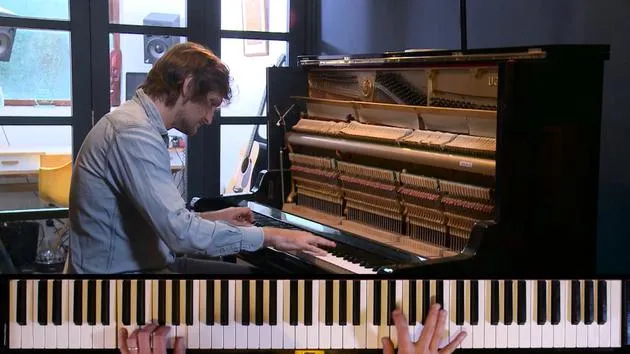
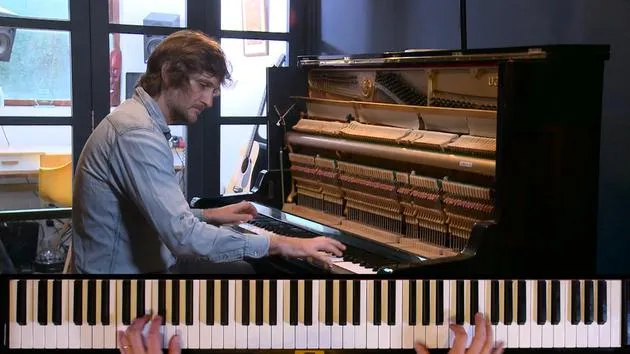
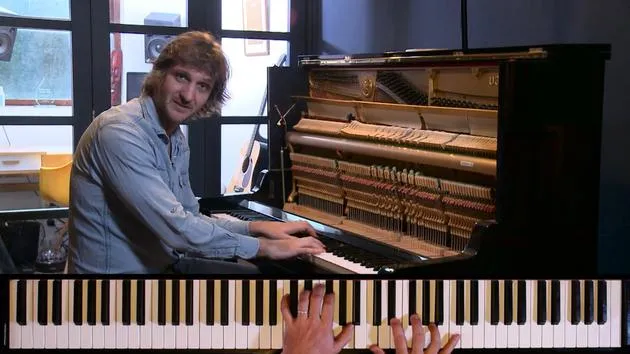
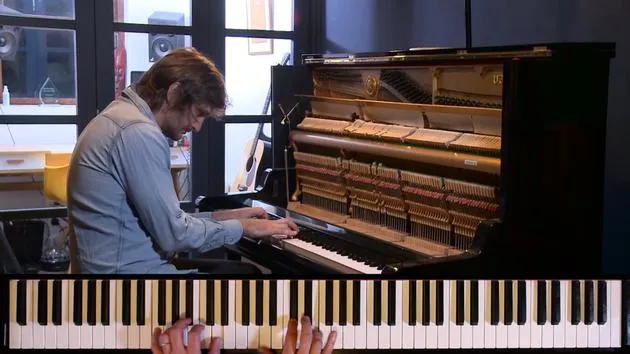
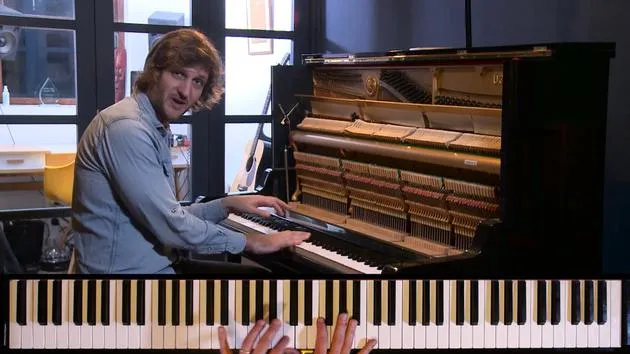
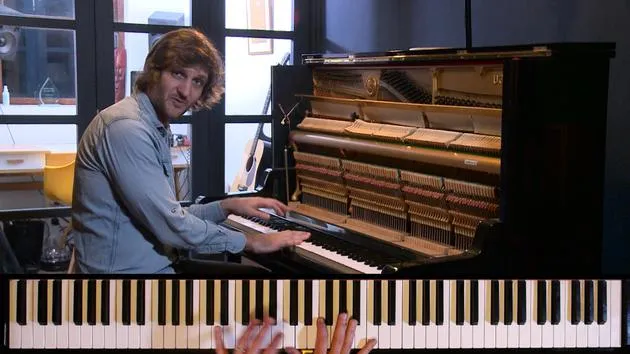
Lesson transcript
Exploring the Walking Bass Line
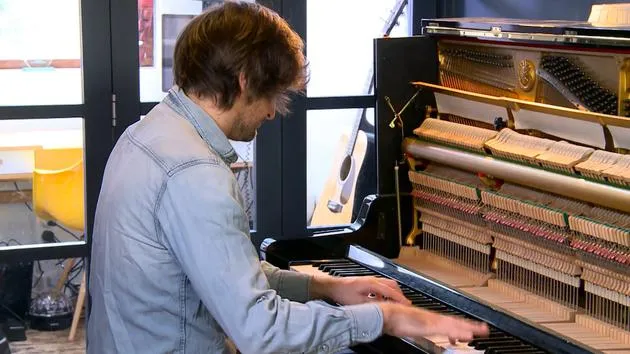
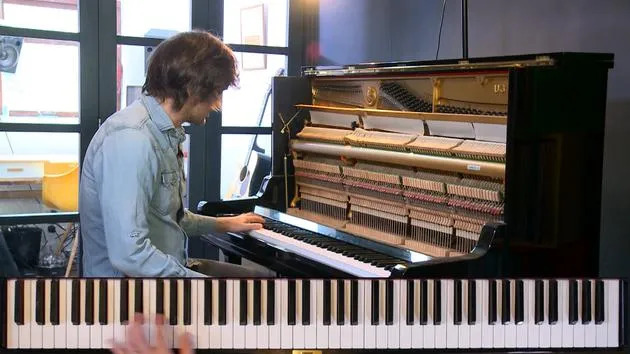
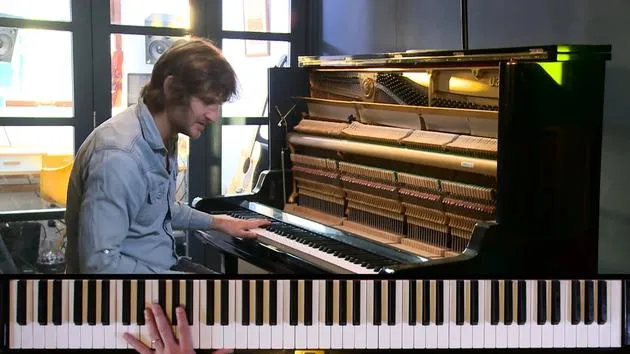
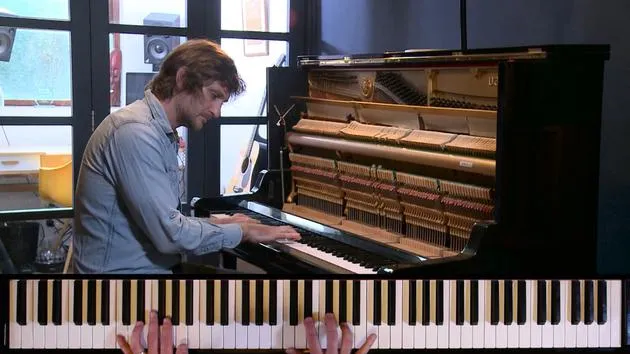
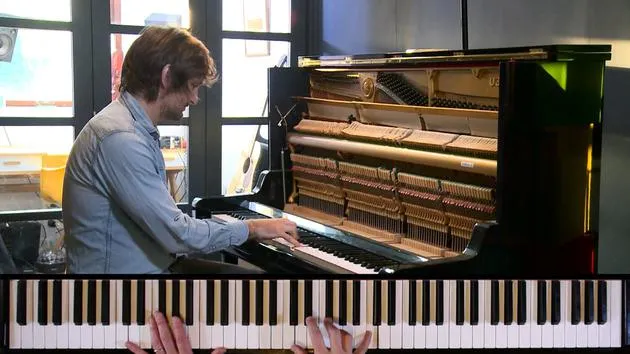
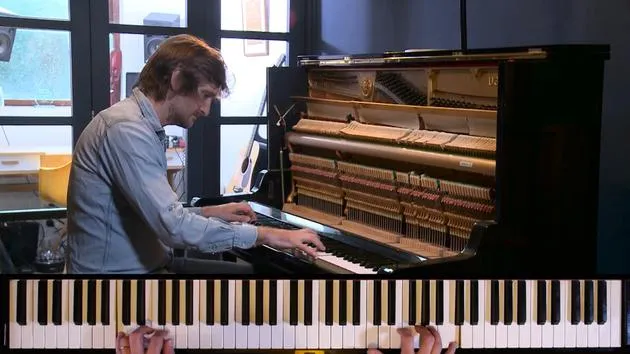
So yeah, let's look at another kind of bass line: the walking bass line. Let's explore it in as many different ways as we can.
The Basics
A walking bass line outlines the chord. For example, a 12-bar blues might go like this:
- Very simply, just outlining a C6
- Maybe to the 7
- Then the F
- Back to the C7
- Then to the G
- Maybe the F
It could stay on the G as well, but then there's a little turn around there. So there's a very simple walking bass line outlining the 12-bar blues.
Adding Excitement
What these early boogie players realized is that they could make it more exciting and intense by adding:
- An octave, which adds a bit of weight instantly.
- Breaking it up to create a skipping element, making it much more danceable.
So, you might get something like this. I might have even gone a little too harmonically advanced there with the little 2-5-1, then a different way down to the G, which you can do. The idea is that it's rocking between the octaves.
Exploring Variations
There are some things, like perhaps the Kaukau blues, where it's almost a sort of half-time feel. Feel free to explore different ways of playing it:
- Instead of going up and then down, why not start going down?
- Rather than going all the way up the chords, you might want to just go up, up, and down the triad.
You might do something like this, still based on the sixth chord.
Albert Ammons' Approach
Let's look at what Albert Ammons does sometimes with that walking bass line. He often adds the fifth, which again adds an extra layer of weight.
- So there you go.
- Then on the F.
- When he gets to the G or on Bass Gone Crazy, for example, he simply plays.
"Do check out that tune. It's great. And it's in the key of G as well."
If we put that in context, you can hear the difference going from the walking bass line without the fifth to the bass line with the fifth. It adds this extra weight, which I think is really hip.
Syncopation
Another thing that Albert Ammons does with that walking bass line with the fifth in it is to displace it by an eighth note or a quaver.
Rather than the bottom note being on the downbeat, that becomes the downbeat. For example:
- Instead of 1, 2, 3, 4, 1, you get something like 1, 2, a 1, 2, 3, etc.
This may sound slightly disjointed when you're familiar with the normal walking bass line, but when you put it in context, it works.
"It adds an extra kind of syncopation to it."
So something like this:
- 1, 2, 1, 2
adds a little bit of spice!
24 lessons
2h 1m of structured video lessons
Advanced video features
Slow down, loop a passage, follow along
Mobile, tablet & desktop
Practise wherever you are
100% satisfaction guarantee
30-day money-back guarantee
Meet your guru

Meet your guru
Paddy Milner is recognised as one of the leading blues piano players in the world - he is currently keyboard player of choice for Sir Tom Jones, following several years with the late, great Jack Bruce - but he is also a superb original songwriter and a distinctive singer. Just read the praise from the likes of Dave Brubeck below! His playing was featured on the soundtrack for the hit 2019 film 'Rocketman'.
He has twice won the award for Best Keyboard Player in the British Blues Awards, and he holds a long-standing residency as a founder member of the Ronnie Scott's Blues Explosion at the world-renowned Ronnie Scott's club.
His current group LONDONOLA plays homegrown British music with a strong dose of New Orleans spirit, and his collaborative group JAWBONE goes from strength to strength following the release of their self-titled debut album.
- "I love it... there's a guy who can really play the piano" - Dave Brubeck
- "I highly recommend it. Somehow things start to feel much better!" - Jack Bruce
- "The best blues piano player in Europe..." - Blues Access, USA
- "Impressive & original" - The Times
- "Dazzling" - The Independent
Across his courses, Paddy breaks down authentic blues shuffle, slow blues, boogie-woogie, rock 'n' roll and New Orleans piano - right down to three classic boogie-woogie songs - so you can learn these styles from one of the very best in the business.







