



Developing Your Own Basses - Harmonic Ideas & Suitcase Blues Study
Creative ideas for developing the boogie basses harmonically, including a study on Albert Ammons' Suitcase Blues
What's in the course
24 lessons (2h 1m) · 2 free
01. Introducing Basses & Practice Tips
2:23
02. Building Boogie Basses
Free lesson6:22
03. Developing Basses Further
8:57
04. Minor Basses
3:02
05. Walking Basses
7:05

06. Getting Creative With 8-To-The-Bar Basses
5:33
07. Jimmy Yancey Style Latin Basses
2:07
08. Developing Your Own Basses - Rhythmic Ideas
6:04

09. Developing Your Own Basses - Harmonic Ideas & Suitcase Blues Study
You are here8:08
Lesson transcript
Exploring Creative Bass Lines: Albert Ammons' "Suitcase Blues"
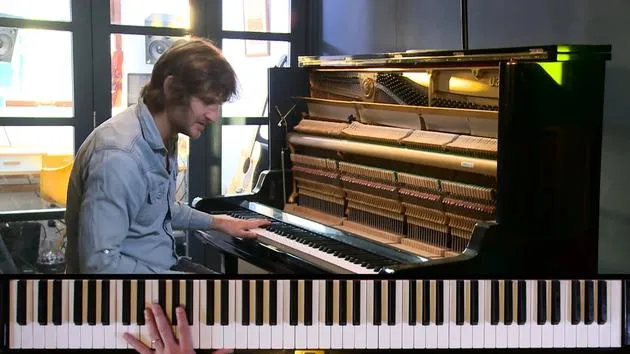
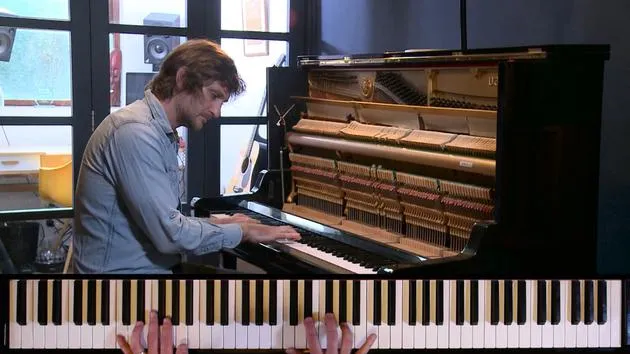
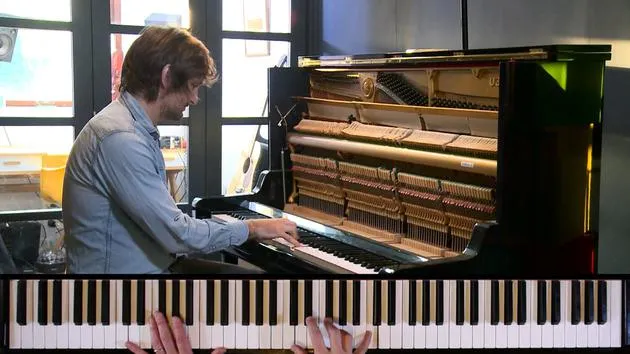
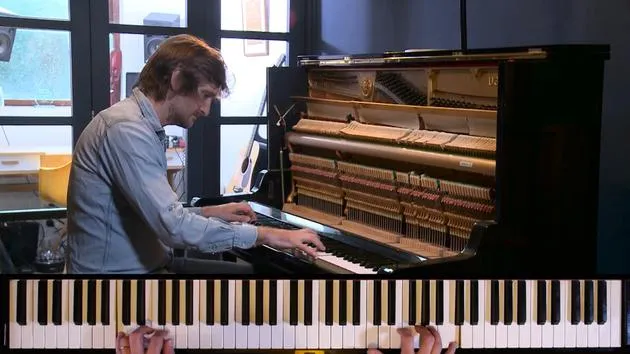
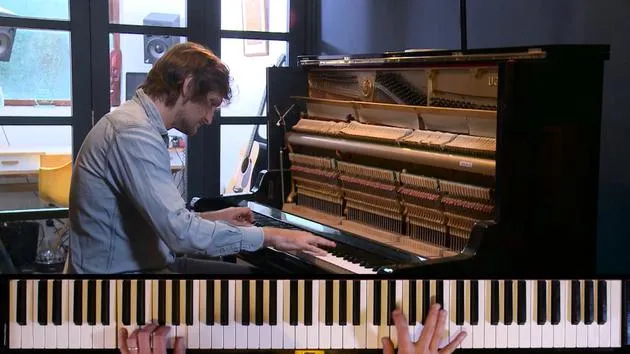
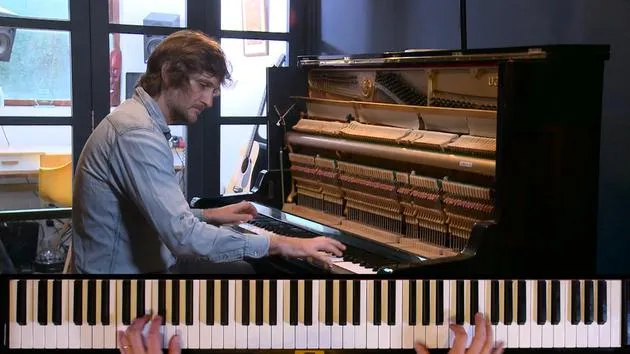
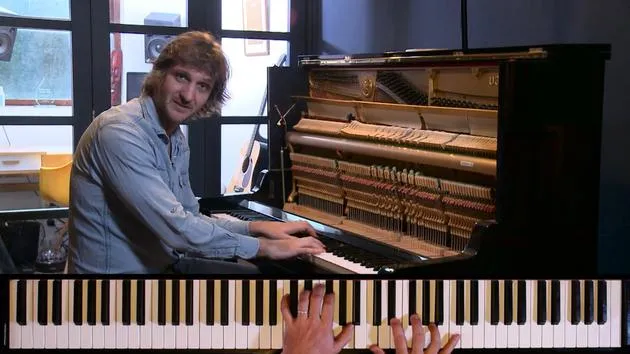
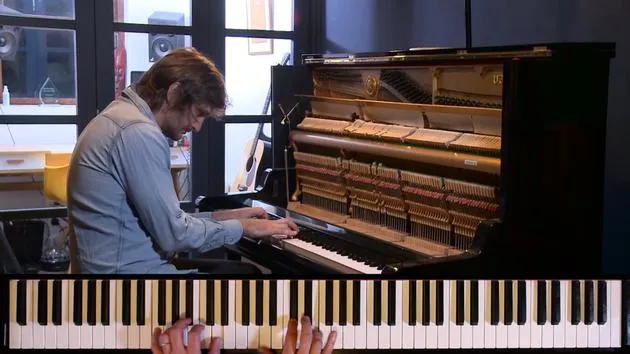
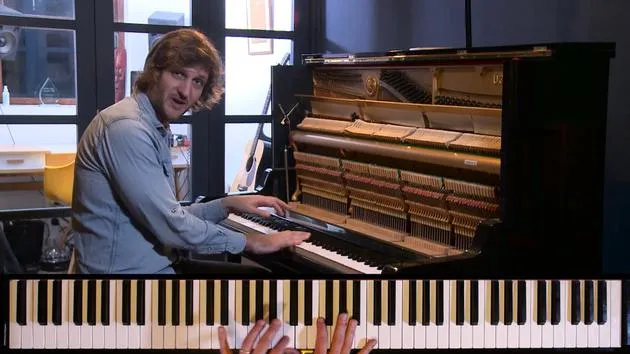
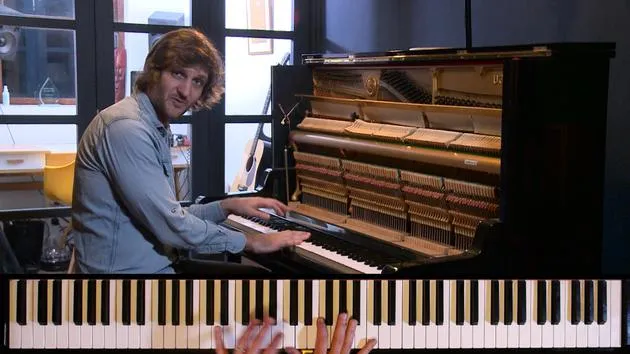
Talking about getting creative with bass lines, let's look at a truly interesting one by the fantastic Albert Ammons in his piece "Suitcase Blues."
Introduction to the Bass Line
- Identifiable Piece: The bass line is easily recognizable.
- Basis in Tenths: This bass line is based on tenths, which we haven't actually explored yet.
Essentially, it's a variation on a very simple bass line, but Ammons adds the 10th on top, which greatly enriches the texture.
- The root and the 10th stay where they are, and only the middle note moves.
The whole bass line goes like this:
When it moves up to the 4, it does this:
- It walks down the same intervals.
You'll notice it's exactly the same on the C and then back up to the G.
The V Chord: A Deeper Dive
When we reach the V chord, things get really interesting and quite complex.
- The harmonies seem to be influenced by stride piano playing, where tenths are more common.
- Ammons was a great stride piano player.
So when he approaches the V chord, he does so via a G (first inversion) to a B flat diminished chord, which is where the harmony transitions to A:
- This is actually a D7 in second inversion, with that tenth voicing.
So, it flows in tenths with the fifth in the middle or sixth, depending on how you look at it. It does this cool little phrase, and you could even put a little skip in there:
- Something like that.
Revisiting the Turnaround
There's a lot of notes here, and then we return to the diminished again. Next comes the turnaround, which I'll explain:
- The turnaround might look something like this:
So, the harmonies on the turnaround could be something like that, based on this:
- But he keeps transitioning to the G7 to the D7.
What he's done here is taken those harmonies and structured them in tenths. However, he's broken them up to maintain that rhythmic rolling feel:
- On 2, 3, 4.
And then we're back into the tune.
The Left Hand Feature
That's quite an involved left hand from Albert Ammons, and there's a fantastic little break during the tune which I'm excited to share.
- This segment is a left-hand feature before returning to the main theme.
Essentially, it involves going up the triad and back into the tune, with some rolls included.
- The whole break might look something like this, then back in.
Let me just show you that little turnaround back into the tune.
Right Hand Integration
Now, to give you a glimpse of how the actual tune sounds, we will also look at the right hand stuff alongside the tenth in the left hand:
That's the main part of the tune!
Conclusion
There you go! That's just a little insight into "Suitcase Blues" by Albert Ammons.
24 lessons
2h 1m of structured video lessons
Advanced video features
Slow down, loop a passage, follow along
Mobile, tablet & desktop
Practise wherever you are
100% satisfaction guarantee
30-day money-back guarantee
Meet your guru

Meet your guru
Paddy Milner is recognised as one of the leading blues piano players in the world - he is currently keyboard player of choice for Sir Tom Jones, following several years with the late, great Jack Bruce - but he is also a superb original songwriter and a distinctive singer. Just read the praise from the likes of Dave Brubeck below! His playing was featured on the soundtrack for the hit 2019 film 'Rocketman'.
He has twice won the award for Best Keyboard Player in the British Blues Awards, and he holds a long-standing residency as a founder member of the Ronnie Scott's Blues Explosion at the world-renowned Ronnie Scott's club.
His current group LONDONOLA plays homegrown British music with a strong dose of New Orleans spirit, and his collaborative group JAWBONE goes from strength to strength following the release of their self-titled debut album.
- "I love it... there's a guy who can really play the piano" - Dave Brubeck
- "I highly recommend it. Somehow things start to feel much better!" - Jack Bruce
- "The best blues piano player in Europe..." - Blues Access, USA
- "Impressive & original" - The Times
- "Dazzling" - The Independent
Across his courses, Paddy breaks down authentic blues shuffle, slow blues, boogie-woogie, rock 'n' roll and New Orleans piano - right down to three classic boogie-woogie songs - so you can learn these styles from one of the very best in the business.







