



Developing Basses Further
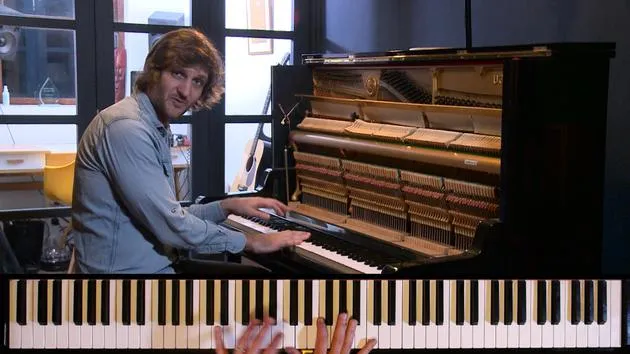
Paddy Milner adds thirds and inversions to simple boogie-woogie bass lines, drawing on Meade Lux Lewis's 'Honky Tonk Train Blues' to make them more interesting.
What's in the course
24 lessons (2h 1m) · 2 free
01. Introducing Basses & Practice Tips
2:23
02. Building Boogie Basses
Free lesson6:22
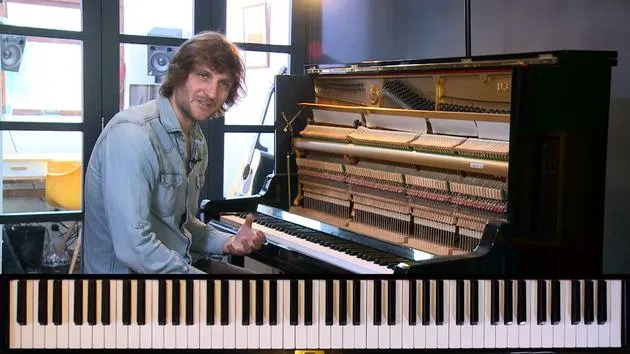
03. Developing Basses Further
You are here8:57
04. Minor Basses
3:02

05. Walking Basses
7:05

06. Getting Creative With 8-To-The-Bar Basses
5:33
07. Jimmy Yancey Style Latin Basses
2:07
08. Developing Your Own Basses - Rhythmic Ideas
6:04

09. Developing Your Own Basses - Harmonic Ideas & Suitcase Blues Study
8:08
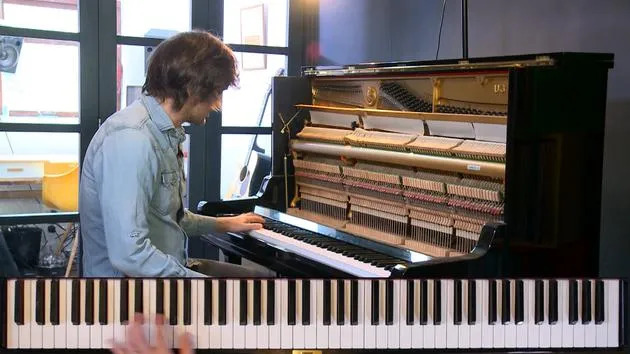
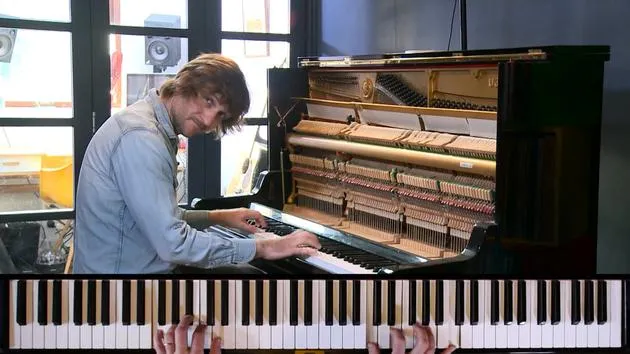

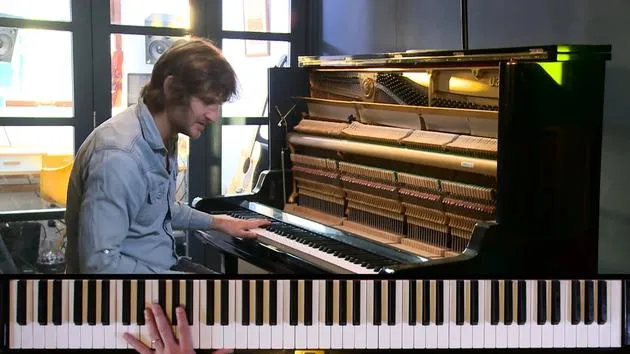
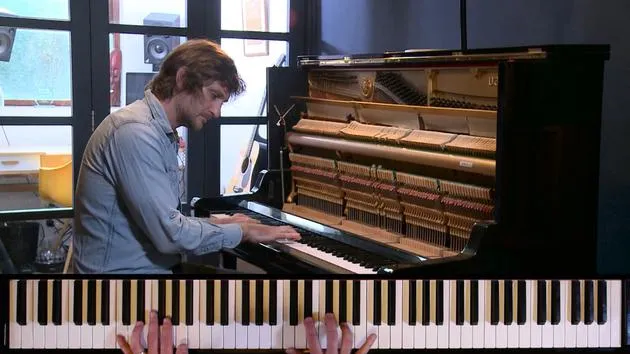
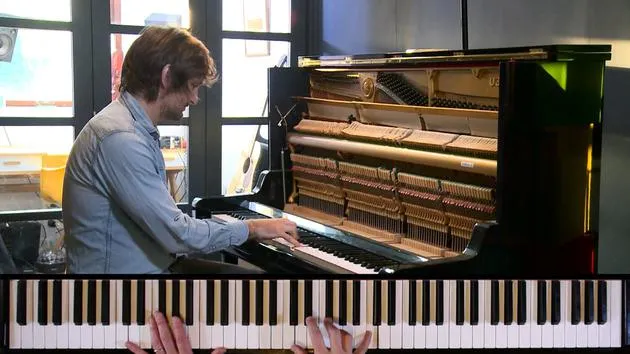
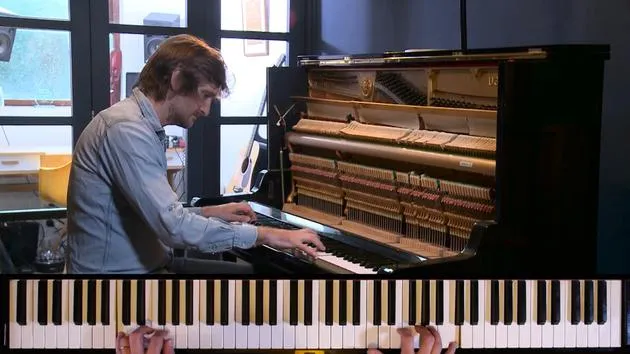
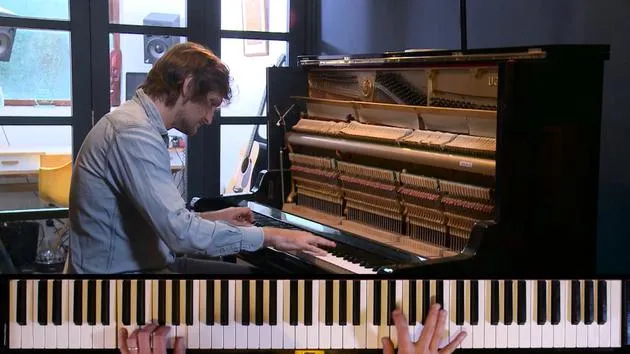
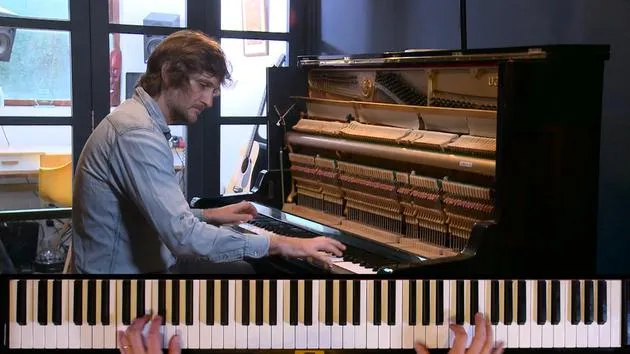
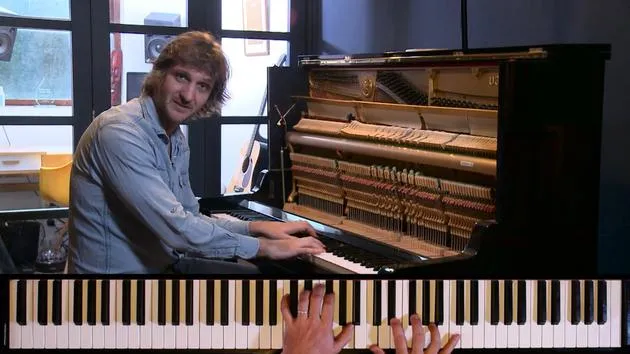
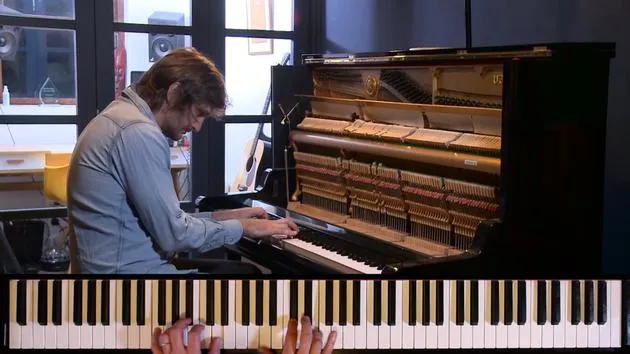
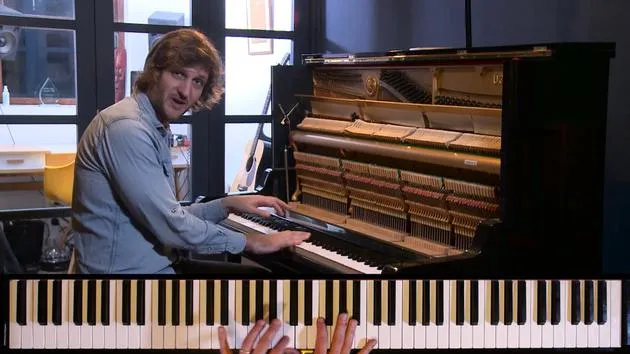
Lesson transcript
Bass Lesson: Adding Complexity to Simple Lines
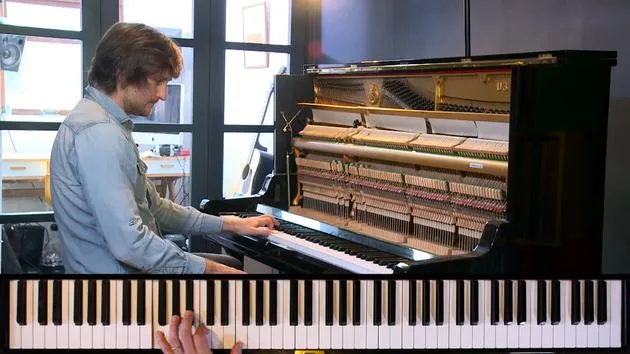
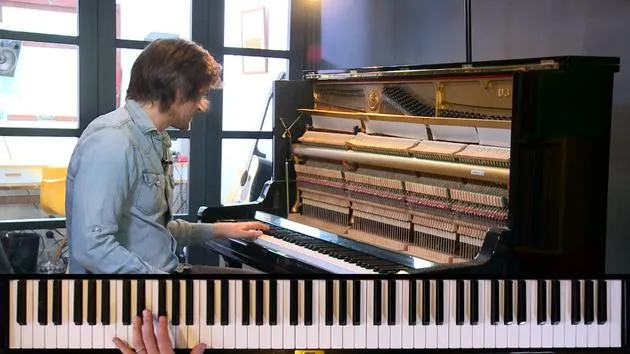
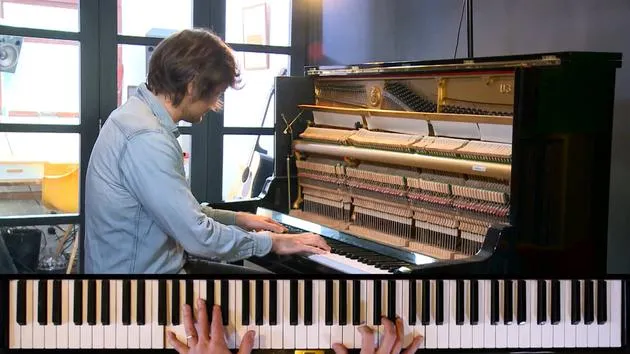
Now we could go back to one of the early basses we looked at. Obviously very simple. Why not add a third to it like this?
Again, it instantly makes it more interesting and fun. You know, that's fairly simple. It kind of works. It's fine.
Honky Tonk Train Blues Connection
But definitely add something. You might hear it sounds a bit like Honky Tonk Train Blues by Meadlux Lewis. It's a very similar bass based on what he uses in that.
In fact, what he does is invert it and put the fifth at the bottom of the voicing. So rather than this, you get:
- Original Bass:
- Modified Bass:
It's not a direct copy because with the original one, you've got the top two notes moving:
- The G going to the A
- The E going to the F
And at the bottom:
- The E goes to the F
- The C goes to the D
So it's the same in the sense that the top two notes are moving while the bottom note stays on the C, that kind of drone C. But in the Honky Tonk Train version, the G stays on the G, so the fifth is in the bass, which gives it a kind of rich sound.
Key Importance
I think Honky Tonk Train Blues is actually in the key of G, by the way.
- Key of G: Important!
- If I played it in C, when you go to the F, it sounds very muddy.
- In the key of G, when you go to that C, it still sounds cool.
So yeah, when it jumps up to the D, it doesn't play, which would be the direct transposition of this with the fifth in the bass. What it does is stay on the D:
- D Note:
And there's some debate about whether it actually introduces that third or not. I'm not sure; that's not what I play when I play the tune.
Adding Octaves for Intensity
So, there you go! Great Milux Lewis bass there.
Let's go back to this bass in thirds. Why not, for some extra weight, add the octave at the top and keep playing it?
If you want to add a bit more intensity or excitement to the next chorus, you could play the previous chorus with another bass line or a bass line in thirds.
- Next Chorus:
- When it comes to the next chorus and the octave, you can instantly hear that it is more intense.
- Use that towards the end of a song for extra kick.
Boogie Woogie Stomp Comparison
If you listen to Boogie Woogie Stomp by Albert Ammons, it's based on the Pine Top Smith original, Pine Top Spoogie Woogie. In the last few choruses, he takes it out with some big bass lines, actually based on sixth chords, which I'll discuss later.
Rocking the Bass Lines
Some other ideas we can utilize with these bass lines placed in thirds include:
- Rocking the Notes:
- Rather than playing them together, try something like this:
This approach enables you to play it a lot quicker, should you wish to do that.
Remember, playing quick just sounds rushed. At the end of the day, you've got to remember this is music for people to dance to. It should be at a tempo that people can dance to.
Staying on the Chord
You could also rock with the octave. Rather than going on the four chord, you could actually stay a little like in Honky Tonk Train Blues.
- When it changes to the V chord, the root note stays the same. You can do the same when it goes up to the four chord.
Example:
1, 2, 3, 4.
I'll show you that again:
- It's got that C, that bottom C as a pedal note, which I think gives it some real excitement.
Expanding the Hand Span
That's a good little tip for you! Why not move that top note as well?
We're getting quite a big hand span here, but it sounds good and fattens it out. The top note of the chord is doing that maybe on the four chord.
Example:
On the four chord, maybe something like this again:
- It's a big fat bass line there, which I'm not sure you hear very often, if at all.
Conclusion
I think it's something I occasionally use, and it's something I've kind of developed from that simple bass line.
- Add the third,
- Add the octave,
- Move the octave,
- Why not rock that as well?
I use that on the tune I played for you, 21st Century Boogie.
So there we go! Some basses in thirds with the octave added for some extra weight.
24 lessons
2h 1m of structured video lessons
Advanced video features
Slow down, loop a passage, follow along
Mobile, tablet & desktop
Practise wherever you are
100% satisfaction guarantee
30-day money-back guarantee
Meet your guru

Meet your guru
Paddy Milner is recognised as one of the leading blues piano players in the world - he is currently keyboard player of choice for Sir Tom Jones, following several years with the late, great Jack Bruce - but he is also a superb original songwriter and a distinctive singer. Just read the praise from the likes of Dave Brubeck below! His playing was featured on the soundtrack for the hit 2019 film 'Rocketman'.
He has twice won the award for Best Keyboard Player in the British Blues Awards, and he holds a long-standing residency as a founder member of the Ronnie Scott's Blues Explosion at the world-renowned Ronnie Scott's club.
His current group LONDONOLA plays homegrown British music with a strong dose of New Orleans spirit, and his collaborative group JAWBONE goes from strength to strength following the release of their self-titled debut album.
- "I love it... there's a guy who can really play the piano" - Dave Brubeck
- "I highly recommend it. Somehow things start to feel much better!" - Jack Bruce
- "The best blues piano player in Europe..." - Blues Access, USA
- "Impressive & original" - The Times
- "Dazzling" - The Independent
Across his courses, Paddy breaks down authentic blues shuffle, slow blues, boogie-woogie, rock 'n' roll and New Orleans piano - right down to three classic boogie-woogie songs - so you can learn these styles from one of the very best in the business.







