



Paddy's Rock 'n' Roll piano basics

With
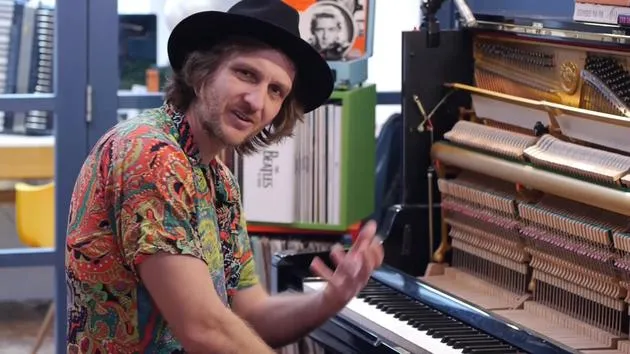
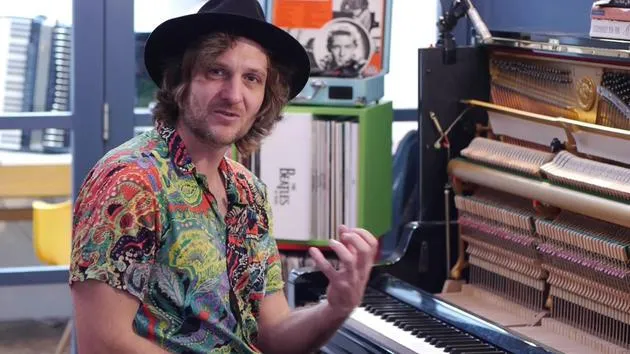
Paddy MilnerPaddy explains the Rock 'n' Roll form, playing through and teaching you a simple 12-bar to get started

What's in the course
25 lessons (2h 34m) · 1 free













Lesson transcript
Introduction to Rock and Roll Music
Cool! So before we jump in and look in depth at some Jerry Lee Lewis and other rock and roll ideas, let's briefly discuss what I mean by rock and roll in relation to this course.
Understanding the 12-Bar Blues Form
Essentially, we're looking at the 12-bar blues form, which, if you're not familiar with it, I'll give you a quick rundown:
- This form consists of 12 bars that repeat on a cycle.
- There are different variations, but let's use this basic structure as our foundation:
-
Four bars on chord I
- In the key of C, that would be four bars on the chord of C.
-
Two bars on chord IV
- This is the chord of F.
-
Two bars on chord I
- Back to C again.
-
One bar on chord V
-
One bar on chord IV
-
Two bars on chord I
Distinction Between Rock and Roll and Blues
Rock and Roll Piano Characteristics
So, what makes rock and roll piano different from blues and boogie woogie?
-
Simpler Palette: Rock and roll often features a simpler left hand.
- For example, you might play something straightforward like a basic rhythm pattern.
-
Right Hand Repeats: The right hand often has lots of repeated notes.
We will look at more complicated things later, but for now, think of this as the broad idea for rock and roll.
Influences
- We'll explore the style of Jerry Lee Lewis, and also get inspired by Johnny Johnson, the great piano player who accompanied Chuck Berry on all his notable tunes.
Demonstration
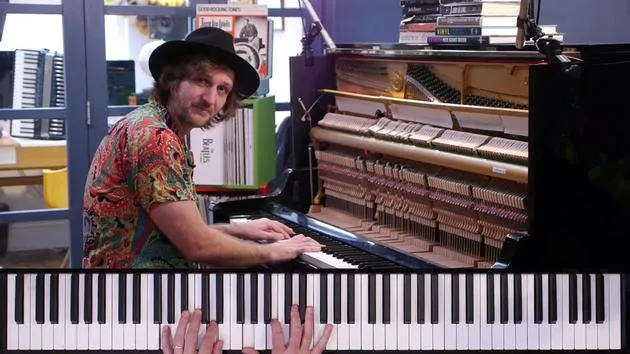
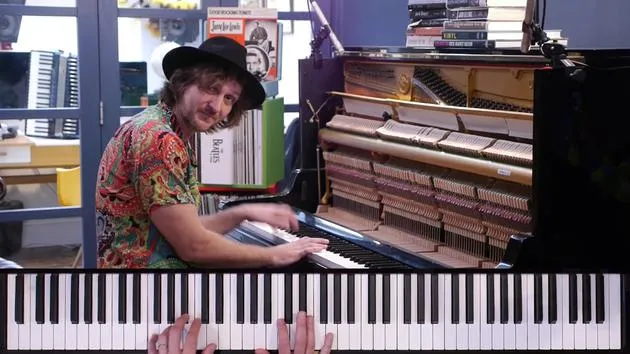
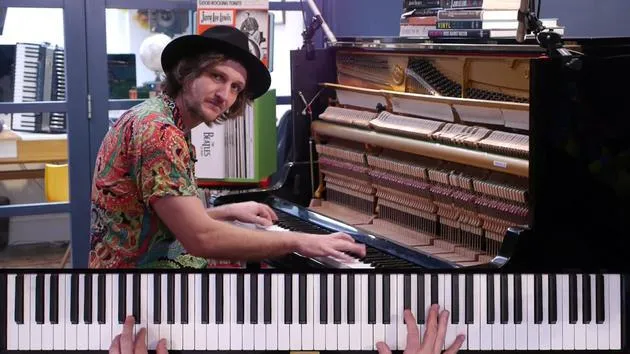
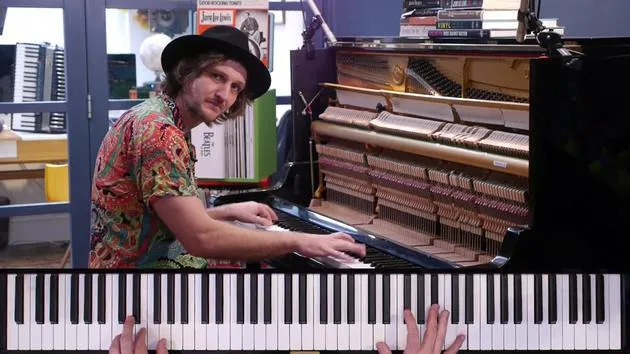
I'm going to play something now that captures the essence of rock and roll without doing anything too crazy.
- You'll hear lots of repeated notes in the right hand and a simple left hand pattern.
- If you can get your fingers around this, you'll have a good basis for exploring other ideas in the course.
Here we go:
"A one, two, a one, two."
So there you go! There's something relatively simple with lots of repeated notes. I did add a few little embellishments, for example: those little runs. But don't worry if you can't get those down right now. Just concentrate on getting the repeated notes together with the left hand.
Conclusion
And remember, with that real rock and roll attitude, we're not just "pussyfooting" around. It's about hammering it out with that spirit of rock and roll.
So, yeah, let's dive into the course!
25 lessons
2h 34m of structured video lessons
Advanced video features
Slow down, loop a passage, follow along
Mobile, tablet & desktop
Practise wherever you are
100% satisfaction guarantee
30-day money-back guarantee
Meet your guru
Meet your guru
Paddy Milner is recognised as one of the leading blues piano players in the world - he is currently keyboard player of choice for Sir Tom Jones, following several years with the late, great Jack Bruce - but he is also a superb original songwriter and a distinctive singer. Just read the praise from the likes of Dave Brubeck below! His playing was featured on the soundtrack for the hit 2019 film 'Rocketman'.
He has twice won the award for Best Keyboard Player in the British Blues Awards, and he holds a long-standing residency as a founder member of the Ronnie Scott's Blues Explosion at the world-renowned Ronnie Scott's club.
His current group LONDONOLA plays homegrown British music with a strong dose of New Orleans spirit, and his collaborative group JAWBONE goes from strength to strength following the release of their self-titled debut album.
- "I love it... there's a guy who can really play the piano" - Dave Brubeck
- "I highly recommend it. Somehow things start to feel much better!" - Jack Bruce
- "The best blues piano player in Europe..." - Blues Access, USA
- "Impressive & original" - The Times
- "Dazzling" - The Independent
Across his courses, Paddy breaks down authentic blues shuffle, slow blues, boogie-woogie, rock 'n' roll and New Orleans piano - right down to three classic boogie-woogie songs - so you can learn these styles from one of the very best in the business.







