



Other ideas
With
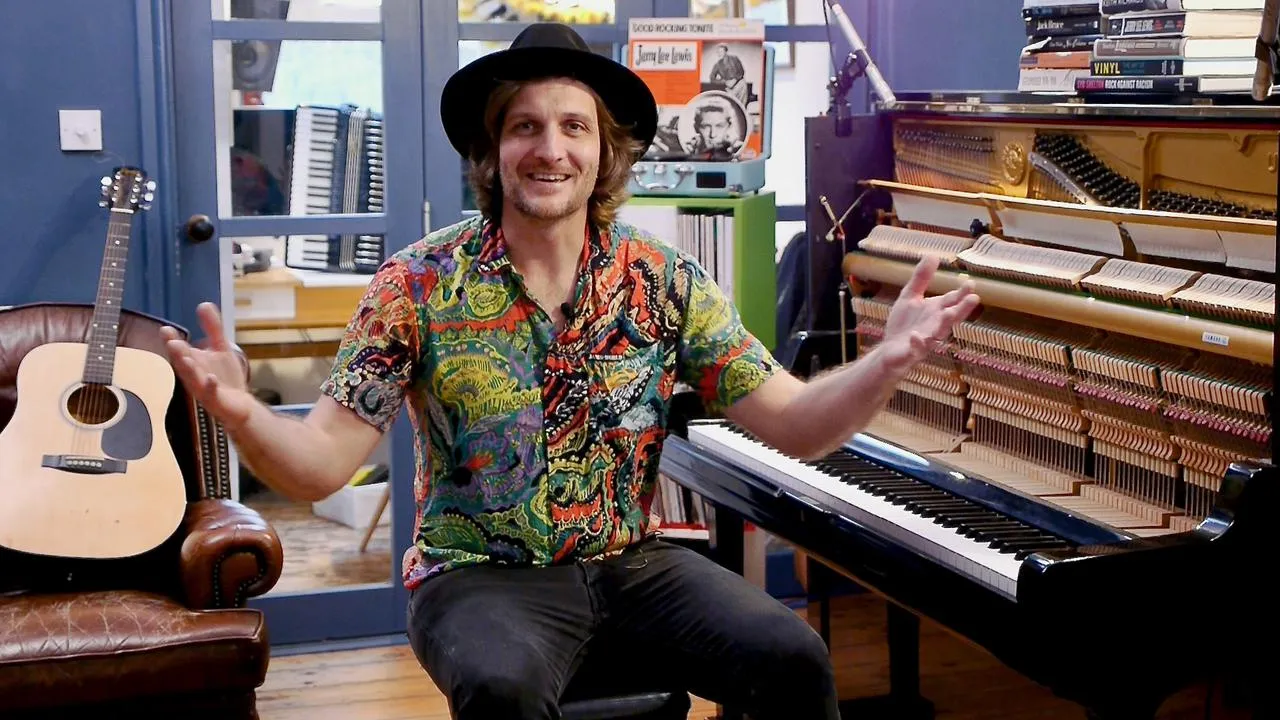
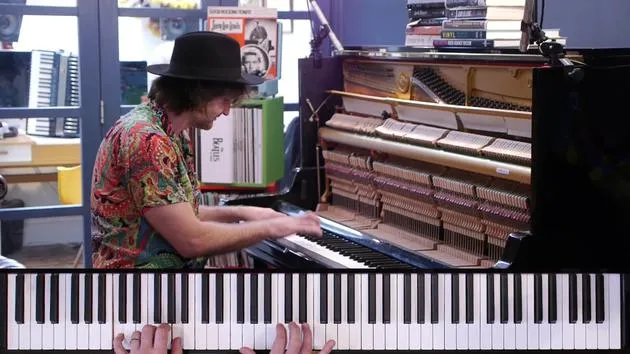
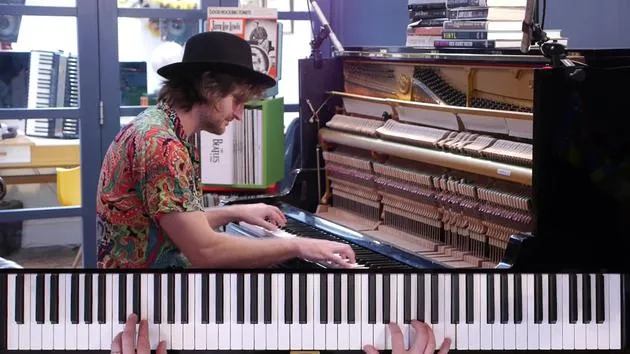
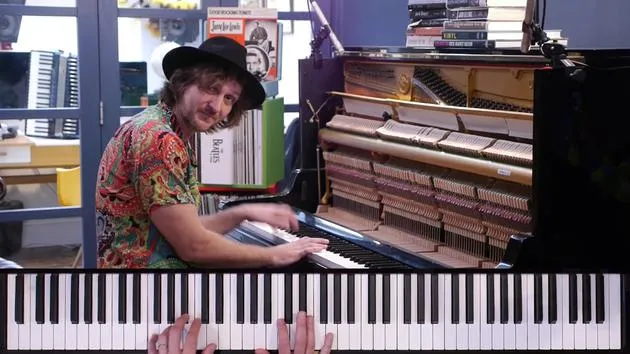
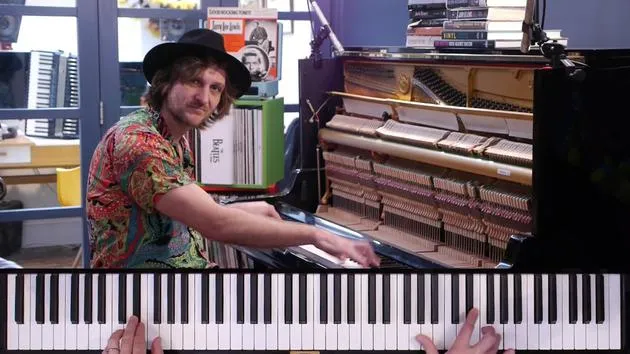
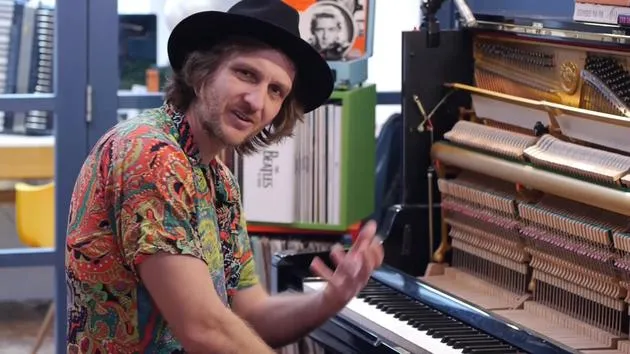
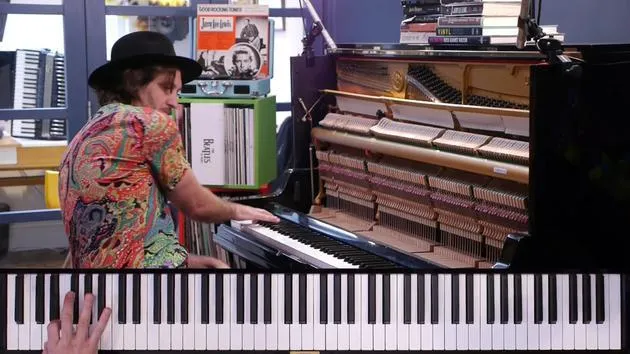
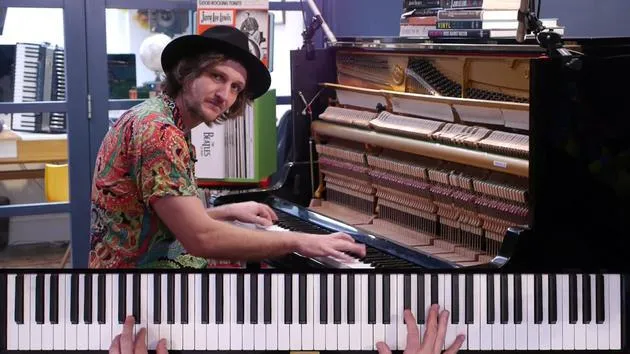
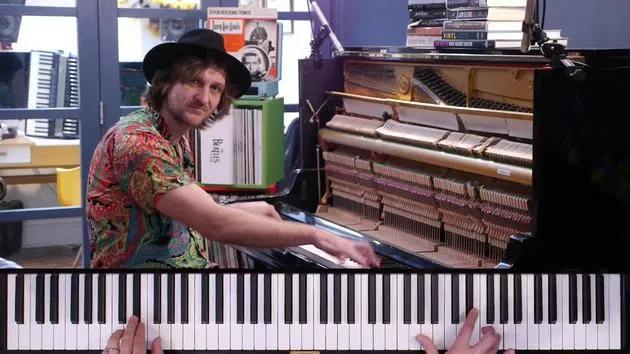
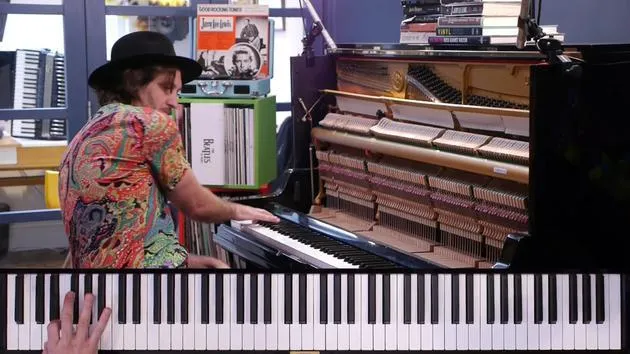
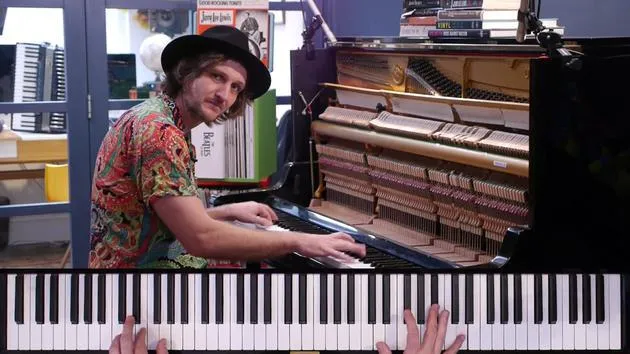
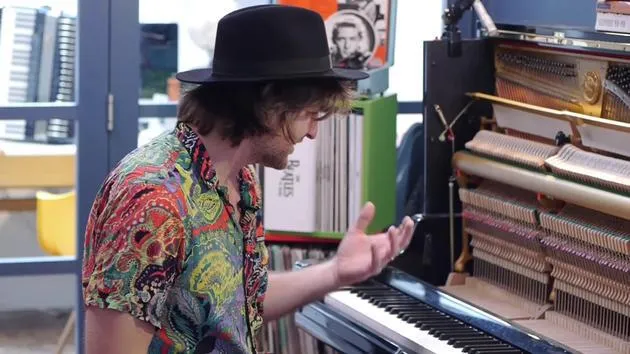
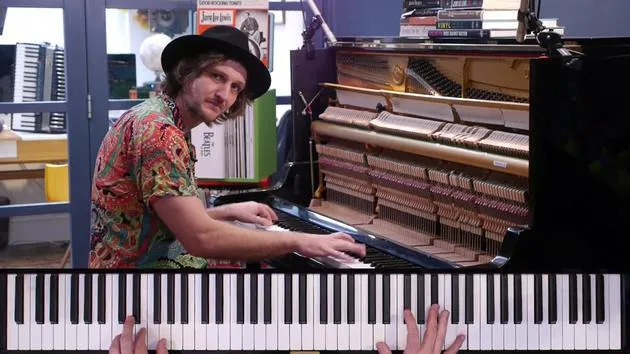
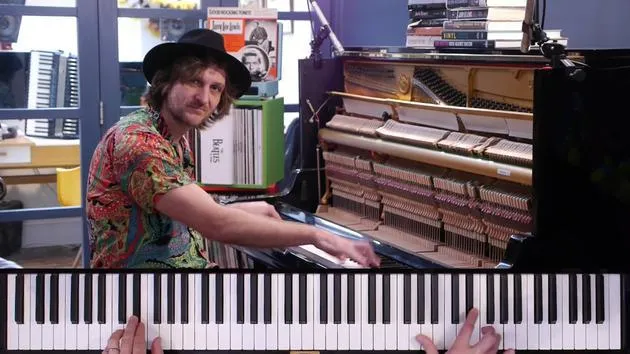
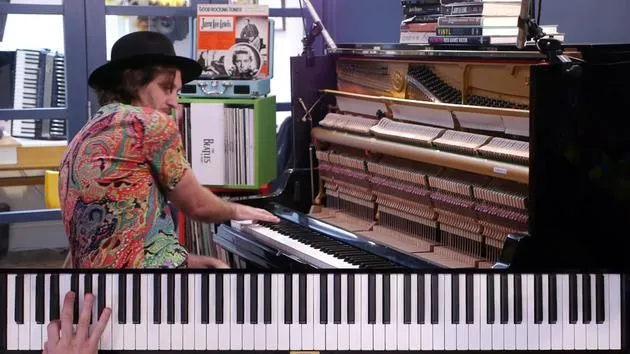
Paddy MilnerPaddy Milner explores more of Jerry Lee Lewis's moves in the tune, from triad embellishments and crushed notes to glissandi and a 'cha cha' riff.
What's in the course
25 lessons (2h 34m) · 1 free
Lesson transcript
Exploring Jerry Lee Lewis's Techniques in "Whole Lotta Shakin'"
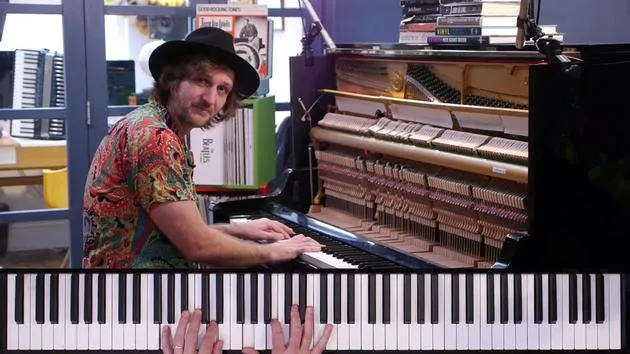
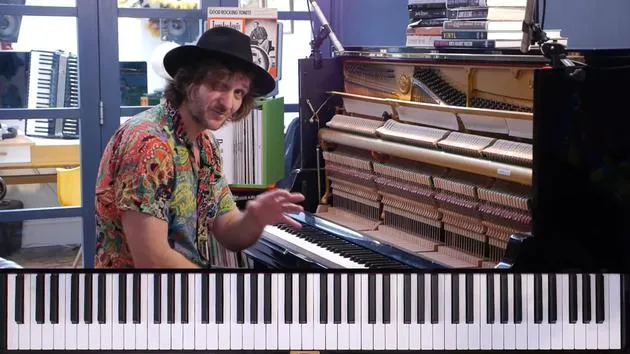
Okay, so let's look at a couple of other ideas that Jerry Lee brings out in "Whole Lotta Shakin'."
Guitar Solo Insights
- Just a little one in the guitar solo where Jerry Lee's kind of pumping away in the background.
- Then on the fourth bar, he does that nice little run up, which is something that musicians use a lot, actually.
- Often, it serves as a kind of musical joke or a musical witticism, if you like.
It's almost like the ending to Cha Cha Cha, which actually Jerry Lee does on, which show is it? I think it's the Dick Clark TV performance where at the end of "Great Balls of Fire," he actually finishes it with a cha cha cha ending rather than the typical ending.
I'm sure they included that as a bit of a musical joke.
Integration into Performance
So goodness agrees, "Great Balls of Fire" does that too, maybe not without the left hand going in the other direction, but they still do that ending.
- He uses that run in the guitar solo to lead up to the four chord, injecting a bit of energy going to that chord change.
- This technique can be applied to any song, particularly when you want to inject energy during a chord transition.
- You could even use it over various chord changes multiple times, allowing you to turn it into a bit of a theme that you develop.
Additional Techniques
Another little idea that Jerry Lee uses is in the verse after the guitar solo, perhaps, where he comes back down from the four chord.
- He includes a little figure, which is quite a hip thing to do: "Here we go!" and then back in.
This is an idea I've explored quite extensively in my shuffle and boogie courses. It's basically an embellishment of a triad, going between two notes.
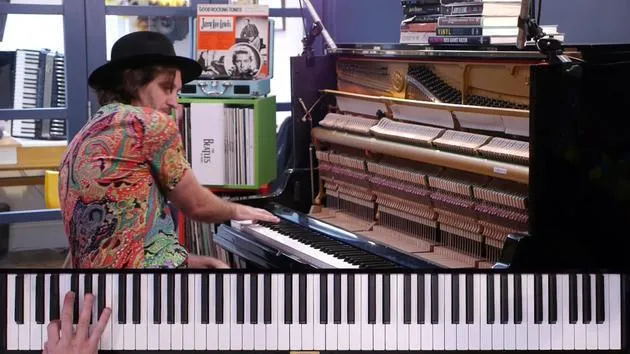
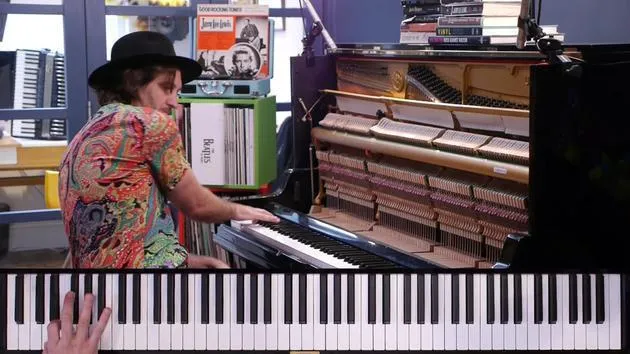
From the four chord, he adds the crushed note, then he sticks a glissando, a nice quick one, going all the way up to the top C.
Practice Tips
- Have a practice of that. You might find that getting into the glissando and back out of it could take a bit of practice to return to that hand position.
- There's so much you can do with this riff. For instance, you could add a top octave to make it sound a bit fatter.
Now, I'm slightly changing the rhythmic approach there.
- Rather than playing it at the same point in the bar:
1, 2, 3, 4. 1, 2, 3, 4.
I'm going:
1, 2, 3, 4. 1, 2.
This displacement creates a nice rhythmic effect.
Experimentation
Why not play it again? Adding that octave just makes it even fatter!
25 lessons
2h 34m of structured video lessons
Advanced video features
Slow down, loop a passage, follow along
Mobile, tablet & desktop
Practise wherever you are
100% satisfaction guarantee
30-day money-back guarantee
Meet your guru
Meet your guru
Paddy Milner is recognised as one of the leading blues piano players in the world - he is currently keyboard player of choice for Sir Tom Jones, following several years with the late, great Jack Bruce - but he is also a superb original songwriter and a distinctive singer. Just read the praise from the likes of Dave Brubeck below! His playing was featured on the soundtrack for the hit 2019 film 'Rocketman'.
He has twice won the award for Best Keyboard Player in the British Blues Awards, and he holds a long-standing residency as a founder member of the Ronnie Scott's Blues Explosion at the world-renowned Ronnie Scott's club.
His current group LONDONOLA plays homegrown British music with a strong dose of New Orleans spirit, and his collaborative group JAWBONE goes from strength to strength following the release of their self-titled debut album.
- "I love it... there's a guy who can really play the piano" - Dave Brubeck
- "I highly recommend it. Somehow things start to feel much better!" - Jack Bruce
- "The best blues piano player in Europe..." - Blues Access, USA
- "Impressive & original" - The Times
- "Dazzling" - The Independent
Across his courses, Paddy breaks down authentic blues shuffle, slow blues, boogie-woogie, rock 'n' roll and New Orleans piano - right down to three classic boogie-woogie songs - so you can learn these styles from one of the very best in the business.







