



Variations on the solos

With
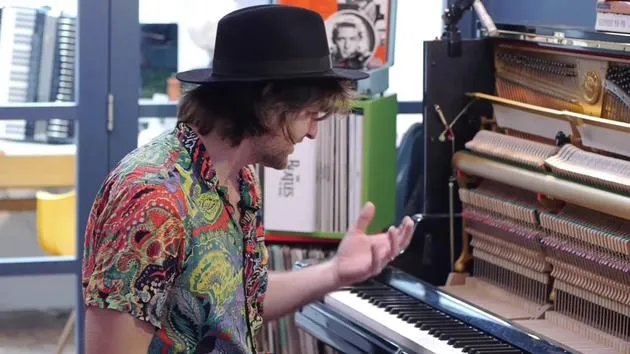
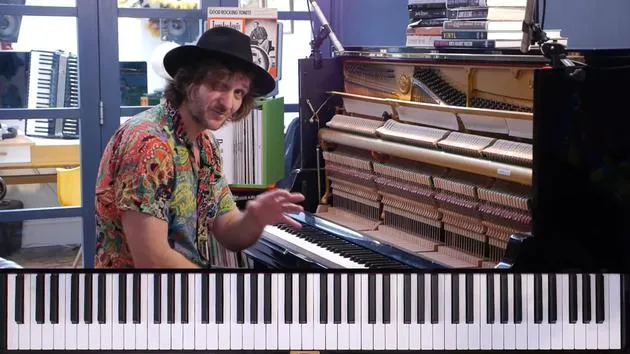
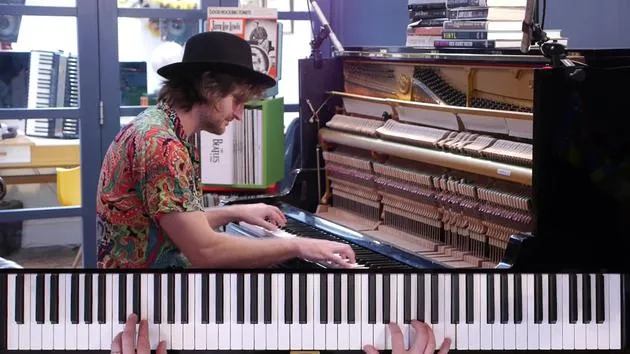
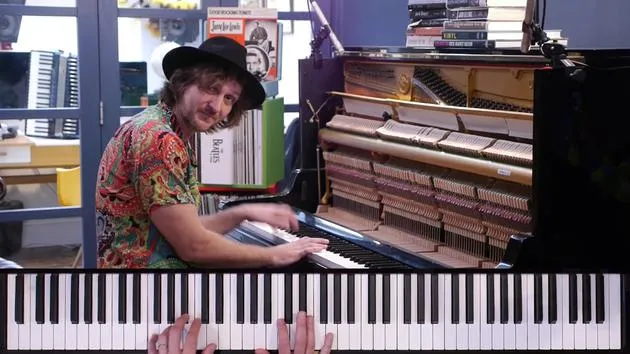
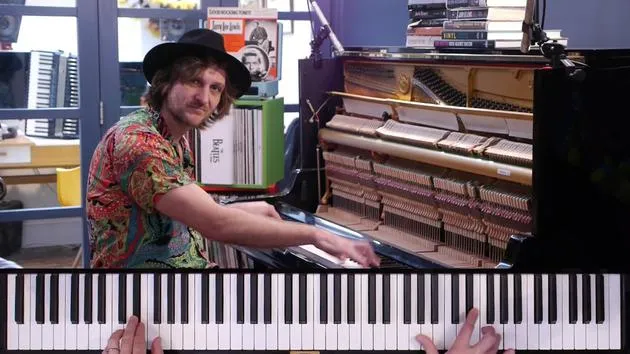
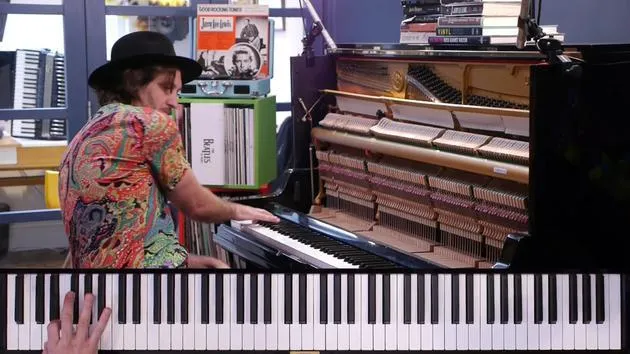
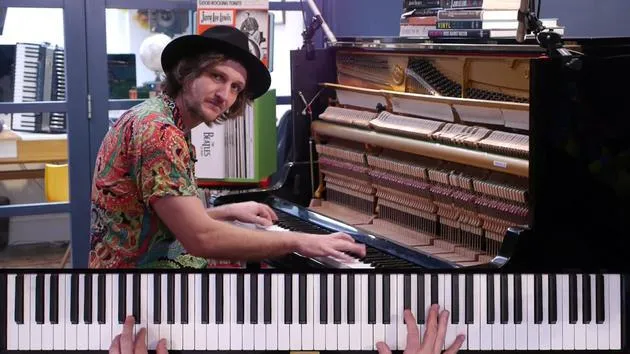
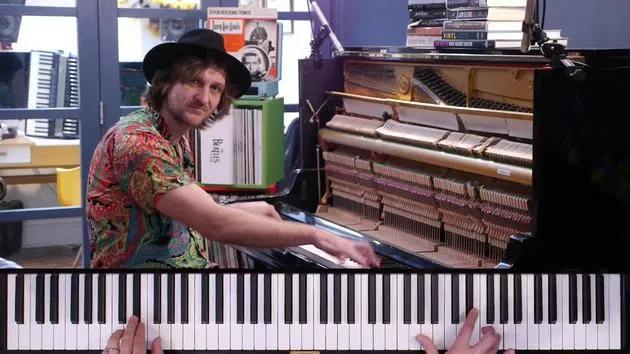
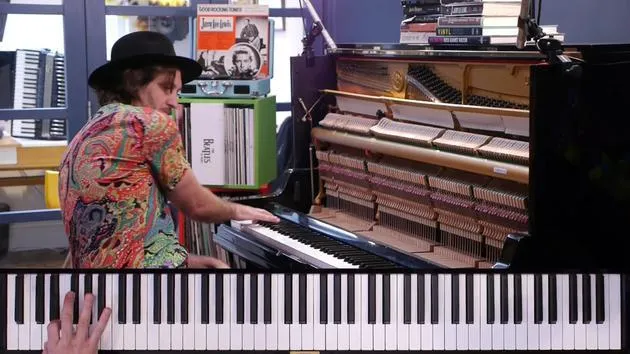
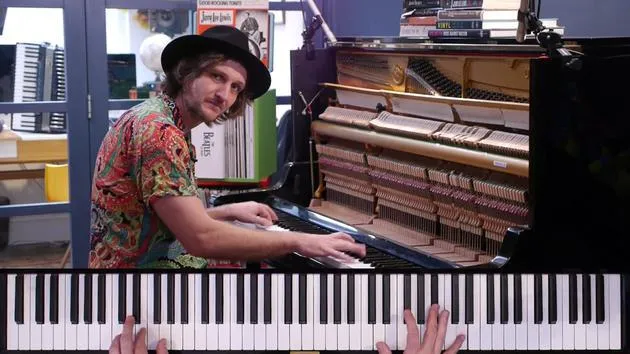
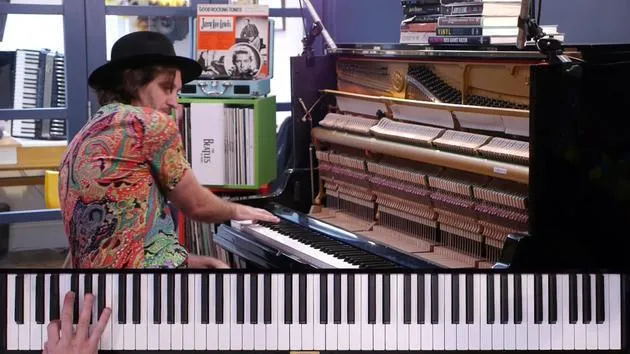
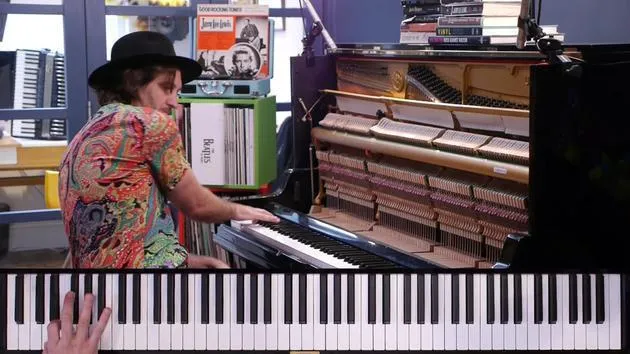
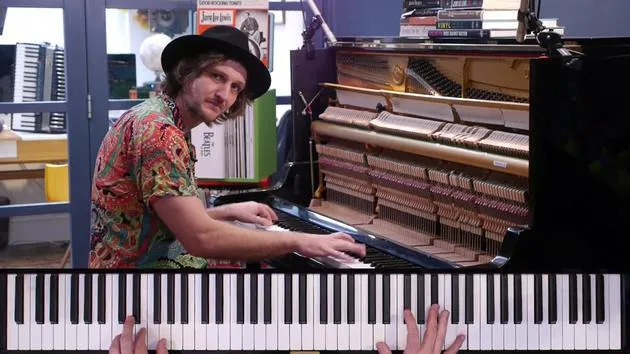
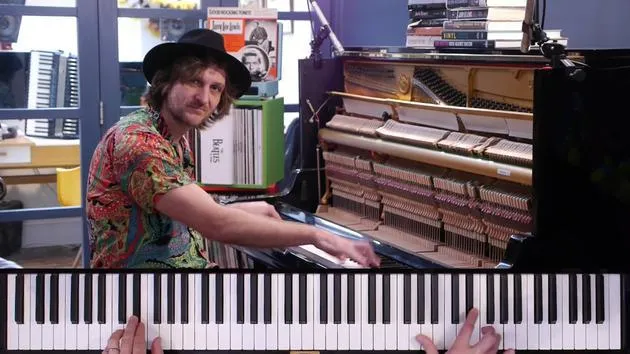
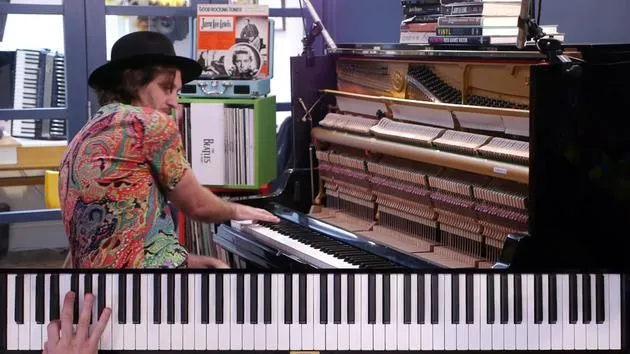
Paddy MilnerIn this lesson, Paddy shares a ton of ideas on how you can expand Jerry Lee's material from Wine Spo-Dee-O-Dee

What's in the course
25 lessons (2h 34m) · 1 free
Lesson transcript
Exploring Variations in the Solo
So, yeah, we've looked at the main ideas in Winespodiode.
- We've examined:
- The introduction
- The main groove
- The bass line in the solos
Again, it's all similar stuff to In A Whole Lot of Shaking.
We've also explored the solo's repeated notes with the sort of Pine Top Smith idea.
Let's Look at Some Variations
Let's analyze the actual material he's using in the solo and find ways to develop it.
- The solo starts with the repeated notes on the fifth and the seventh notes of the scale.
- Why not add a little crushed note?
- Vary the rhythm of that crush note; it doesn't have to be just a regular rhythm.
- Why not create something where that comes to give a bit of excitement and unpredictability to the solo?
Experiment with Notes
- Why not make that crushed note two notes instead of just one?
- Consider adding a little C in there too. This can lead into the next chord.
Here's a little idea for you:
- Add some notes below; you don't have to stick to the exact thing that Jerry Lee used.
- Feel free to experiment!
Variations on the Rundown
There's that little rundown leading into chord four that he plays in the solo.
- We could create some different variations of that.
- Why not start on a different note or maybe play it as a triad?
- Perhaps try playing it as a different interval rather than just a fourth with the tonic at the top.
You might even consider doing the rundown in fourths instead; it has a slightly different tonal quality. This can help you create variation, so you don't use the same thing all the time.
Alternate Ideas and Extensions
Maybe in a set, you'll play a couple of songs that have a similar feel in a similar key, and you just want to do something a little different.
- Rather than using a familiar idea, why not explore this:
- You could play around with ascending phrases.
It kind of feels natural to come down, but there's no reason why you shouldn't go up!
- If you're taking two solos:
- For the first one, you could use an idea that comes down.
- For the second one, use an idea that goes up.
Why not extend that run? Make it longer.
- Instead of one bar of run, you could use two bars:
- Something like [insert your musical example here].
In doing so, you might find yourself repeating that D halfway down with a crushed note.
Final Thoughts
There are some other little variations you could explore, which I think are really hip, so have fun playing around with those.
- Why not try using a whole chord?
Sorry, just a couple of other ideas in there if you want to pick those up!
25 lessons
2h 34m of structured video lessons
Advanced video features
Slow down, loop a passage, follow along
Mobile, tablet & desktop
Practise wherever you are
100% satisfaction guarantee
30-day money-back guarantee
Meet your guru
Meet your guru
Paddy Milner is recognised as one of the leading blues piano players in the world - he is currently keyboard player of choice for Sir Tom Jones, following several years with the late, great Jack Bruce - but he is also a superb original songwriter and a distinctive singer. Just read the praise from the likes of Dave Brubeck below! His playing was featured on the soundtrack for the hit 2019 film 'Rocketman'.
He has twice won the award for Best Keyboard Player in the British Blues Awards, and he holds a long-standing residency as a founder member of the Ronnie Scott's Blues Explosion at the world-renowned Ronnie Scott's club.
His current group LONDONOLA plays homegrown British music with a strong dose of New Orleans spirit, and his collaborative group JAWBONE goes from strength to strength following the release of their self-titled debut album.
- "I love it... there's a guy who can really play the piano" - Dave Brubeck
- "I highly recommend it. Somehow things start to feel much better!" - Jack Bruce
- "The best blues piano player in Europe..." - Blues Access, USA
- "Impressive & original" - The Times
- "Dazzling" - The Independent
Across his courses, Paddy breaks down authentic blues shuffle, slow blues, boogie-woogie, rock 'n' roll and New Orleans piano - right down to three classic boogie-woogie songs - so you can learn these styles from one of the very best in the business.







