



Melody and right hand

With
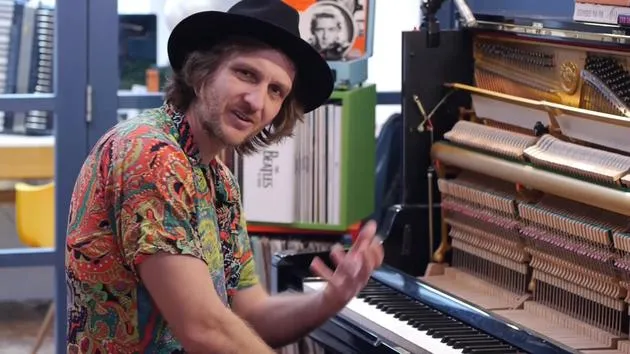
Paddy MilnerLet's start breaking down the tune and looking at the piano part, in the key of C. Come to grips with the rhythm, articulation and how to play the tune authentically

What's in the course
25 lessons (2h 34m) · 1 free

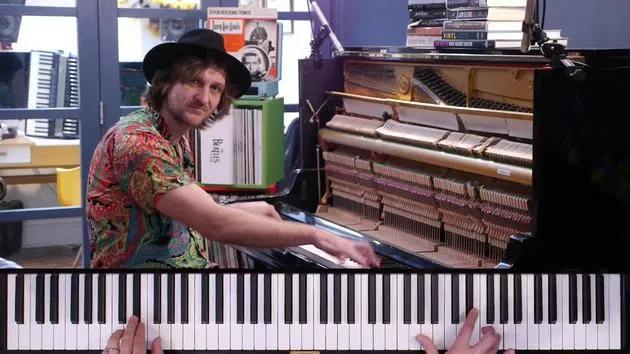
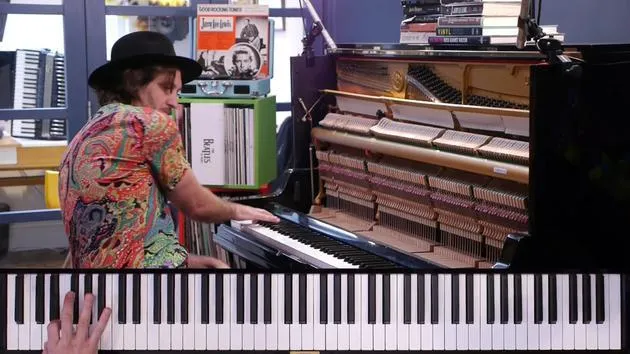
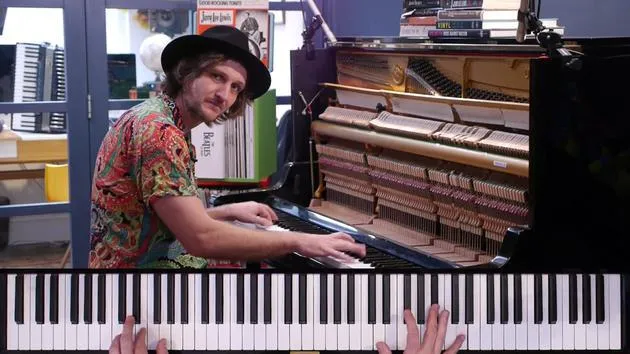

Lesson transcript
12-Bar Blues Piano Lesson
Introduction
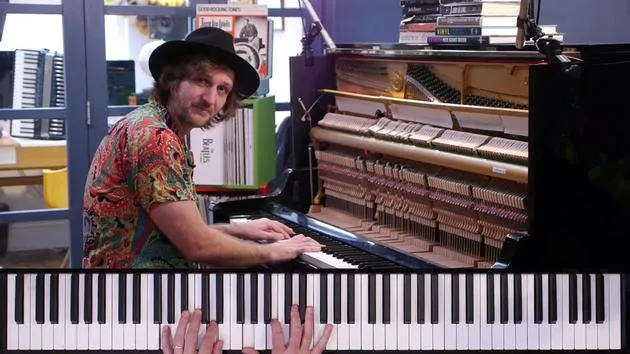
So, I'm going to just play around the whole 12 bars so you can have a listen to the main feel of the tune.
Count: 2 1, 2, 3, 4.
Breaking It Down
Let's start breaking it down and look at that piano part.
Right Hand
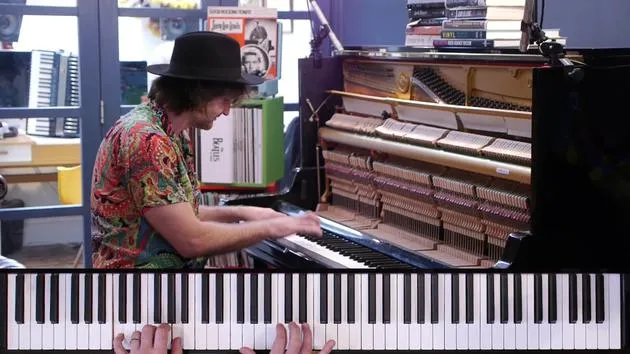
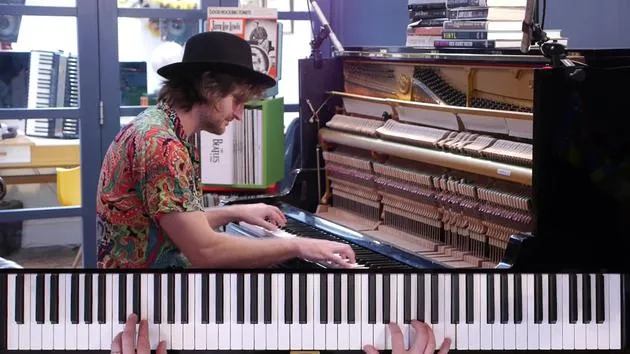
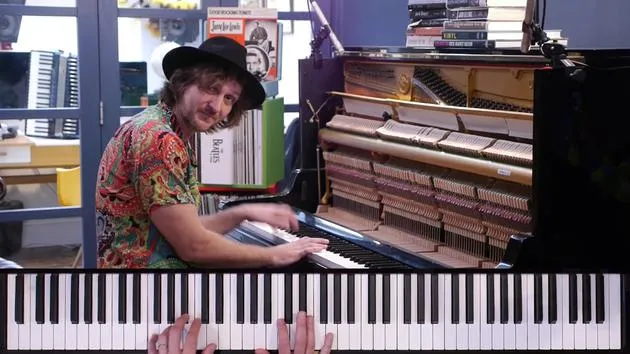
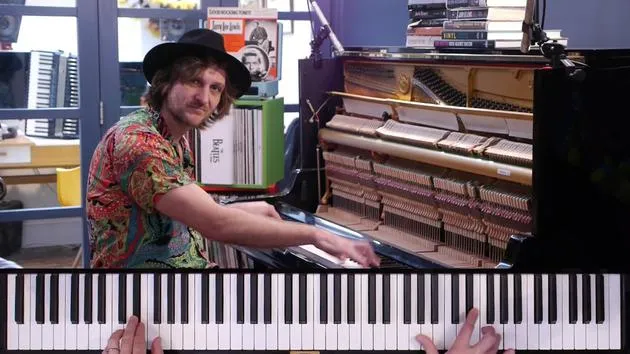
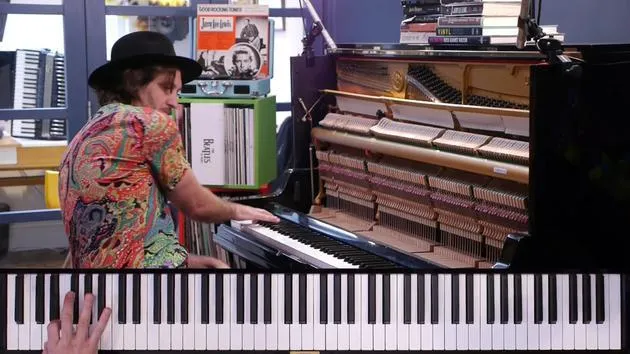
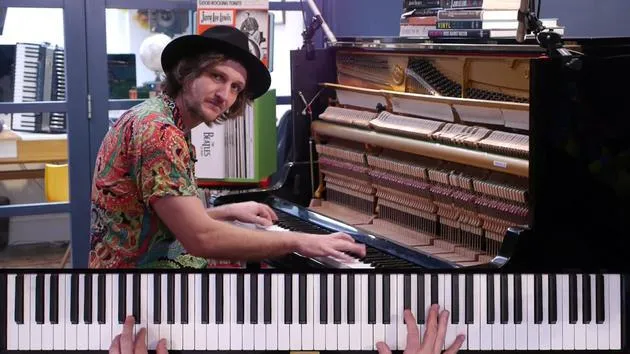
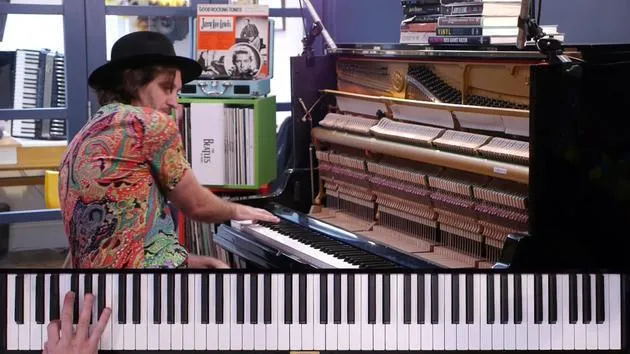
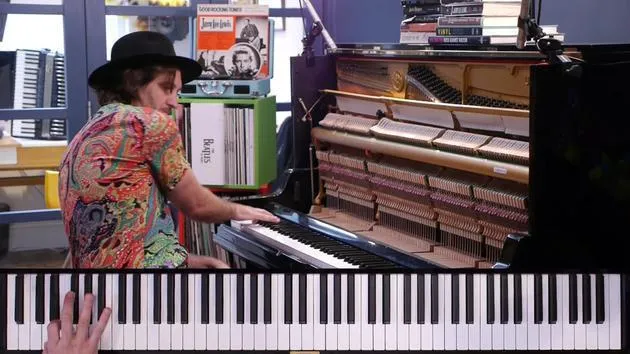
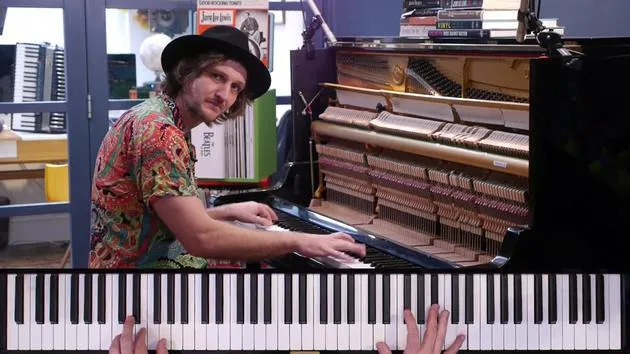
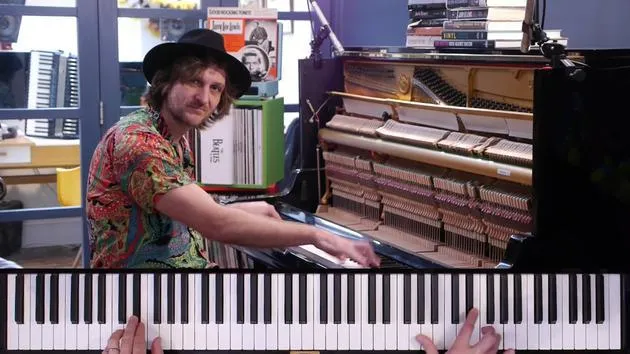
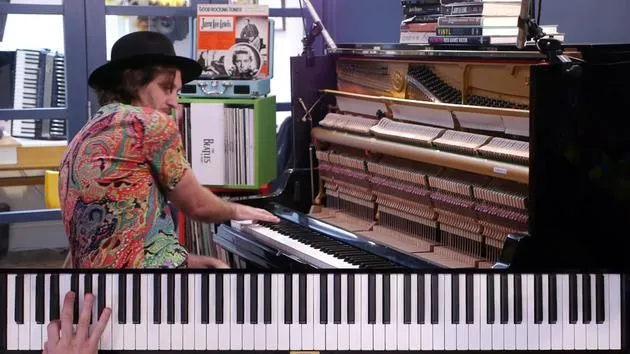
- In the right hand, we're simply playing triads with the third on the top.
Left Hand
- In the left hand, we are essentially outlining a kind of C6 chord, always playing the bottom C with it, which gives it a nice sort of weight.
- We play those chords on the downbeats, while the right hand plays on the upbeats (the off beats).
Chord Progression
When we move up to chord four:
-
The right hand plays the inversion of F, while the left hand continues as it had been on chord one (the chord of C).
-
There's a nice lead-up to chord 4, which adds direction.
-
Chord Progression Summary:
- Chord 1: C
- Chord 4: F
- Chord 1: C
- Chord 5: G (1 bar)
- Chord 4: F (1 bar)
- Chord 1: C (2 bars) with a turnaround (which we'll look at in due course).
Feel and Rhythm
Is It Straight or Swung?
So, there are a few things we should talk about regarding this feel.
- Question: Is it straight? Is it swung? Is it a shuffle?
Let's have a listen.
It's slightly swung, isn't it? It almost sounds a bit like ska or something. It's definitely swung, but not really dotted.
Listening Practice
- Have a listen to how Jerry Lee plays it and try to find that nice balance of how long or how dotted you make that feel.
- It's kind of a heavily swung feel, which I describe as somewhere in the middle:
- The bass is quite heavy, but it's not overpowering.
- Likewise, the right hand is quite solid, but it's not rigid.
Articulation
- Listen to how Jerry Lee articulates the notes:
- Is he playing long notes or short notes?
- He strikes a balance, embodying a smoothness with a nice fat bottom end.
The Importance of Original Recordings
This is crucial in rock and roll; it gives a solid foundation at the bottom end. I can't emphasize enough how important it is to listen to the original recordings and recreate those feels.
Anticipating Chord Changes
There's something quite interesting that helps propel the music along:
- Jerry Lee often anticipates the chord change with the right hand.
For example:
- If we are going from C to F, notice how it happens just before the beat.
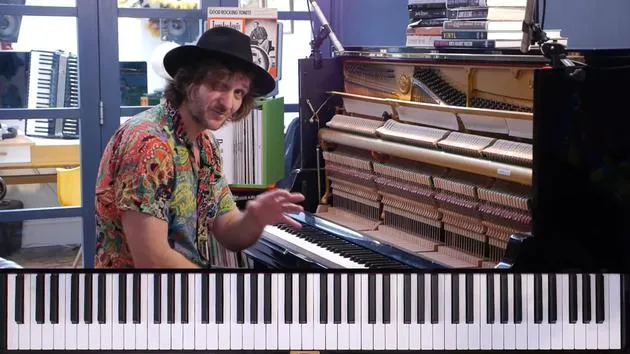
Here's a quick demonstration:
- Two bars of C going up to F...
Practice Tips
- So, if you can try to practice that and get it down, that's a good starting point for playing this song.
- Essentially, all the verses are more or less the same with a couple of little embellishments we'll look at as we go along.
Using a Metronome
- If you're finding it difficult to play that figure at speed, use a metronome. Start at half speed.
- As you feel comfortable, you can increase the tempo gradually.
Identifying Trouble Spots
You might find that you come unstuck when changing chords.
- Practice going between two chord changes, like from 5 to 4.
Momentum and Flow
Notice when Jerry Lee moves from the I chord to the IV chord with that run-up, he plays it a little heavier, providing momentum to go.
- It's all about making the music flow; it's not just about mechanically playing the notes, it's about how the music is breathing.
Conclusion
This approach is a testament to Jerry Lee's all-around musicality. He is truly an incredible piano player and musician.
25 lessons
2h 34m of structured video lessons
Advanced video features
Slow down, loop a passage, follow along
Mobile, tablet & desktop
Practise wherever you are
100% satisfaction guarantee
30-day money-back guarantee
Meet your guru
Meet your guru
Paddy Milner is recognised as one of the leading blues piano players in the world - he is currently keyboard player of choice for Sir Tom Jones, following several years with the late, great Jack Bruce - but he is also a superb original songwriter and a distinctive singer. Just read the praise from the likes of Dave Brubeck below! His playing was featured on the soundtrack for the hit 2019 film 'Rocketman'.
He has twice won the award for Best Keyboard Player in the British Blues Awards, and he holds a long-standing residency as a founder member of the Ronnie Scott's Blues Explosion at the world-renowned Ronnie Scott's club.
His current group LONDONOLA plays homegrown British music with a strong dose of New Orleans spirit, and his collaborative group JAWBONE goes from strength to strength following the release of their self-titled debut album.
- "I love it... there's a guy who can really play the piano" - Dave Brubeck
- "I highly recommend it. Somehow things start to feel much better!" - Jack Bruce
- "The best blues piano player in Europe..." - Blues Access, USA
- "Impressive & original" - The Times
- "Dazzling" - The Independent
Across his courses, Paddy breaks down authentic blues shuffle, slow blues, boogie-woogie, rock 'n' roll and New Orleans piano - right down to three classic boogie-woogie songs - so you can learn these styles from one of the very best in the business.







