



Comienzos y finales

Con
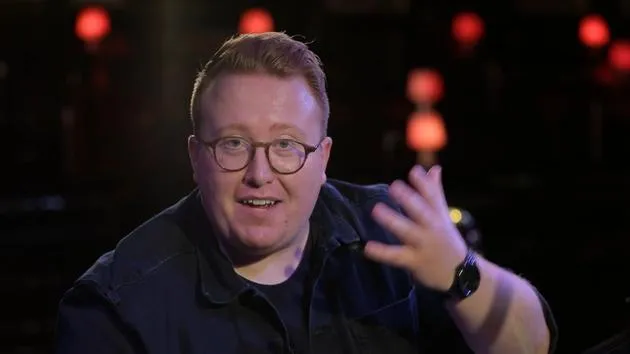
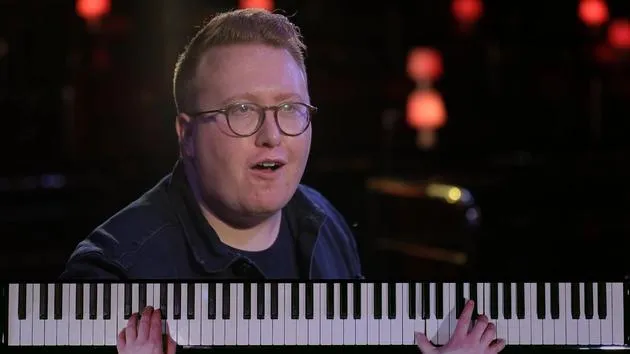
Tom SealsTom examina distintas maneras de empezar y terminar la canción, tanto si acompañas a un cantante como si no.

Qué incluye el curso
21 lecciones (1h 47m) · 1 gratis
01. Introducción a 'New York State of Mind'
3:05

02. Usar terceras
Lección gratis1:41
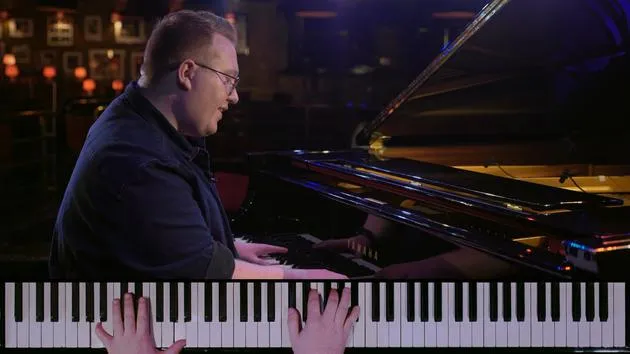
03. Darle un toque 'bluesero'
10:58
04. Darle un toque ‘jazzy’
1:20

05. Ganar confianza al improvisar solos
3:05
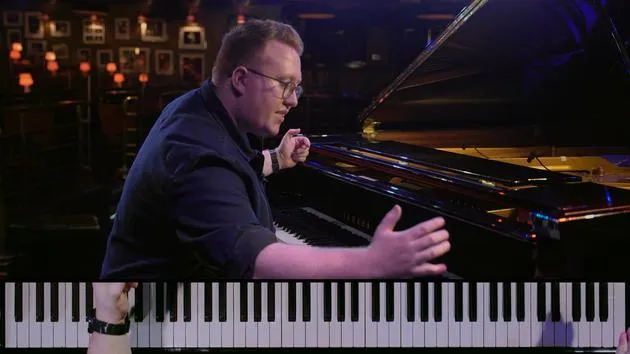
06. Ideas avanzadas para solos
7:30
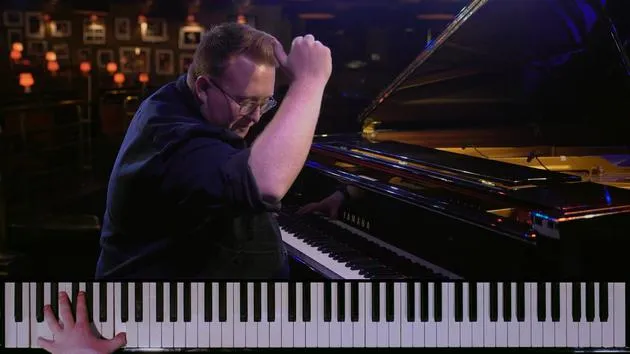
07. Un final clásico al estilo de ‘Billy’
3:47

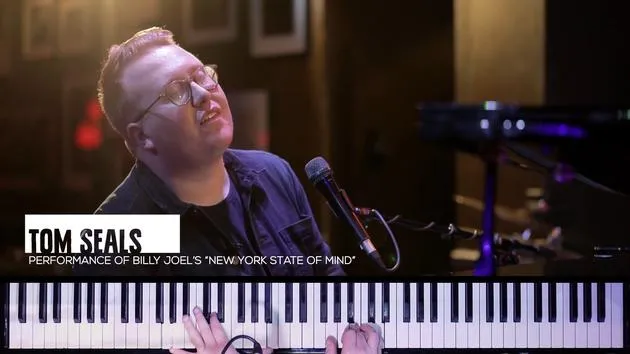
08. Tom Seals interpreta 'New York State of Mind' de Billy Joel
6:26



Transcripción de la lección
Music Lesson: Topping and Tailing a Tune
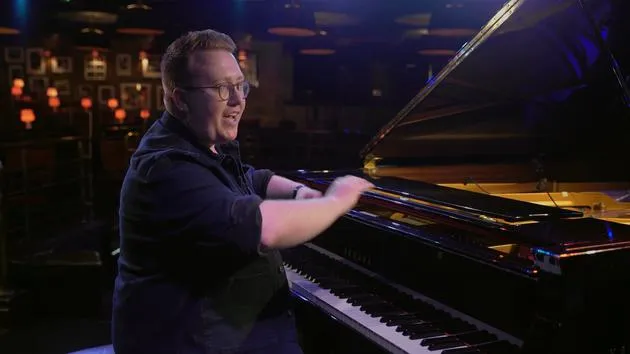
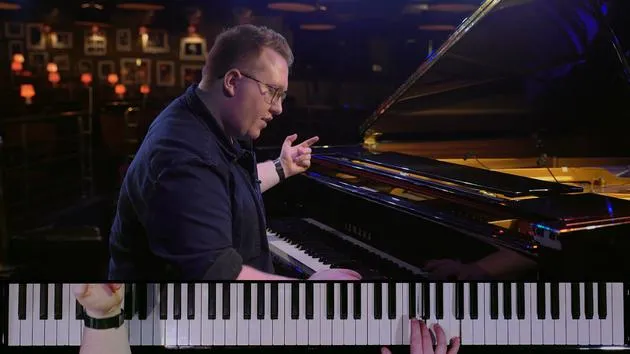
So we've looked at the main bulk of the tune. Let's look at topping and tailing, how to start and how to finish this tune.
Starting the Tune
Now, there are two different ways to start the tune:
Without Vocals
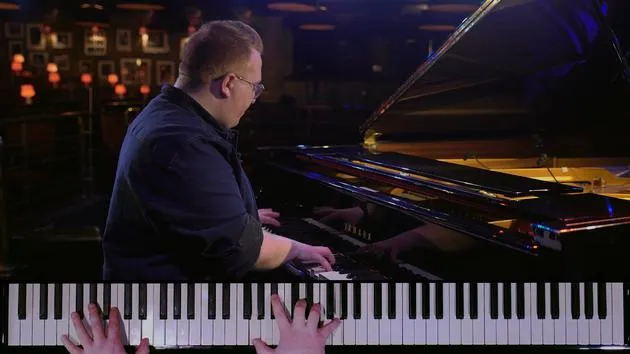
If you don't have a vocalist and we're just playing solo piano, to me, this tune is very, at tempo, it has a lot of stabs and a lot of stops. Let's start with something contrasting, like a really nice, laid-back rubato intro.
- Take the melody and really slow it down.
- Use lots of arpeggios.
- Spread the chords around the piano while incorporating the melody.
For example:
"Let me tell you about a girl I know," but change it ever so slightly.
We're not at tempo here, this is completely free and really relaxed. Just enjoy the moment. This is your spotlight; drag it out.
I'm just playing around with the chords here. One technique you could employ is pedaling. This technique, almost derived from stride piano, involves:
- Using the left hand for the root note,
- Using the right hand for the chord.
This constant motion allows the left hand to reinforce the root note and the chord while letting the right hand do the nice, melodic, flowy stuff.
Here's a simple starting example:
- Let me play a B, a D7.
Now, let's make what we're playing a bit different and jazzy.
Jazz Chords
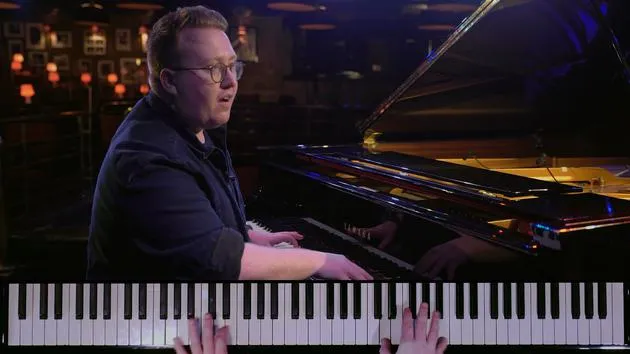
One of my favorite chords is a D7 with a sharp 5 and a sharp 9. It looks like this:
- Play with the left hand:
- Keep the first three chords quite simple.
- G, G with a B (B down there), still a G.
- C, C there, and then a D down here.
Watch this finger placement:
- Little finger on the F sharp,
- Third finger on the B flat,
- Second finger on the C,
- Thumb on the F.
Recognize that chord? It's the sharp 5, sharp 9!
Listen to how jazzy and bluesy that sounds. Here's a nice little run:
- G, D, C sharp, C natural, B flat, G.
Imagine that little run, speeding it up:
- G, D, C sharp, C, B flat, G over that incredible D7 chord. How nice does that sound?
Starting with a Vocalist
If you have a singer (it could be you), or if you don't have one, go find someone to sing this Ray Charles tune with you.
- Give the singer some space.
- Create a dramatic intro with:
"Let me tell you about a girl that I know."
Now's your time to shine!
Back to simple:
"She's my baby, she lives next door."
Classic Ray Charles Trick
This is a nice little trick, especially when we're in G. The B in the thumb and G with your little finger move everything up a semitone:
- Semitone on the thumb,
- Whole tone in the right hand,
- Up a semitone again.
You get this nice moment when hitting the D and the B. That's nice to hit the G all at the same time!
You'll have a great dramatic intro.
Ending the Tune
Now let's look at the ending. This is a classic Ray Charles ending that I've heard on a lot of his live recordings of this exact tune. It's at tempo and consists of single notes.
Creating the Ending
- Take the G chord, then the C chord.
This is the ending:
- G, B, D just once each,
- Two times on the C,
- Once on the E and G.
So, the only note you play twice is the C:
G, B, D, two times on the C, E, G, D octave, D, and G.
Putting that together:
- This could be straight or swung:
- Straight: Every note is the same amount of length.
- Swung: The first note is slightly longer than the second.
Finish with a nice G7 chord:
- Same notes all the way across the piano, running up to give it a nice ending.
Example Finale
For an example, you could come out of the tune like this:
"That's why I know? Oh, yes, I know? Hallelujah, I love her so."
Enjoy making that your own and playing with the ideas! I look forward to hearing you play it!
21 lecciones
1h 47m de lecciones en vídeo estructuradas
Funciones de vídeo avanzadas
Ralentiza, repite un pasaje, sigue la partitura
Móvil, tablet y ordenador
Practica donde quieras
Garantía de satisfacción 100%
30 días de garantía de devolución
Conoce a tu gurú
Conoce a tu gurú
El título de Piano Man del Reino Unido lo han ostentado durante mucho tiempo Elton John, Jools Holland y Jamie Cullum. En las últimas cinco décadas nadie más se ha acercado ni remotamente... ¡hasta ahora!
Recién salido de su gira con las entradas agotadas "Let The Good Times Roll", Tom Seals -"posiblemente el futuro del jazz y el blues"- tiene el mundo en la punta de los dedos. Su virtuosismo como solista, sus excelentes dotes para la improvisación y su voz personal han llevado a destacadas figuras del sector a aclamarlo como el mejor pianista y vocalista de boogie woogie y blues del Reino Unido.
Con apenas veinticinco años, Seals ya ha ofrecido conciertos con las entradas agotadas por todo el mundo, incluido el legendario Ronnie Scott's de Londres, una actuación deslumbrante en el Birdland Jazz Club de Broadway, en Nueva York, y trabajos junto a Jools Holland.
Apariciones destacadas:
- 'Gregory Porter & Friends' del Cheltenham Jazz Festival
- 'Boogie Woogie & Blues Spectacular' de Jools Holland
- Birdland Jazz Club, Nueva York
- British Summer Time - Hyde Park
- Ronnie Scott's Jazz Club
- Gisburne Park Pop-Up
- Montreux Jazz Festival
- Cropredy Festival
- The Steinway Two Pianos Festival
- Glastonbury
- Newark Showground "Drive-In"
- Blenheim Palace
En su curso, Tom desvela los secretos que hay detrás de su forma de tocar -mostrándote cómo dar swing a los estándares al piano, construir líneas auténticas de boogie woogie y blues, y encontrar la libertad para improvisar- para que tú también puedas convertirte en el Piano Man definitivo.
Puedes leer la biografía completa de Tom en www.tomseals.co.uk.







