



Improvising

With
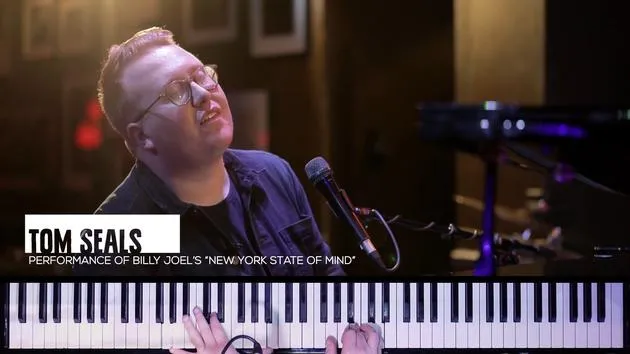
Tom SealsTom shows how understanding the blues scales can be a brilliant foundation for your improvisation ideas.

What's in the course
21 lessons (1h 47m) · 1 free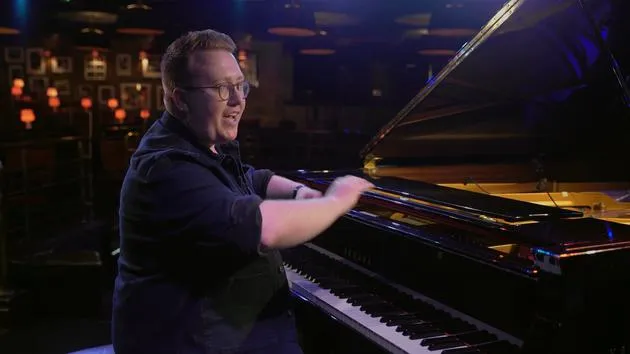


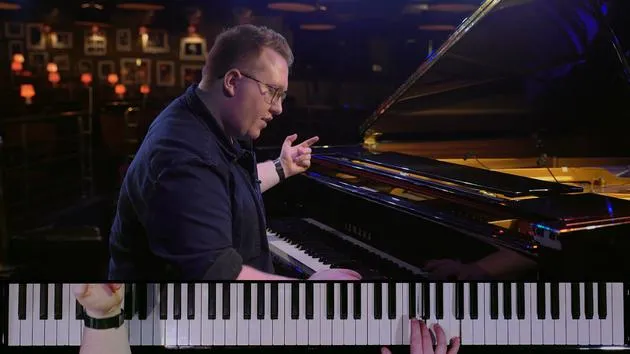

Lesson transcript
Music Lesson: Embracing the Blues Scale
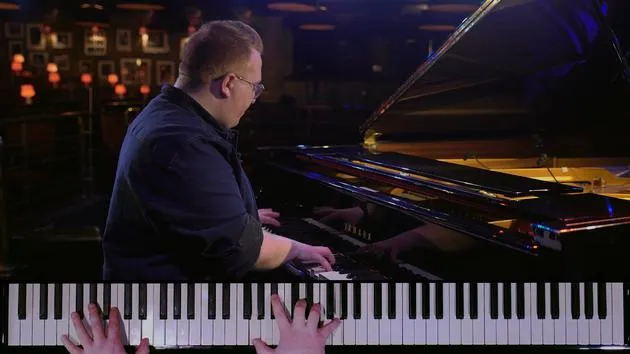
So this song is great for so many reasons. One of the main reasons is the chord shot you have there is simple. It allows you the freedom and the opportunity to create your own unique ideas. Part of this, of course, is going to be down to the soloing and the improvisation.
The Blues Scale in G
Now we're in G. The blues scale in G is going to help you massively with this tune. Here's the blues scale:
- G
- B flat
- C
- C sharp
- D
- F
- G
It would be great for you to get that blues scale in your fingers because when you're improvising, those are the only notes you need to play. They'll work anywhere on the piano, up and down; it's going to sound great.
Simple Ideas Using the Blues Scale
Let's take that idea in the most simple form, just using that blues scale. Here are some ideas you might come up with so far:
- That's only using those notes.
Once you're a bit more comfortable, of course, you can start adding in some nice little accidentals, stuff like this:
- Using the C sharp to the D as a grace note.
So we're giving that little flourish, and you can sort of fall onto that D by playing the C sharp.
Advanced Ideas with the Blues Scale
A bit more of an advanced idea of how to use the blues scales could be something like this. Repetition is always nice. Once you find an idea that works and that sounds quite complicated, that's just finding the exact notes that work and moving your fingers as fast as you can.
Important Note: All those ideas I've played so far have only used notes from the blues scale. Get that blues scale in your fingers, and you'll have endless hours of fun with it!
Standard Blues Line
Now I'm going to show you a really standard blues line, which is something like this:
- G, B, and D
- Very simple: just a G chord.
- Now we're going to move it to a second inversion C chord: G, C, and E, and back to the G: G, B, D.
Incorporating the Minor Third
You can add in the B flat because, as always in jazz and blues, hitting that third , the minor third , going to the major third sounds great:
- So you get this progression.
And as you will see just by looking at that, it's not too far away from the blues scale!
The Melody: Classic Ray Charles Style
Let me tell you about a girl I know using that and incorporating some classic Ray Charles lines. One of Ray's iconic lines, which you will hear if you listen to his back catalogue, goes:
"Do ba da da da da da da."
Learning the Line
So, I'm going to show you that line:
- D, E, G.
- A grace note on the B flat to the B,
- G, A, E, G.
Okay, we'll go for it a bit slower, but at speed it would sound like this classic Ray Charles line:
- Slow Version: D, E, G, grace note on the B flat to a B natural, G, A, E, back to the G.
So using the classic Ray line, the melody, the blues scales, and the little bluesy trick I taught you earlier, put it all together and have some fun! It could sound something like this.
Adding Trills and Walking Bass Lines
Another thing that's very standard in blues, which I was about to play there naturally, is this idea of a trill.
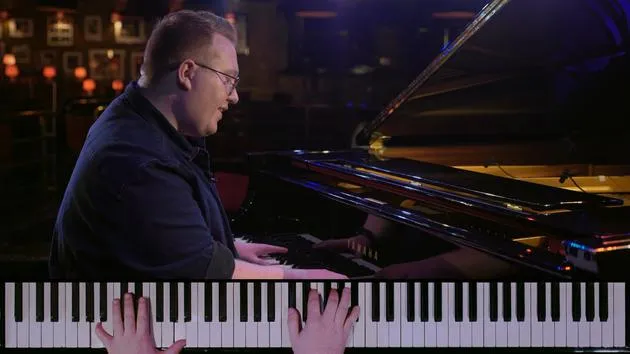
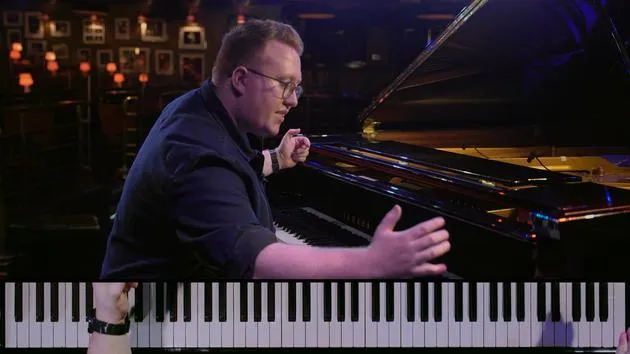
- Doing this with your hands, like so:
- Just octaves.
- You could even add a B in like this.
Just pivoting your hands back and forth gives a real nice Ray Charles roll.
Putting It All Together
Let's have a look at some of the ideas. Here's the standard Ray line. Now, let's add that in with a walking bass line.
Here are the stabs and just the blues scale.
21 lessons
1h 47m of structured video lessons
Advanced video features
Slow down, loop a passage, follow along
Mobile, tablet & desktop
Practise wherever you are
100% satisfaction guarantee
30-day money-back guarantee
Meet your guru
Meet your guru
The mantle of UK Piano Man has long been held by Elton John, Jools Holland and Jamie Cullum. Over the past five decades no one else has come remotely close - until now!
Fresh from his sell-out "Let The Good Times Roll" tour, Tom Seals - "quite possibly the future of jazz and blues" - has the world at his fingertips. His virtuoso soloing, excellent improvisation skills and distinctive voice have led top industry figures to hail him as the UK's finest boogie woogie and blues pianist and vocalist.
Still in his mid-twenties, Seals has already played sold-out shows across the globe, including London's legendary Ronnie Scott's, a stunning performance at Birdland Jazz Club on Broadway in New York, and work alongside Jools Holland.
Notable appearances include:
- Cheltenham Jazz Festival's 'Gregory Porter & Friends'
- Jools Holland's 'Boogie Woogie & Blues Spectacular'
- Birdland Jazz Club, New York City
- British Summer Time - Hyde Park
- Ronnie Scott's Jazz Club
- Gisburne Park Pop-Up
- Montreux Jazz Festival
- Cropredy Festival
- The Steinway Two Pianos Festival
- Glastonbury
- Newark Showground "Drive-In"
- Blenheim Palace
In his course, Tom throws open the secrets behind his playing - showing you how to swing standards at the piano, build authentic boogie woogie and blues lines, and find the freedom to improvise, so you can become the ultimate Piano Man yourself.
You can read Tom's full biography at www.tomseals.co.uk.







