



Soloing - Arpeggios and Enclosures

With
Rob Luft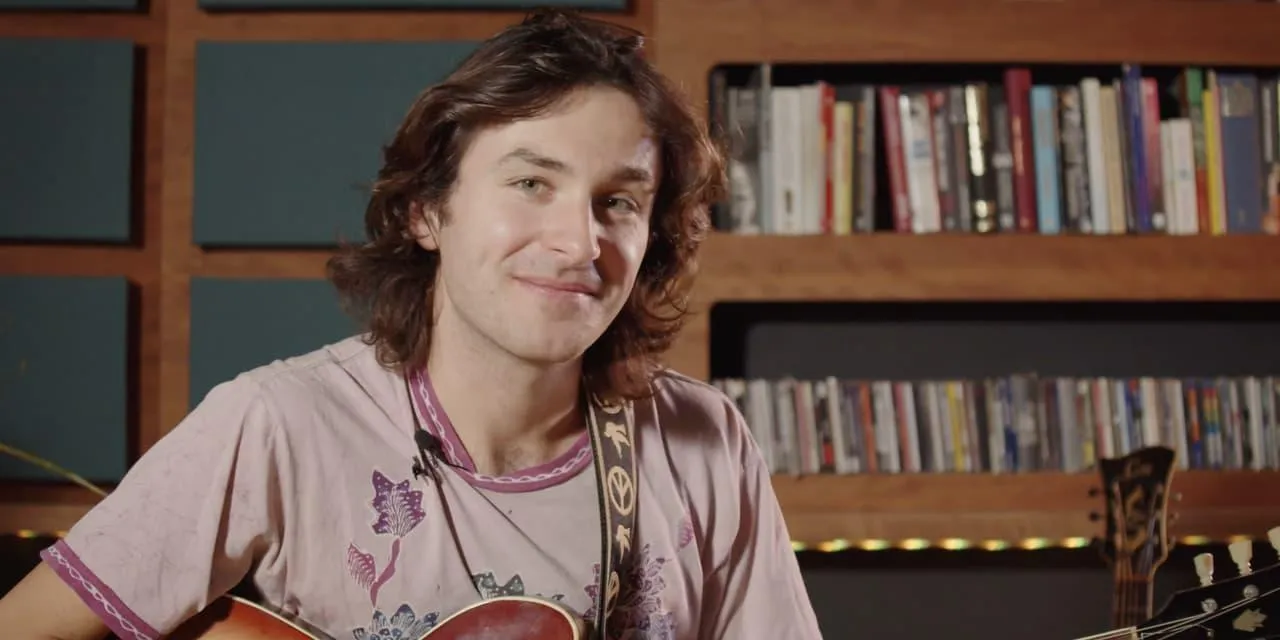
What's in the course
28 lessons (2h 7m) · 1 free
01. Why study Django Reinhardt?
3:45
02. Chords and Harmony - A Section
11:06
03. Chords and Harmony - B Section
2:21
04. Right Hand Techniques - European vs American
5:04
05. How to Create Swing Feel
1:51
06. Melody Walkthrough
9:10
07. Soloing - Arpeggios and Enclosures
You are here10:40
08. Soloing - The Harmonic Minor Bebop Scale
8:27
09. Soloing - Use of Pentatonics
9:45
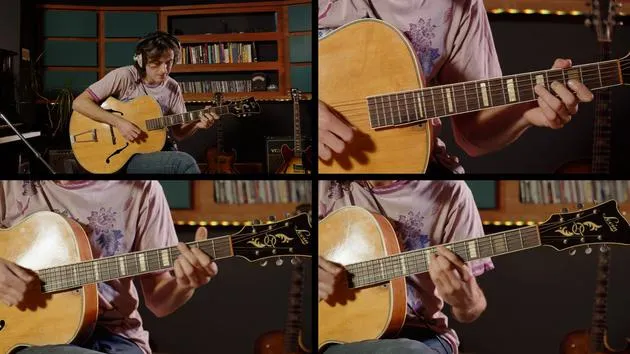
10. Clouds - Performance (Split-screen with accompaniment)
3:48
11. Clouds - Performance
3:49
12. Clouds - Performance (Simplified)
2:40
01. Why study Joe Pass?
2:23
02. Introduction to Solo Playing and Parallel Harmony
4:00
03. Diminished Lines and "Sicilian 3rds"
5:19
04. Playing in Time with Pianistic Voicings
5:22
05. How to Play the Second Half
5:06
06. Hybrid vs Finger Style Picking
5:57
07. November in Norway - Performance
2:29
08. November in Norway - Performance (Simplified)
1:27
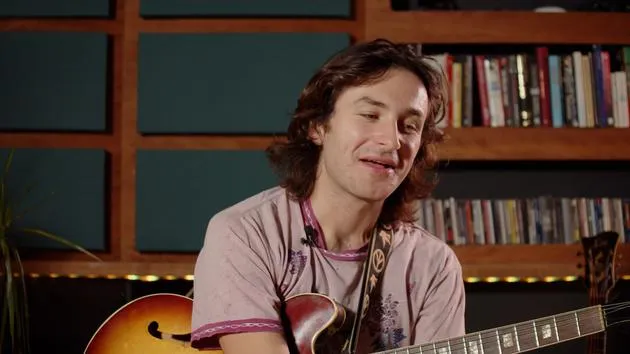
Lesson transcript
Improvising in the Style of Django Reinhardt
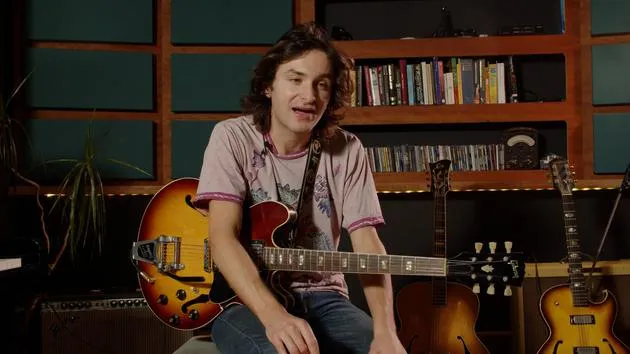
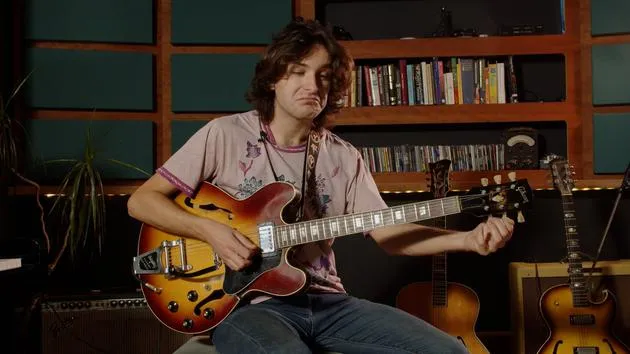
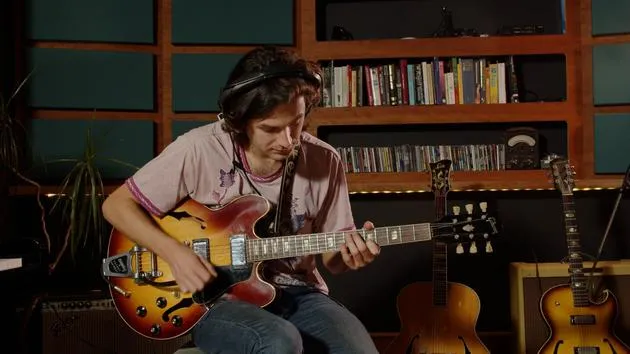
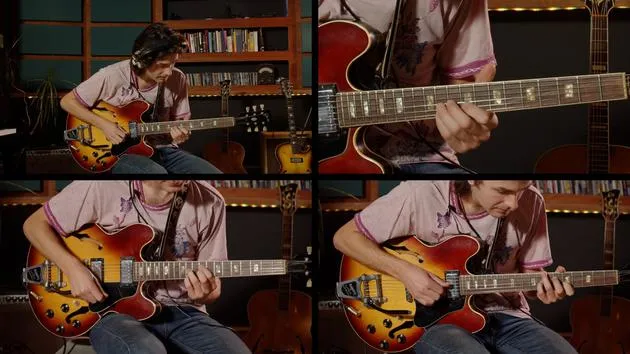
In this lesson, we're going to explore how to improvise in the style of Django Reinhardt over a chord sequence. Django was famous for a variety of techniques and melodic ideas that he employed throughout his career.
Key Techniques
1. Fast Vibrato
- Django was renowned for his very fast vibrato on the melody notes.
- For example, if he was playing an A on the 10th fret of the B string, he wouldn't just play it plainly.
- He might use this fast vibrato in the left hand, which can be heard throughout his recordings, particularly if you preface it with the F major scale.
Try This:
- Play the F major scale from octave A to A and hear how Django would finish it.
- This fast vibrato adds sustain to long notes, anchoring the sound in Django's style.
2. Arpeggiated Playing Style
- Django often played in a very arpeggiated style.
- For instance, over a D flat seventh or a D flat ninth, he would play beautiful arpeggios starting on the third.
Example:
- Articulate the 3, 5, 7, 9, and then descend using the 6th to the 5th. This works nicely over D flat 7 and can be mirrored on C7 to resolve nicely to F major.
3. Use of Chromaticism
- Another hallmark of Django's playing is light chromaticism between chord tones.
- To get from the third to the fifth of F major, Django might play it using the flat third (the bluesy A flat):
Sample Phrase:
- "F - A - A flat"
- This sound is bluesy and chromatic while still outlining an F major sound.
4. Enclosures of Chord Tones
- Django often used enclosures of chord tones.
- For example, surrounding the notes of the chord F, A, and C with additional melody notes.
Example Phrase:
- This can be very ergonomic on the guitar and allows for fluid phrasing. When played correctly, it easily flows off the fingers.
Applying Techniques to Chord Progressions
Example Chord Sequence:
- Start with D flat seventh.
- Transition to C7, then resolve to F major.
Minor Chord Sequences
Shifting to the relative minor, the chord sequence often moves to D minor, using 2, 5 transitions like E half diminished to A7, then resolving to D minor.
- Musicians like Django used alternating arpeggios between dominant and tonic chords, cycling between seventh and D minor for a cohesive sound.
Breakdown of the Technique:
- Start with an A7 flat ninth arpeggio (starting on A C sharp).
- Move to a D minor arpeggio (starting on F).
- Repeat with octaves, resolving to the D minor's third.
Chord Sequence:
This creates a wonderfully flowing sequence.
Playing Variations
- If you want to play slower, you can simply elongate the phrases.
- For a faster tempo, consider using triplets.
These techniques allow for a rich tapestry of sound, drawing on Django's influences while ensuring your improvisation retains that characteristic swing and flair.
Final Thought
Through these techniques, you can embody the spirit of Django Reinhardt and enrich your improvisational vocabulary. Happy playing!
28 lessons
2h 7m of structured video lessons
Advanced video features
Slow down, loop a passage, follow along
Mobile, tablet & desktop
Practise wherever you are
100% satisfaction guarantee
30-day money-back guarantee
Meet your guru
Meet your guru
Rob Luft is an award-winning musician from London, widely described as one of the UK's most prominent and talented young contemporary jazz guitarists. Praised by The Times as set 'to achieve great things in the future', Rob won the 2016 Kenny Wheeler Jazz Prize in association with Edition Records, and took 2nd Prize in the 2016 Montreux Jazz Guitar Competition. His debut album, 'Riser', was released in July 2017 to widespread critical acclaim across the European jazz media. John Fordham wrote in The Guardian that it's a 'very sophisticated debut, but given Luft's old-soul achievements since his early teens, we should have heard it coming'.
'So young and so talented!' - Jamie Cullum, BBC Radio 2 (UK)
'...an extraordinary talent!' - Julian Joseph, BBC Radio 3 (UK)
'The virtuosity of the three [guitarists Al di Meola, John McLaughlin and Paco de Lucia] is reminiscent of the 23-year-old Londoner Rob Luft, who is celebrated as a new "Wunderkind"' - Spiegel Online (D)
In Play Authentic Jazz Guitar, Rob opens up the harmonic language, phrasing and improvising instincts behind that 'old-soul' sound, showing you how he really thinks about the fretboard so you can start finding your own voice in jazz.







