



Chords and Harmony - B Section

With
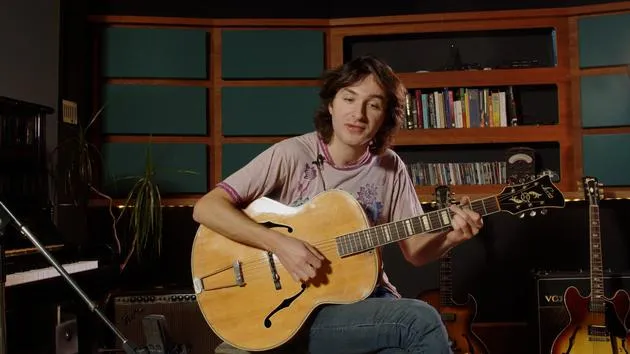
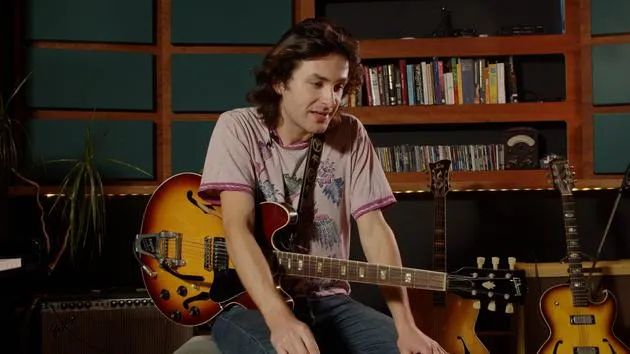
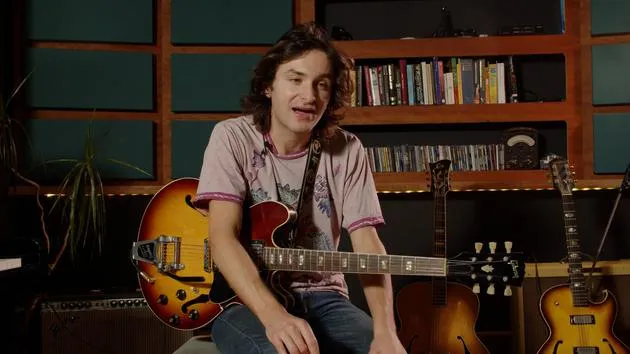
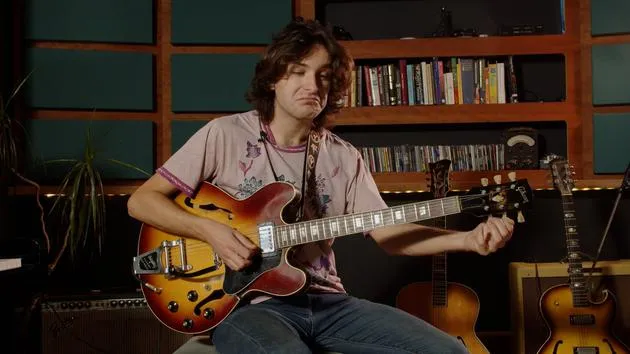
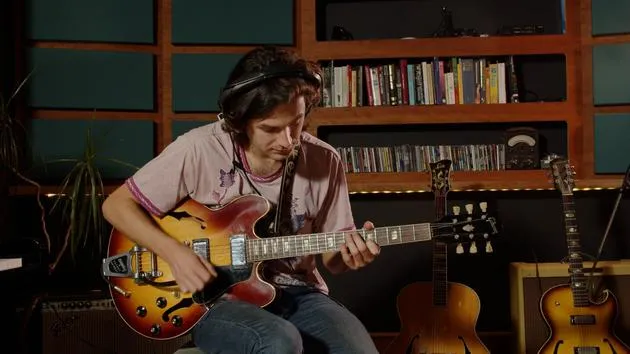
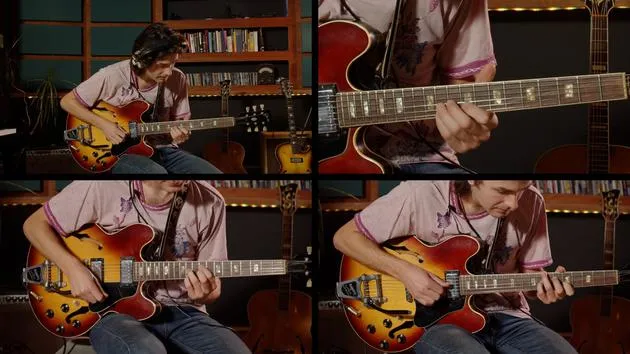
Rob LuftRob Luft walks through the chord voicings in the B section and shows how the harmony modulates up into the key of B flat major.
What's in the course
28 lessons (2h 7m) · 1 free
01. Why study Django Reinhardt?
3:45
02. Chords and Harmony - A Section
11:06
03. Chords and Harmony - B Section
You are here2:21
04. Right Hand Techniques - European vs American
5:04
05. How to Create Swing Feel
1:51
06. Melody Walkthrough
9:10
07. Soloing - Arpeggios and Enclosures
Free lesson10:40
08. Soloing - The Harmonic Minor Bebop Scale
8:27
09. Soloing - Use of Pentatonics
9:45
10. Clouds - Performance (Split-screen with accompaniment)
3:48
11. Clouds - Performance
3:49
12. Clouds - Performance (Simplified)
2:40
01. Why study Joe Pass?
2:23
02. Introduction to Solo Playing and Parallel Harmony
4:00
03. Diminished Lines and "Sicilian 3rds"
5:19
04. Playing in Time with Pianistic Voicings
5:22
05. How to Play the Second Half
5:06

06. Hybrid vs Finger Style Picking
5:57
07. November in Norway - Performance
2:29
08. November in Norway - Performance (Simplified)
1:27
Lesson transcript
Music Lesson: Modulating to B Flat Major
And then we cycle back to the D flat 7 with the A/B in the bass, to the C7, and to the F major, and then back to the C7.
Repeats like the very first four bars. However, now we're going to change; it's modulating now into the key of B flat major.
It's doing that much in the same way as it resolves to F major at the beginning of the piece. Same thing, but up five frets.
Transitioning to B Flat Major
And how we do that:
- G flat 7 with D flat in the bass
- F7 with C in the bass
- Then B flat 6 or BB 6, 9
In my backing track, I've included a cheeky A7 as a passing chord, which is again very reminiscent of the era.
Reminiscent of every Woody Allen soundtrack you've ever heard, you get this effect.
Four Minor Chord Use
Then we have the power of four minor:
- B flat minor
- F major
And then the same with the first four bars again. So that little ending bit there is very typical.
A lot of pop music and jazz music after this era, after the Second World War, will use a dominant chord like C to F.
In fact, all music uses that.
Sorry, everything from Bach to Mozart to Jimi Hendrix will go this way.
However, in the gypsy jazz era, they often use four minor, like a B flat minor, as a substitute to move back to chord one, which is F.
So you get:
Instead of this (C to F) at the end, you often hear this (B flat minor) or any inversion of that, and that's how the piece ends.
28 lessons
2h 7m of structured video lessons
Advanced video features
Slow down, loop a passage, follow along
Mobile, tablet & desktop
Practise wherever you are
100% satisfaction guarantee
30-day money-back guarantee
Meet your guru
Meet your guru
Rob Luft is an award-winning musician from London, widely described as one of the UK's most prominent and talented young contemporary jazz guitarists. Praised by The Times as set 'to achieve great things in the future', Rob won the 2016 Kenny Wheeler Jazz Prize in association with Edition Records, and took 2nd Prize in the 2016 Montreux Jazz Guitar Competition. His debut album, 'Riser', was released in July 2017 to widespread critical acclaim across the European jazz media. John Fordham wrote in The Guardian that it's a 'very sophisticated debut, but given Luft's old-soul achievements since his early teens, we should have heard it coming'.
'So young and so talented!' - Jamie Cullum, BBC Radio 2 (UK)
'...an extraordinary talent!' - Julian Joseph, BBC Radio 3 (UK)
'The virtuosity of the three [guitarists Al di Meola, John McLaughlin and Paco de Lucia] is reminiscent of the 23-year-old Londoner Rob Luft, who is celebrated as a new "Wunderkind"' - Spiegel Online (D)
In Play Authentic Jazz Guitar, Rob opens up the harmonic language, phrasing and improvising instincts behind that 'old-soul' sound, showing you how he really thinks about the fretboard so you can start finding your own voice in jazz.







