



Right Hand Techniques - European vs American
With
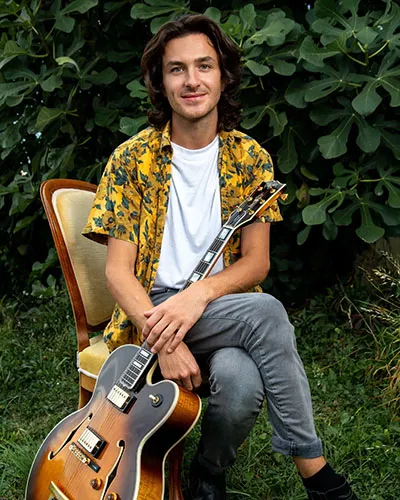
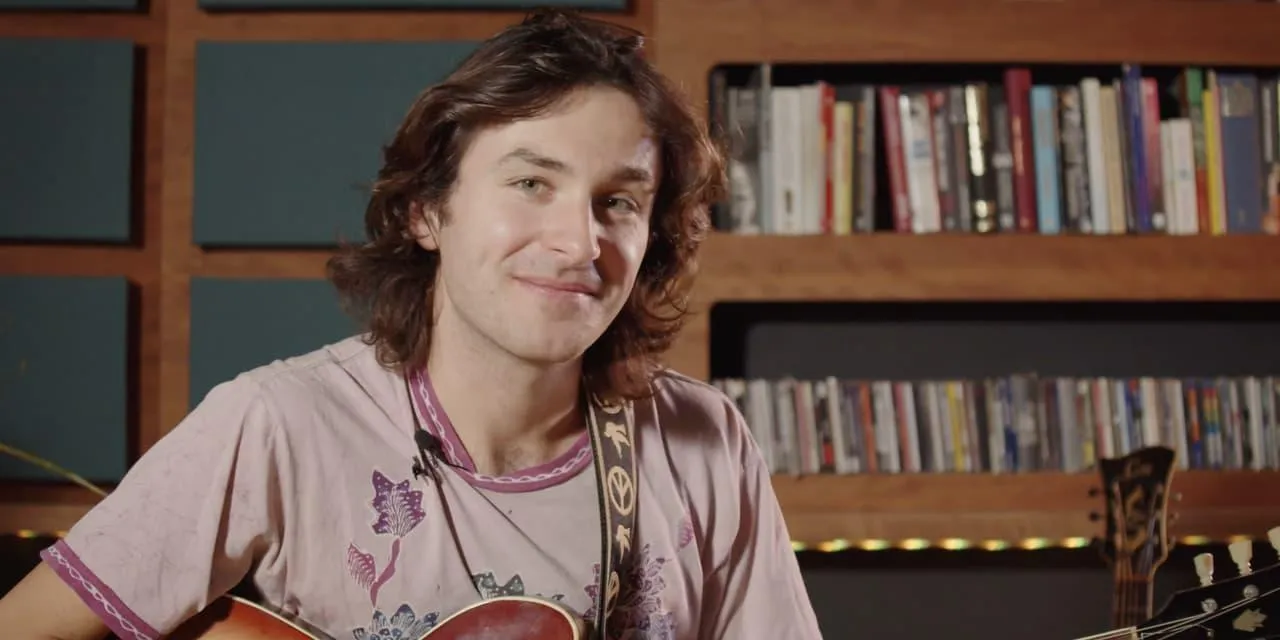
Rob LuftRob Luft contrasts two right-hand approaches to jazz rhythm guitar: the European gypsy-jazz style played hard up by the bridge, and the American school.
What's in the course
28 lessons (2h 7m) · 1 free
01. Why study Django Reinhardt?
3:45
02. Chords and Harmony - A Section
11:06
03. Chords and Harmony - B Section
2:21
04. Right Hand Techniques - European vs American
You are here5:04
05. How to Create Swing Feel
1:51
06. Melody Walkthrough
9:10
07. Soloing - Arpeggios and Enclosures
Free lesson10:40
08. Soloing - The Harmonic Minor Bebop Scale
8:27
09. Soloing - Use of Pentatonics
9:45
10. Clouds - Performance (Split-screen with accompaniment)
3:48
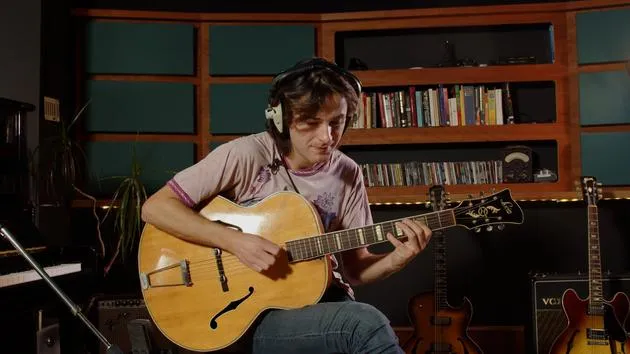
11. Clouds - Performance
3:49
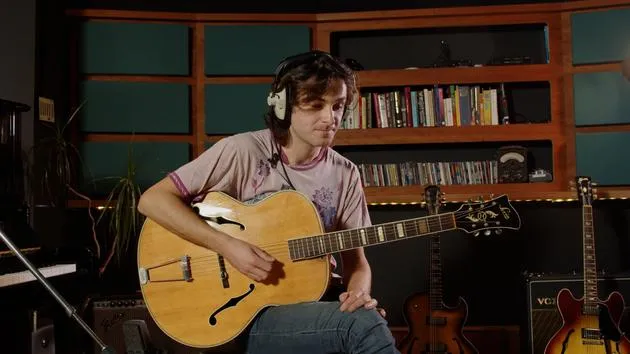
12. Clouds - Performance (Simplified)
2:40
01. Why study Joe Pass?
2:23
02. Introduction to Solo Playing and Parallel Harmony
4:00
03. Diminished Lines and "Sicilian 3rds"
5:19
04. Playing in Time with Pianistic Voicings
5:22
05. How to Play the Second Half
5:06
06. Hybrid vs Finger Style Picking
5:57
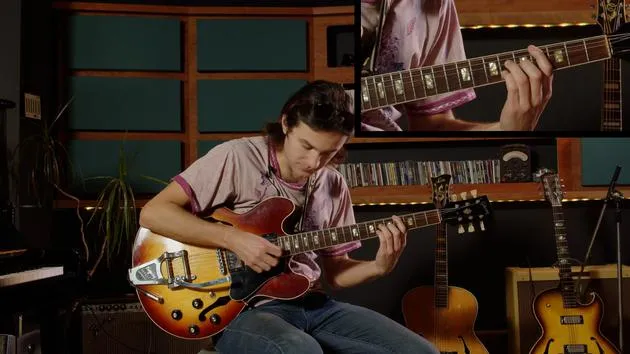
07. November in Norway - Performance
2:29
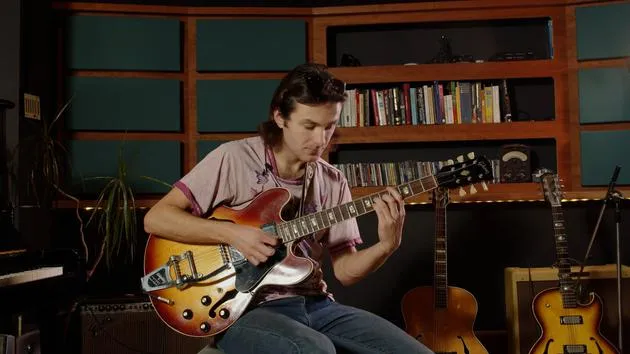
08. November in Norway - Performance (Simplified)
1:27
Lesson transcript
Understanding Chord Sequences in Different Styles
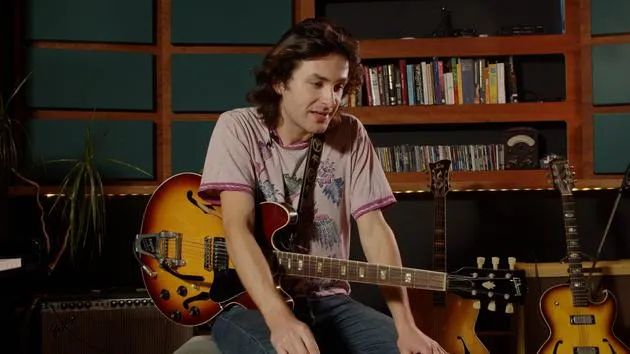
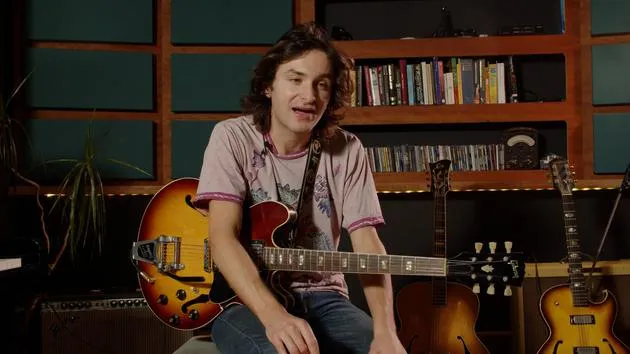
So rhythmically, when it comes to playing a chord sequence like this in the style of the era, there are two schools of thought:
The Gypsy Jazz Approach
- The first of which would be the more authentic European, gypsy jazz approach.
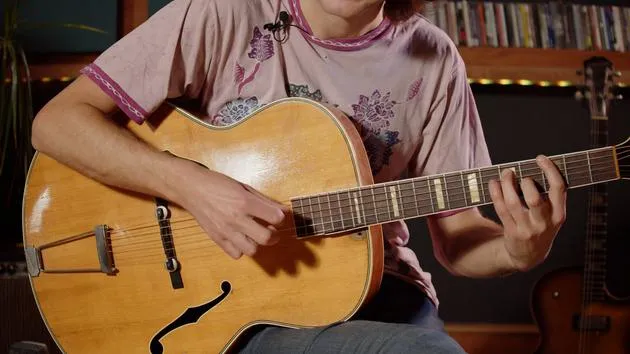
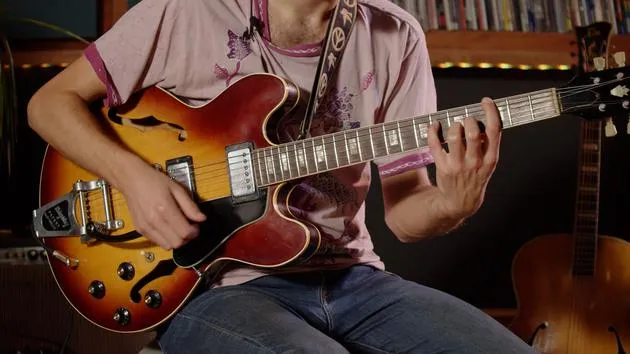
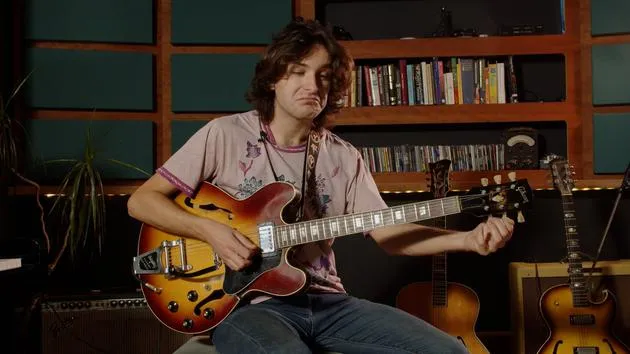
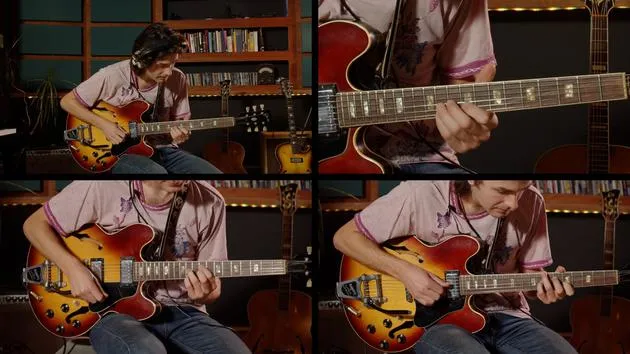
- Here, the guitarists of the era really play right back on the bridge with their right hand and bend the wrist at an incredibly dramatic angle.
- This technique creates a huge amount of volume and emphasizes the chord on beats one and three, while heavily muting the strings on beats two and four.
- This is especially noticeable at faster tempos.
"It's going to sound a bit like this..."
It may sound slightly robotic at this slower tempo, but if I speed it up a bit, perhaps playing another song, you'll hear it creates a huge amount of volume. When done in tandem with several rhythm guitarists, it generates a significant amount of momentum and rhythmic impetus.
- While it may not sound particularly brilliant on its own, it is a very useful technique.
The American School of Rhythm Guitar
- I, however, am no expert or connoisseur on the gypsy jazz style.
- I adhere more to the American school of rhythm guitar, which was typical in the dance bands, big bands, and jazz orchestras of the 1930s.
Freddie Green's Influence
- The most famous exponent of this style is Freddie Green.
- Freddie was playing rhythm guitar with Count Basie's orchestra from its inception in the late 1920s until it continued even after Count Basie died in the late 60s and early 70s.
- He was essentially the sound of the orchestra.
"The ironic thing about this style of rhythm guitar is that often within a band, you cannot even hear it."
- This style is much about feeling rather than hearing.
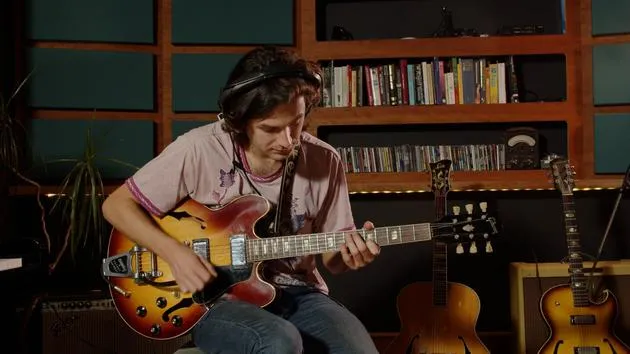
- You play right on the break between the fretboard and the body of the guitar, lightly caressing the strings and giving equal focus to all four beats of the bar.
Emphasizing All Four Beats
- Unlike the gypsy style, where there's a lot of focus on beats one and three, this American style emphasizes all four beats.
- It creates a slightly lighter touch.
"For me, that's a little bit of a bridge between those two worlds."
- I still emphasize beats one and three in a slightly heavier way, but you can hear some harmony on beats two and four.
- In the context of a guitar duo or current music, it sounds more modern and attractive, allowing the guitar to sing and letting you appreciate the harmonies.
Key Takeaways
- Rhythmically, the most important thing is that the right hand is moving on all four beats of the bar.
- It is very percussive, almost mimicking the drum kit.
"So if you're in a band context with a drummer, think about locking in with the hi-hat."
- Are you creating that percussive texture that the acoustic guitarists of the 40s were aiming for?
- Remember, this was an era almost before Les Paul invented electric guitars, so we're still thinking acoustically here.
28 lessons
2h 7m of structured video lessons
Advanced video features
Slow down, loop a passage, follow along
Mobile, tablet & desktop
Practise wherever you are
100% satisfaction guarantee
30-day money-back guarantee
Meet your guru
Meet your guru
Rob Luft is an award-winning musician from London, widely described as one of the UK's most prominent and talented young contemporary jazz guitarists. Praised by The Times as set 'to achieve great things in the future', Rob won the 2016 Kenny Wheeler Jazz Prize in association with Edition Records, and took 2nd Prize in the 2016 Montreux Jazz Guitar Competition. His debut album, 'Riser', was released in July 2017 to widespread critical acclaim across the European jazz media. John Fordham wrote in The Guardian that it's a 'very sophisticated debut, but given Luft's old-soul achievements since his early teens, we should have heard it coming'.
'So young and so talented!' - Jamie Cullum, BBC Radio 2 (UK)
'...an extraordinary talent!' - Julian Joseph, BBC Radio 3 (UK)
'The virtuosity of the three [guitarists Al di Meola, John McLaughlin and Paco de Lucia] is reminiscent of the 23-year-old Londoner Rob Luft, who is celebrated as a new "Wunderkind"' - Spiegel Online (D)
In Play Authentic Jazz Guitar, Rob opens up the harmonic language, phrasing and improvising instincts behind that 'old-soul' sound, showing you how he really thinks about the fretboard so you can start finding your own voice in jazz.







