



Hybrid vs Finger Style Picking
With
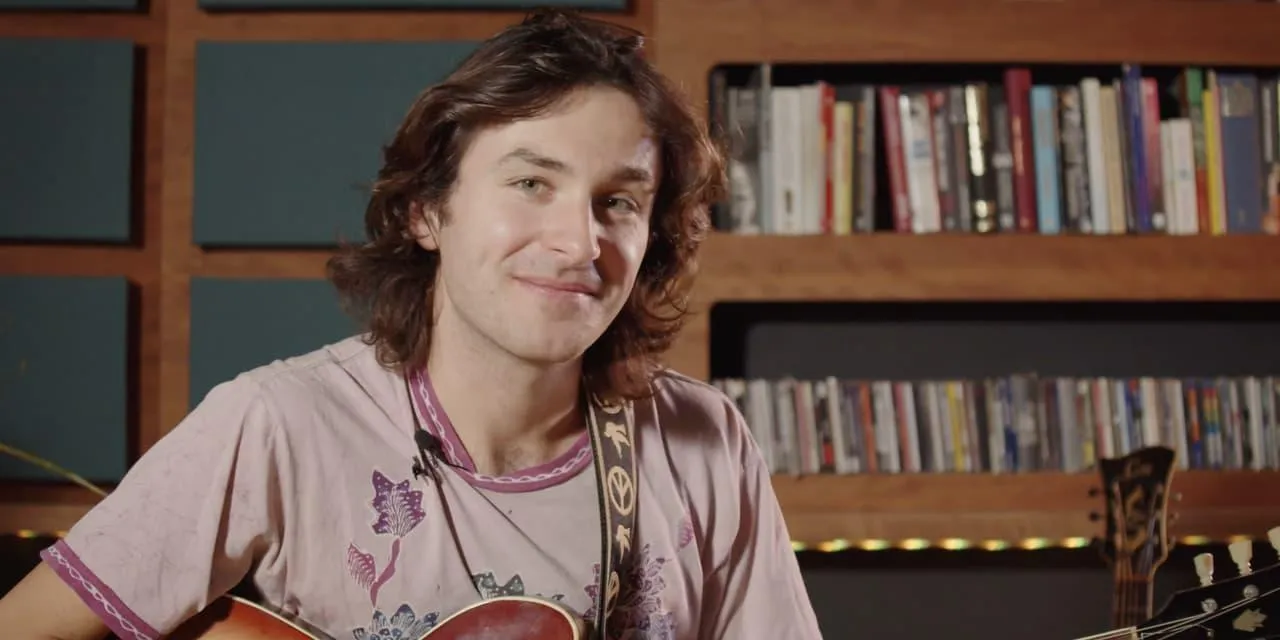
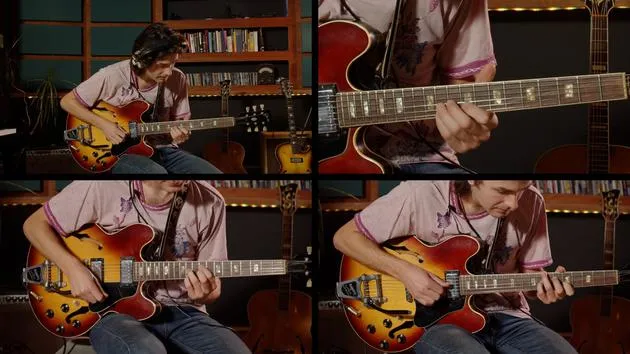
Rob LuftRob Luft explains his hybrid picking approach - plectrum plus fingers - for playing four-note chords and melody in the style of Joe Pass.
What's in the course
28 lessons (2h 7m) · 1 free
01. Why study Django Reinhardt?
3:45
02. Chords and Harmony - A Section
11:06
03. Chords and Harmony - B Section
2:21
04. Right Hand Techniques - European vs American
5:04
05. How to Create Swing Feel
1:51
06. Melody Walkthrough
9:10
07. Soloing - Arpeggios and Enclosures
Free lesson10:40
08. Soloing - The Harmonic Minor Bebop Scale
8:27
09. Soloing - Use of Pentatonics
9:45
10. Clouds - Performance (Split-screen with accompaniment)
3:48
11. Clouds - Performance
3:49
12. Clouds - Performance (Simplified)
2:40
01. Why study Joe Pass?
2:23
02. Introduction to Solo Playing and Parallel Harmony
4:00
03. Diminished Lines and "Sicilian 3rds"
5:19
04. Playing in Time with Pianistic Voicings
5:22
05. How to Play the Second Half
5:06
06. Hybrid vs Finger Style Picking
You are here5:57
07. November in Norway - Performance
2:29
08. November in Norway - Performance (Simplified)
1:27
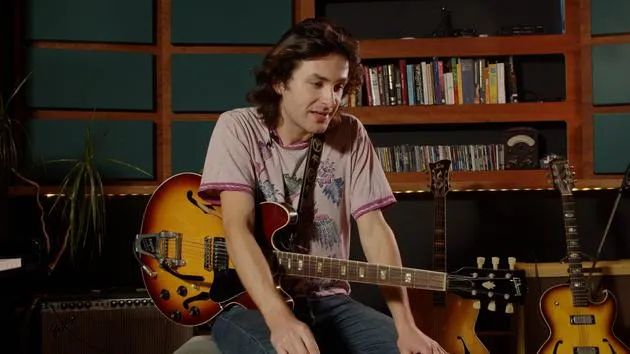
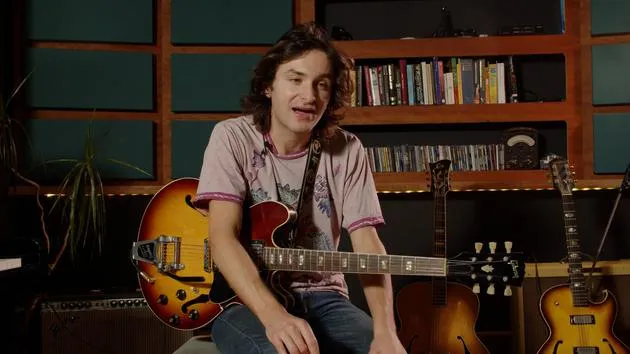
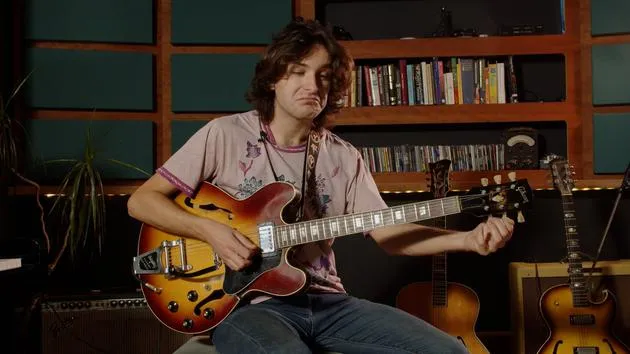
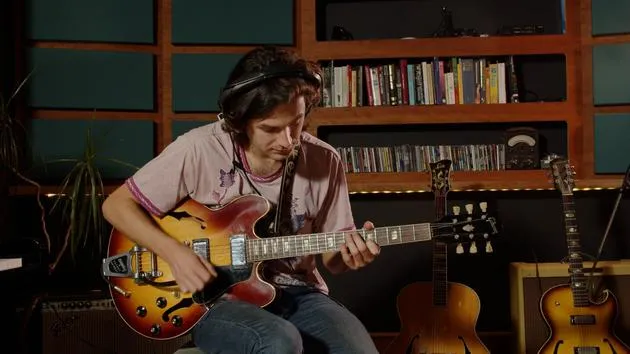
Lesson transcript
Exploring the Technique of Joe Pass
So I'm here studying the beauty of Joe Pass and his incredible technique in the right hand.
Emulating Joe Pass
I think it's impossible to really exactly emulate him because he himself changed his approach throughout his career. In his younger years, he was like many jazz guitarists, using the plectrum. But as he got older and specialized more in the solo jazz performance aspect of his playing, he eschewed the plectrum and just went pure finger style, almost like a classical player.
Personally, I don't have the facility to do that. However, I do love the way he approaches unaccompanied jazz guitar.
My Approach: Hybrid Style
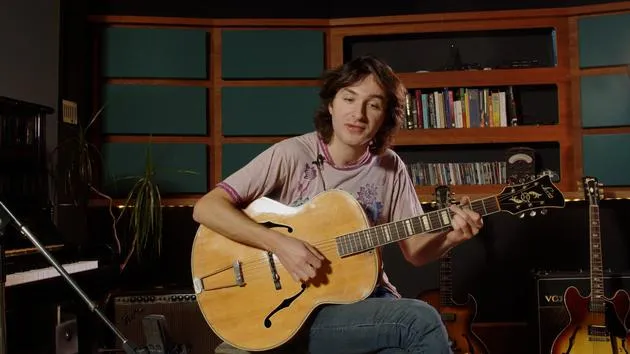
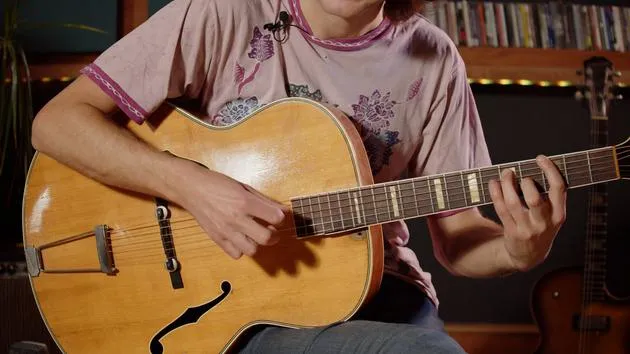
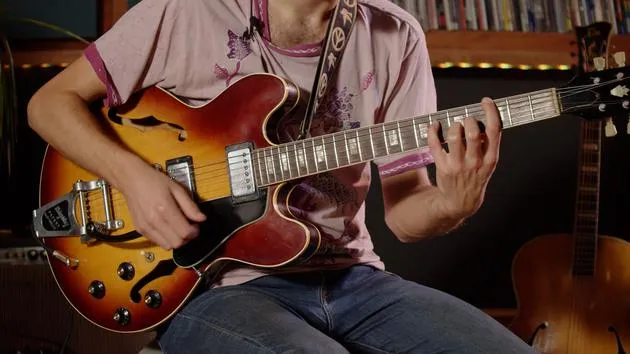
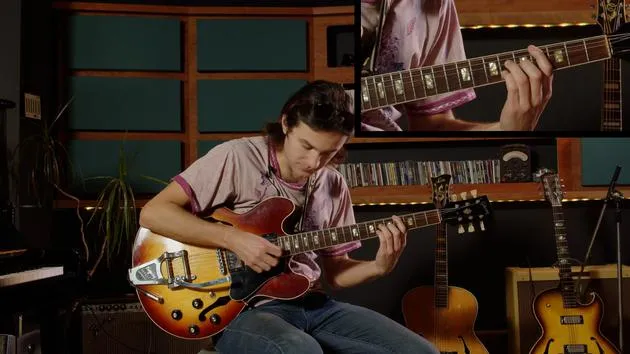
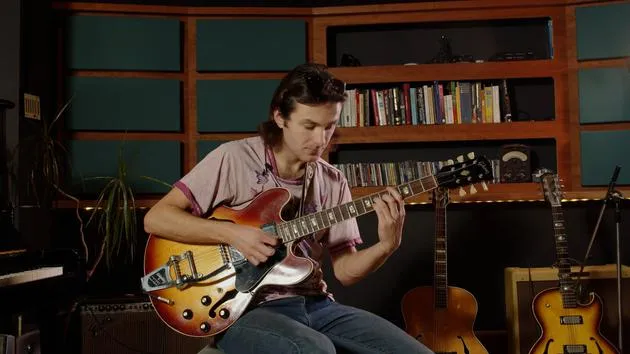
I've kind of reimagined his approach using the hybrid style, which involves having the plectrum between my thumb and index finger. Then, I use the three remaining fingers in much the same way that a classical guitarist would. This allows me to achieve a four-note voicing:
- Lowest note with the plectrum
- Next three notes with the remaining fingers
You can play the chords together or rake for four-note voicings. It's a very nice way to bridge modern jazz guitar and traditional jazz guitar, especially as many of us in the 21st century are using this hybrid technique.
Transitioning Between Harmony and Melody
As you can see, I can move effortlessly between harmony and melody.
- Hybrid: Now just with the plectrum, I'll play some melody.
- Hybrid again: That was just with a plectrum.
- Hybrid again: That was hybrid.
What I'm trying to say is that every time I'm playing chords here, I'm using this hybrid technique of plectrum with fingers. This creates a more classical tone compared to simply picking all the notes with the plectrum, which would sound like this:
- Only using plectrum: It's a much more percussive tone.
There's nothing wrong with it, though. Traditional jazz guitarists, electric jazz guitarists like Jim Hall, and many famous ones such as Tal Farlow and Jimmy Rainey from the '50s played just with the plectrum.
Notable Examples
- Charlie Christian: Perhaps the most famous example of all, he only used downstrokes to play.
- He was almost the founder of electric jazz guitar and never used his fingers, just downstrokes with the pick.
I think it's nice to bridge the fingerstyle jazz guitar of Joe Pass with the very percussive picking style of guitarists like Charlie Christian.
The Hybrid Technique in Action
Using this hybrid technique, you get passages like this:
- Again, I'm moving between hybrid and picking melodies, which is interesting.
I find it difficult to articulate clearly on camera because this technique is so internalized within me. Using fingers with the plectrum allows me to think a bit more like a pianist, which, of course, Joe Pass himself was.
Embracing Your Comfort Zone
If you're really proficient with your fingers, there's no reason I should suggest you stop playing fingerstyle. I'd say:
- Embrace that!
- Especially during unaccompanied performances.
However, if you have a drummer or a bass player or both playing loudly behind you, you might feel that the fingerstyle approach isn't powerful enough. That's why many guitarists began using the plectrum to create a much louder tone.
Conclusion
In the context of unaccompanied music, if fingerstyle makes you comfortable, then definitely play that. For me, this hybrid approach allows me to perform with trios, quartets, orchestras, or even unaccompanied jazz guitar.
I think it's important to follow your taste.
Now, let me play a few bars to illustrate how it looks with this hybrid style.
There you go!
28 lessons
2h 7m of structured video lessons
Advanced video features
Slow down, loop a passage, follow along
Mobile, tablet & desktop
Practise wherever you are
100% satisfaction guarantee
30-day money-back guarantee
Meet your guru
Meet your guru
Rob Luft is an award-winning musician from London, widely described as one of the UK's most prominent and talented young contemporary jazz guitarists. Praised by The Times as set 'to achieve great things in the future', Rob won the 2016 Kenny Wheeler Jazz Prize in association with Edition Records, and took 2nd Prize in the 2016 Montreux Jazz Guitar Competition. His debut album, 'Riser', was released in July 2017 to widespread critical acclaim across the European jazz media. John Fordham wrote in The Guardian that it's a 'very sophisticated debut, but given Luft's old-soul achievements since his early teens, we should have heard it coming'.
'So young and so talented!' - Jamie Cullum, BBC Radio 2 (UK)
'...an extraordinary talent!' - Julian Joseph, BBC Radio 3 (UK)
'The virtuosity of the three [guitarists Al di Meola, John McLaughlin and Paco de Lucia] is reminiscent of the 23-year-old Londoner Rob Luft, who is celebrated as a new "Wunderkind"' - Spiegel Online (D)
In Play Authentic Jazz Guitar, Rob opens up the harmonic language, phrasing and improvising instincts behind that 'old-soul' sound, showing you how he really thinks about the fretboard so you can start finding your own voice in jazz.







