



Drum Synth et Ultrabeat
Avec
Aamir YaqubAamir Yaqub explore le Drum Synth de Logic pour créer kicks, snares, claps et hats électroniques, en les façonnant avec la hauteur, le decay et un peu de saleté.
Le contenu du cours
20 leçons (1h 47min) · 1 gratuites
01. Bienvenue dans la synthèse
Leçon gratuite0:53
02. Introduction à la synthèse, synthèse soustractive
3:22
03. Première étape : génération du son
4:09
04. Deuxième étape - Façonnage du son et filtres
1:35
05. Façonner le volume - ADSR
3:27
06. LFO
1:54
07. Alchemy
4:11
08. Retro synth
4:55
09. Synthés ES1 et ES2
4:00
10. Synthétiseur ESP
1:17
11. ESM, ESE, EFM1
8:54
12. Sculpture, EVOC20 et vocoding
7:53
13. Drum Synth et Ultrabeat
Tu es ici7:11
14. Drum Kit and Drum Machine Designer
7:23
15. Synthés de clavier : orgue vintage, EP, Clav, Mellotron
9:03
16. Studio Horns et Studio Strings
4:48
17. Effets MIDI - Arpégiateur
21:21
18. Effets MIDI - Chord Trigger
5:45
19. Autres effets MIDI
4:33
Transcription de la leçon
Working with Logic Synths
When we are working with Logic synths, it's important to remember that synths don't always have to emulate older models. One of the coolest synths available in Logic is the Drum Synth.
Drum Synth Overview
The Drum Synth provides sounds such as:
- Kicks
- Snares
- Claps
- Percussion hats
- Cymbals
It features a very simple interface, making it easy to use.
Exploring Sounds
For example, if I access the snares and claps, I can choose a snappy snare. Here's what that sounds like:
Sound example here
I can change this to an air snare. By adjusting the pitch, you can hear how the tonality changes the tone as well.
- Body Decay: We know what that means.
- Add Some Dirt: Adding texture to the sound.
The Drum Synth allows you to access an electronic drum synthesis engine. If you prefer an electronic drum sound, it makes sense to use this rather than drum samples or other available options.
Ultrabeat: A Powerful Tool
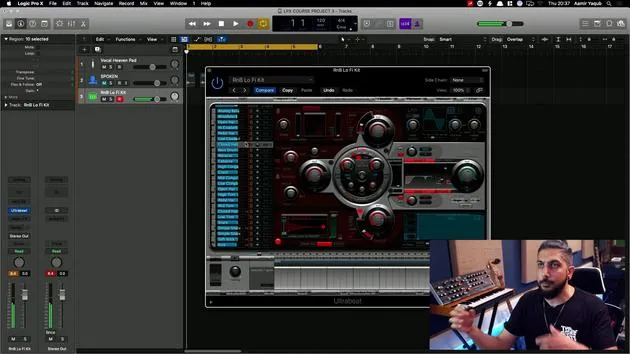
Continuing in the realm of drum synthesis, let's load up Ultrabeat, which is also available in Logic. This drum machine is one of the oldest plugins in Logic and serves as a drum synthesizer capable of creating percussive sounds and polyphonic rhythms.
Features of Ultrabeat
- Powerful Step Sequencer: Combine elements we've looked at before.
- Drum Kits: Start by calling up a drum kit or drum bank.
For instance, let's select the RB Lo Fi Kit. Loading this kit will bring in various samples for synthesis. You can perform actions such as:
- Filtering
- Utilizing oscillators
- And more
This creates an interactive drum kit you can manipulate.
Programming Patterns
When working with Ultrabeat, you can program sounds manually or use the built-in step sequencer to initiate a pattern quickly. By default, the step sequencer is off, but upon pressing play, you will notice an existing pattern.
Changing Patterns
- Navigate to where it says Pattern.
- Select a different one to compare the variations.
To enter full view mode:
- This feature allows you to see all 32 steps.
Adding Groove
For example, you might want to add a four-on-the-floor feel with a kick at the start. You can experiment with:
- Swing: Adjust the swing to change how the pattern feels.
- Closed Hats: Modify their pattern to create variation.
Additionally, you can:
- Solo instruments
- Change levels and panning using sliders
- Adjust velocity to create dynamic hits
Exporting Patterns
Once you finish, you can drag your pattern to the Arrange Window. Simply click on the light-up area next to pattern to initiate this.
Note: Remember to turn off the step sequencer before playing back the pattern. Otherwise, you'll experience double triggering, which will sound odd.
After turning it off, you can explore the pattern in the piano roll for a more familiar interface.
While Ultrabeat may not have the most modern aesthetic compared to newer drum synthesis options, it is certainly worth exploring, especially when you start experimenting with different sounds and filter options. With some creativity, you can achieve phenomenal sound design results!
20 leçons
1h 47m de leçons vidéo structurées
Fonctions vidéo avancées
Ralentissez, bouclez un passage, suivez la partition
Mobile, tablette et ordinateur
Pratiquez où vous voulez
Satisfaction garantie à 100 %
Garantie remboursement 30 jours
Rencontrez votre guru
Rencontrez votre guru
Aamir Yaqub est un producteur et ingénieur du son basé à Londres. Il a travaillé avec certains des plus grands noms de la musique, dont Alicia Keys, David Guetta, Rihanna, Sia et will.i.am, tout en développant des artistes indépendants.
Au fil de ses cours, il enseigne l'intégralité de son flux de travail sur Logic Pro : de l'interface et de l'enregistrement à la création de beats, la synthèse et les effets MIDI, jusqu'au mixage et à la finalisation d'un morceau.







