



La gamme blues

Lesson time: (2min 48sec)
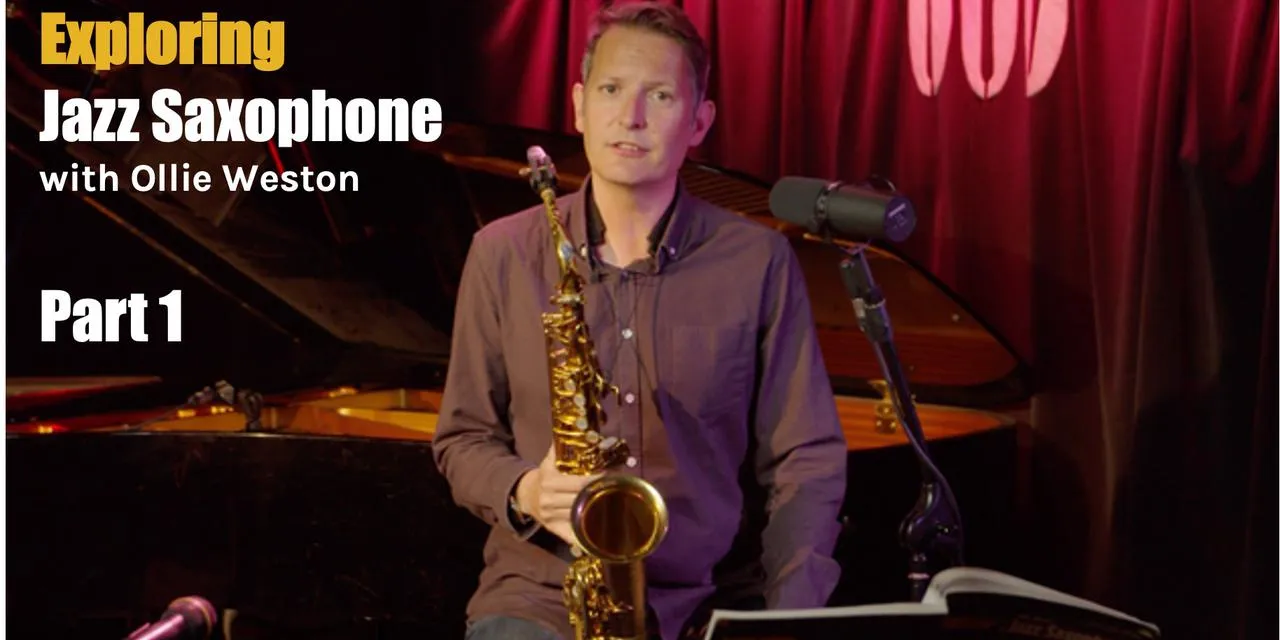
Ollie Weston présente la gamme blues, en la construisant à partir de la fondamentale et en expliquant comment chaque note s'y rapporte numériquement.
Course preview
This lesson is part of the course Exploring Jazz Saxophone : Partie 1 - Pour commencer
Watch a preview of the full course below.
Lesson transcript:
Introduction to the Blues Scale
In this lesson, I'm going to introduce the blues scale, work out how to construct it from a root note, and discuss the relationships of notes to the root numerically.
Constructing the Blues Scale
I've played a blues in D, so I'm going to call D number one. The degrees of the D scale are as follows:
- First Degree: D (Root)
- Second Degree: E
- Third Degree: F# (Major Third)
- Fourth Degree: G
- Fifth Degree: A
- Sixth Degree: B
- Seventh Degree: C#
Then we're back to the octave, which is the root.
Changing the Interval
I'll be talking a lot about these numbers and pointing at my fingers as we go.
The first interval I want to change in the blues is the third. I want to create a minor sound because the blues is essentially sad music.
Flattening the Third
- Instead of this major third starting our tune, "Leaving Town," I want it to be minor.
- Already, it starts to sound a little bit more clashy, dissonant, and gritty, which is what we want.
Scale Modifications
- I'm not going to play the second in my blues scale. I'm going to jump straight to the third.
- Then I'm going to play the fourth, which remains as is: G.
- The next note is a really clashy, interesting sound: a flattened fifth.
This note is between G and A, and in this key, it is G#. Hopefully, already you're capturing some of that blues sound.
- I'm then going to correct the G# and it's going to go back to a normal fifth: A.
- Lastly, I'm going to omit the sixth as well and jump straight to the seventh.
Instead of it being a C# as per a D major scale, it's going to be a C natural, again, a flattening process to create a more minor, crunchy sound.
Practice
I like to take some time to play those notes and try to capture the spirit of the blues as we met in "Leaving Town."
About the instructor
Depuis l'obtention de son diplôme au Leeds College of Music (BA Hons) et à la Guildhall School of Music (Post Graduate Diploma in Performance), Ollie a bâti une carrière riche et variée dans la musique. En tant que saxophoniste, il s'est produit en concert et en studio avec des artistes aussi divers qu'Amy Winehouse, Tim Minchin, Bonobo, Frank Turner, le London Jazz Orchestra, le Hackney Colliery Band, l'Ambient Jazz Ensemble et le Nelson Riddle Orchestra. Il est également coleader du quartet de jazz 'Time Is Of The Essence', et compose et arrange du matériel pour cette formation et d'autres ensembles. Ollie est actif dans l'éducation musicale, actuellement comme responsable de cours du département jazz de la Guildhall School of Music and Drama (école junior), où il dirige des ensembles de jazz, un big band et des cours de théorie. Il a écrit une série de livres 'Exploring Jazz' pour Schott Music, publiés dans le monde entier et inscrits aux programmes d'examen au Royaume-Uni. Ollie a également animé des ateliers pour l'Oxford University, Pro Corda Strings et BABSWE, ainsi que pour les écoles d'été de la Guildhall School of Music. Dans ses cours Exploring Jazz Saxophone, Ollie te mène des tout premiers pas jusqu'à improviser en toute confiance sur des morceaux et des grilles d'accords, en développant les compétences d'improvisation qui mettent le vocabulaire d'un véritable jazzman à portée de tes doigts. read more