



Le rôle de l'A&R
Avec
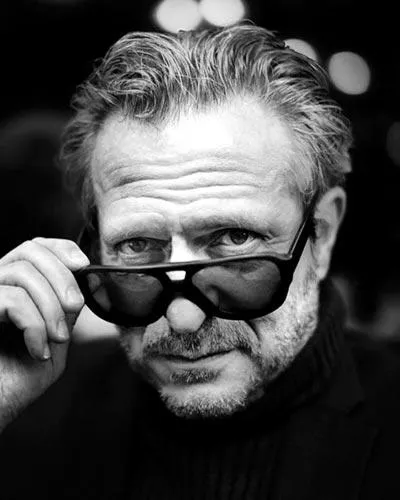
Charlie RapinoCharlie Rapino explique ce que fait vraiment un A&R au sein d'un label, de la découverte et du développement d'artistes à l'équilibre entre les choix créatifs et les choix commerciaux qui les financent.
Le contenu du cours
16 leçons (2h 16min) · 1 gratuites
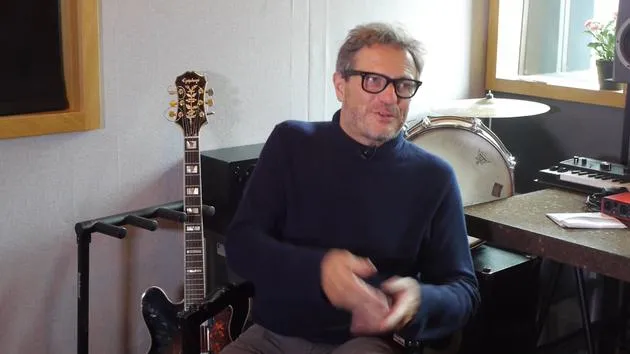
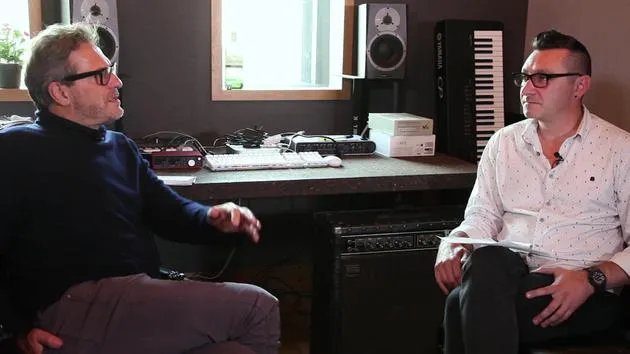
Transcription de la leçon
Understanding A&R: Insights from Charlie
Charlie: I wanted to ask you what your perception is of A&R. Because really, a lot of the stuff you've been talking about with these anecdotes, you seem to be playing that sort of role of an A&R, really, where you're discovering something.
- You're like, "I love it. It's shit at the moment, so it's perfect for us."
- But almost like you're developing and launching, you know, an artist in a new area through the productions that you were doing.
Your Perception of A&R
Do you see yourself and what you were doing in the same light as A&R, or how do you perceive what A&R is?
I ended up being an A&R. Yeah. Which was a natural progression, I suppose.
What does it mean to you?
You're a driver; you're a chauffeur. A highly paid chauffeur.
Any of the students want to be an A&R?
I'm sure if they're watching, it's something they're interested in understanding what it means more than any other.
The A&R Journey
First of all, when you move into A&R, you have two years: the A year and the B year.
- The B year is the one that allows you to finance the projects which are A listed.
- I'm talking about the old industry, obviously, now the old school.
Sometimes you will sign something that is so trashy and obviously popular that you will make so much money for the company that it will allow you to sign Radio artists. A good example is Tommy Mottola signing Joe Dolce with "Shut Up Your Face."
Quote: "Mind you, you gotta respect these records because it takes a good sick sense of humor and quite a good sharp intellect to write 'Shut Up Your Face.'"
When artists used to come and say to me, "Alfred, that's a piece of crap. I can write that."
- Really? You can write that? Great. Why don't you write one now?
- Because you need it. Because you are in debt.
So never diss those records in pop music because they are healthy for the ecosystem. Over the years, you discover that "Rhythm of the Night," for example, is a cool record because Bastille did that cover.
- It's part of your collective memory; it's a subconscious collective thing.
- "Oh, that was a fun record."
You know, it's that thing in reality I hate , it's a novelty record.
Quote: "There are some people on the face of the earth that can write a succession of novelty records and give it an identity. They become big hits and big hit acts. The Beatles, ABBA, they wrote novelty records, but they were very good novelty records."
The Transition to Sony
In '99, you became an A&R director at Sony.
- Yeah, Sony International. That was a bad idea.
What does the system look like in '99? Can you describe this industry system?
A&R driven, creatively driven.
- I used to work for David Massey and Paul Berger, who were inspirational bosses.
- You had to stand up for your ideas, and if you insisted, they would give up and push you into doing that.
- There was no way of complaining, "Oh, you didn't make me sign this."
You had to say to yourself, "Well, we should have insisted more; your problem." And they're right , you gotta stand up for yourself, believe in your ideas.
A&R Service Dynamics
It was really A&R servicing in my way because Sony wanted to get massively into the dance market, which I knew inside out. I knew all the producers through their relationship with Warners.
- Steve Allen went to sign Eiffel 65 and all these novelty hits again on Warners that we were making a lot of money from.
- So really, giving A&R ideas for breaking global acts.
Reflections on the Industry
I didn't have in mind to go into Sony or Universal or stuff like that. I didn't think about it; I was just networking. I knew David very well from when he was a manager; I really liked him.
But obviously, your original stance was, "Don't go anywhere near them; keep away from the machine," as it were.
- That was probably my mistake in a way.
- But I knew David not really from a record company side. I knew him as a manager.
David is the sort of guy that really likes to talk not just about music, but about fashion. We were both very into fashion and how these other arts or cultures could influence the world of music and vice versa.
- It wasn't just about the music; I was very interested in him or Paul as more human beings rather than executives.
- I didn't really care about being an executive. Can you see me as an executive? Nah, nah.
The State of the Industry
At that time, the industry was in a very healthy space.
- We were all working, we were selling; we were selling product at the time.
- Obviously, there were big margins, and everybody was making a buck , A&R was driving the whole thing.
Quote: "What's the A&R saying? Wasn't today; it's what's the marketing guy saying."
- It was content driven. The core was the content, the creativity.
- Today, it seems more about big data; it's about numbers.
There's no more quality filter, but there's no driver. The record company was the artist who was going to. There was this bet that took the product, all the artists, to the consumer.
- Today, that bet is missing because the record companies are not financing that process anymore.
Direct to Consumer
Today, it's digital and all that stuff. But obviously there's a counter effect , there's no money.
- If you're an artist, there's no money to finance the digital process.
- Even managers themselves, they don't finance today; they're more like business managers.
The big question mark is: what do you do?
Today, you are direct to the record companies, after media, or even after the audience.
- Gangnam Style was signed when it was at that point a planetary phenomenon because the numbers were there, but they were coming in way late in the process.
- Before, they owned and represented the kernel of creativity.
Quote: "That is missing. So today, I think it comes back to what we were saying: being direct to consumer."
Basically, the artist can be direct to consumer.
- The more you think about it, it goes back to the notebook and the pencil.
- If you want to be successful, you gotta work very hard and try to guess what people are thinking and what people want to hear and what makes them tick.
Conclusion: In this time, you don't have someone like me who drives you there; you do the driving.
16 leçons
2h 16m de leçons vidéo structurées
Fonctions vidéo avancées
Ralentissez, bouclez un passage, suivez la partition
Mobile, tablette et ordinateur
Pratiquez où vous voulez
Satisfaction garantie à 100 %
Garantie remboursement 30 jours
Rencontrez votre guru
Rencontrez votre guru
Charlie a débuté dans l'industrie musicale en tant qu'avocat fraîchement diplômé, organisant des concerts en faisant venir des artistes comme Iggy Pop et Patti Smith devant un public universitaire italien radical.
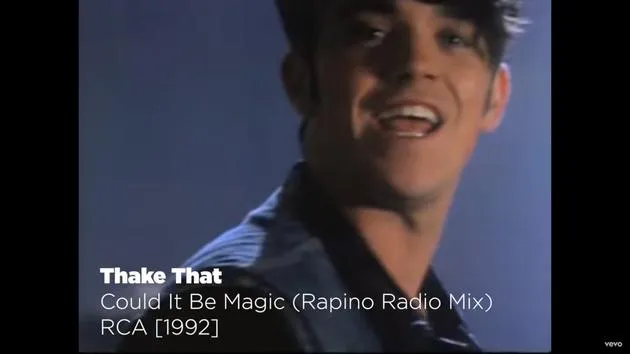
Après avoir travaillé au célèbre Record Plant NYC et s'être imprégné de la scène house, il forme les Rapino Brothers avec Marco Sabiu, s'installe à Londres en 1990 et ne regarde plus jamais en arrière. Là-bas, ils marquent la décennie de leur empreinte en produisant et en enregistrant des disques. Après leur premier succès avec Love Me The Right Way de Kym Mazelle, ils orchestrent le premier tube de Take That et produisent, mixent et peaufinent de nombreux grands noms de la pop dans les années 1990, de Kylie à Primal Scream.
En 1997, Charlie est le producteur « à l'antenne » de « Get Your Act Together » sur la BBC, suivi de « Full Frontal » sur Channel 4. De 1999 à 2004, il est A&R Director chez Sony Music International.
Son énergie ne faiblit jamais. Au fil des années, il a partagé son temps entre le conseil en management pour Ennio Morricone, le conseil pour le magazine Rolling Stone, le travail sur des bandes originales et le conseil en production pour le cinéma et les jeux vidéo (y compris convaincre Iggy Pop de faire les voix off du jeu vidéo Driver 3), ainsi que la signature et la gestion d'artistes via son label en coentreprise avec Sony, Stud Records.
Dans Get signed!, Charlie lève le voile sur des décennies d'expérience en production et en A&R pour te montrer exactement ce que les labels recherchent, comment façonner et présenter ton projet, et ce qu'il faut réellement pour se faire remarquer et décrocher un contrat.







