



Cómo sujetar la guitarra y la púa
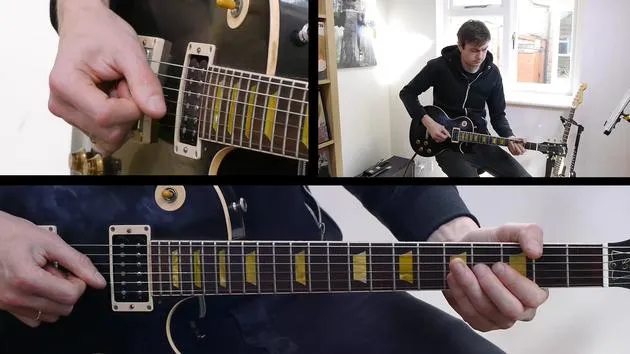
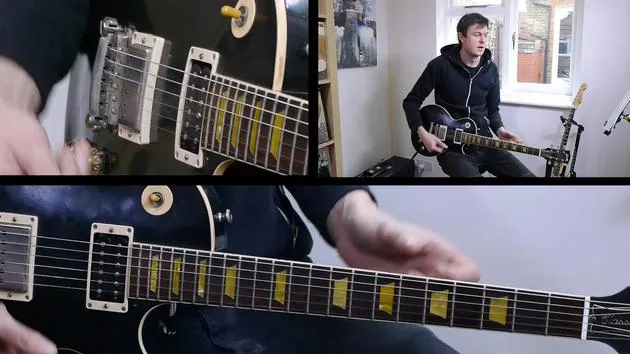
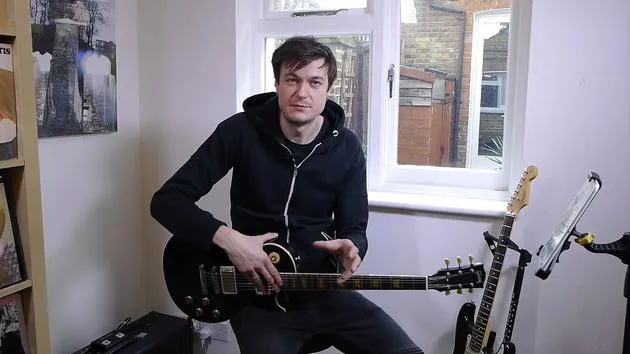
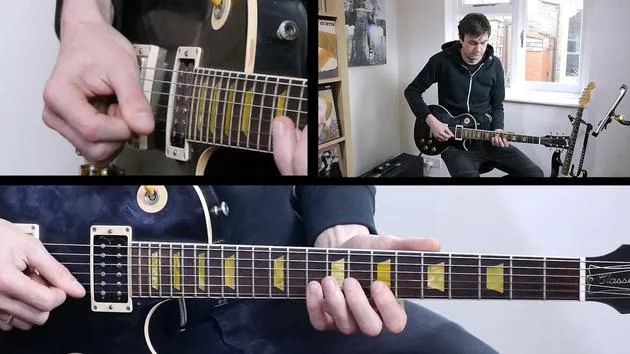
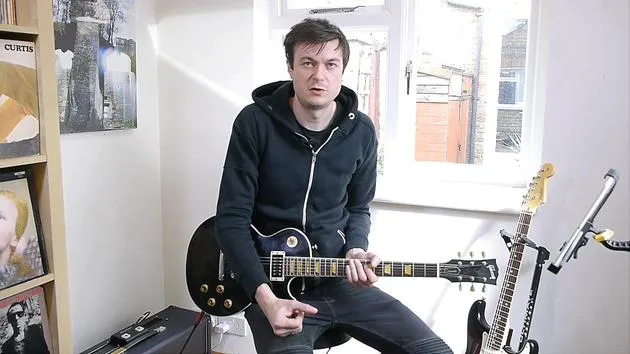
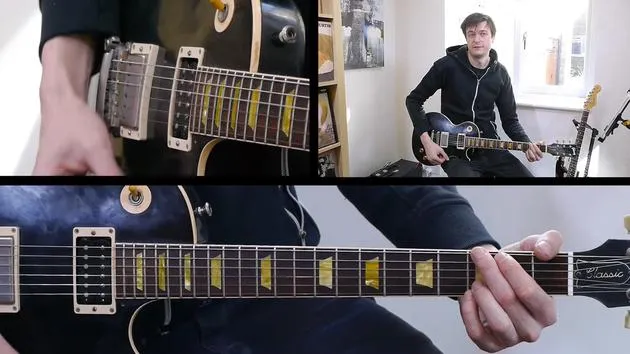
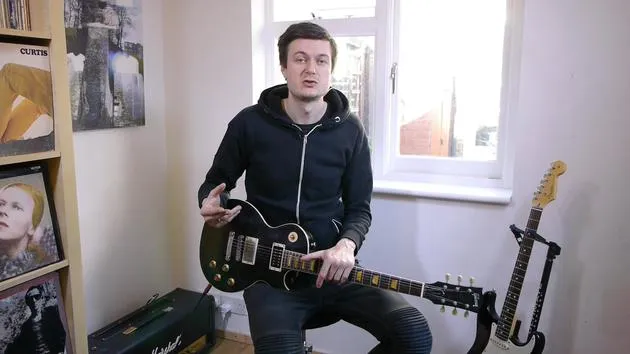
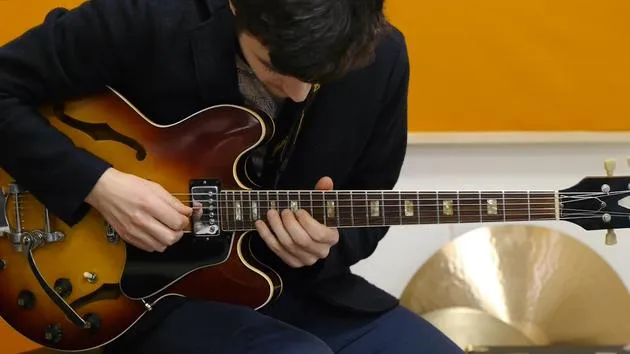
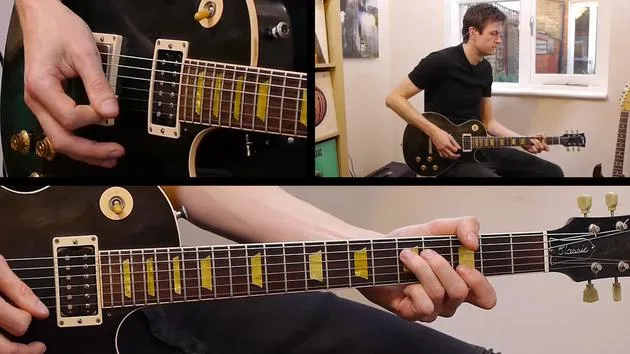
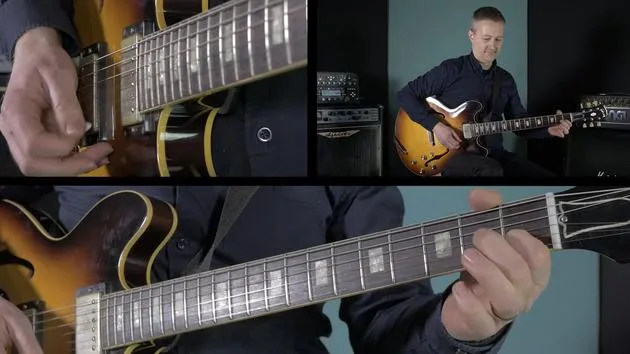
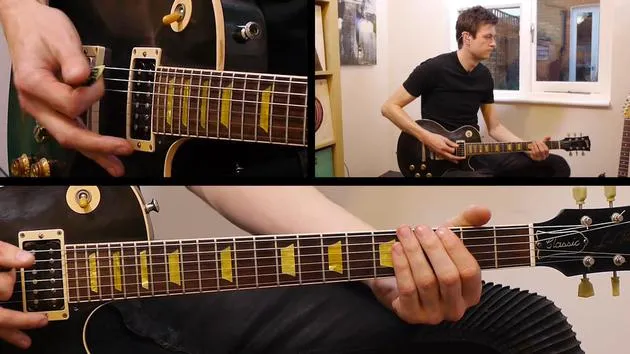
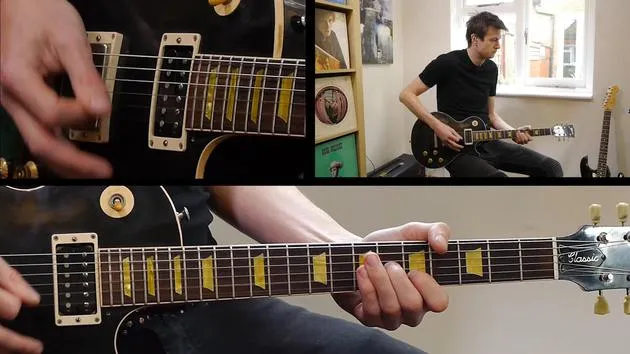
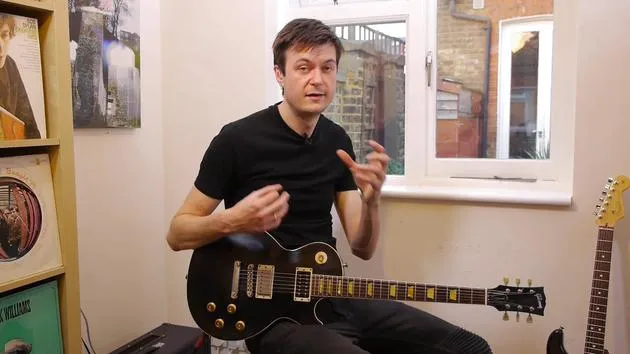
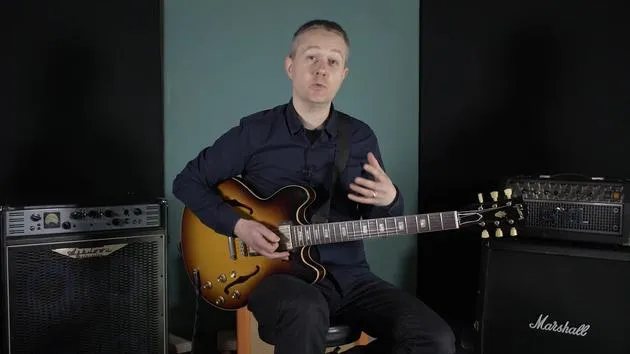
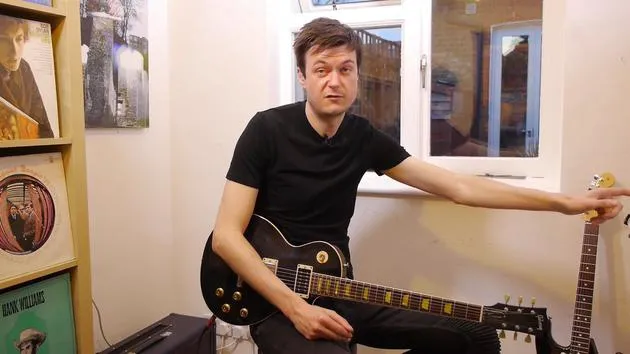
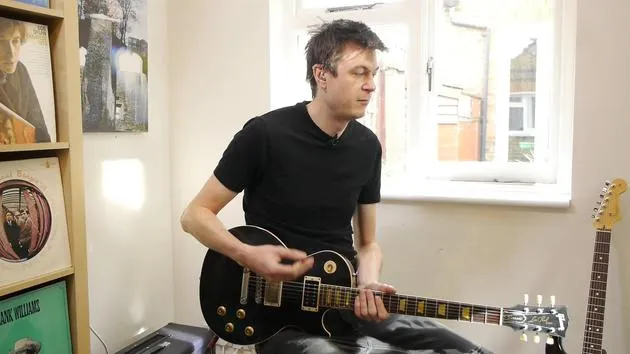
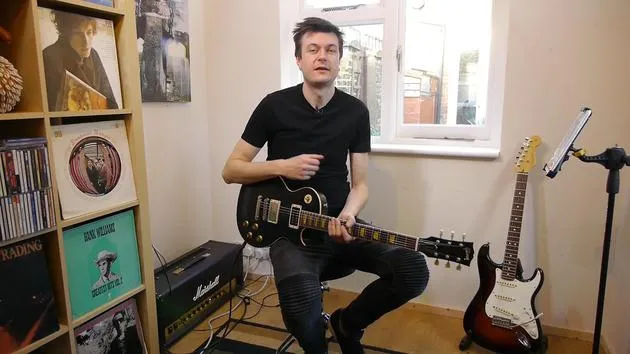
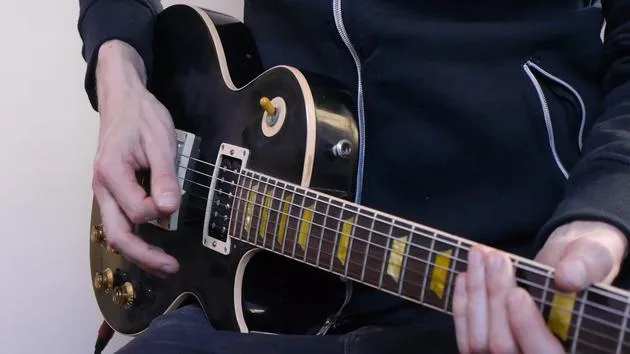
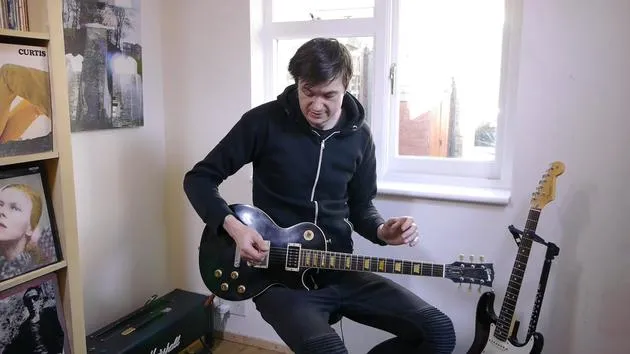
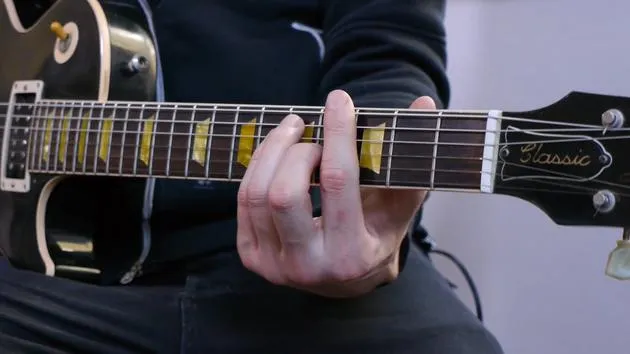
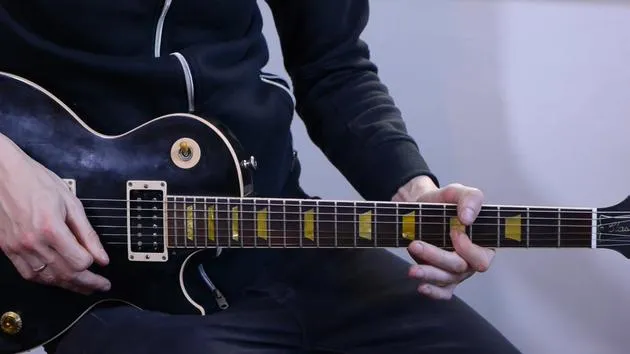
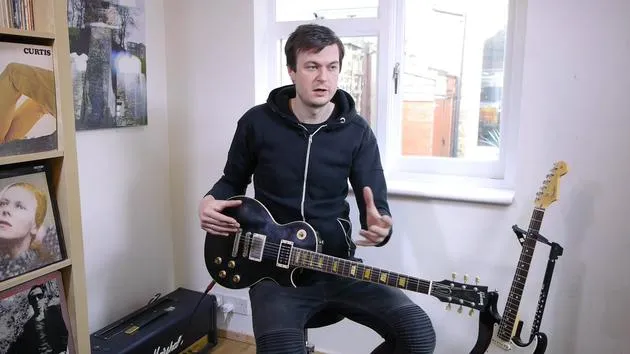
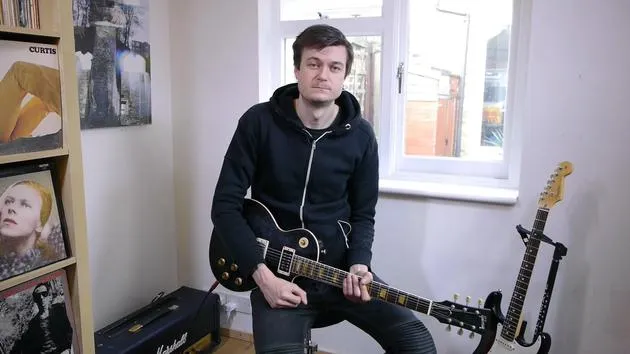
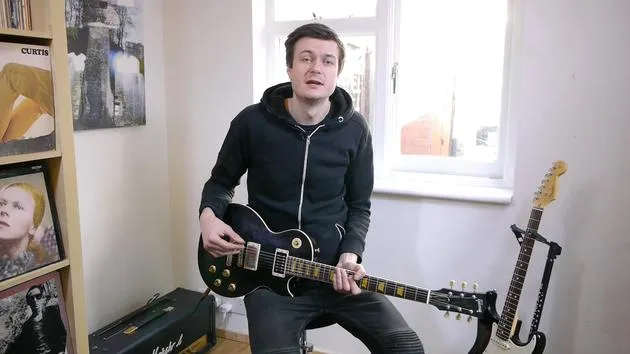
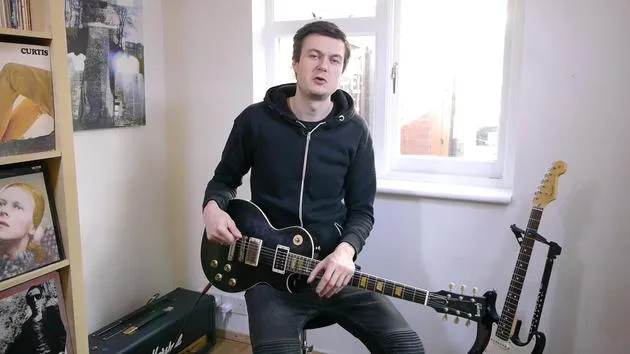
James Barratt te muestra cómo sujetar la guitarra eléctrica y la púa - posición sentado, manteniendo el mástil nivelado y una postura relajada pero firme.

Qué incluye el curso
43 lecciones (3h 11m) · 1 gratis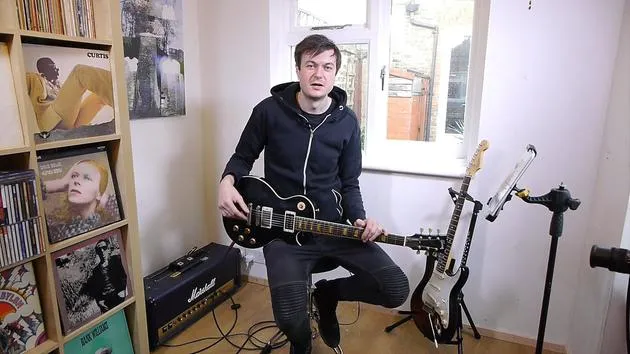
01. Introducción a los enfoques de la improvisación
1:00
02. Primeros pasos con la improvisación
9:22
03. Improvisar sobre notas del acorde
10:18
04. Tarea: Encontrar las notas del acorde
4:05
05. Añadir interés rítmico a tus solos
4:11
06. Ejercicio: improvisar sobre un cambio de acorde
2:52
07. Reto: Envía tu improvisación
0:24
08. Adornar una melodía
5:36
09. Reto: Envía tu melodía
0:26
10. Improvisación rítmica y comping
9:55

Transcripción de la lección
Fundamental Techniques for Electric Guitar
Introduction
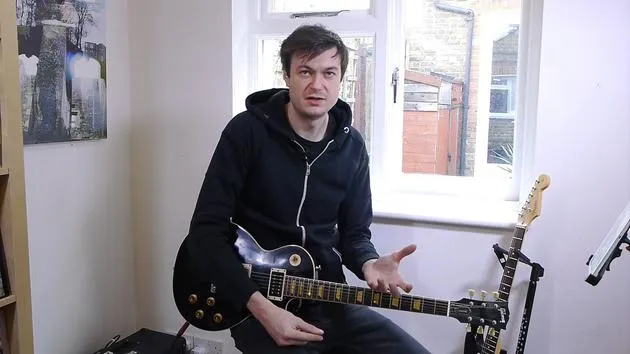
Hi, guys! I just wanted to share with you some of the fundamental techniques for electric guitar.
Holding the Guitar
- We're going to start really basic, beginning with how to hold the guitar.
- Most of the time, electric guitar players will sit the guitar across their right leg, with the neck going across the body.
Important Tips:
-
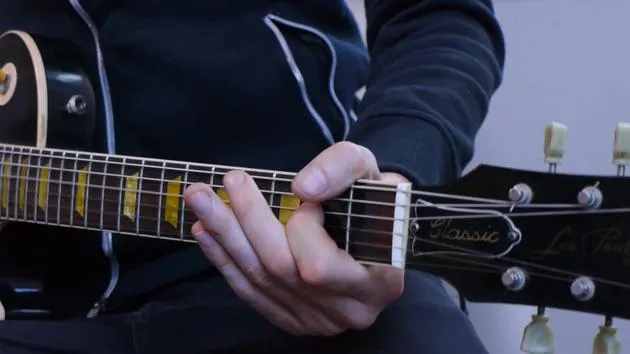
Maintain Neck Position: Be careful not to let the neck of the guitar descend towards the floor.
- We want to keep it nice and level, maybe even slightly upright.
- Allowing the neck to tilt down can lead to a bad left-hand position.
-
Posture Matters: It's great to be relaxed, but not to the point of having poor posture.
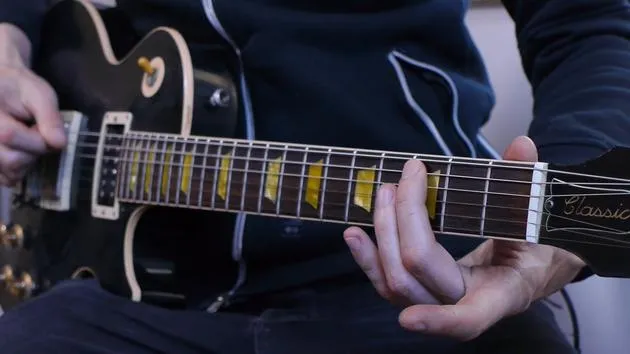
- Avoid resting the forearm of your fretting hand on your leg while playing.
- This can cause pain in your forearm.
- Don't tuck your elbow into your body; it can restrict your movement.
- Avoid resting the forearm of your fretting hand on your leg while playing.
Ideal Positioning:
- Sit with the guitar across your body, keeping it level, not pointing too much towards the floor or the ceiling.
- Your elbow should be relaxed, neither sticking out nor tucked in too tightly.
- Maintain an upright posture, and it should feel reasonably natural.
Right Hand Technique
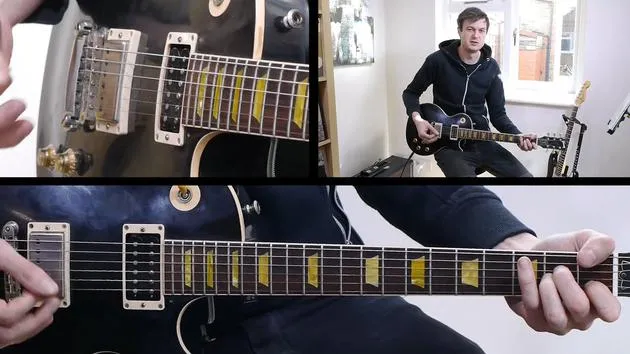
- For the right hand, you will most likely be using a pick.
- If you've chosen this course for popular music, you'll be using a pick 99% of the time.
Holding the Pick:
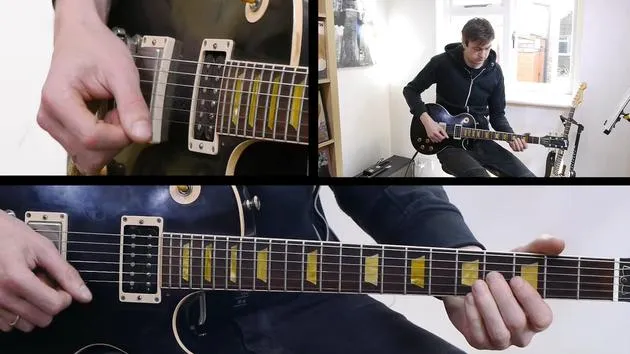
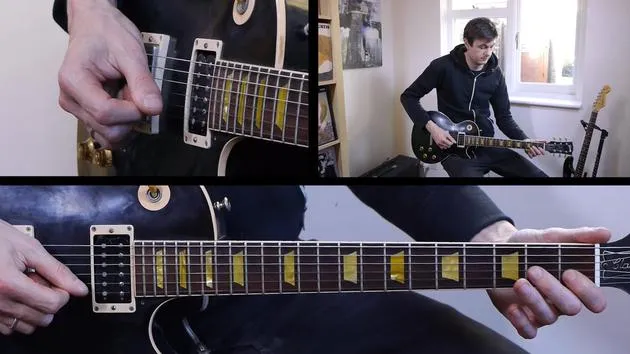
- Grip: Hold the pick between your thumb and your first finger.
- Position:
- Ensure the pointy end of the pick is sticking out under your thumb joint.
- Tuck your first finger behind your thumb.
Avoid This:
- Don't let your first finger go down with the fingernail touching the strings.
- This can cause a poor sound when picking.
- Comfortable Grip: Don't hold the pick too tightly; just enough to avoid dropping it.
- You want to comfortably adjust the amount of pick shown to the strings.
Adjusting for Playing Style:
- For intricate playing, show minimal pick to the strings.
- For strumming, you can afford to show more pick.
- You can maneuver the pick between your thumb and first finger without changing your grip.
Other Fingers Position
- It's entirely up to your preference.
- Personally, I prefer to have my fingers slightly splayed out, which allows easy access to my volume and tone controls.
- You can also choose to finger pick other strings while picking, which is a common technique (perhaps slightly more advanced).
Other Options:
- If you prefer, you can bunch your fingers up into a light fist, but remember:
- Nothing about playing guitar should be tense, stay relaxed.
Experimentation
- Why don't you experiment and see how you get on?
- Explore which finger position you prefer!
43 lecciones
3h 11m de lecciones en vídeo estructuradas
Funciones de vídeo avanzadas
Ralentiza, repite un pasaje, sigue la partitura
Móvil, tablet y ordenador
Practica donde quieras
Garantía de satisfacción 100%
30 días de garantía de devolución







