



Walking Basses
Vemos cómo se emplean los walking basses en los temas de boogie-woogie
Qué incluye el curso
24 lecciones (2h 1m) · 2 gratis
01. Introducción a los bajos y consejos de práctica
2:23

02. Construir bajos de boogie
Lección gratis6:22

03. Desarrollar más los bajos
8:57

04. Bajos menores
3:02

05. Walking Basses
Estás aquí7:05

06. Ser creativo con los bajos de ocho por compás
5:33

07. Bajos latinos al estilo de Jimmy Yancey
2:07
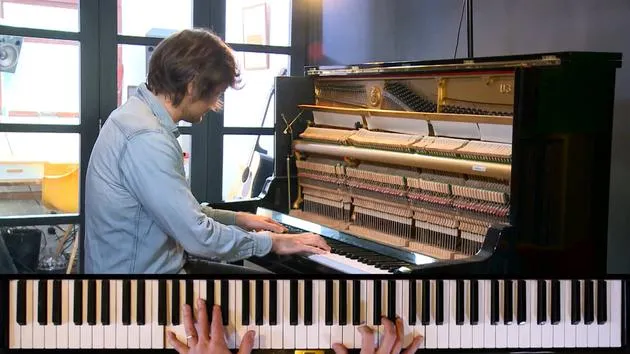
08. Desarrolla tus propios bajos - Ideas rítmicas
6:04

09. Desarrollar tus propios bajos - Ideas armónicas y estudio de Suitcase Blues
8:08



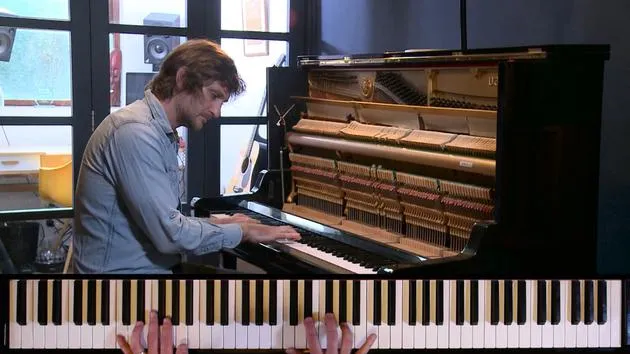
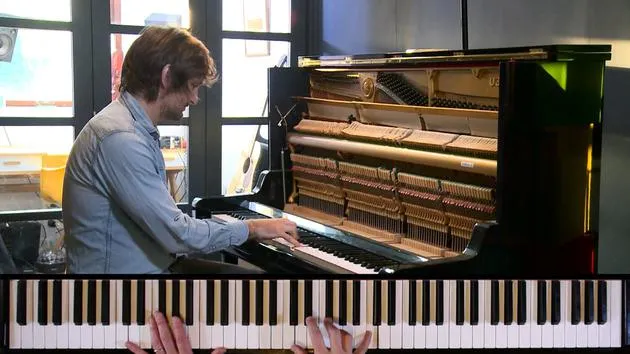
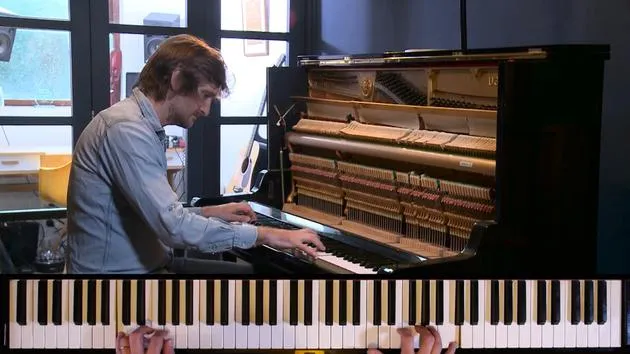

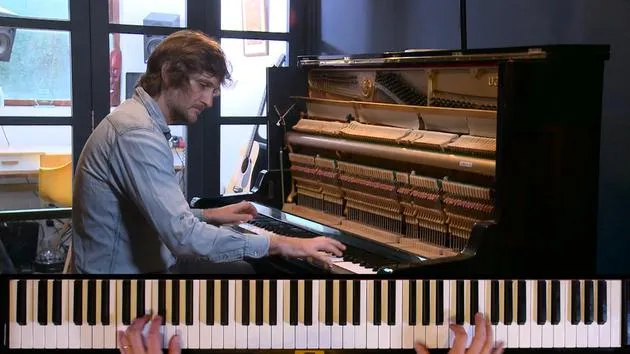
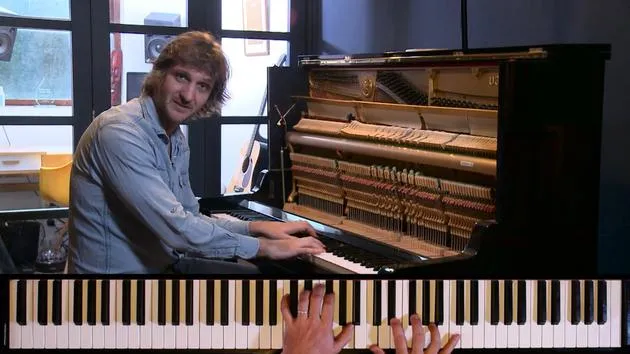
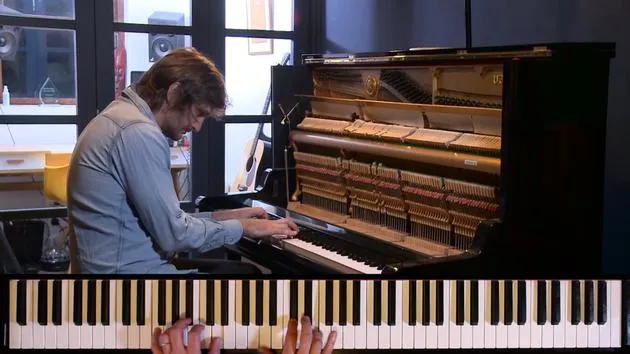

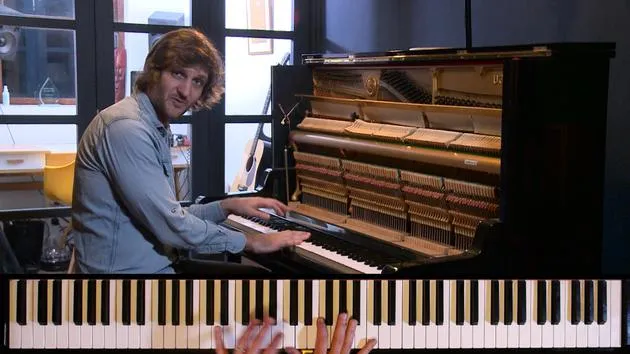
Transcripción de la lección
Exploring the Walking Bass Line
So yeah, let's look at another kind of bass line: the walking bass line. Let's explore it in as many different ways as we can.
The Basics
A walking bass line outlines the chord. For example, a 12-bar blues might go like this:
- Very simply, just outlining a C6
- Maybe to the 7
- Then the F
- Back to the C7
- Then to the G
- Maybe the F
It could stay on the G as well, but then there's a little turn around there. So there's a very simple walking bass line outlining the 12-bar blues.
Adding Excitement
What these early boogie players realized is that they could make it more exciting and intense by adding:
- An octave, which adds a bit of weight instantly.
- Breaking it up to create a skipping element, making it much more danceable.
So, you might get something like this. I might have even gone a little too harmonically advanced there with the little 2-5-1, then a different way down to the G, which you can do. The idea is that it's rocking between the octaves.
Exploring Variations
There are some things, like perhaps the Kaukau blues, where it's almost a sort of half-time feel. Feel free to explore different ways of playing it:
- Instead of going up and then down, why not start going down?
- Rather than going all the way up the chords, you might want to just go up, up, and down the triad.
You might do something like this, still based on the sixth chord.
Albert Ammons' Approach
Let's look at what Albert Ammons does sometimes with that walking bass line. He often adds the fifth, which again adds an extra layer of weight.
- So there you go.
- Then on the F.
- When he gets to the G or on Bass Gone Crazy, for example, he simply plays.
"Do check out that tune. It's great. And it's in the key of G as well."
If we put that in context, you can hear the difference going from the walking bass line without the fifth to the bass line with the fifth. It adds this extra weight, which I think is really hip.
Syncopation
Another thing that Albert Ammons does with that walking bass line with the fifth in it is to displace it by an eighth note or a quaver.
Rather than the bottom note being on the downbeat, that becomes the downbeat. For example:
- Instead of 1, 2, 3, 4, 1, you get something like 1, 2, a 1, 2, 3, etc.
This may sound slightly disjointed when you're familiar with the normal walking bass line, but when you put it in context, it works.
"It adds an extra kind of syncopation to it."
So something like this:
- 1, 2, 1, 2
adds a little bit of spice!
24 lecciones
2h 1m de lecciones en vídeo estructuradas
Funciones de vídeo avanzadas
Ralentiza, repite un pasaje, sigue la partitura
Móvil, tablet y ordenador
Practica donde quieras
Garantía de satisfacción 100%
30 días de garantía de devolución
Conoce a tu gurú

Conoce a tu gurú
Paddy Milner está reconocido como uno de los mejores pianistas de blues del mundo: actualmente es el teclista de confianza de Sir Tom Jones, tras varios años con el gran y ya desaparecido Jack Bruce, pero también es un magnífico compositor original y un cantante con personalidad propia. ¡Basta con leer los elogios de figuras como Dave Brubeck que aparecen más abajo! Su forma de tocar apareció en la banda sonora de la exitosa película de 2019 'Rocketman'.
Ha ganado dos veces el premio al Mejor teclista en los British Blues Awards, y mantiene una residencia de larga trayectoria como miembro fundador de la Ronnie Scott's Blues Explosion en el mundialmente famoso club Ronnie Scott's.
Su grupo actual LONDONOLA toca música británica de cosecha propia con una buena dosis de espíritu de Nueva Orleans, y su grupo colaborativo JAWBONE va de fuerza en fuerza tras la publicación de su álbum de debut homónimo.
- "Me encanta... hay un tipo que sabe tocar de verdad el piano" - Dave Brubeck
- "Lo recomiendo encarecidamente. ¡De algún modo las cosas empiezan a sentirse mucho mejor!" - Jack Bruce
- "El mejor pianista de blues de Europa..." - Blues Access, EE. UU.
- "Impresionante y original" - The Times
- "Deslumbrante" - The Independent
A lo largo de sus cursos, Paddy desglosa el auténtico shuffle de blues, el slow blues, el boogie-woogie, el rock 'n' roll y el piano de Nueva Orleans -incluidas tres canciones clásicas de boogie-woogie- para que aprendas estos estilos de uno de los mejores del oficio.







