



Acordes arpegiados
Paddy explica cómo los acordes arpegiados pueden enriquecer un boogie, y desglosa la técnica necesaria para tocarlos con fluidez
Qué incluye el curso
24 lecciones (2h 1m) · 2 gratis
01. Introducción a los bajos y consejos de práctica
2:23
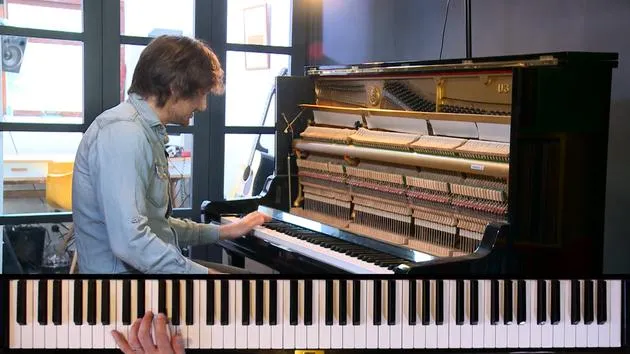
02. Construir bajos de boogie
Lección gratis6:22
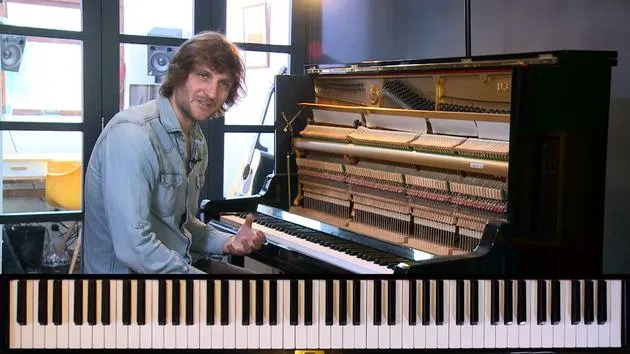
03. Desarrollar más los bajos
8:57
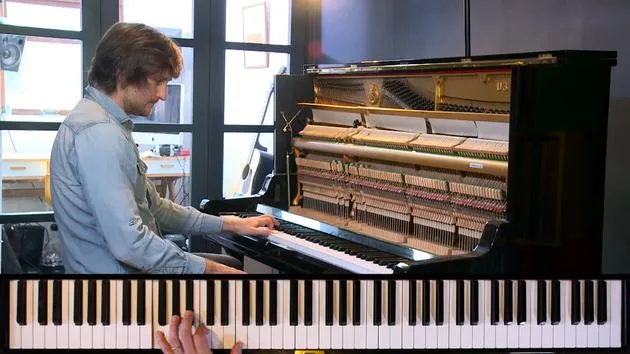
04. Bajos menores
3:02
05. Walking Basses
7:05
06. Ser creativo con los bajos de ocho por compás
5:33
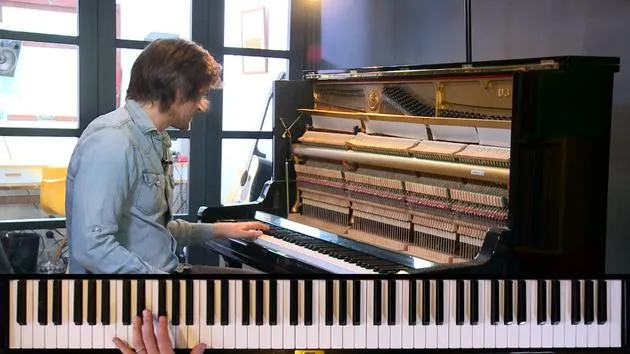
07. Bajos latinos al estilo de Jimmy Yancey
2:07
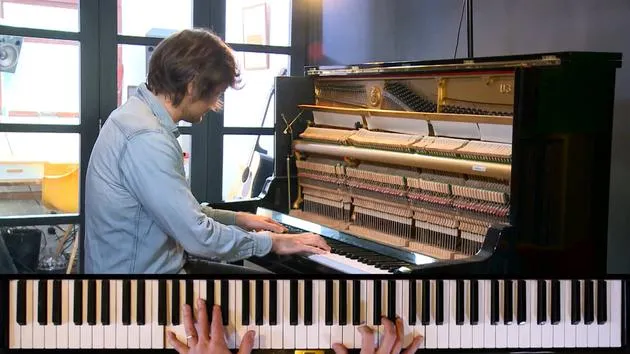
08. Desarrolla tus propios bajos - Ideas rítmicas
6:04
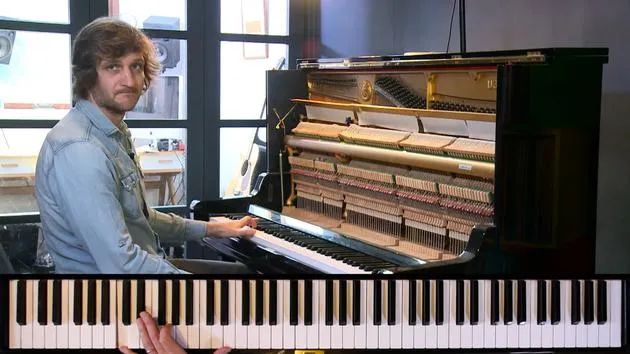
09. Desarrollar tus propios bajos - Ideas armónicas y estudio de Suitcase Blues
8:08
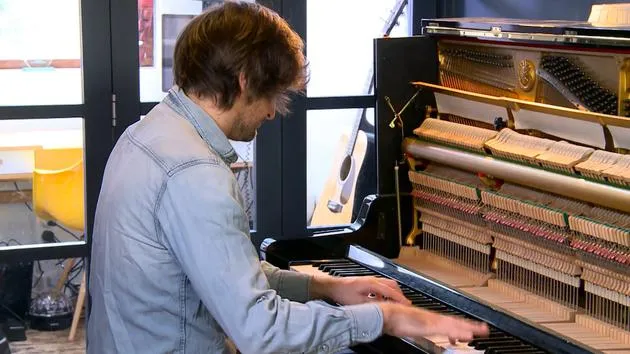
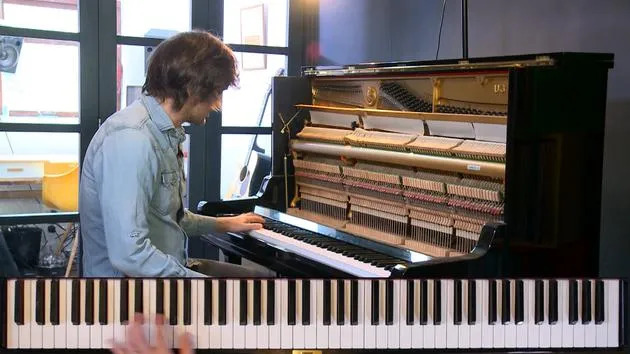
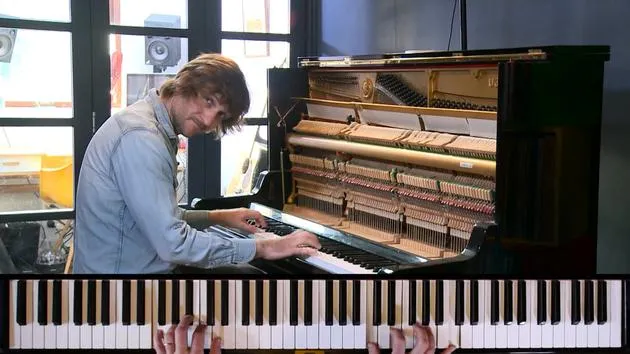
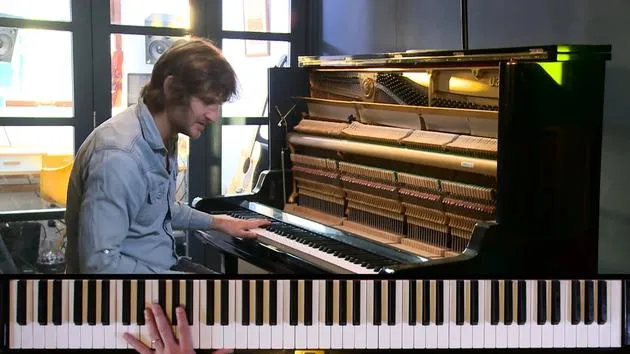
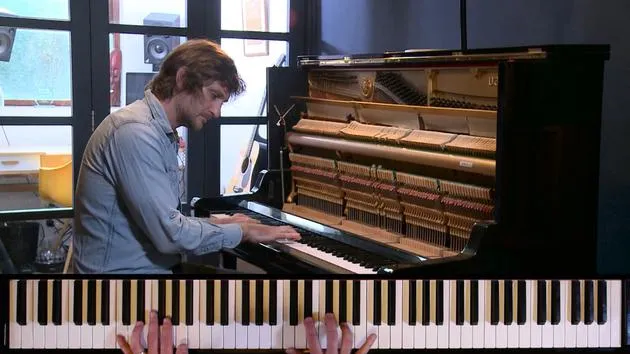
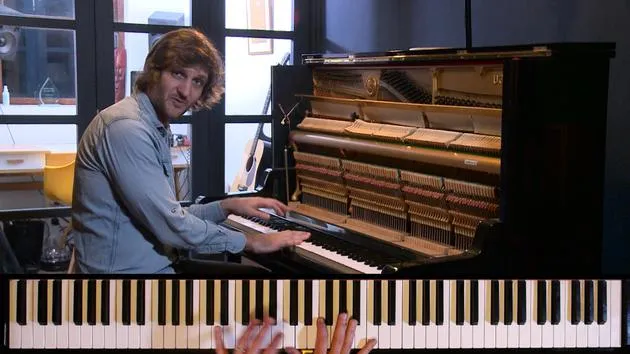
Transcripción de la lección
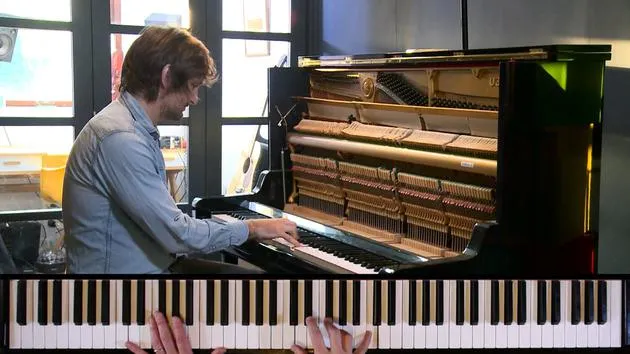
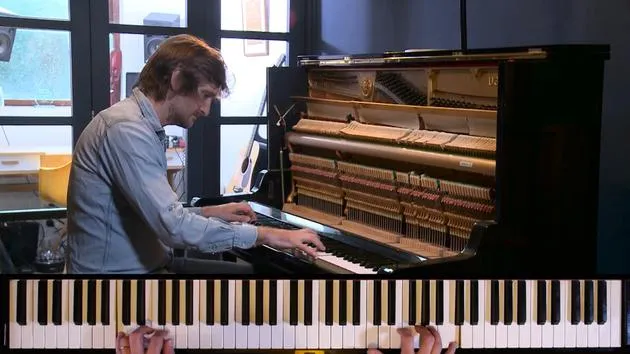
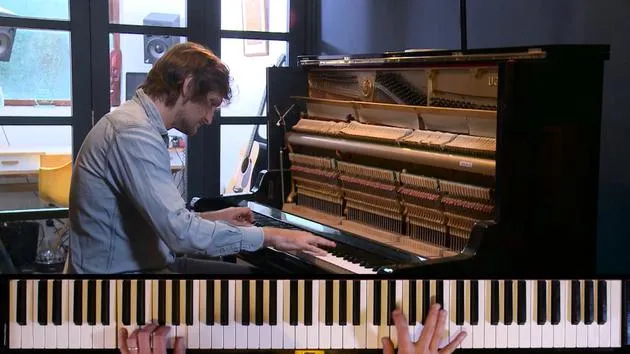
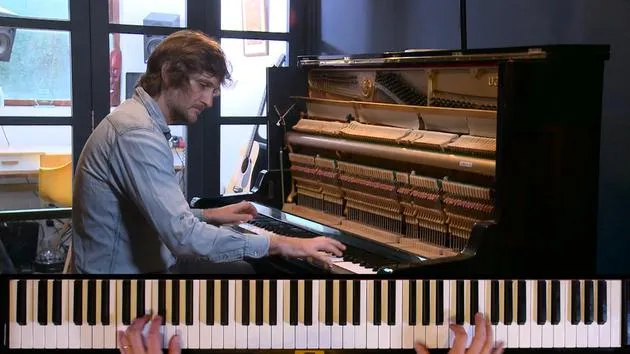
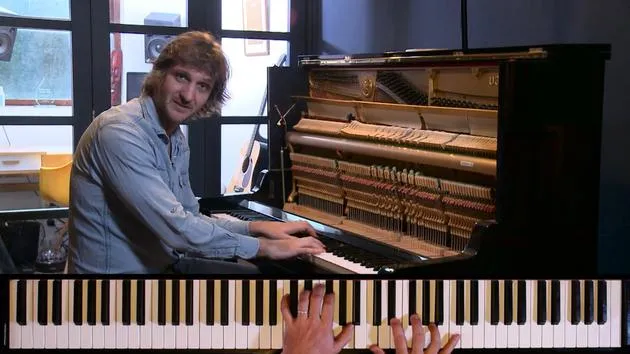
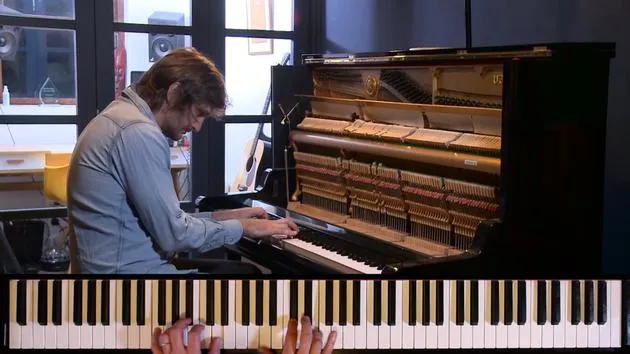
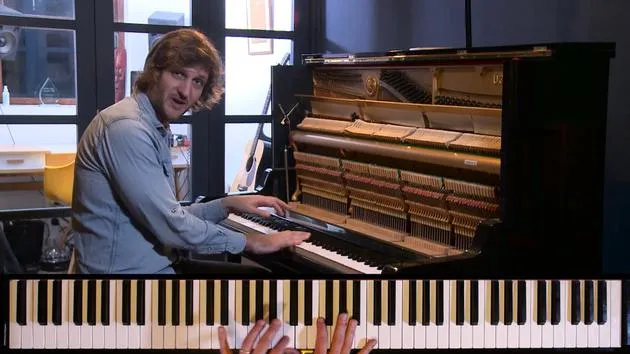
Rolling Chords in Piano
Let's look at just some rolling chords.
Concept Overview:
- Can be very useful.
- This is a Jimmy Yancey style thing: very simple, just outlining the C6 chord.
Technique:
- Sliding off the D# (E flat), going via the D.
- When it goes to the F7, slide off the D again.
This rolling technique can be used with:
- Thirds
- Sixths
Example
For example, you could do something like:
- There's the rolling thing.
- There's the thirds with a couple.
- There's an octave thrown in as a linking note.
You could go down to those thirds.
Minor Tonality
Playing with that minor tonality fits with the F7.
- Those sixths to the thirds.
Rhythmic Variations
How about exploring the rhythms?
- You could play around with phrasing like that.
- Or you could play around with where that actual pattern is placed.
Alternative Approach
Let me try another 12-bar exercise to demonstrate different sounds.
- I'm adding loads of other little ideas from thirds and sixths, incorporating extra ideas.
- This helps mitigate that slightly strange syncopation when it starts on, like, the fourth beat.
Roll and Rhythm
Let's analyze that roll further.
- It doesn't always have to start on beat one or three of the bar.
For instance:
- The first time could start on beats one and four rather than just at the beginning.
Creating Tension and Release
By manipulating the phrasing rhythm, you can create tension and release, which adds excitement to the music.
Contextual Rolling Ideas
Let's look at some rolling ideas in different contexts.
- I often use the rolling idea or break a chord down into an arpeggio over various harmonies.
Harmonic Progression Example:
- C to D minor
- D# diminished to E7
- F to A
- G minor to G# diminished
- F7
Cascading Effect
Something fun I do is to come down from the five:
- This can be based on sixths moving all the way down, creating a cascading, waterfall-like effect.
You can also play this as a simpler arrangement.
Practical Application
Now, how might you use this:
- Use the rolling idea at the end of a chorus.
- For example, you might come down, then go back up.
Linking Ideas
In context, coming down from the V chord into the next chorus, listen for how I link those two riff ideas together using thirds, sixths, and a few linking notes.
Technique for Rolling Piano Parts
Let's look at the technique behind those rolls.
- It may seem involved, but at the base of it, there's nothing crazy going on.
Basic Practice Suggestions:
- Practice at the fastest tempo you're comfortable with.
- Stay in one hand position to build comfort.
- Use a metronome for guidance.
- Gradually increase the tempo until comfortable, and then change the hand position.
I'm confident that before long, you will be able to execute these rolls at faster tempos!
24 lecciones
2h 1m de lecciones en vídeo estructuradas
Funciones de vídeo avanzadas
Ralentiza, repite un pasaje, sigue la partitura
Móvil, tablet y ordenador
Practica donde quieras
Garantía de satisfacción 100%
30 días de garantía de devolución
Conoce a tu gurú
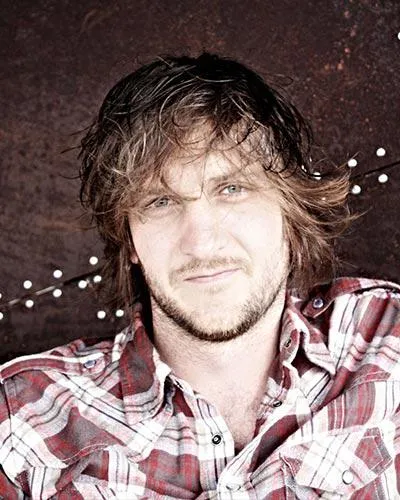
Conoce a tu gurú
Paddy Milner está reconocido como uno de los mejores pianistas de blues del mundo: actualmente es el teclista de confianza de Sir Tom Jones, tras varios años con el gran y ya desaparecido Jack Bruce, pero también es un magnífico compositor original y un cantante con personalidad propia. ¡Basta con leer los elogios de figuras como Dave Brubeck que aparecen más abajo! Su forma de tocar apareció en la banda sonora de la exitosa película de 2019 'Rocketman'.
Ha ganado dos veces el premio al Mejor teclista en los British Blues Awards, y mantiene una residencia de larga trayectoria como miembro fundador de la Ronnie Scott's Blues Explosion en el mundialmente famoso club Ronnie Scott's.
Su grupo actual LONDONOLA toca música británica de cosecha propia con una buena dosis de espíritu de Nueva Orleans, y su grupo colaborativo JAWBONE va de fuerza en fuerza tras la publicación de su álbum de debut homónimo.
- "Me encanta... hay un tipo que sabe tocar de verdad el piano" - Dave Brubeck
- "Lo recomiendo encarecidamente. ¡De algún modo las cosas empiezan a sentirse mucho mejor!" - Jack Bruce
- "El mejor pianista de blues de Europa..." - Blues Access, EE. UU.
- "Impresionante y original" - The Times
- "Deslumbrante" - The Independent
A lo largo de sus cursos, Paddy desglosa el auténtico shuffle de blues, el slow blues, el boogie-woogie, el rock 'n' roll y el piano de Nueva Orleans -incluidas tres canciones clásicas de boogie-woogie- para que aprendas estos estilos de uno de los mejores del oficio.







