



Desarrollar tus propios bajos - Ideas armónicas y estudio de Suitcase Blues
Ideas creativas para desarrollar armónicamente los bajos de boogie, incluido un estudio sobre Suitcase Blues de Albert Ammons
Qué incluye el curso
24 lecciones (2h 1m) · 2 gratis
01. Introducción a los bajos y consejos de práctica
2:23
02. Construir bajos de boogie
Lección gratis6:22
03. Desarrollar más los bajos
8:57
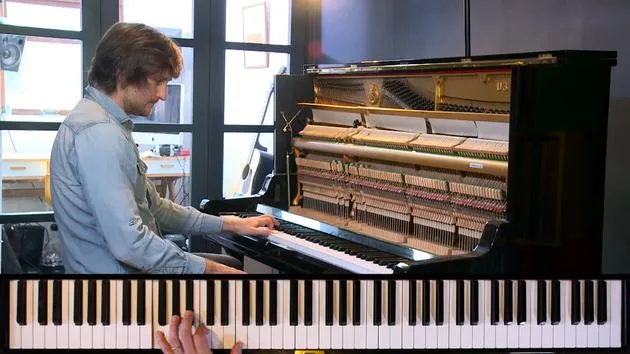
04. Bajos menores
3:02
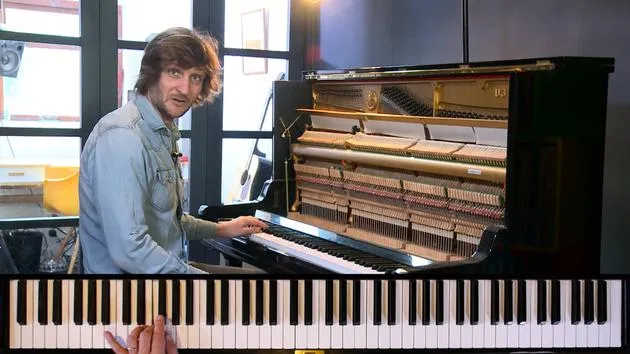
05. Walking Basses
7:05
06. Ser creativo con los bajos de ocho por compás
5:33
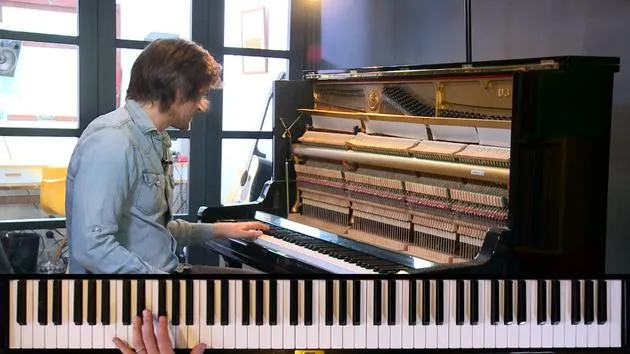
07. Bajos latinos al estilo de Jimmy Yancey
2:07
08. Desarrolla tus propios bajos - Ideas rítmicas
6:04
09. Desarrollar tus propios bajos - Ideas armónicas y estudio de Suitcase Blues
Estás aquí8:08
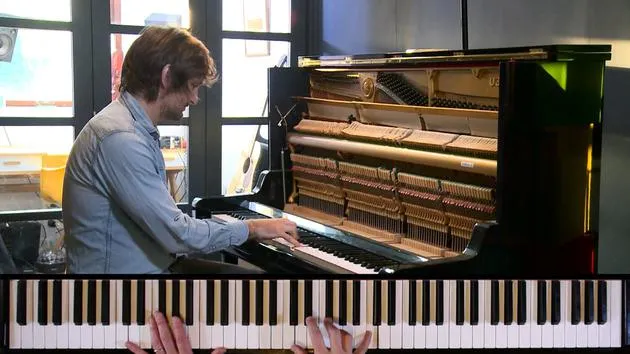
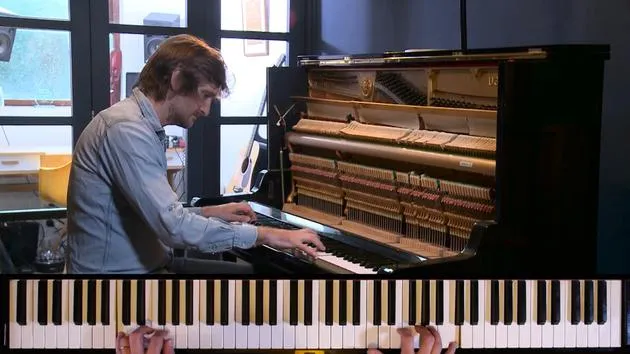
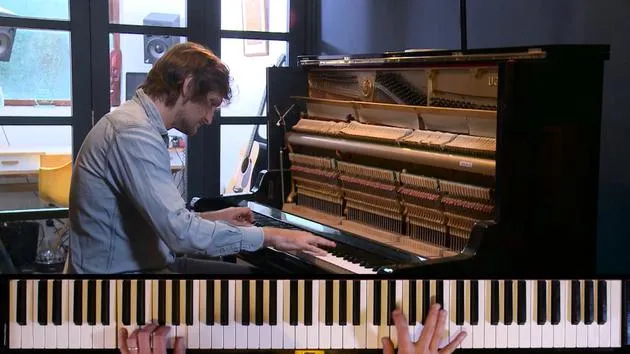
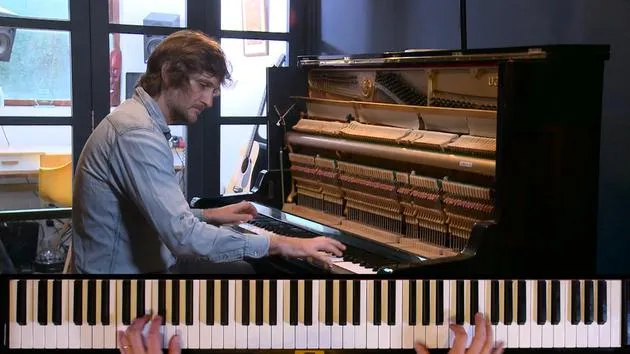
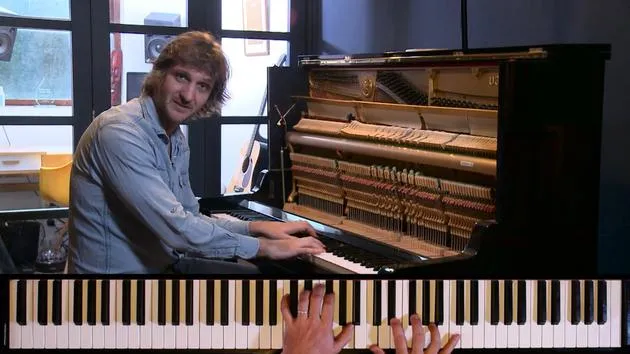
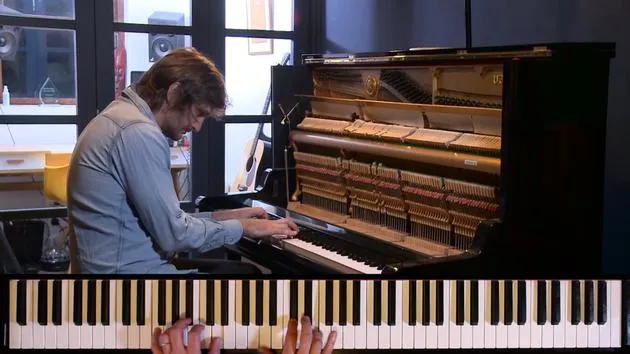
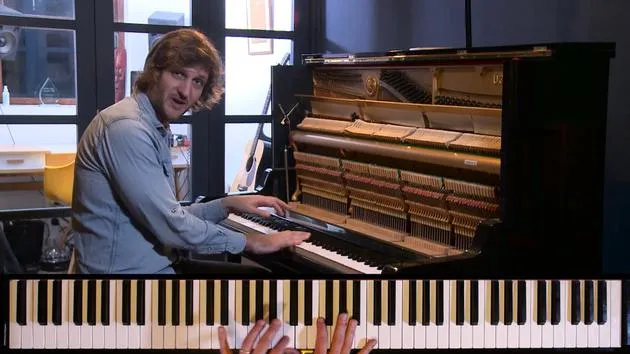
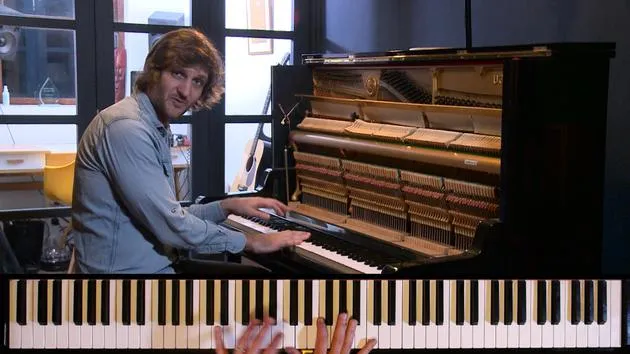
Transcripción de la lección
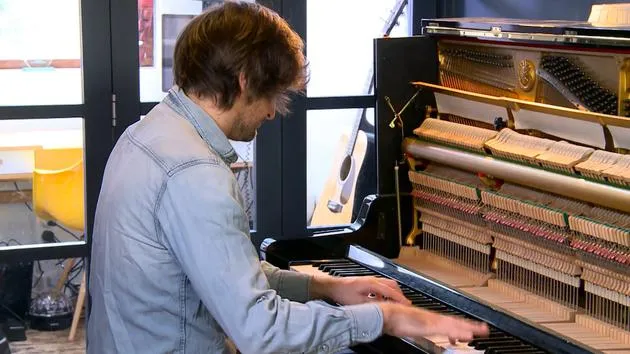
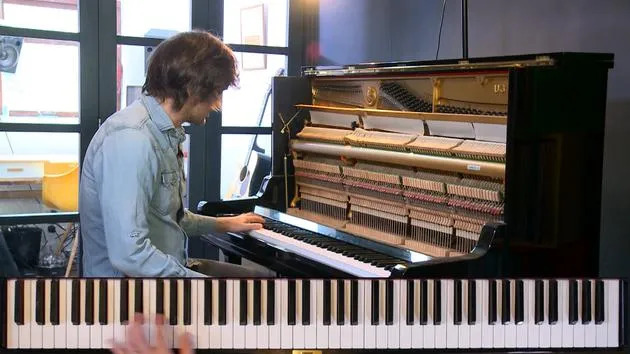
Exploring Creative Bass Lines: Albert Ammons' "Suitcase Blues"
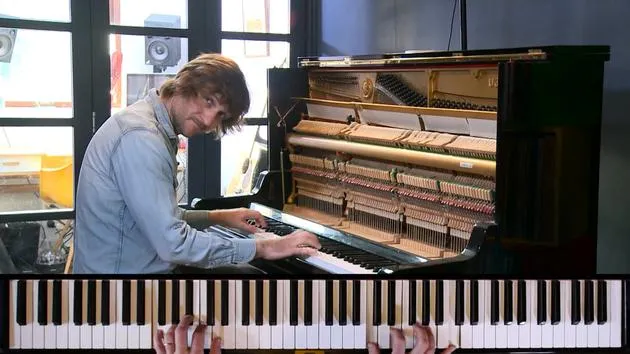
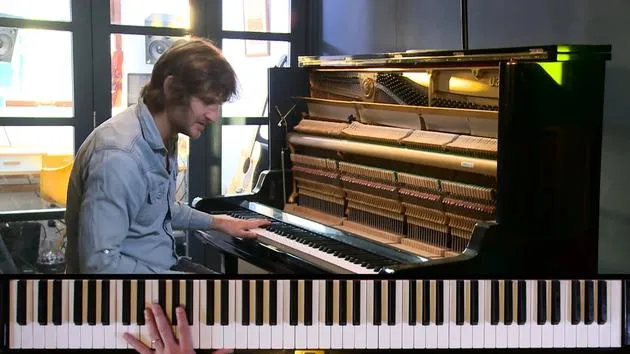
Talking about getting creative with bass lines, let's look at a truly interesting one by the fantastic Albert Ammons in his piece "Suitcase Blues."
Introduction to the Bass Line
- Identifiable Piece: The bass line is easily recognizable.
- Basis in Tenths: This bass line is based on tenths, which we haven't actually explored yet.
Essentially, it's a variation on a very simple bass line, but Ammons adds the 10th on top, which greatly enriches the texture.
- The root and the 10th stay where they are, and only the middle note moves.
The whole bass line goes like this:
When it moves up to the 4, it does this:
- It walks down the same intervals.
You'll notice it's exactly the same on the C and then back up to the G.
The V Chord: A Deeper Dive
When we reach the V chord, things get really interesting and quite complex.
- The harmonies seem to be influenced by stride piano playing, where tenths are more common.
- Ammons was a great stride piano player.
So when he approaches the V chord, he does so via a G (first inversion) to a B flat diminished chord, which is where the harmony transitions to A:
- This is actually a D7 in second inversion, with that tenth voicing.
So, it flows in tenths with the fifth in the middle or sixth, depending on how you look at it. It does this cool little phrase, and you could even put a little skip in there:
- Something like that.
Revisiting the Turnaround
There's a lot of notes here, and then we return to the diminished again. Next comes the turnaround, which I'll explain:
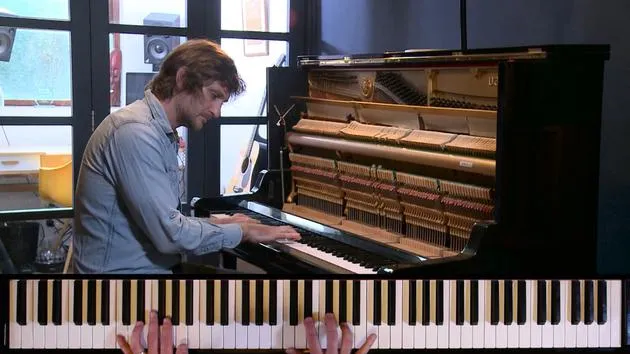
- The turnaround might look something like this:
So, the harmonies on the turnaround could be something like that, based on this:
- But he keeps transitioning to the G7 to the D7.
What he's done here is taken those harmonies and structured them in tenths. However, he's broken them up to maintain that rhythmic rolling feel:
- On 2, 3, 4.
And then we're back into the tune.
The Left Hand Feature
That's quite an involved left hand from Albert Ammons, and there's a fantastic little break during the tune which I'm excited to share.
- This segment is a left-hand feature before returning to the main theme.
Essentially, it involves going up the triad and back into the tune, with some rolls included.
- The whole break might look something like this, then back in.
Let me just show you that little turnaround back into the tune.
Right Hand Integration
Now, to give you a glimpse of how the actual tune sounds, we will also look at the right hand stuff alongside the tenth in the left hand:
That's the main part of the tune!
Conclusion
There you go! That's just a little insight into "Suitcase Blues" by Albert Ammons.
24 lecciones
2h 1m de lecciones en vídeo estructuradas
Funciones de vídeo avanzadas
Ralentiza, repite un pasaje, sigue la partitura
Móvil, tablet y ordenador
Practica donde quieras
Garantía de satisfacción 100%
30 días de garantía de devolución
Conoce a tu gurú

Conoce a tu gurú
Paddy Milner está reconocido como uno de los mejores pianistas de blues del mundo: actualmente es el teclista de confianza de Sir Tom Jones, tras varios años con el gran y ya desaparecido Jack Bruce, pero también es un magnífico compositor original y un cantante con personalidad propia. ¡Basta con leer los elogios de figuras como Dave Brubeck que aparecen más abajo! Su forma de tocar apareció en la banda sonora de la exitosa película de 2019 'Rocketman'.
Ha ganado dos veces el premio al Mejor teclista en los British Blues Awards, y mantiene una residencia de larga trayectoria como miembro fundador de la Ronnie Scott's Blues Explosion en el mundialmente famoso club Ronnie Scott's.
Su grupo actual LONDONOLA toca música británica de cosecha propia con una buena dosis de espíritu de Nueva Orleans, y su grupo colaborativo JAWBONE va de fuerza en fuerza tras la publicación de su álbum de debut homónimo.
- "Me encanta... hay un tipo que sabe tocar de verdad el piano" - Dave Brubeck
- "Lo recomiendo encarecidamente. ¡De algún modo las cosas empiezan a sentirse mucho mejor!" - Jack Bruce
- "El mejor pianista de blues de Europa..." - Blues Access, EE. UU.
- "Impresionante y original" - The Times
- "Deslumbrante" - The Independent
A lo largo de sus cursos, Paddy desglosa el auténtico shuffle de blues, el slow blues, el boogie-woogie, el rock 'n' roll y el piano de Nueva Orleans -incluidas tres canciones clásicas de boogie-woogie- para que aprendas estos estilos de uno de los mejores del oficio.







