



Lenguaje de la mano derecha usando terceras
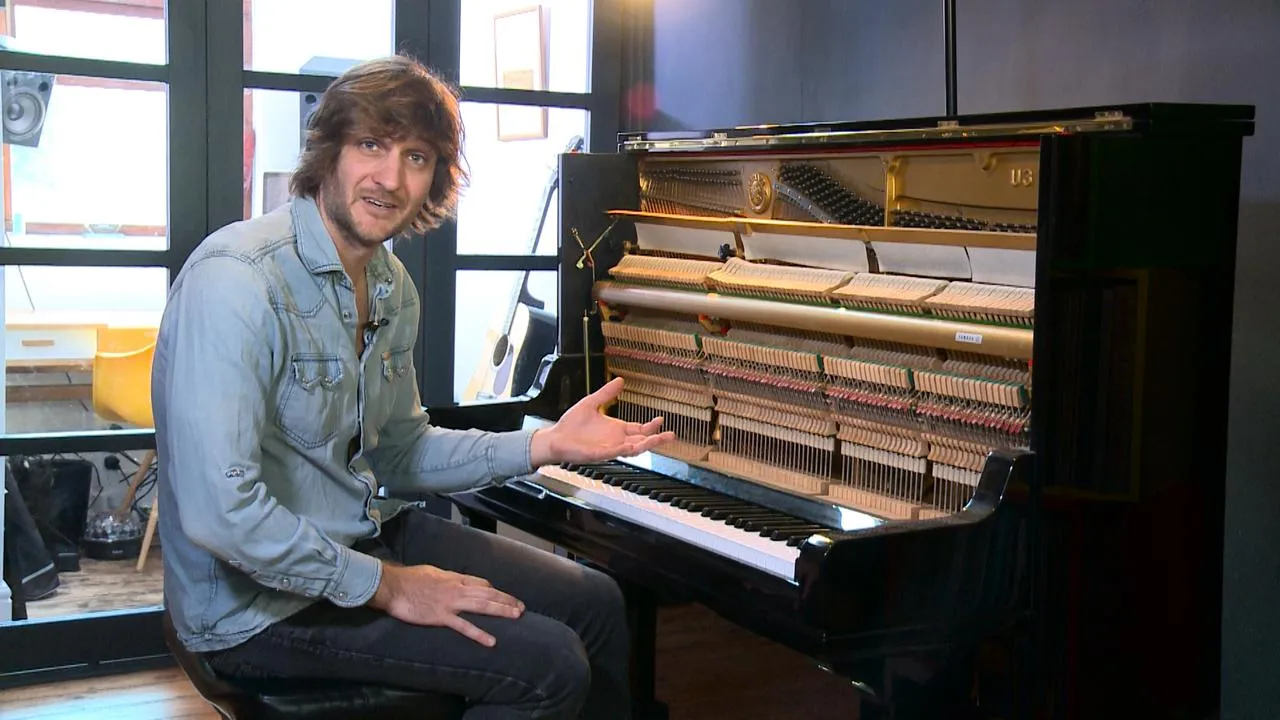
Paddy examina riffs característicos de la mano derecha y lenguaje de boogie basado en terceras
Qué incluye el curso
24 lecciones (2h 1m) · 2 gratis
01. Introducción a los bajos y consejos de práctica
2:23
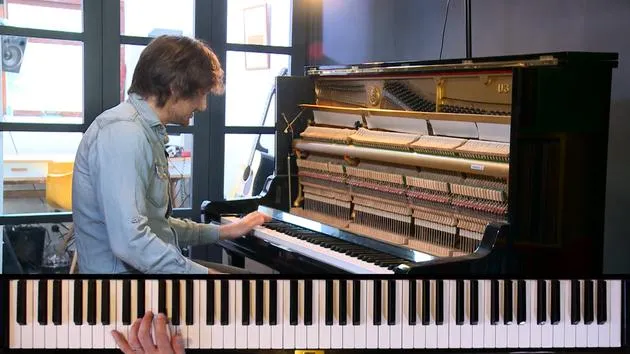
02. Construir bajos de boogie
Lección gratis6:22
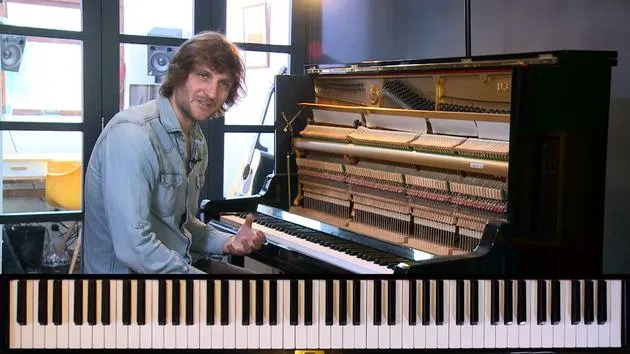
03. Desarrollar más los bajos
8:57
04. Bajos menores
3:02
05. Walking Basses
7:05
06. Ser creativo con los bajos de ocho por compás
5:33
07. Bajos latinos al estilo de Jimmy Yancey
2:07
08. Desarrolla tus propios bajos - Ideas rítmicas
6:04
09. Desarrollar tus propios bajos - Ideas armónicas y estudio de Suitcase Blues
8:08
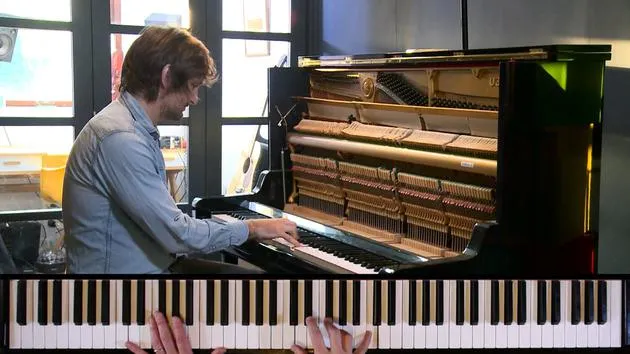
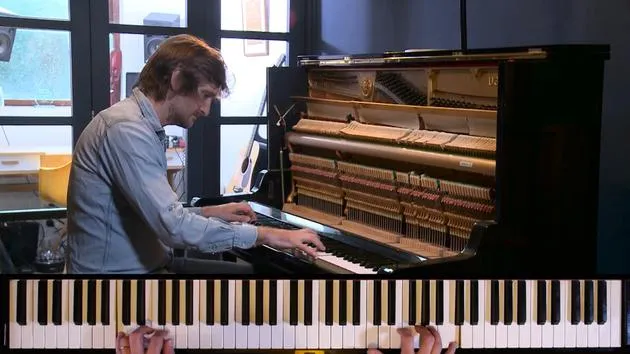
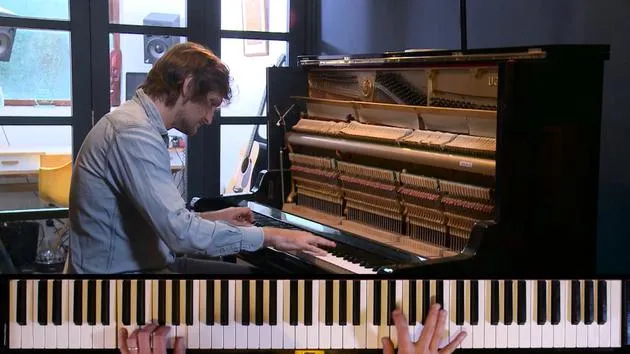
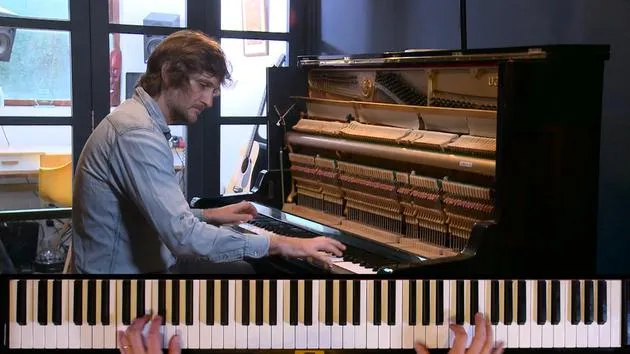
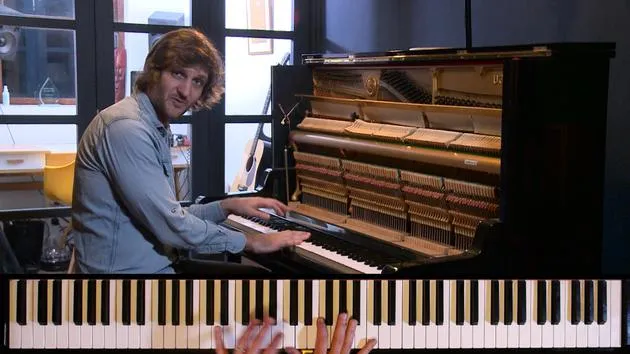
Transcripción de la lección
Exploring Right Hand Language in Boogie Woogie
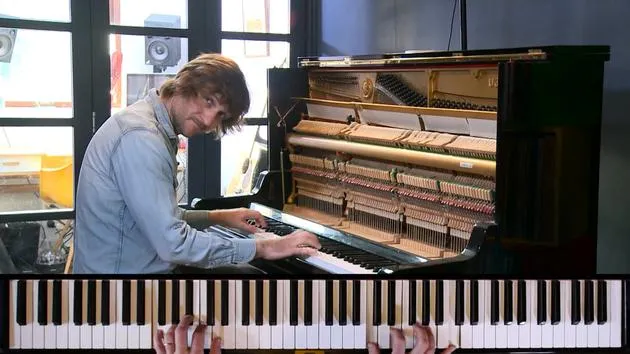
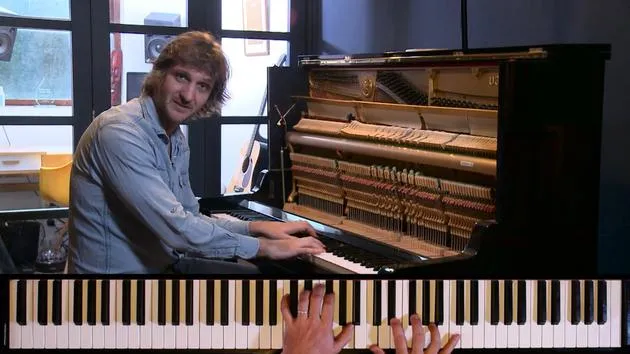
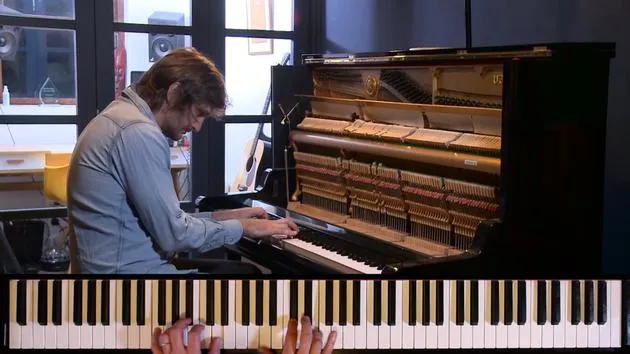
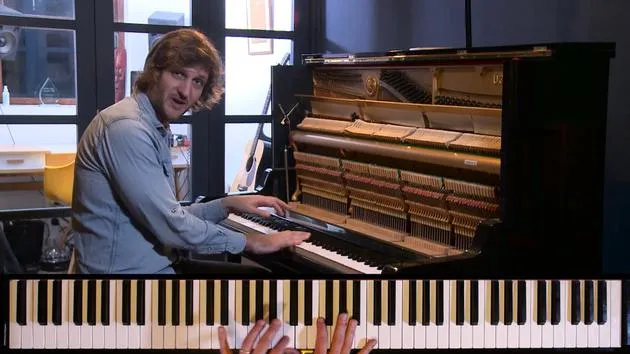
So, yeah, let's dive in and look at some right hand language used in boogie woogie. Let's kick off by looking at one of the very first riffs we hear in the very first recorded boogie woogie piano piece: Pinetop's Boogie Woogie by Pinetop Smith.
This has a riff in it which originally is in the key of E flat, setting a great benchmark for lots of other piano players to use. Albert Ammons employs that riff frequently, as do many other pianists.
Transposing the Riff
Let's go back and look at it in the key of C, as we have been, which is the key that Albert Ammons plays it in: Boogie Woogie Stomp.
- Riff Overview: The riff is based on a ninth chord.
- The D is the ninth.
- It involves an elaboration of that ninth chord.
- We approach the third from below, which creates movement at the top that rocks between the E.
- Then we work out the F9 chord and start on the 5.
It's great that you're able to learn to transpose these riffs into as many keys as possible. If you need to do it in B flat, E flat, or even B, it's beneficial to practice this across various keys.
Practical Exercise
A good way of practicing that is to go around the cycle of fifths:
- C
- F
- B flat
- E flat
- A flat
- D flat
- G flat, etc.
This is great practice, and obviously, it's good for the left hand too, with those basses.
Variations on the Classic Riff
There's a classic riff you can play around with. Why not experiment by playing it in different styles? For instance:
- Instead of playing it simply as a triplet, why not roll it?
- It's all the same notes but treated differently, giving it a different flavor.
You could also play it as a sort of 4 over 3. It may sound more complicated than it is, but essentially, you are playing a straight rhythm over the swung feel.
- Normal Triplet vs. Triplet Four:
- Normal triplet
- Triplet four
Those are just a couple of ideas for playing around with that original riff from Pinetop Smith.
Improvising with Thirds and Sixths
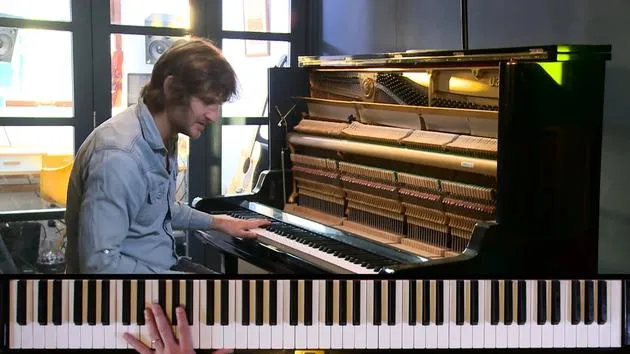
Now, let's have a look at improvising based on thirds and sixths while using some other chords. A third is a very simple concept and may not initially sound particularly bluesy or boogie woogie, but if we add certain notes, it opens up a whole realm of possibilities.
Tension and Resolution
This idea is akin to a part of the diminished seventh chord resolving to the C. It creates tension and introduces the minor-major difference central to this style.
- Going between the two instantly immerses you in that boogie sound world.
- However, you wouldn't want to do that for the entire 12 bars, so we must look at ways to make it interesting.
Classic Riff with Chord Variations
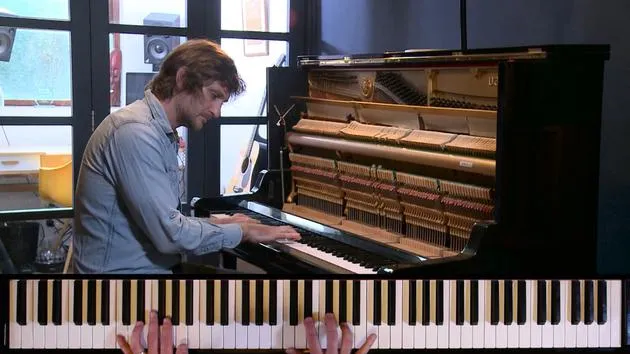
When playing that riff over the four chord, notice the dissonance that can occur, which can actually be used. For example, in Albert Ammons' version of Boogie Woogie Stomp, he plays:
- When it goes to the four, he retains that E natural, which normally would conflict with the F7 with E flat tonality, but it sounds hip.
The riff again, based on Pinetop's Boogie Woogie, focuses on thirds, and we're introducing:
- The C6 chord, which can be played before rolling it.
- You can also apply it on the F, G, and C.
Modifying Your Approach
Hearing the same riff repeatedly across different chords can feel repetitive. Often, when moving around the 12-bar sequence to the 4 chord, the E becomes an E flat of the F7 chord.
- You might want to modify your thirds to reflect that:
- Instead of the standard phrasing, you could end on a minor third before returning to a major third.
Exploring Creative Variations
You could do something unique with those thirds:
- For instance, when you reach that four chord, you could play a creative variation.
Structuring Your Improvisation
To create more interesting lines, link third movements to different registers. For example, connecting them via the G underneath.
- These phrases should have musical structure; they are not just random thirds played sequentially.
- Think of it as having a conversation , there's a form and structure, along with punctuation, which is essential for improvising melodies.
Conclusion: Learning from the Masters
Let's look at more ways of linking these thirds. This is similar to what Pete Johnson does. If you listen to the first chorus of Roland Pete, a classic recording with Big Joe Turner, you'll hear him using thirds throughout:
- Notice how he transitions from the four to five, clearly defining thirds along the way.
I'd recommend learning that. I don't think he plays the full sixth chord; he may just utilize that interval.
Recap of Pete Johnson's Style
- His style is built around the C triad with a linking note.
- This linking note aims for the E, which is part of the C chord.
You could play that throughout the whole 12-bar sequence if you wanted!
24 lecciones
2h 1m de lecciones en vídeo estructuradas
Funciones de vídeo avanzadas
Ralentiza, repite un pasaje, sigue la partitura
Móvil, tablet y ordenador
Practica donde quieras
Garantía de satisfacción 100%
30 días de garantía de devolución
Conoce a tu gurú
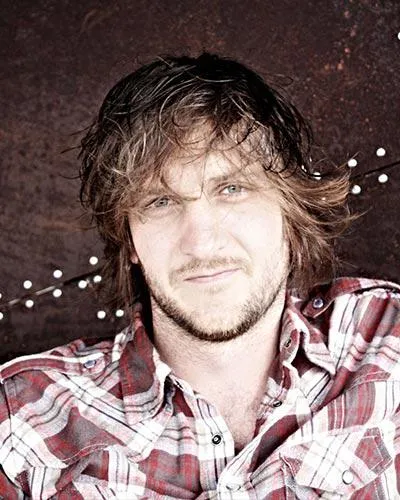
Conoce a tu gurú
Paddy Milner está reconocido como uno de los mejores pianistas de blues del mundo: actualmente es el teclista de confianza de Sir Tom Jones, tras varios años con el gran y ya desaparecido Jack Bruce, pero también es un magnífico compositor original y un cantante con personalidad propia. ¡Basta con leer los elogios de figuras como Dave Brubeck que aparecen más abajo! Su forma de tocar apareció en la banda sonora de la exitosa película de 2019 'Rocketman'.
Ha ganado dos veces el premio al Mejor teclista en los British Blues Awards, y mantiene una residencia de larga trayectoria como miembro fundador de la Ronnie Scott's Blues Explosion en el mundialmente famoso club Ronnie Scott's.
Su grupo actual LONDONOLA toca música británica de cosecha propia con una buena dosis de espíritu de Nueva Orleans, y su grupo colaborativo JAWBONE va de fuerza en fuerza tras la publicación de su álbum de debut homónimo.
- "Me encanta... hay un tipo que sabe tocar de verdad el piano" - Dave Brubeck
- "Lo recomiendo encarecidamente. ¡De algún modo las cosas empiezan a sentirse mucho mejor!" - Jack Bruce
- "El mejor pianista de blues de Europa..." - Blues Access, EE. UU.
- "Impresionante y original" - The Times
- "Deslumbrante" - The Independent
A lo largo de sus cursos, Paddy desglosa el auténtico shuffle de blues, el slow blues, el boogie-woogie, el rock 'n' roll y el piano de Nueva Orleans -incluidas tres canciones clásicas de boogie-woogie- para que aprendas estos estilos de uno de los mejores del oficio.







