



Introducciones características del boogie-woogie
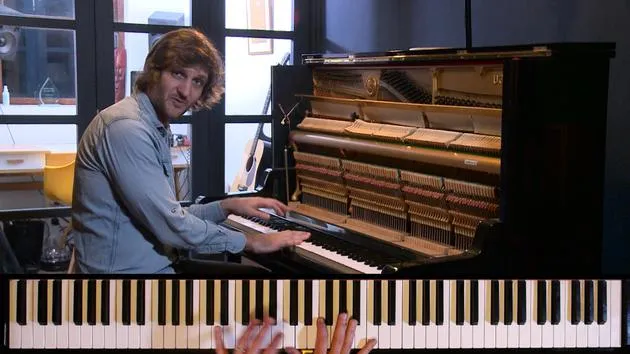
Paddy Milner desglosa cómo empezar un tema de boogie-woogie, construyendo intros en torno al clásico movimiento de acorde de C7 a disminuido.
Qué incluye el curso
24 lecciones (2h 1m) · 2 gratis
01. Introducción a los bajos y consejos de práctica
2:23
02. Construir bajos de boogie
Lección gratis6:22
03. Desarrollar más los bajos
8:57
04. Bajos menores
3:02
05. Walking Basses
7:05
06. Ser creativo con los bajos de ocho por compás
5:33
07. Bajos latinos al estilo de Jimmy Yancey
2:07
08. Desarrolla tus propios bajos - Ideas rítmicas
6:04
09. Desarrollar tus propios bajos - Ideas armónicas y estudio de Suitcase Blues
8:08
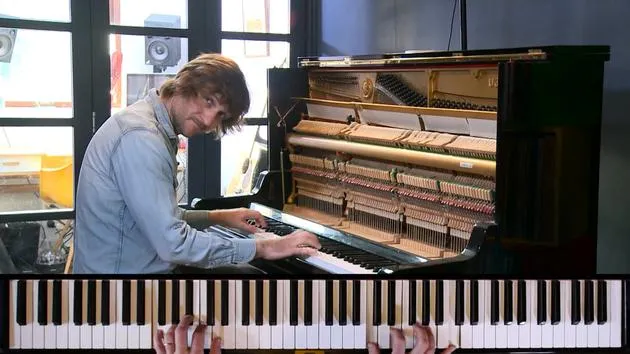
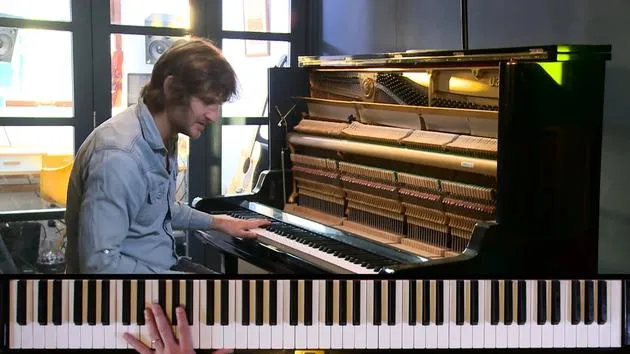
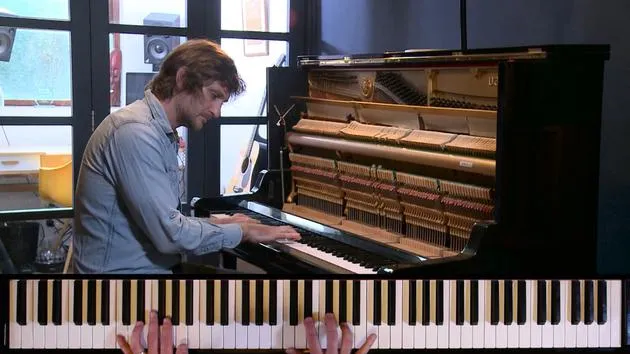
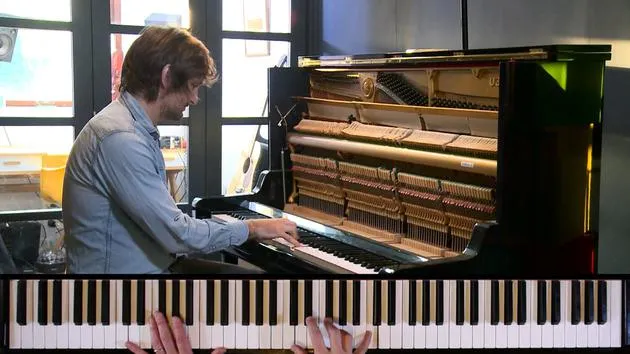
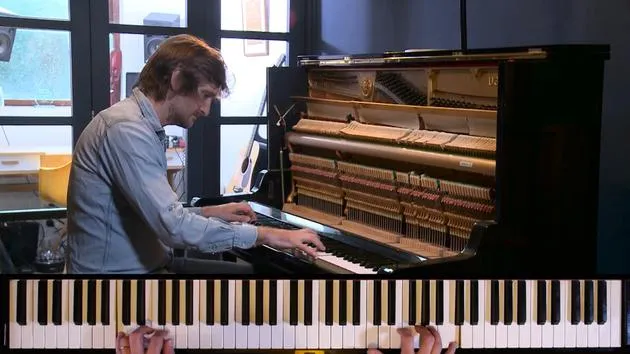
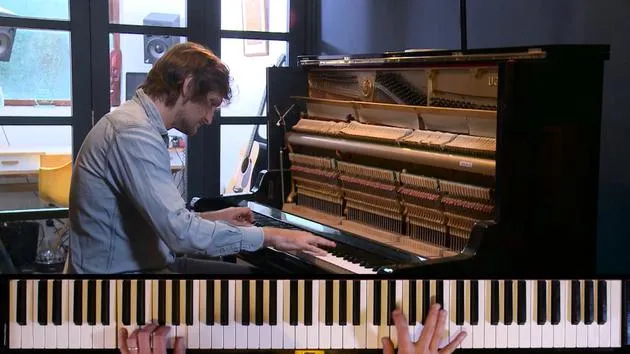
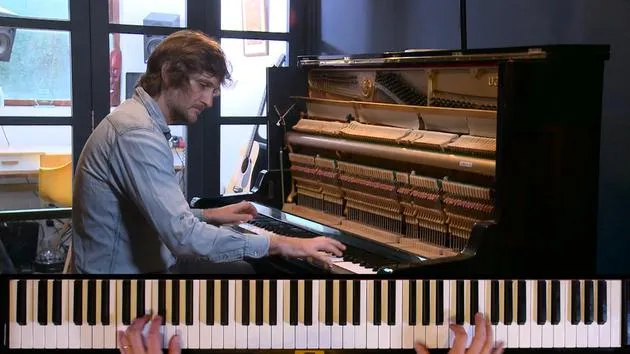
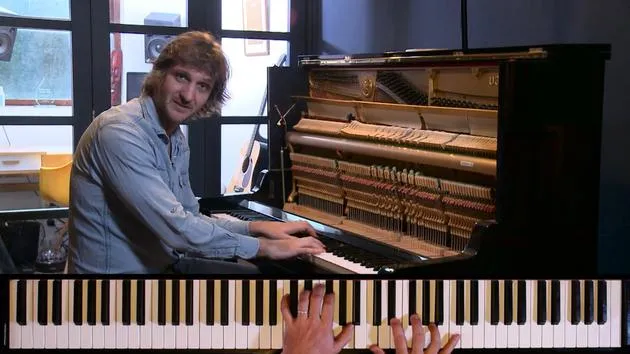
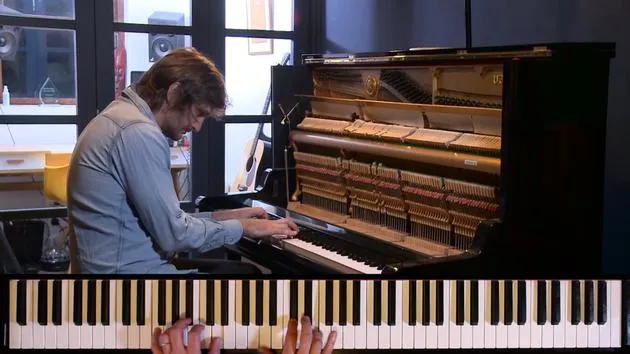
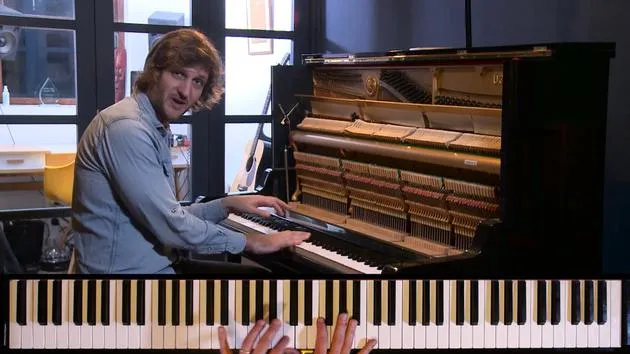
Transcripción de la lección
Starting a Boogie Woogie Tune
So how do you start a Boogie Woogie tune?
Basic Chord Movement
Well, most boogie tunes have an intro, and a lot of them are built around this kind of chord movement:
- C7 to C diminished 7 and then back to C7.
There are some variations on that. For example:
- C7 to diminished 7 to an F minor or D minor half diminished chord back to the C7.
A lot of them are built by adding a rhythm to that basic harmonic movement.
Example:
You might have a simple version like this:
- This particular voicing is definitely one that was used a lot. Essentially, it's the third and the seventh in the bass going down, while in the right hand, the octave stays the same.
So you've got the whole diminished seventh there. You could add some extra note values in there, say, like that or that kind of thing.
You'll probably hear that this is very similar to a lot of the Albert Ammons intros and Pete Johnson's very famous intro to Roland Pete.
Introduction to Roland Pete
Let's look at that introduction to Roland Pete by Pete Johnson.
You'll hear it's built on the same harmonies that we just looked at, plus some other ones thrown in.
I'm going to play it for you once and then break it down.
Playthrough:
So that's it. Now, let's break it down.
- It starts with a little line to introduce it: G, A, B in octaves.
- Very simple! It uses the same harmony as we looked at, but with the C at the bottom.
The diminished here is:
- It's the same, but it has this discordant B at the bottom, which, if you listen to the record, adds a feeling of movement downwards.
This works in context as follows:
- To the C7
- Then, lots of parallel chords at the bottom.
These parallel chords are essentially an F. Occasionally, I do put in a little roll there.
So there you go, there's Pete Johnson's intro to Roland Pete.
Another Classic Intro
Let's look at another classic intro.
This one is by Albert Ammons to his Boogie Woogie Stomp, which he actually took from the original Pinetops Boogie Woogie intro.
Approach
This one is built on tremolos between the two hands.
Playthrough:
So, yeah, it involves a bit of technique there, just trying to get this rhythm as consistent as possible between the hands.
Breakdown
Let's play it slowly:
- The first bit has this little run in the left hand, and then it's rocking with the right hand.
- It's always the left hand that leads.
- Then it does it again.
Notice these harmonies going up.
And then this time, it does the same thing on the F with the run-up.
Final Thoughts
That's the basic idea!
Just remember, tempo-wise, try to play it at a comfortable speed before ramping it up. Eventually, you'll get up to the speed of the original.
24 lecciones
2h 1m de lecciones en vídeo estructuradas
Funciones de vídeo avanzadas
Ralentiza, repite un pasaje, sigue la partitura
Móvil, tablet y ordenador
Practica donde quieras
Garantía de satisfacción 100%
30 días de garantía de devolución
Conoce a tu gurú

Conoce a tu gurú
Paddy Milner está reconocido como uno de los mejores pianistas de blues del mundo: actualmente es el teclista de confianza de Sir Tom Jones, tras varios años con el gran y ya desaparecido Jack Bruce, pero también es un magnífico compositor original y un cantante con personalidad propia. ¡Basta con leer los elogios de figuras como Dave Brubeck que aparecen más abajo! Su forma de tocar apareció en la banda sonora de la exitosa película de 2019 'Rocketman'.
Ha ganado dos veces el premio al Mejor teclista en los British Blues Awards, y mantiene una residencia de larga trayectoria como miembro fundador de la Ronnie Scott's Blues Explosion en el mundialmente famoso club Ronnie Scott's.
Su grupo actual LONDONOLA toca música británica de cosecha propia con una buena dosis de espíritu de Nueva Orleans, y su grupo colaborativo JAWBONE va de fuerza en fuerza tras la publicación de su álbum de debut homónimo.
- "Me encanta... hay un tipo que sabe tocar de verdad el piano" - Dave Brubeck
- "Lo recomiendo encarecidamente. ¡De algún modo las cosas empiezan a sentirse mucho mejor!" - Jack Bruce
- "El mejor pianista de blues de Europa..." - Blues Access, EE. UU.
- "Impresionante y original" - The Times
- "Deslumbrante" - The Independent
A lo largo de sus cursos, Paddy desglosa el auténtico shuffle de blues, el slow blues, el boogie-woogie, el rock 'n' roll y el piano de Nueva Orleans -incluidas tres canciones clásicas de boogie-woogie- para que aprendas estos estilos de uno de los mejores del oficio.







