



Usar las introducciones como breakdowns
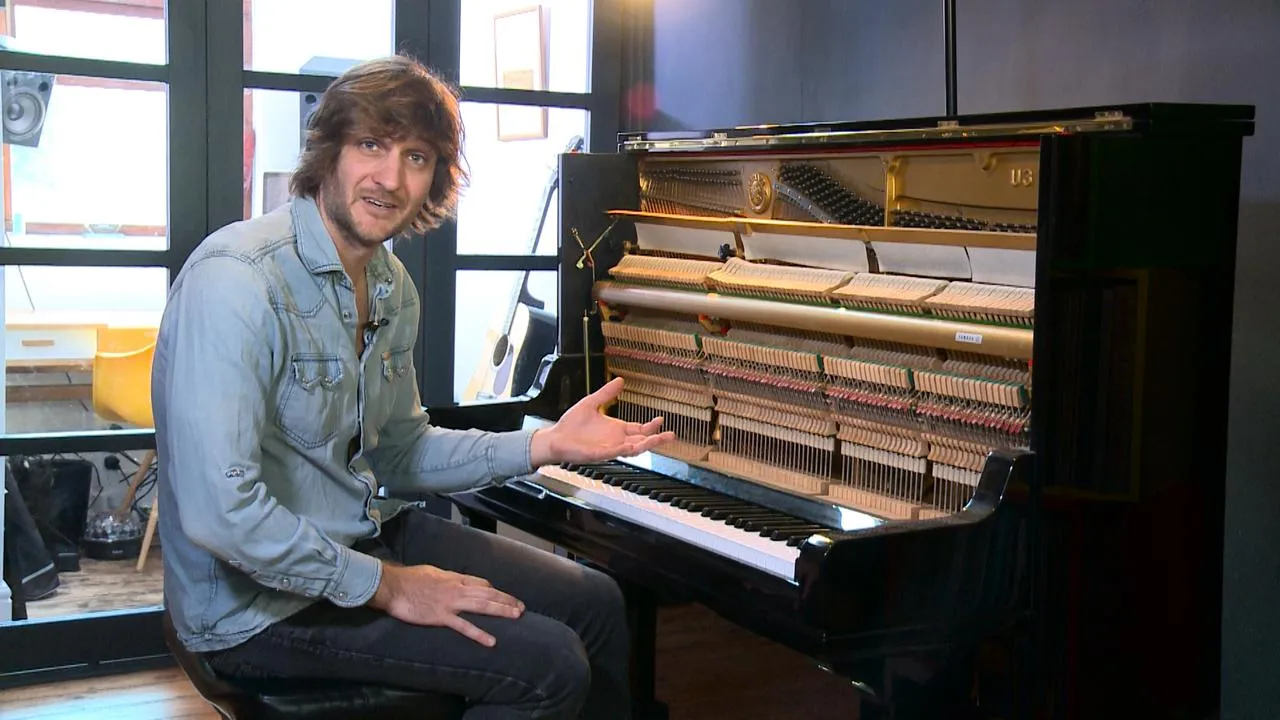
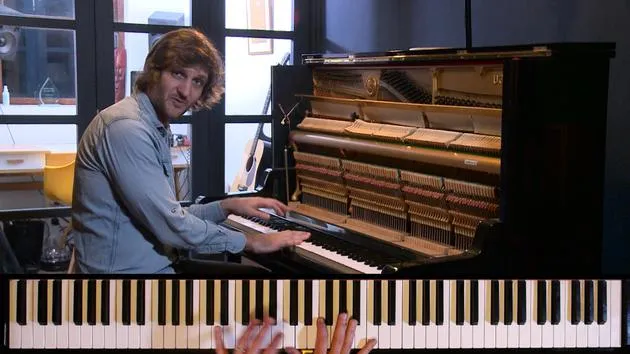
Paddy Milner convierte las introducciones de boogie en breakdowns: arpegia los acordes y usa un descenso de C7 a Do disminuido para crear y liberar tensión.
Qué incluye el curso
24 lecciones (2h 1m) · 2 gratis
01. Introducción a los bajos y consejos de práctica
2:23
02. Construir bajos de boogie
Lección gratis6:22
03. Desarrollar más los bajos
8:57
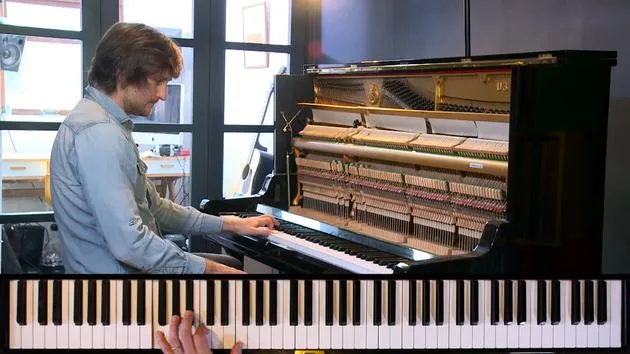
04. Bajos menores
3:02
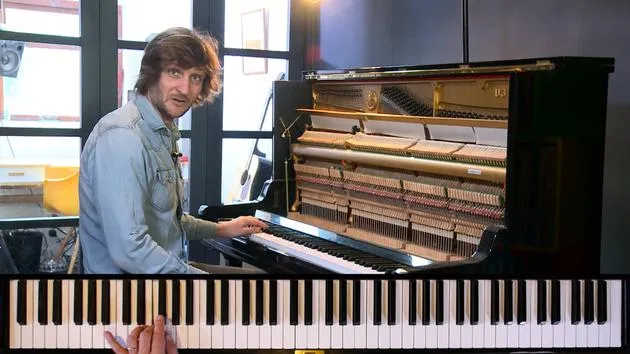
05. Walking Basses
7:05
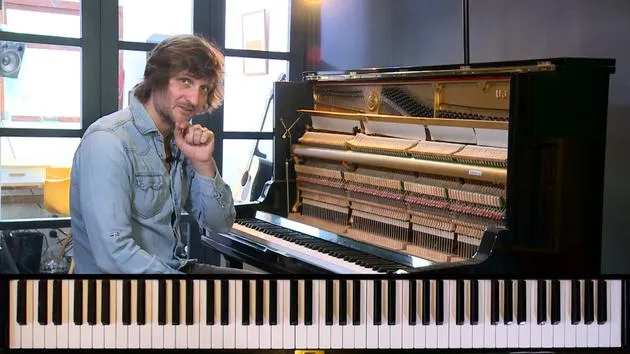
06. Ser creativo con los bajos de ocho por compás
5:33
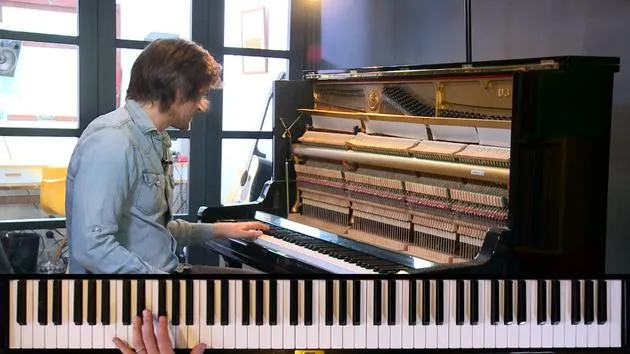
07. Bajos latinos al estilo de Jimmy Yancey
2:07
08. Desarrolla tus propios bajos - Ideas rítmicas
6:04
09. Desarrollar tus propios bajos - Ideas armónicas y estudio de Suitcase Blues
8:08
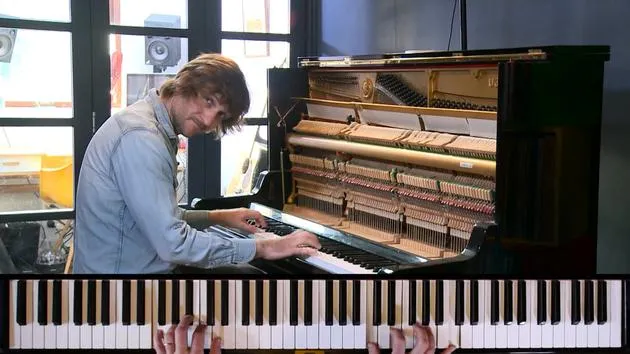
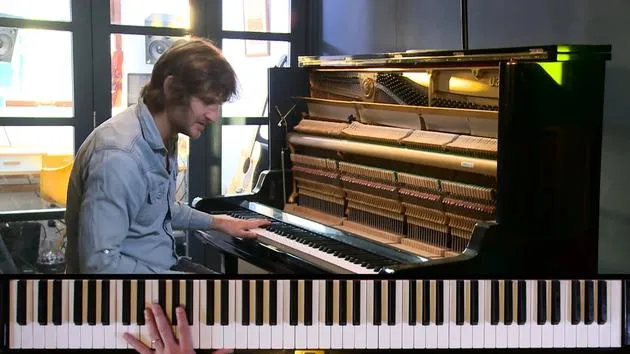
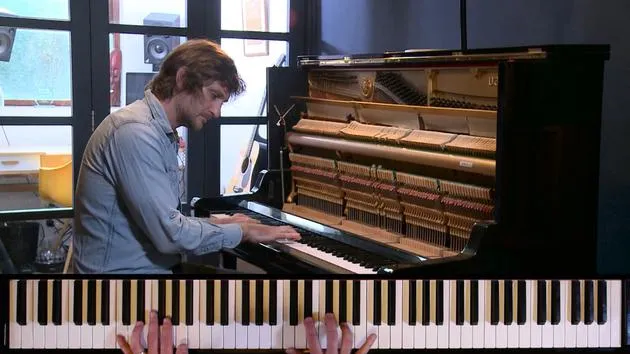
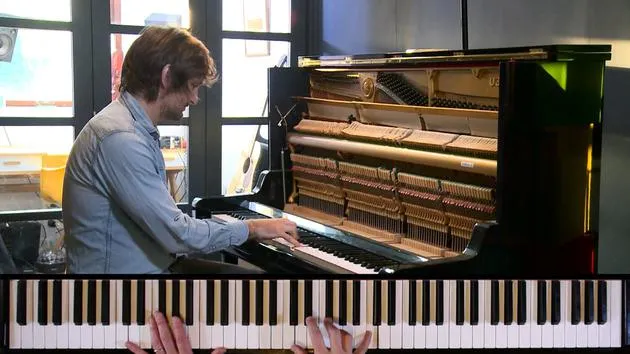
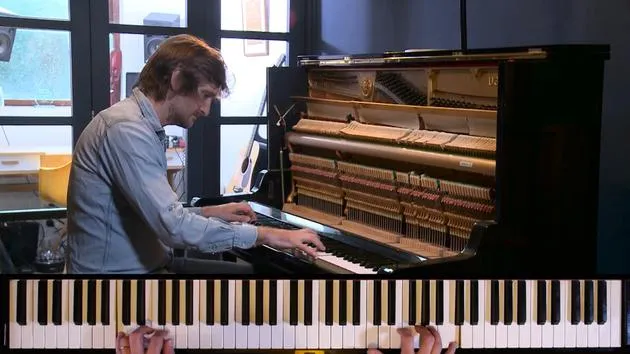
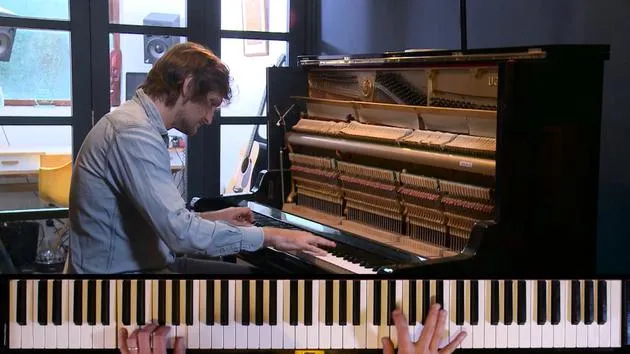
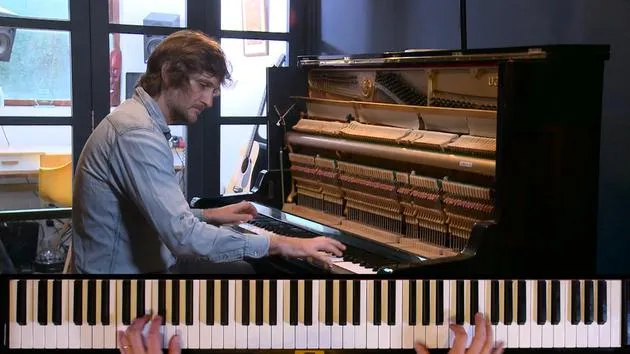
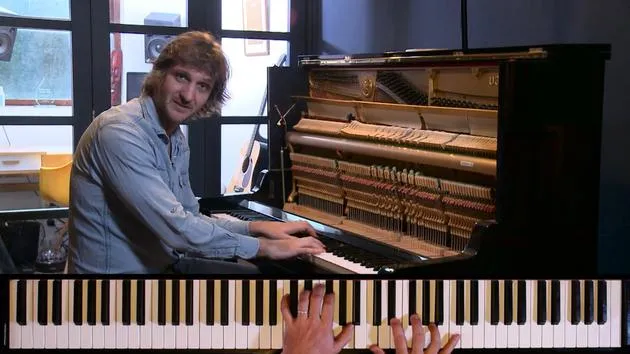
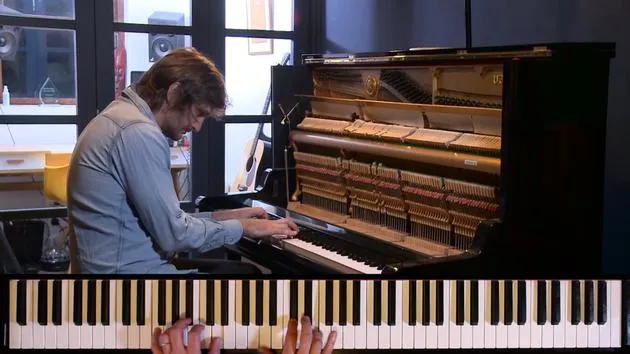
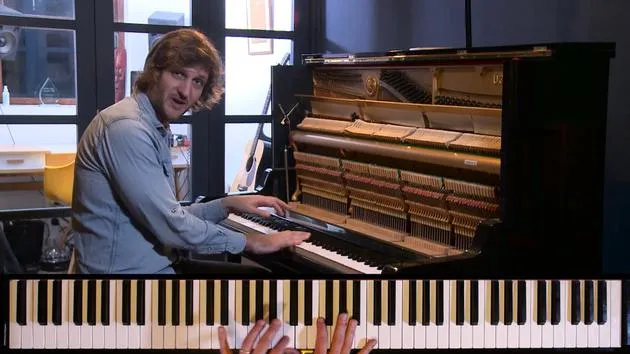
Transcripción de la lección
Music Lesson: Intros and Breaks in Harmony
So, there's all kinds of introductions and breakdowns that are based on this harmony. Rather than using chunky and rhythmic patterns, we can create something a little more pretty, an arpeggiated version of those chords.
Arpeggiated Ideas
For example, you could play something simple based on an arpeggiation of the chords, finishing with a going down a ninth chord. Feel free to play around with different voicings:
- Explore Options:
- "I don't know... the possibilities are endless, really."
- Have fun with arpeggiating those harmonies.
Intro Breakdown Example
Here's another intro idea that you can also use as a breakdown, which again is based on those harmonies. Let's try it:
- Count In: "1, 2, 3."
- Description: "Yeah, I think it's quite a deep one."
Analyzing the Structure
So, essentially, it goes from C7 to C diminished 7, adding a little bluesy rundown. Here's how the whole run goes:
- There's a neat little intro idea for you.
- Some people extend that rundown, so the end of that intro could go like this:
- Adding an extra bar just creates a bit of unexpectedness, which resolves when it goes to the four.
Moving to Breaks
Now, moving on from intros, let's look at breaks. This is a perfect example of a boogie break.
Understanding Breaks
- Breaks help create more excitement in dancing. In any genre, things calm down for a moment, and then the music starts again.
- In Boogie Woogie, they use breaks. For example, in Pinetop's Boogie Woogie, Pinetop says, "Hey, when I say stop, don't move a peg. When I say Boogie Woogie, you shake it!"
Another Break Idea
Let's look at another break idea, which gives you a lot of freedom to do your thing. It's built on this, in fact, that's basically it:
- Structure: That leaves you two bars to fill with anything you want to do.
- Use ideas based on thirds and sixths, or simple riffs. Albert Ammons does just that!
Contextual Example
Let me show you it in context. Here we go, starting from the five:
- Count In: "One, two, three, four."
- Filling: "So I'm just filling it in with... base notes or something like that."
You might jump up to an octave with the fifth idea. Here's another idea using that arpeggiated ninth chord, still from the five:
- Count In: "1, 2, 3."
- Creativity: "The two-bar gap can be filled with anything you want. Let your creativity go wild!"
Feel free to experiment with a whole tone scale or anything else that resonates with you.
Conclusion
Ultimately, this music should be fun! There you have some intros and breaks. You can often interchange the two, using these ideas for either introductions or breaks in the middle of the tune. Enjoy!
24 lecciones
2h 1m de lecciones en vídeo estructuradas
Funciones de vídeo avanzadas
Ralentiza, repite un pasaje, sigue la partitura
Móvil, tablet y ordenador
Practica donde quieras
Garantía de satisfacción 100%
30 días de garantía de devolución
Conoce a tu gurú

Conoce a tu gurú
Paddy Milner está reconocido como uno de los mejores pianistas de blues del mundo: actualmente es el teclista de confianza de Sir Tom Jones, tras varios años con el gran y ya desaparecido Jack Bruce, pero también es un magnífico compositor original y un cantante con personalidad propia. ¡Basta con leer los elogios de figuras como Dave Brubeck que aparecen más abajo! Su forma de tocar apareció en la banda sonora de la exitosa película de 2019 'Rocketman'.
Ha ganado dos veces el premio al Mejor teclista en los British Blues Awards, y mantiene una residencia de larga trayectoria como miembro fundador de la Ronnie Scott's Blues Explosion en el mundialmente famoso club Ronnie Scott's.
Su grupo actual LONDONOLA toca música británica de cosecha propia con una buena dosis de espíritu de Nueva Orleans, y su grupo colaborativo JAWBONE va de fuerza en fuerza tras la publicación de su álbum de debut homónimo.
- "Me encanta... hay un tipo que sabe tocar de verdad el piano" - Dave Brubeck
- "Lo recomiendo encarecidamente. ¡De algún modo las cosas empiezan a sentirse mucho mejor!" - Jack Bruce
- "El mejor pianista de blues de Europa..." - Blues Access, EE. UU.
- "Impresionante y original" - The Times
- "Deslumbrante" - The Independent
A lo largo de sus cursos, Paddy desglosa el auténtico shuffle de blues, el slow blues, el boogie-woogie, el rock 'n' roll y el piano de Nueva Orleans -incluidas tres canciones clásicas de boogie-woogie- para que aprendas estos estilos de uno de los mejores del oficio.







