



Acordes y saltos
Con
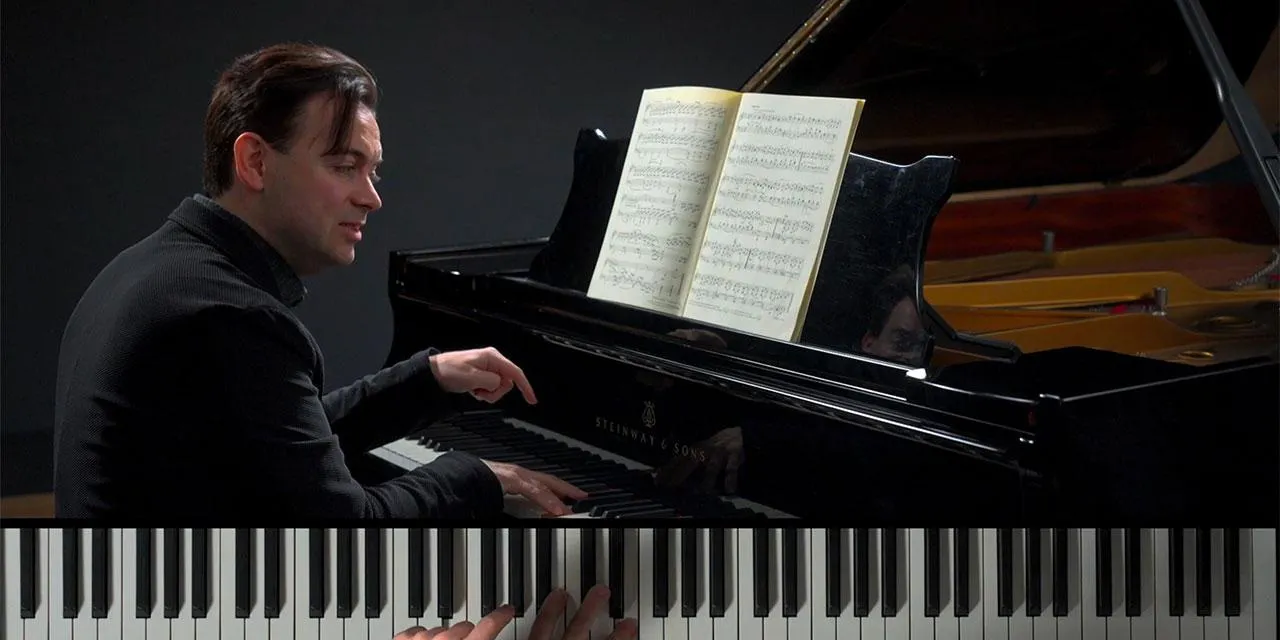
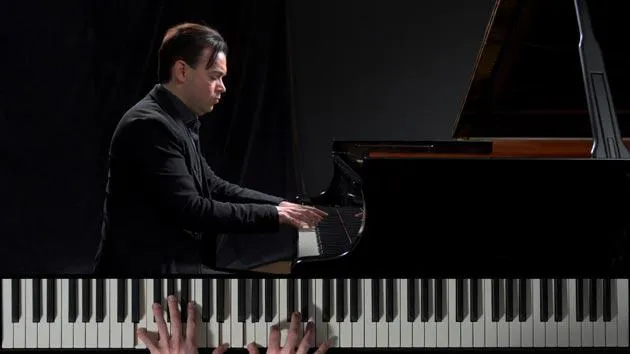
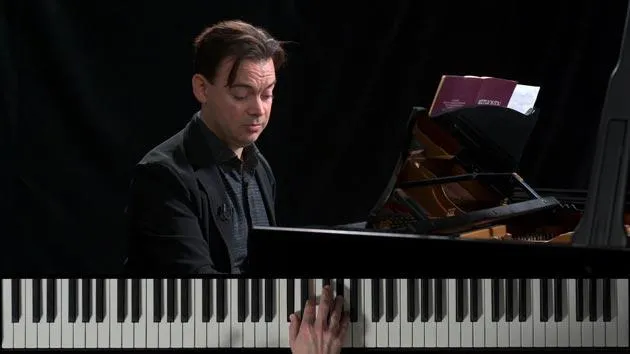
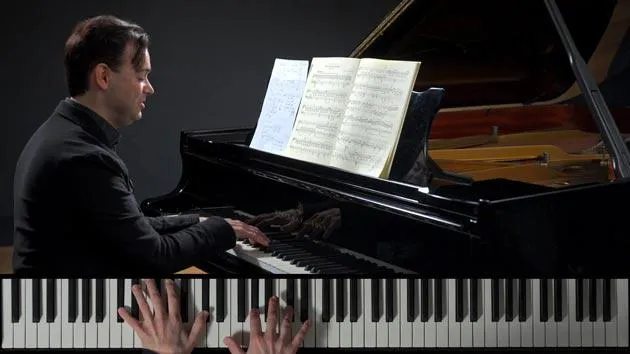
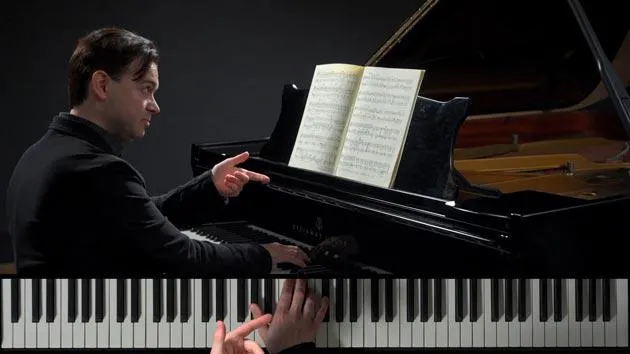
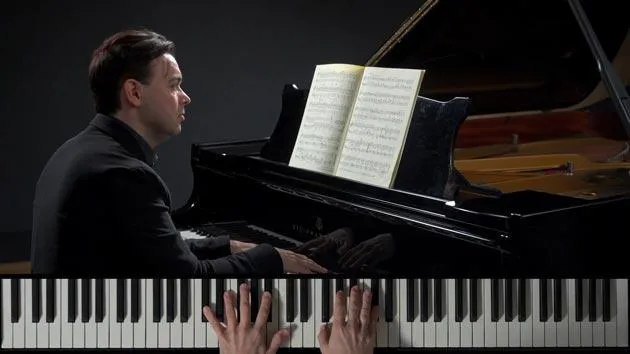
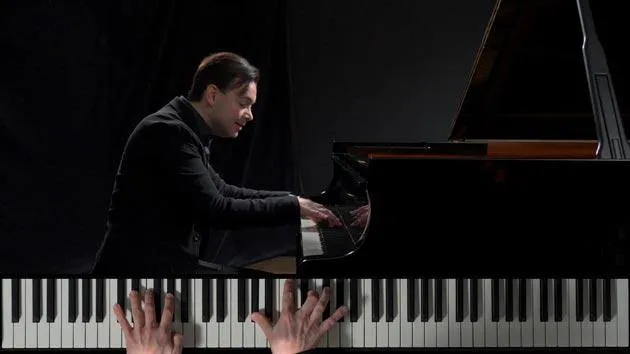
Dejan LazićEn este vídeo, aprende a tocar los acordes repetidos en ambas manos, al piano, en forte, y como un «crescendo», acompañados de saltos más amplios en ambas manos.
Qué incluye el curso
20 lecciones (2h 4m) · 1 gratis
Transcripción de la lección
Moonlight Sonata: Exploring the Third Movement
Hello, everyone!
So let's talk about another feature this great third movement of the Moonlight Sonata has to offer.
Recap of Previous Features
- We discussed the broken arpeggio right at the beginning.
- We covered the Alberti bass, in both right hand and left hand.
Dynamic Changes in Bar 43
Now, in Bar 43, there's another feature:
- Beethoven indicates FFF (forte fortissimo) four times.
- See the indications in Bars 41 and 42? He emphasizes four times forte for all these harmonic changes.
This is crucial!
Importance of the Urtext Edition
- It's essential to have the urtext edition, where these features stand out.
- Beethoven clearly wanted a forte and attack on every single harmonic change.
Alberti Bass and Dissonance
In the left hand, we can see:
- We have the Alberti bass repeating again and again, but with a twist.
- There's a bit of dissonance right there that we should emphasize.
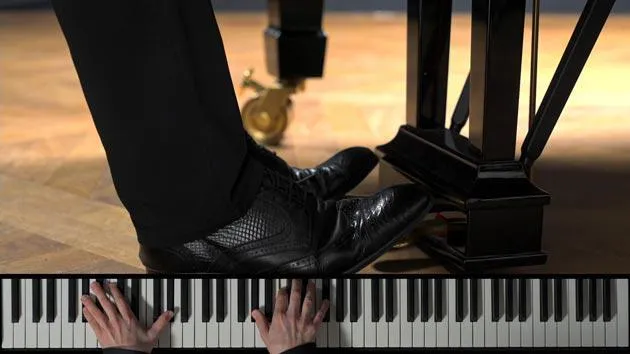
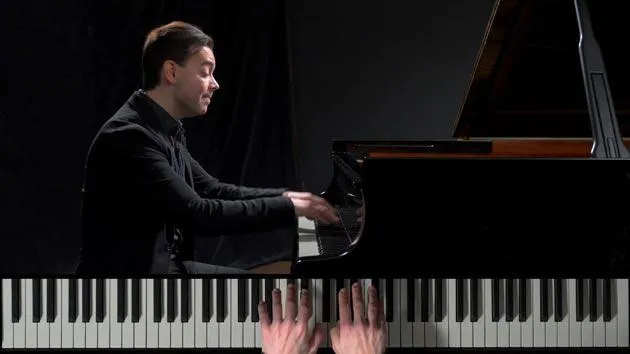
Practicing Chords and Jumps
Now, we come to the jumps:
- These chords and jumps in the piano are not that big, but then we have crescendo.
- This is the biggest leap.
For this incredible dominant knife:
- We need not only space, but sometimes even time.
- We really need to hit it properly.
Practice just this:
- Stall, and then do it again.
Music First
This is very important. With all great music, I always say:
- Music first and not the technical difficulty.
- Sometimes a passage doesn't work for a musical reason.
Once you truly feel this incredible harmony, practicing and analyzing these turns become much more enjoyable.
Exploring Discoveries
You'll have incredible fun when you start exploring.
- For instance, we don't have this E until later; it comes here with the seventh and the ninth.
- There's joy in discovering and exploring, transforming it from mere practice into music-making.
Similar Cases Later in the Piece
We have a similar case later in the piece after we had our four fortes.
- We then move to C sharp minor.
- Here, the piano stays, and there is no crescendo, unlike the first time.
Practice Slowly
Practice it really slowly:
- Focus on this jump.
- It's different here, and you might want more declamato, more freedom.
Predictable Patterns
However, there's no crescendo, and there's no discord, only sevenths.
- Beethoven introduces the non-chord right at the beginning, but later on, he doesn't use it as we might expect.
Understanding Neapolitan Chords
Consider this famous Neapolitan chord:
- We encountered it in the first movement several times.
- In Fortissimo during Bar 33, we see it against Forzanti.
Left Hand Rhythmic Figure
This is the first fortissimo in the piece and follows the Alberti bass again with the Neapolitan.
- Pay attention to the rhythmic figure in the left hand.
Changes Over Time
The next time it appears in Bar 128, we notice:
- The Neapolitan is different; this is not a mistake.
- It's a slight change that brings a whole new world of expressivity to the passage.
Syncopated Rhythm Comparison
After that, we have another Neapolitan.
- If you compare it to the first instance, the syncopated rhythm in the left hand occurs earlier.
- The repetition in the first instance spans two bars, but here it's shorter, only one bar, making it more compressed and faster.
Conclusion
This is one of many reasons why Beethoven is such a great composer, if not the greatest of all.
I wish you luck practicing this great piece, and I'll see you in the next lesson where we'll delve into the coda, arpeggi, and the amazing ending over the last two pages of this piece.
See you there!
20 lecciones
2h 4m de lecciones en vídeo estructuradas
Funciones de vídeo avanzadas
Ralentiza, repite un pasaje, sigue la partitura
Móvil, tablet y ordenador
Practica donde quieras
Garantía de satisfacción 100%
30 días de garantía de devolución
Conoce a tu gurú
Conoce a tu gurú
Las frescas interpretaciones del repertorio de Dejan Lazić lo han consolidado como uno de los solistas más singulares e inusuales de su generación. Actúa con regularidad con las principales orquestas del mundo, entre ellas las orquestas sinfónicas de Boston y Chicago, la Budapest Festival Orchestra, la Royal Concertgebouw Orchestra, la London Philharmonic, la Philharmonia Orchestra, la NDR Elbphilharmonie Orchester, así como las orquestas de cámara de Australia, Basilea y los Países Bajos, y ha establecido estrechas colaboraciones con directores como Giovanni Antonini, Iván Fischer, Michael Francis, Andris Nelsons, Ivan Repušić, Thomas Søndergård, Robert Spano, John Storgårds, Krzysztof Urbański y Jan Willem de Vriend.
Dejan Lazić ha publicado numerosos CD con Channel Classics y Onyx Classics, y una grabación del Triple Concierto de Beethoven para Sony Classical. Su grabación en directo del Concierto para piano n.º 2 de Rachmaninov con la London Philharmonic Orchestra y Kirill Petrenko recibió el premio alemán "Echo Klassik". También cuenta con un gran número de seguidores en el Lejano Oriente y desarrolla una intensa actividad como recitalista y músico de cámara, participando con regularidad en importantes festivales internacionales.
Las composiciones de Dejan Lazić reciben un reconocimiento cada vez mayor, y en 2015 fue fichado como compositor por el grupo editorial Sikorski Music Publishing. Su arreglo del Concierto para violín de Brahms como Concierto para piano "n.º 3" se estrenó y grabó con la Atlanta Symphony Orchestra y Robert Spano en 2009 y ha cosechado un gran éxito sostenido, en los BBC Proms, el Concertgebouw de Ámsterdam, el Festival de Pascua de Hamburgo y el Festival Chopin de Varsovia, en ambas Américas y en Japón. Su Concierto para piano en estilo istrio (Op. 18) se estrenó en el Aspen Music Festival en 2014 y desde entonces se ha interpretado por toda Europa y en Estados Unidos. Otras obras incluyen diversa música orquestal, de cámara y para piano, cadencias, así como varios arreglos de obras de Mozart, Schubert, R. Strauss, Wagner y Debussy.
Dejan Lazić nació en Zagreb, Croacia, en el seno de una familia de músicos. Creció en Salzburgo, Austria, donde estudió en el Mozarteum (piano, clarinete y composición). Sus primeros encuentros con Zoltán Kocsis e Imre Rohmann en el Festival Bartók de Hungría fueron decisivos para su carrera artística, al igual que la notable influencia de Peter Eötvös. Dejan Lazić vive en Ámsterdam.
En Master Moonlight Sonata by Beethoven, Dejan comparte la visión que hay detrás de esas aclamadas interpretaciones, guiándote a través de los tres movimientos de una de las obras más queridas del repertorio pianístico para que puedas moldearla con verdadera comprensión en lugar de por imitación. www.dejanlazic.com







