



Equilibrio

Con
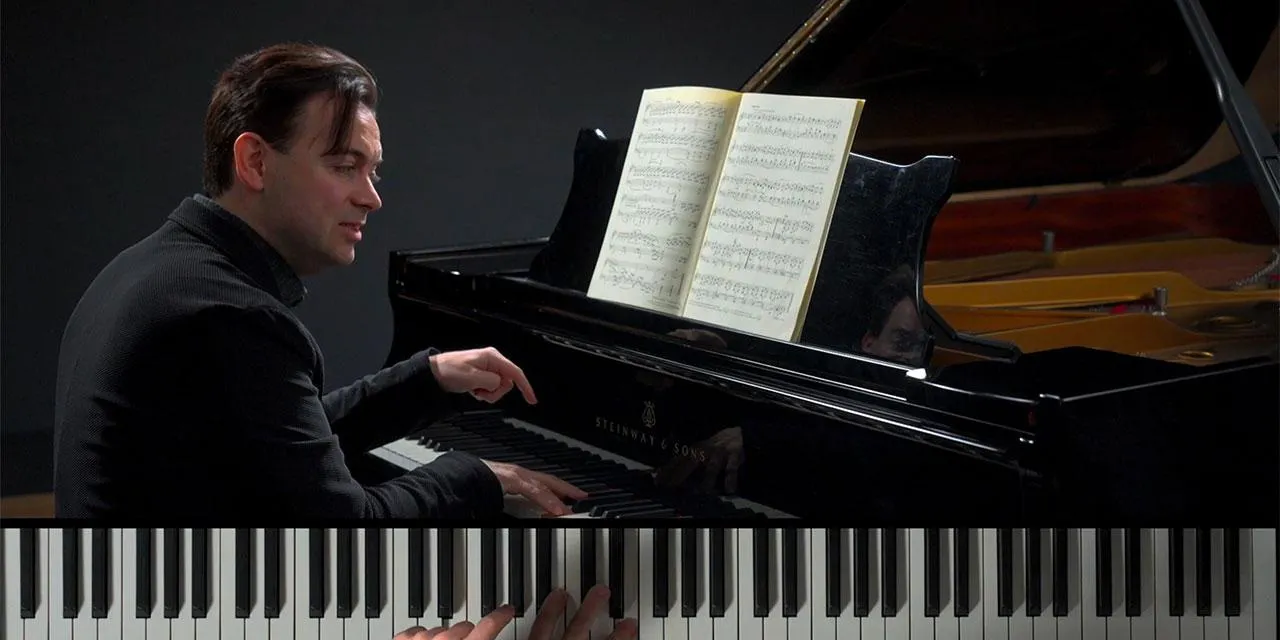
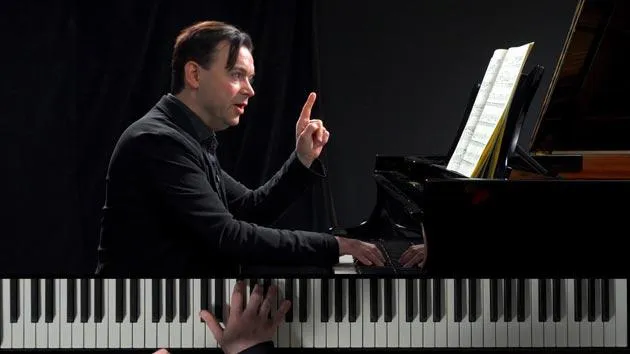
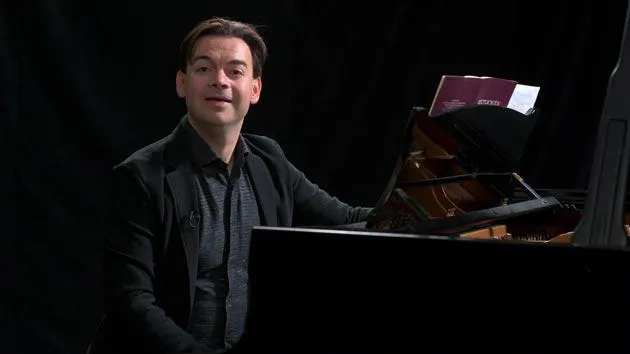
Dejan LazićEn esta lección, Dejan muestra cuál es la mejor manera de lograr un equilibrio adecuado entre las funciones de ambas manos.
Qué incluye el curso
20 lecciones (2h 4m) · 1 gratis
Transcripción de la lección
Understanding Balance in Beethoven's Moonlight Sonata's Second Movement
Hi, everyone.
Let's talk about balance in this second movement of Beethoven's Moonlight Sonata.
The Challenge of Two Hands
Of course, having two hands is sometimes a burden. When playing the piano, we should, for instance, in the first movement, obey three main features:
- Two features in the right hand:
- The melody
- The accompaniment (the triplets)
- The basis in the left hand.
Yet, it should all sound equal, not one more dominant than the other.
Phrasing and Voicing
Now, in the second movement, when we address matters of balance, we also talked about:
- Phrasing
- Voicing
- Balance between the voices and between the hands.
This is not always the exact same thing.
Demonstration of the Trio
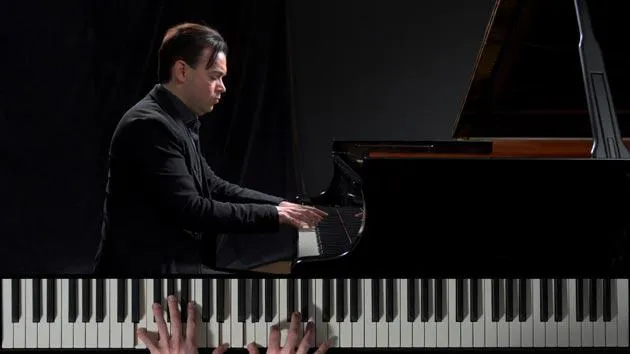
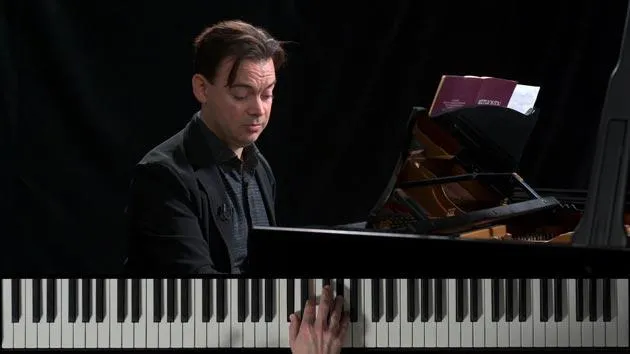
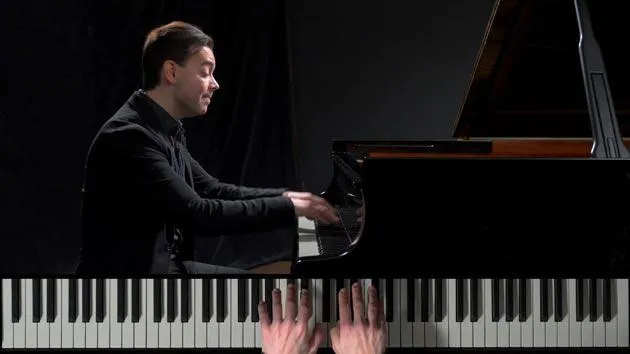
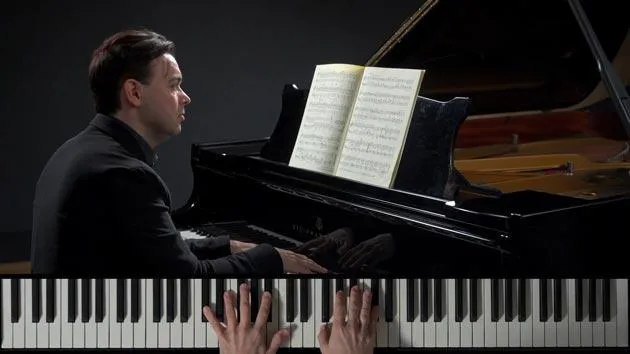
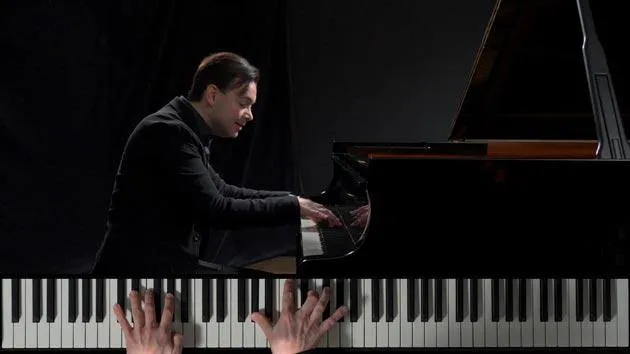
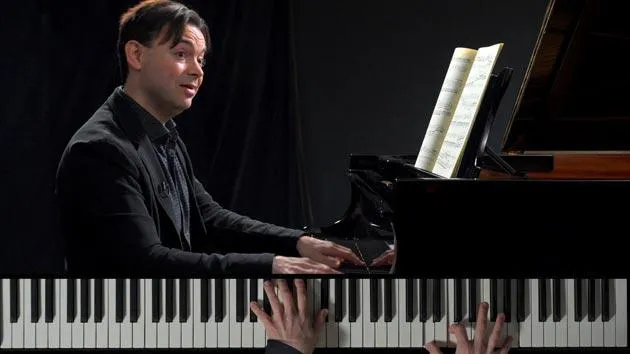
I can demonstrate the trio, the middle section of this movement, which goes like this:
"This is complete contrast to... as if there's a lack of bass."
So, this is the trio, almost like bagpipes.
The Dynamics of the Trio
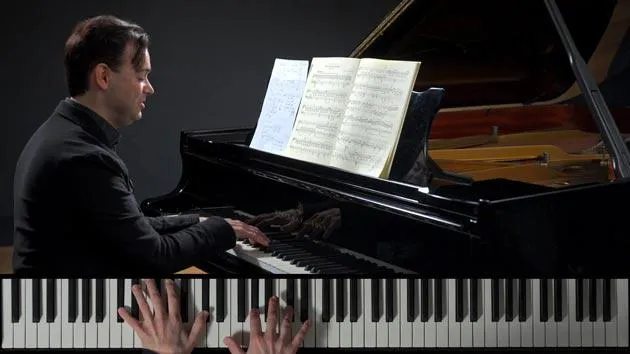
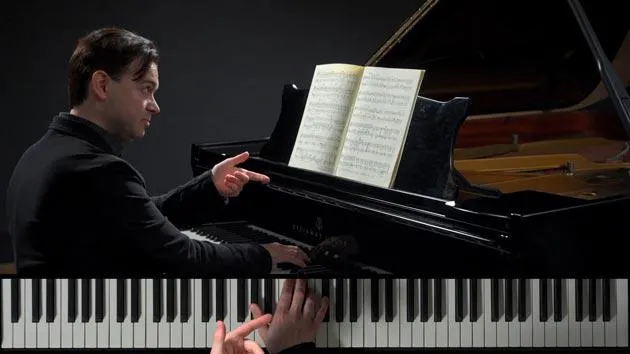
- This balance here is a flat because Beethoven writes for forte piano in the left hand, but only a flat.
- It's very clearly marked in the score that this fortepiano goes for A flat and not for the lower D flat.
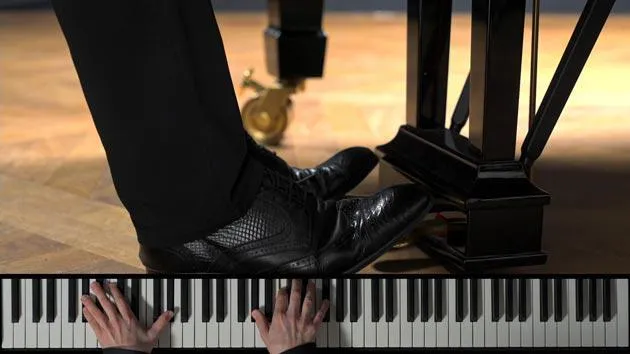
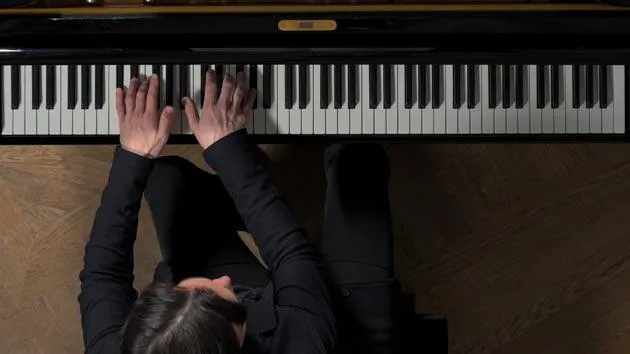
So, only for your thumb.
Please play it with your thumb, because obviously, you could also play it with the second finger, but we said the thumb is naturally the most robust of all fingers. This way, you can easily put weight on the thumb and not on any of the other fingers, creating a more bagpipe-like sound in the right hand.
Syncopes and Sforzanti
However, those syncopes have sforzanti (SF mark).
So it's not forte piano; it's sforzanto. It's faster, more into the bone.
"And then no sforzanto. And again here. Yes, yes, yes. And again."
See, that's the difference.
The Pianissimo Dynamics
All of a sudden, we have pianissimo, very soft in both hands. Here again, we've got this forte piano just in the left hand, but only for the thumb.
To avoid playing it too loudly, make sure to balance your hands and not play the right hand too loudly. If you play this too loudly, then you cover the thumb's forte piano.
So, try to be as pianissimo in the right hand, allowing the D flat forte piano to shine through.
"After forte, it returns to piano."
This is a proper balance where you will never lose the character of the piece. It will be in strong contrast to the main section, which is very lyrical, gracious, and dolce (sweet).
Conclusion
So, you can play with all these features. Even though this movement is relatively short, it is really compressed with all these amazing features.
It's just like:
"The best dish where you can taste a little bit of everything, even a bit of sugar, a bit of salt in the sauce."
There's really everything that Beethoven's rich personality and artistry could put on one page. So, have fun!
20 lecciones
2h 4m de lecciones en vídeo estructuradas
Funciones de vídeo avanzadas
Ralentiza, repite un pasaje, sigue la partitura
Móvil, tablet y ordenador
Practica donde quieras
Garantía de satisfacción 100%
30 días de garantía de devolución
Conoce a tu gurú
Conoce a tu gurú
Las frescas interpretaciones del repertorio de Dejan Lazić lo han consolidado como uno de los solistas más singulares e inusuales de su generación. Actúa con regularidad con las principales orquestas del mundo, entre ellas las orquestas sinfónicas de Boston y Chicago, la Budapest Festival Orchestra, la Royal Concertgebouw Orchestra, la London Philharmonic, la Philharmonia Orchestra, la NDR Elbphilharmonie Orchester, así como las orquestas de cámara de Australia, Basilea y los Países Bajos, y ha establecido estrechas colaboraciones con directores como Giovanni Antonini, Iván Fischer, Michael Francis, Andris Nelsons, Ivan Repušić, Thomas Søndergård, Robert Spano, John Storgårds, Krzysztof Urbański y Jan Willem de Vriend.
Dejan Lazić ha publicado numerosos CD con Channel Classics y Onyx Classics, y una grabación del Triple Concierto de Beethoven para Sony Classical. Su grabación en directo del Concierto para piano n.º 2 de Rachmaninov con la London Philharmonic Orchestra y Kirill Petrenko recibió el premio alemán "Echo Klassik". También cuenta con un gran número de seguidores en el Lejano Oriente y desarrolla una intensa actividad como recitalista y músico de cámara, participando con regularidad en importantes festivales internacionales.
Las composiciones de Dejan Lazić reciben un reconocimiento cada vez mayor, y en 2015 fue fichado como compositor por el grupo editorial Sikorski Music Publishing. Su arreglo del Concierto para violín de Brahms como Concierto para piano "n.º 3" se estrenó y grabó con la Atlanta Symphony Orchestra y Robert Spano en 2009 y ha cosechado un gran éxito sostenido, en los BBC Proms, el Concertgebouw de Ámsterdam, el Festival de Pascua de Hamburgo y el Festival Chopin de Varsovia, en ambas Américas y en Japón. Su Concierto para piano en estilo istrio (Op. 18) se estrenó en el Aspen Music Festival en 2014 y desde entonces se ha interpretado por toda Europa y en Estados Unidos. Otras obras incluyen diversa música orquestal, de cámara y para piano, cadencias, así como varios arreglos de obras de Mozart, Schubert, R. Strauss, Wagner y Debussy.
Dejan Lazić nació en Zagreb, Croacia, en el seno de una familia de músicos. Creció en Salzburgo, Austria, donde estudió en el Mozarteum (piano, clarinete y composición). Sus primeros encuentros con Zoltán Kocsis e Imre Rohmann en el Festival Bartók de Hungría fueron decisivos para su carrera artística, al igual que la notable influencia de Peter Eötvös. Dejan Lazić vive en Ámsterdam.
En Master Moonlight Sonata by Beethoven, Dejan comparte la visión que hay detrás de esas aclamadas interpretaciones, guiándote a través de los tres movimientos de una de las obras más queridas del repertorio pianístico para que puedas moldearla con verdadera comprensión en lugar de por imitación. www.dejanlazic.com







