



Acordes disminuidos
Con
Chris HaighEl acorde disminuido está formado por tres terceras menores, una encima de otra
Qué incluye el curso
28 lecciones (1h 46m) · 1 gratis
Transcripción de la lección
Understanding the Diminished Chord
In this chapter, we're going to look at the diminished chord.
What is a Diminished Chord?
The diminished chord is made up of three minor thirds, one on top of the other. The symbol for a diminished chord is either dim or a little circle.
The Peculiarity of Diminished Chords
The diminished chord is peculiar in that instead of there being 12 diminished chords, there are only really three. This is because for any diminished chord, any of the notes can count as the root.
For example:
- B flat diminished has all the same notes as:
- G diminished
- D flat diminished
- E diminished
So, G diminished is the same as:
- B flat diminished
- D flat diminished
- E diminished
Similarly:
-
A flat diminished is the same as:
- B flat diminished
- D diminished
- F diminished
-
A diminished is the same as:
- C diminished
- E flat diminished
- G flat diminished
Good News for Practice
This is very good news because it means that you only need to practice three sets of scales and arpeggios, not 12.
Practicing Diminished Arpeggios
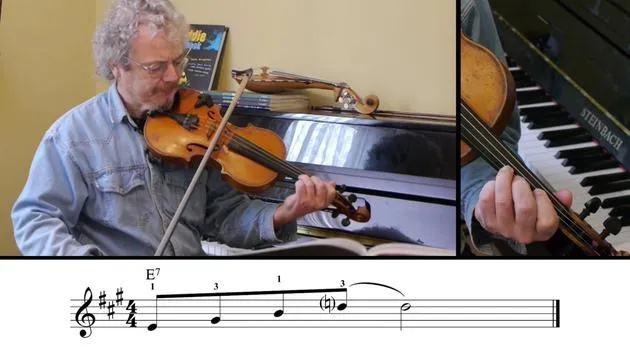
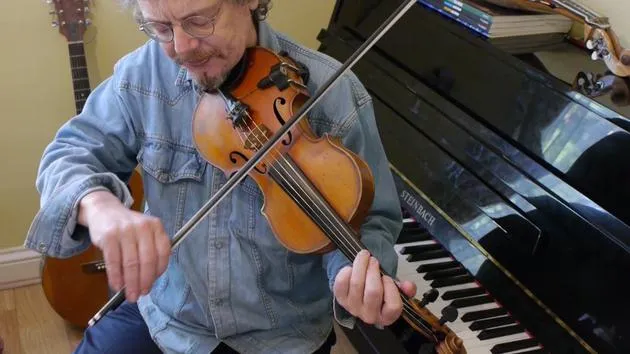
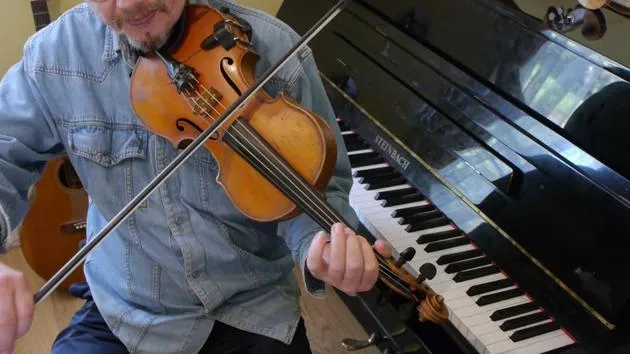
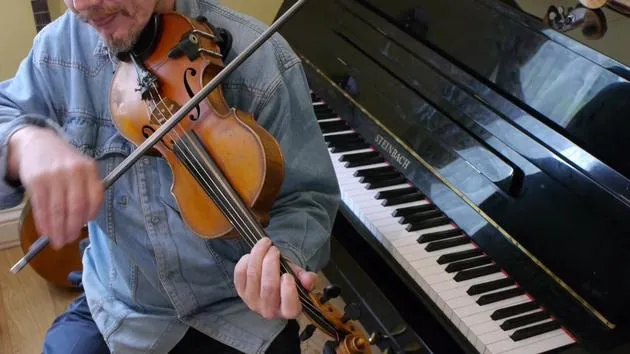
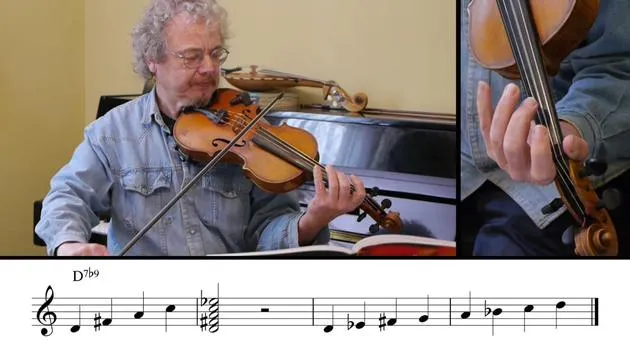
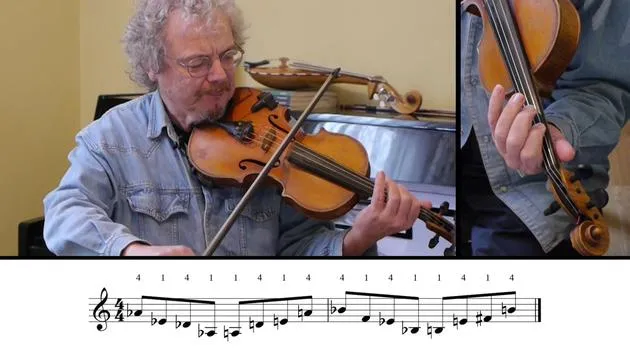
Here is the G diminished arpeggio in first position.
Note: You will see no logic in the fingering of these arpeggios, so you just have to practice them until your fingers know where to go.
Do the same with the A flat diminished and A diminished arpeggios.
Soloing with Diminished Scales
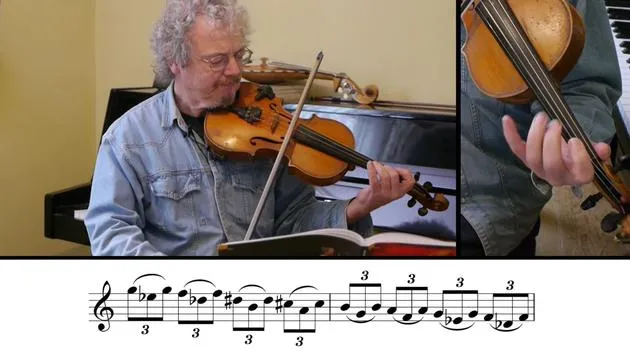
If you're soloing using a diminished scale, a pattern which is very useful is this one:
You can create a riff by combining triplets and arpeggio notes.
The G Diminished Scale
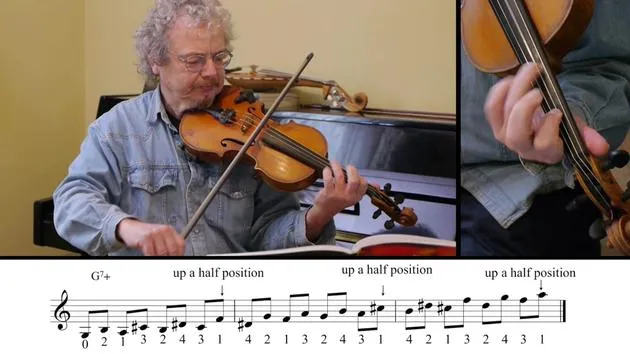
The scale of G diminished consists of the arpeggio notes, plus, for each note, a leading note a semitone below.
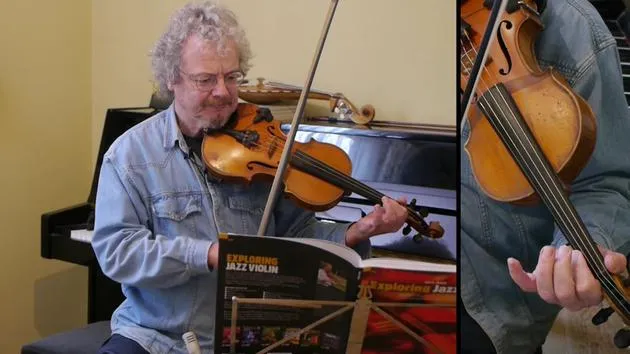
If you look at your fingers as you play a diminished scale, you may see a pattern emerge. The finger pattern you use on the G string is repeated on the D string, but a half position lower, and the same again on the next string.
Open strings complicate this pattern, but if you start on the G string in a higher position, you can use the same fingering four times as you ascend the scale.
Common Use of Diminished Chords
The most common use of diminished chords is as a passing chord between a I and a II minor 7. It works very well in this way because the diminished chord has a strong tendency to want to move and resolve up a semitone.
A diminished chord will often appear in this turnaround sequence.
Ignoring the Diminished Chord
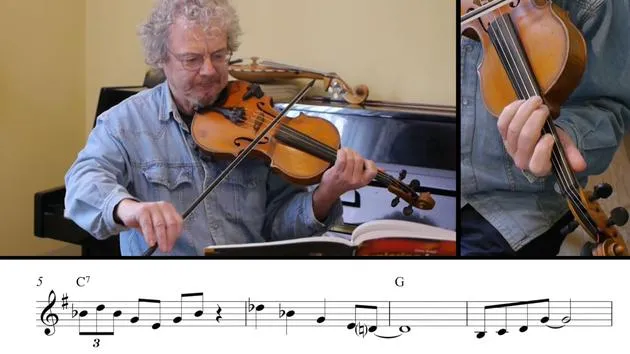
In this context, where the diminished chord is only half a bar long, you can virtually ignore it.
For example: Here is a G major pentatonic phrase, which sounds fine over the A flat diminished.
Paying Attention to Diminished Chords
Here, on the other hand, we pay proper attention to the chord. It's pretty rare, but not impossible to find an extended section of diminished chord.
The bridge to the standard September Song, for example, goes something like this. The song is in the key of C, but there's no way you'd get away with bluffing your way through this as if it was a diatonic sequence.
Here's an example of what you could play.
Finally, here's an extended G diminished sequence, a bit more up tempo.
28 lecciones
1h 46m de lecciones en vídeo estructuradas
Funciones de vídeo avanzadas
Ralentiza, repite un pasaje, sigue la partitura
Móvil, tablet y ordenador
Practica donde quieras
Garantía de satisfacción 100%
30 días de garantía de devolución
Conoce a tu gurú
Conoce a tu gurú
Chris Haigh es violinista profesional desde hace 25 años, con experiencia en muchos géneros distintos. Ha tocado en más de 75 álbumes, trabajando con artistas como Alison Moyet, Bob Geldof, All About Eve, Michael Ball, David Soul, Oumou Sangare, The Quireboys, Riverdance, Morcheeba, James Galway y Steps.
Ha tocado swing y jazz con The Kimbara Brothers, Diz Disley, Le Jazz, The Hot Club of London y los Quecumbar Allstars, y lidera una banda de swing soviético de siete integrantes, The Kremlinaires.
Chris imparte clases y talleres sobre técnica de violín de jazz y ha enseñado violín de jazz en las universidades de Middlesex, Brunel y Newcastle y en el Truro College. Entre sus créditos como autor figuran nueve libros de violín, entre ellos The Fiddle Handbook.
También dirige Fiddling Around (fiddlingaround.co.uk), probablemente la fuente de información sobre violín más completa y visitada de la red.







