



Minor 7b5/7b9
Con
Chris HaighAquí tienes un par de acordes que suelen aparecer juntos. Parecen muy complicados, pero en realidad son bastante fáciles de manejar. Los encontrarás en temas como Autumn Leaves y Black Orpheus (Morning of the Carnival)
Qué incluye el curso
28 lecciones (1h 46m) · 1 gratis
Transcripción de la lección
Understanding Min 7B5 and 7B9 Chords
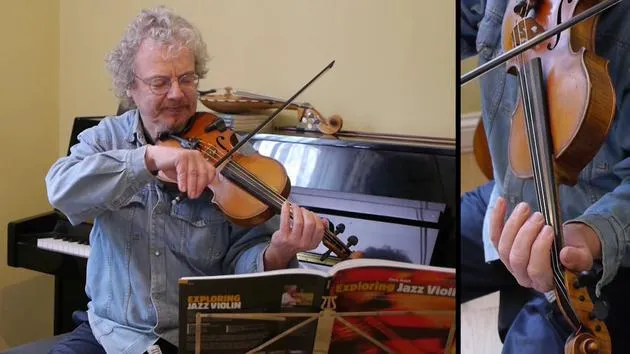
In this chapter, we're going to be looking at a pair of chords that often come together: Min 7B5 and 7B9.
They may look complicated, but they are actually quite easy to deal with. You'll come across them in tunes such as Autumn Leaves and Black Orpheus. These chords often occur in minor key songs.
Example in G Minor
For example, in the key of G minor:
- Instead of the typical minor progression (2-5-1):
- A minor 7, D7, G minor,
- you might encounter:
- A minor 7 flat 5, D7 B9, to G minor.
Minor 7 Flat 5 Chord
First, let's look at the minor 7, flattened fifth.
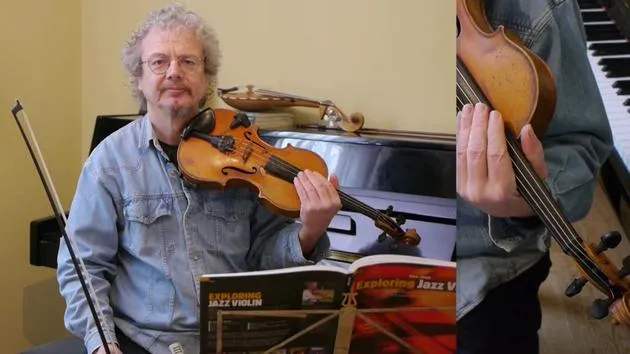
- This chord is an A minor 7 with the fifth flattened.
Here's how it breaks down:
- A minor 7: (show chord)
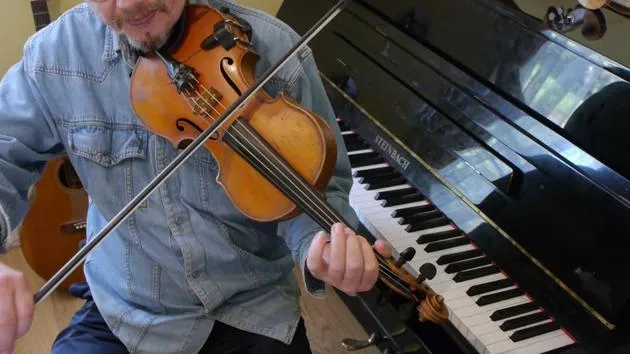
- A minor 7 with the fifth flattened: (show chord)
- D7, B9: (show chords)
Now, regarding D7, the ninth is the eighth. When it's flattened, it becomes that.
Arpeggio and Scale
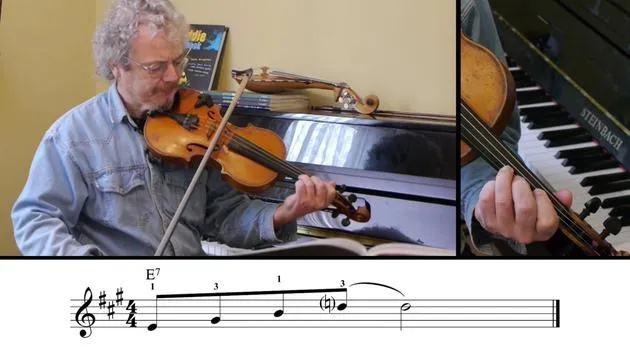
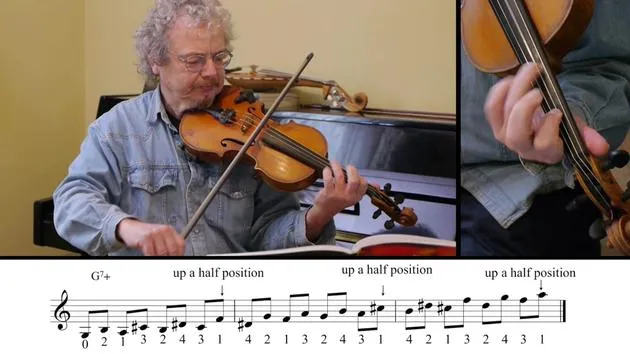
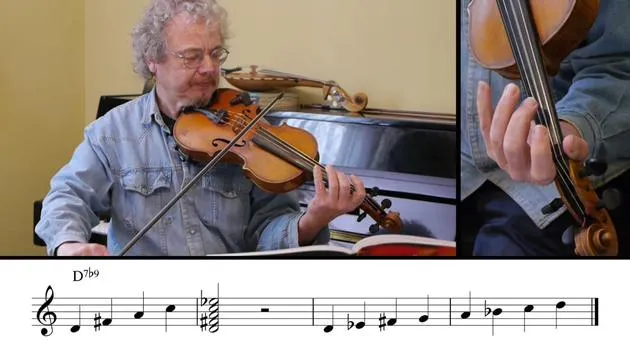
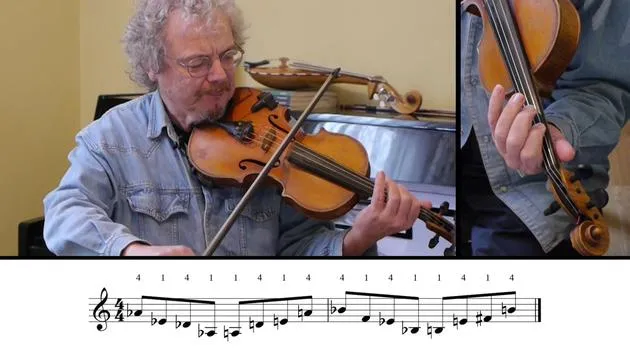
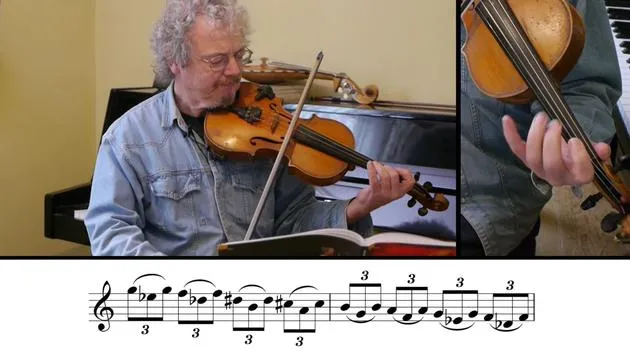
The arpeggio and the scale will be as follows:
The reason these chords work well together is that their scales coincide, as I'll demonstrate with the chords.
Riff Example
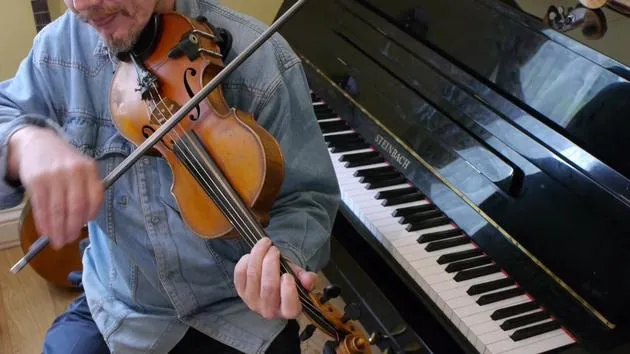
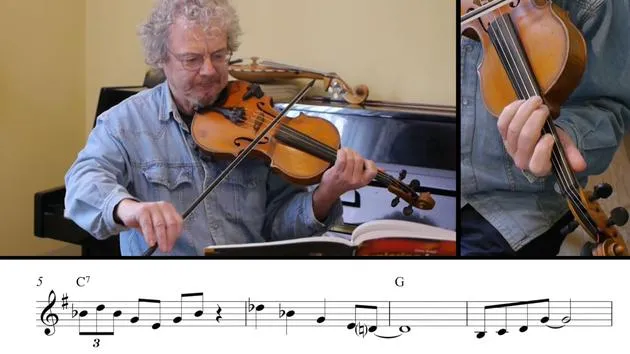
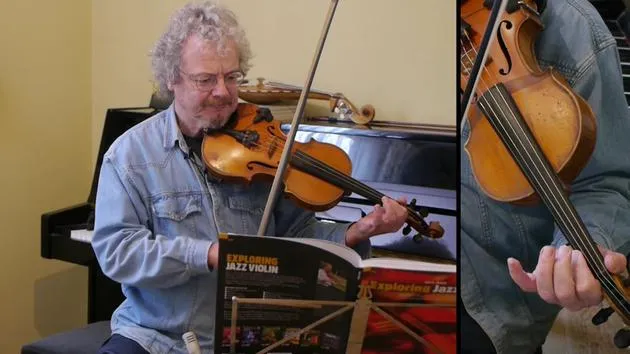
Here's a riff you could use over these two chords.
- It's not necessary to follow the same scale through the sequence.
- Instead, you can use a separate scale or arpeggio for each chord.
Alternative Approach
Another approach to these chords is to play the minor blues scale of the I chord, which is G minor.
28 lecciones
1h 46m de lecciones en vídeo estructuradas
Funciones de vídeo avanzadas
Ralentiza, repite un pasaje, sigue la partitura
Móvil, tablet y ordenador
Practica donde quieras
Garantía de satisfacción 100%
30 días de garantía de devolución
Conoce a tu gurú
Conoce a tu gurú
Chris Haigh es violinista profesional desde hace 25 años, con experiencia en muchos géneros distintos. Ha tocado en más de 75 álbumes, trabajando con artistas como Alison Moyet, Bob Geldof, All About Eve, Michael Ball, David Soul, Oumou Sangare, The Quireboys, Riverdance, Morcheeba, James Galway y Steps.
Ha tocado swing y jazz con The Kimbara Brothers, Diz Disley, Le Jazz, The Hot Club of London y los Quecumbar Allstars, y lidera una banda de swing soviético de siete integrantes, The Kremlinaires.
Chris imparte clases y talleres sobre técnica de violín de jazz y ha enseñado violín de jazz en las universidades de Middlesex, Brunel y Newcastle y en el Truro College. Entre sus créditos como autor figuran nueve libros de violín, entre ellos The Fiddle Handbook.
También dirige Fiddling Around (fiddlingaround.co.uk), probablemente la fuente de información sobre violín más completa y visitada de la red.







