



Acordes major7, minor7 y flat7
Con
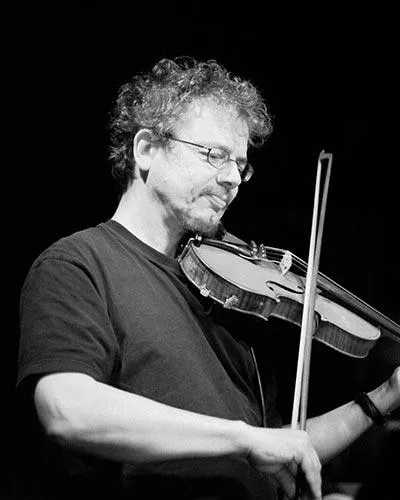
Chris HaighChris Haigh muestra cómo reconocer y tocar sobre acordes de séptima mayor, séptima menor y séptima de dominante al violín, usando arpegios en cada posición de los dedos.
Qué incluye el curso
28 lecciones (1h 46m) · 1 gratis
Transcripción de la lección
Lesson on Major Seven, Minor Seven, and Flat Seven Chords
In this lesson, we're going to look at how to deal with major seven, minor seven, and flat seven chords. But first, here's a quick summary of what we know so far.
Chord Structure
A chord is usually made up of:
-
Root
-
Third
-
Fifth
-
Seventh Note
-
If the seventh note is a semitone below the root, we have a Major 7.
-
If it's a tone below the root, it's a 7.
-
If it's a minor chord, it's a Minor 7.
There are many more chord types apart from sevens, created by:
- Altering a note (e.g., flattening the fifth)
- Adding extra notes
We'll come to some of these a bit later, but first, let's concentrate on the three seventh-type chords.
Major Seven Chords
The Major Seven has a relaxed, settled feel to it. It will often be the first and last chord in a major key jazz tune since the major seven has its seventh note a semitone below the root. The major scale itself fits exactly over this chord.
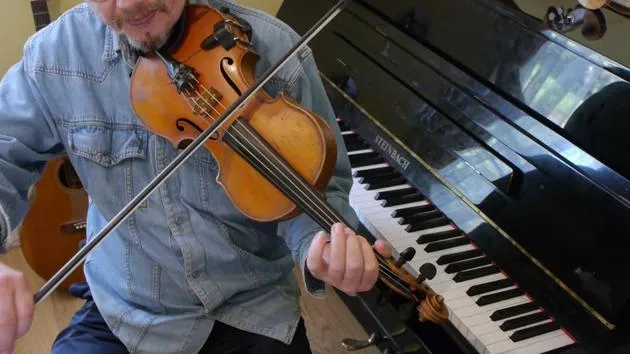
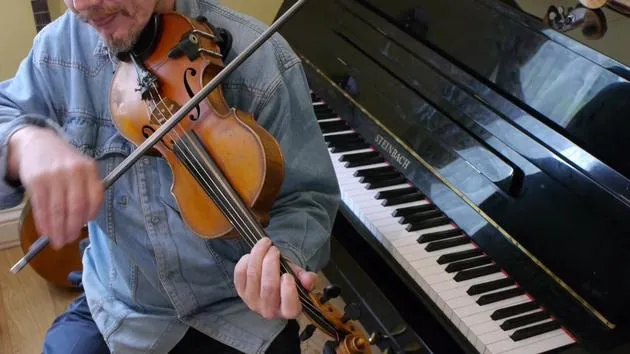
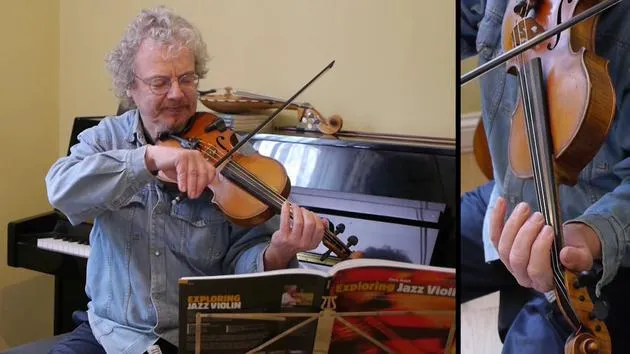
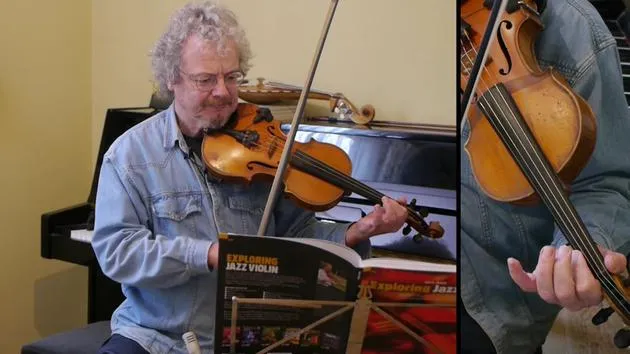
You need to get used to the arpeggio of the major seven chord in each finger position. For example, starting on an open string on a G:
- Open 2, Open 2
This pattern is symmetrical because it's the same finger pattern on each of the two strings:
- Two tones and another two tones.
If you start with the first finger, then it's:
- 1 3 1 3
- Again, the same intervals (two tones).
If you start on the second finger:
- 2 2 again reflecting the same two tones.
Practice Suggestions
Whatever major seven you are presented with, simply play the root in a convenient position and use either:
- Open 2 1 2 1 3 or 2 4 2 4.
Arpeggios serve two functions:
- They help outline the chord sequence when reading through it.
- A good way to start learning any new jazz tune is to play through the arpeggios of every chord.
- With a little bit of decoration, chord arpeggios can form the skeleton of a lick or part of a solo.
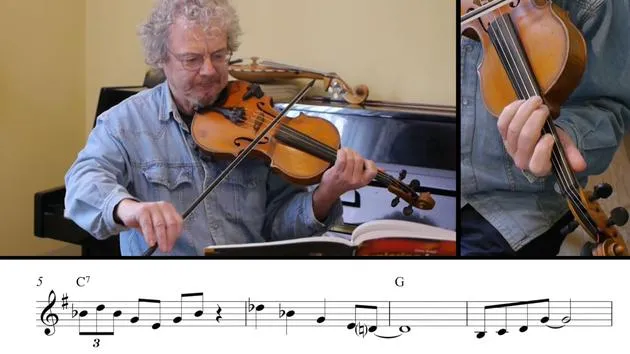
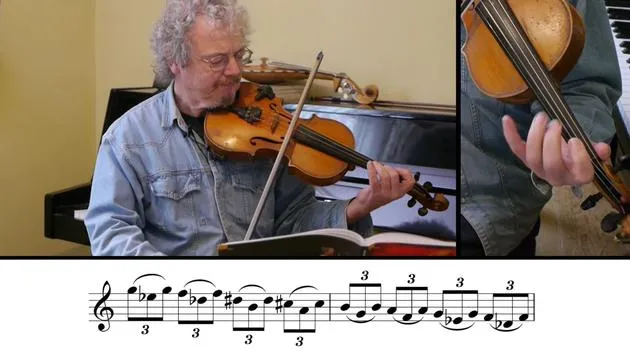
Here's a couple of riffs made from a G Major 7 arpeggio. It's sometimes a good idea to accentuate the seventh note, as this is the note which gives the chord a lot of its character. You can do this by:
- Starting on that note
- Repeating or elongating it.
Backing Track
Here is a piece of backing on the single chord of G Major 7:
- Use it to practice the G major scale, G major 7 arpeggio, and some improvisation.
Minor Seven Chords
Now let's look at the Minor 7th chord. Most minor chords in jazz are minor sevens rather than straight minors. The Minor 7 chord has a slight feeling of unease or movement.
The fingering for a Minor 7 chord is easy, like the Major 7:
- Open 2, Open 2
- 1, 3
- 1, 3 or 2, 4
The difference is that instead of stretching two tones from one note to the next, you only stretch one and a half tones.
Practicing Minor 7
The scale you would play over a Minor 7 chord is the Dorian Minor:
- That is to say, the minor scale with a raised sixth.
Don't worry if you don't understand the term Dorian; it's something you can look into later.
There's also a bebop scale to go with a minor seven with an extra note between the third and fourth degrees.
Here's a backing track to practice:
- Arpeggios
- Scales
- Riffs on a Minor 7.
Flat Seven Chords
The seventh chord is sometimes called a flattened seven or the dominant.
While the Major Seven felt stable and complacent, the Minor Seven has a slight feeling of movement. The seventh has a strong feeling of urgency and instability about it. It wants to resolve back to the tonic chord. This property makes the Seventh Chord one of the most important drivers of a jazz chord sequence.
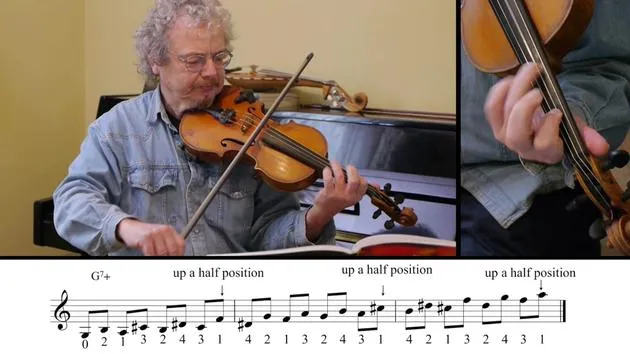
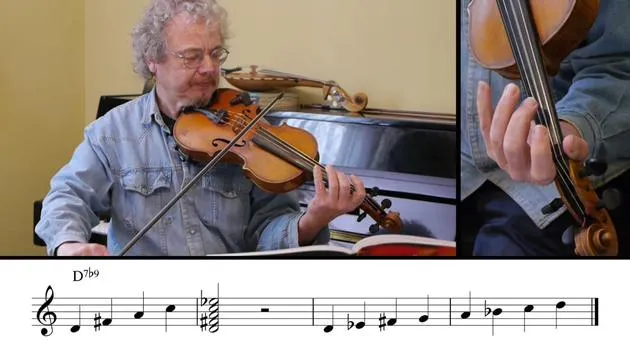
Fingering for D7 Arpeggio
The fingering for a D7 arpeggio is:
- Open 2, Open 2
In this case, it's not the same on the two strings:
- We've got two tones here, then a tone and a half.
- Your second finger is lowered on the second string.
Additional Chord Examples
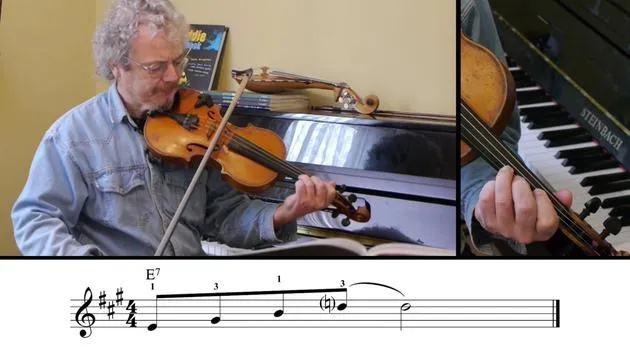
- Here's an E7 chord with 1, 3, 1, 3 fingering.
- An F# seventh chord with 2, 4, 2, 4 fingering.
Scale for Seventh Chords
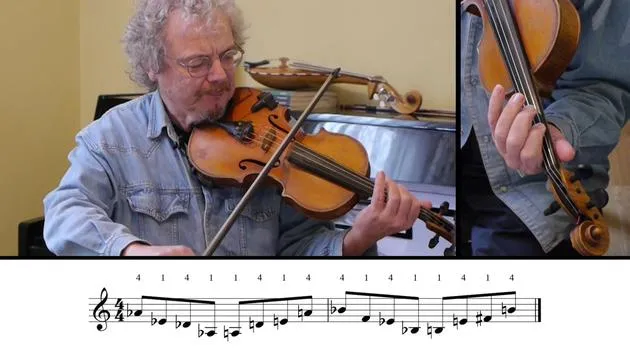
The scale you would use for a seventh chord is the major scale with a flattened seventh, also known as the Mixolydian Mode.
- Here it is with the chords.
There's a bebop scale for the seventh chord with an extra note between the seventh and eighth degrees. Gropelli often used this lick over a seventh chord.
Closing Practice
Here's a lick which emphasizes the seventh note.
Here's a backing track to practice:
- Arpeggio scales
- And licks over a D7.
28 lecciones
1h 46m de lecciones en vídeo estructuradas
Funciones de vídeo avanzadas
Ralentiza, repite un pasaje, sigue la partitura
Móvil, tablet y ordenador
Practica donde quieras
Garantía de satisfacción 100%
30 días de garantía de devolución
Conoce a tu gurú
Conoce a tu gurú
Chris Haigh es violinista profesional desde hace 25 años, con experiencia en muchos géneros distintos. Ha tocado en más de 75 álbumes, trabajando con artistas como Alison Moyet, Bob Geldof, All About Eve, Michael Ball, David Soul, Oumou Sangare, The Quireboys, Riverdance, Morcheeba, James Galway y Steps.
Ha tocado swing y jazz con The Kimbara Brothers, Diz Disley, Le Jazz, The Hot Club of London y los Quecumbar Allstars, y lidera una banda de swing soviético de siete integrantes, The Kremlinaires.
Chris imparte clases y talleres sobre técnica de violín de jazz y ha enseñado violín de jazz en las universidades de Middlesex, Brunel y Newcastle y en el Truro College. Entre sus créditos como autor figuran nueve libros de violín, entre ellos The Fiddle Handbook.
También dirige Fiddling Around (fiddlingaround.co.uk), probablemente la fuente de información sobre violín más completa y visitada de la red.







