



Tocar de oído
Con
Chris HaighEn esta lección veremos cómo escuchar los acordes a medida que cambian y decidir qué notas encajan y cuáles no
Qué incluye el curso
26 lecciones (1h 53m) · 1 gratis
Transcripción de la lección
Music Lesson: Playing By Ear
In this lesson, we're going to focus on playing by ear. So far, we've been working with easy diatonic chord sequences. By this, I mean that the chords have mostly been based on the notes of the scale we're working in. The tonal center, which is the note you can keep coming back to, remains the same throughout the tune.
This is a very useful starting point that gives you confidence to experiment without too many disasters. However, eventually, you'll come across chord sequences where things are not quite so easy. We're going to look at how to listen to chords as they change, allowing you to make decisions about what notes are suitable or unsuitable.
Understanding Chords
These decisions can be based on theoretical knowledge of the chords (which we'll cover later) or simply by the sound of the chords. What we're doing now is playing by ear.
Example 1: Listening to Chords
- Consider the chords: C and C7
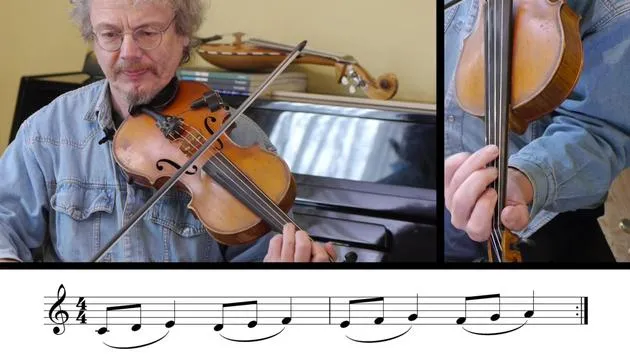
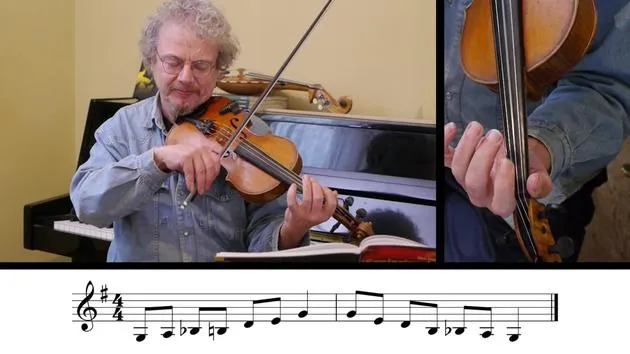
- Now, let's listen to the C major scale played over both of them.
Initially, we start with the C chord. The second chord is C7.
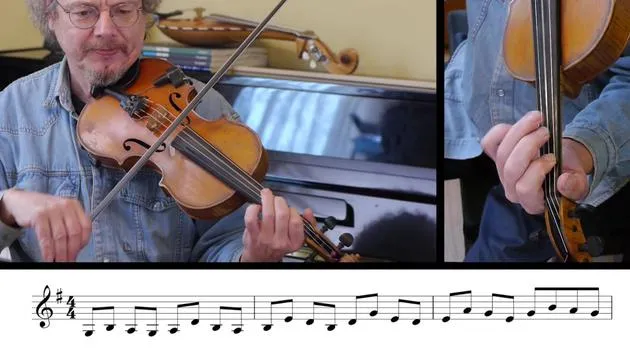
Now let's try playing the C major scale over those two chords and see how it sounds.
Hopefully, you will have heard that while the C major scale fits fine over the C chord, it doesn't fit well over the C7 chord. One note is wrong, the B note, and it needs to go down.
As I mentioned, this is something that you'll understand later when we've talked about the chords properly. Just by listening, you should be able to tell that note has changed.
Avoiding Wrong Notes
You need to be aware that the B note has become a note that you must avoid during that chord. If you need to play a B, it now has to be a B flat.
So, you have two alternatives:
- Simply avoid the note you know will sound wrong, or
- Find the note that replaces it and play that instead.
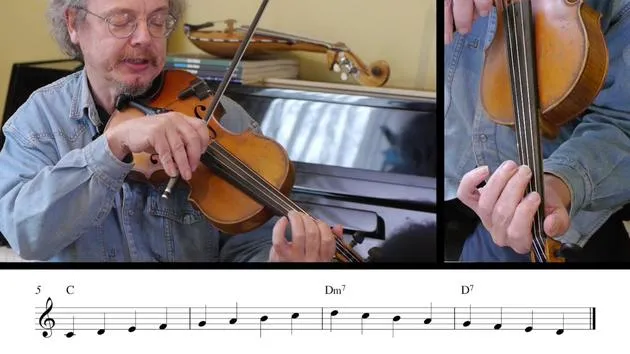
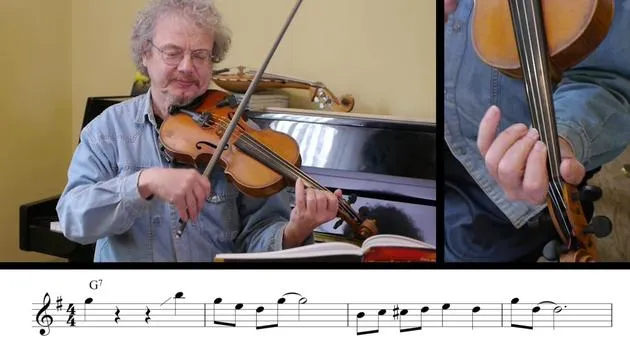
Example 2: Chord Progressions Let's consider another example. We have a C major chord leading to a D minor 7 chord, which then leads to a D7 chord.
Listen to these chords. If we try playing the C major scale over that, it will sound like this:
You should be able to hear that we have a new avoid note on the way down: the F note. It no longer sounds right because we have a D major chord.
Thus, the F note has become an avoid note. The note you need to replace it with is F sharp.
What we're doing here is continuing to treat the sequence as if it is in the key of C major, while keeping the same tonal center, but carefully treading around certain notes, which are the avoid notes.
Exploring Chord Sequences
Mostly, non-diatonic chords are fairly short, and you soon get back on safe ground, so this is not so difficult.
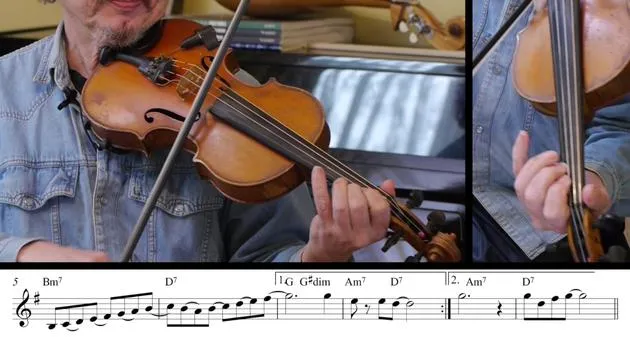
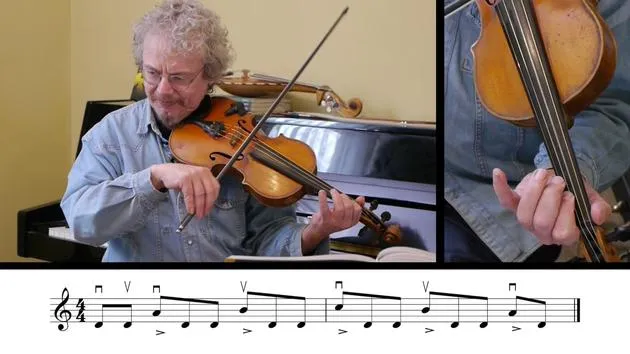
Let's look at an example of a tune that you can use to explore this approach. This chord sequence has several places where the diatonic idea breaks down. It's called Snakes and Ladders.
When we come to try playing the C major scale, we'll find that it doesn't always work. I'll play a little bit of it and we'll see what kind of train smash we come up with.
You can hear that the approach we took before is clearly not going to work here. The very second chord is E7, which has a G sharp in it. So, as we go up the C major scale, as soon as we hit the E7 chord, the G note becomes an avoid note.
You have two options: either don't play the G or play the G sharp.
Looking at the end of that line, we have an F minor 7 chord. In this case, the A note does not work because the F minor requires an Ab. Thus, the A note has become an avoid note, and so on.
The tune has a general C major feel to it, but in several places, you'll need to take evasive action.
Listening and Experimenting
When you understand chords properly, you'll be better equipped to deal with this issue. For now, it's essential to keep listening and experimenting until you can trust your ear to help you avoid trouble.
Demonstrating Approaches
Now, I will demonstrate two different approaches to playing Snakes and Ladders.
-
First Round: I will try to avoid the difficult notes.
So, what I was doing most of the time was moving fairly freely up and down the C major scale. However, when it came to one of the dangerous chords, like E, I simply stuck on the E note to avoid any problems.
-
Second Round: This time, I will use a bit of knowledge and actually play the right notes in the right places instead of simply avoiding them.
While we're still not being very musical, I'm concentrating on using the major scale going up and down, but now we're trying to address the difficult notes.
26 lecciones
1h 53m de lecciones en vídeo estructuradas
Funciones de vídeo avanzadas
Ralentiza, repite un pasaje, sigue la partitura
Móvil, tablet y ordenador
Practica donde quieras
Garantía de satisfacción 100%
30 días de garantía de devolución
Conoce a tu gurú
Conoce a tu gurú
Chris Haigh es violinista profesional desde hace 25 años, con experiencia en muchos géneros distintos. Ha tocado en más de 75 álbumes, trabajando con artistas como Alison Moyet, Bob Geldof, All About Eve, Michael Ball, David Soul, Oumou Sangare, The Quireboys, Riverdance, Morcheeba, James Galway y Steps.
Ha tocado swing y jazz con The Kimbara Brothers, Diz Disley, Le Jazz, The Hot Club of London y los Quecumbar Allstars, y lidera una banda de swing soviético de siete integrantes, The Kremlinaires.
Chris imparte clases y talleres sobre técnica de violín de jazz y ha enseñado violín de jazz en las universidades de Middlesex, Brunel y Newcastle y en el Truro College. Entre sus créditos como autor figuran nueve libros de violín, entre ellos The Fiddle Handbook.
También dirige Fiddling Around (fiddlingaround.co.uk), probablemente la fuente de información sobre violín más completa y visitada de la red.







