



Introducción y arco con swing
Con
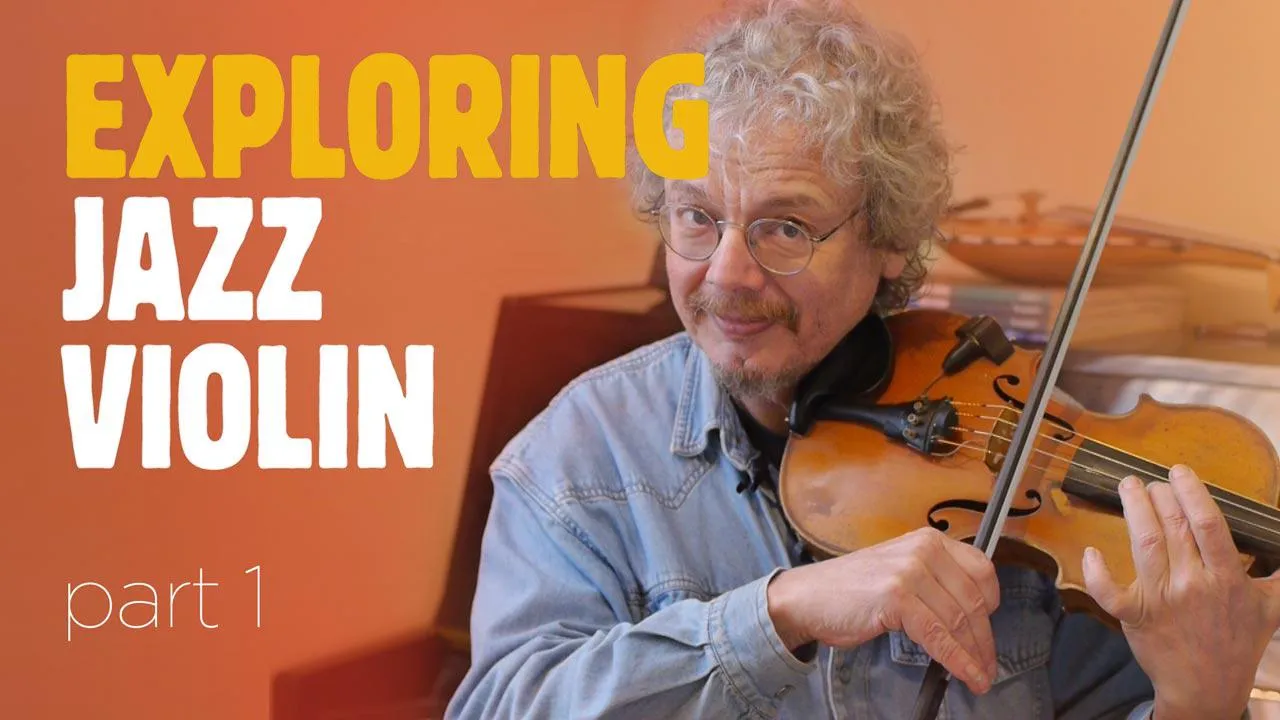
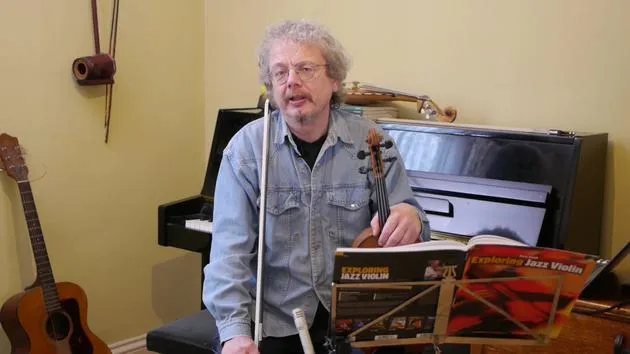
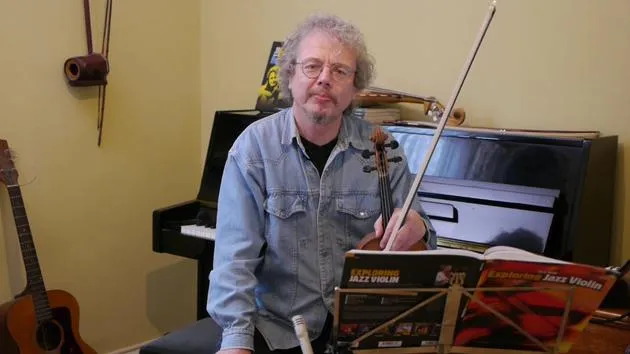
Chris HaighChris Haigh presenta el arco con swing: tocar de forma desigual las corcheas escritas como iguales, con golpes de arco cortos y fantasma para lograr ese feeling de jazz esencial.
Qué incluye el curso
26 lecciones (1h 53m) · 1 gratis
Transcripción de la lección
Swing Bowing Lesson
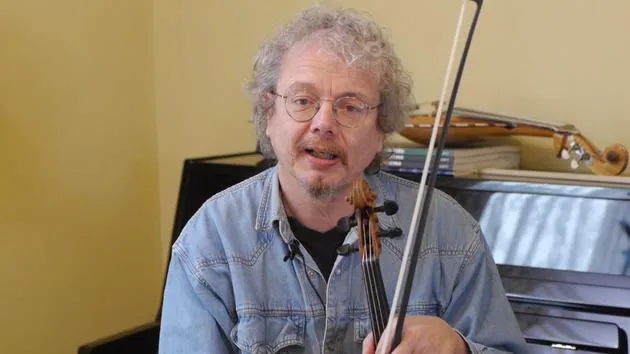
Okay, in this lesson, we're going to be looking at swing bowing. Swing is an essential part of jazz, and for a violinist, getting the bowing is one of the most important things.
Understanding Swing Melodies
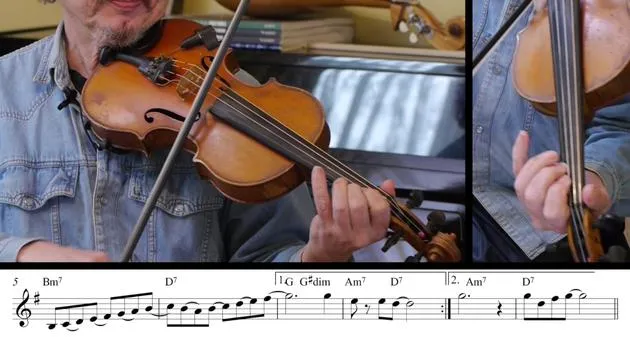
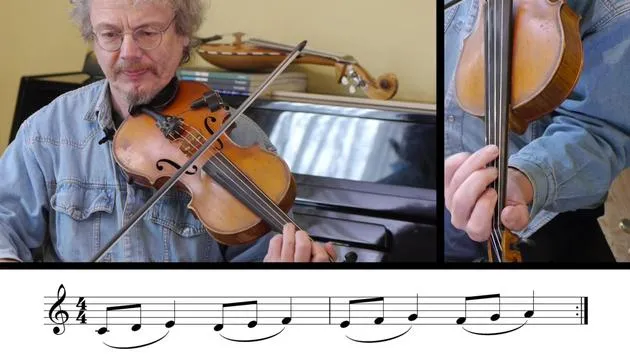
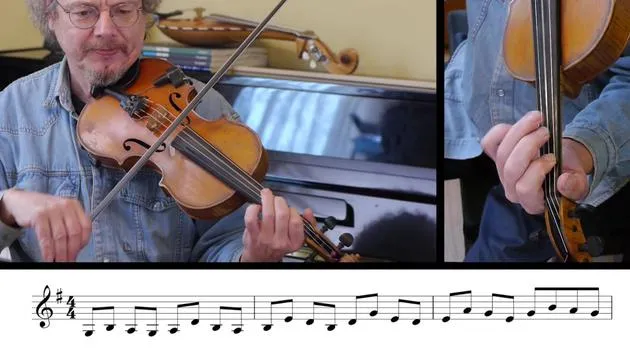
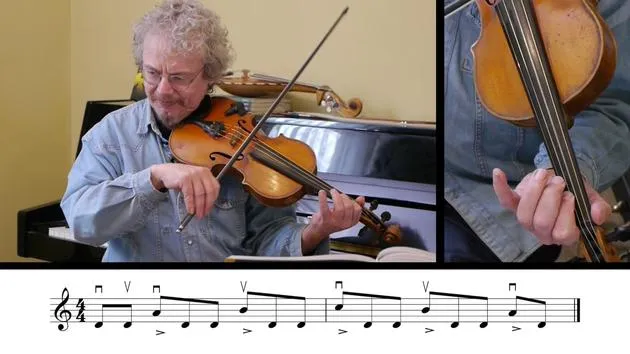
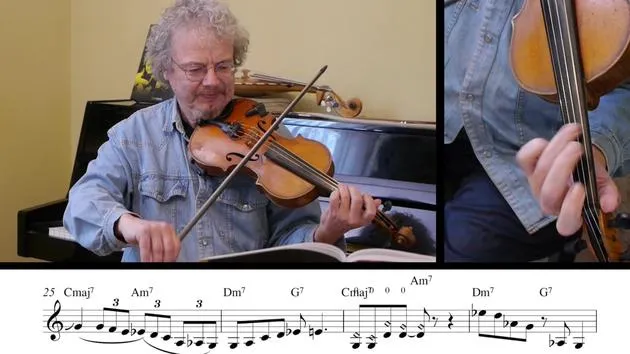
Swing melodies are written in sheet music with equal eighth notes (the quavers). However, they are played unevenly. So, whereas they're written, they'll actually be played like this:
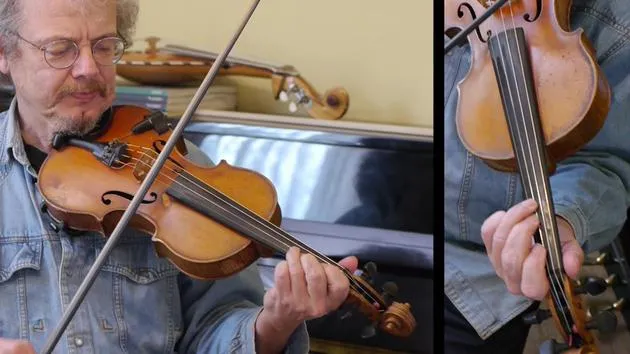
- Achieved with short, uneven bows.
- Every second note is shorter or even ghosted (by which I mean it almost disappears).
Ghosted Notes
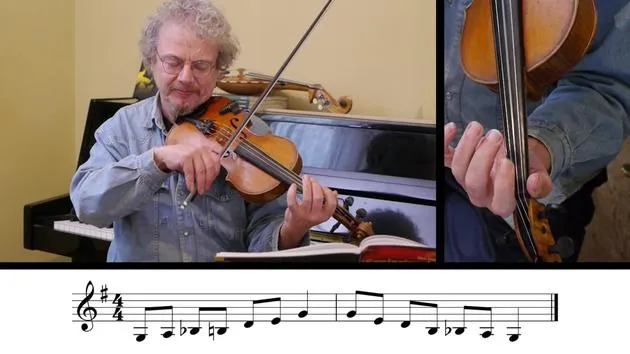
A ghosted note would be like this. You can practice your scales like this.
The Problem with Separate Bows
What we've done so far is just use separate bows, but there's a problem with this approach. As you play separate bows, you eventually run out of bow because you're doing:
- Long, short, long, short, long, short, long, short.
The way to get around this is by using bowing patterns that include slurs.
Common Bowing Patterns
Chain Bowing
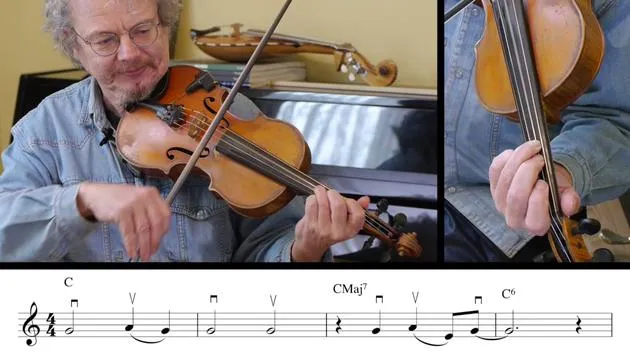
Probably the most common bowing pattern is called chain bowing. This consists of starting off with a down bow and then slurring pairs. This gives a very even sound, swings nicely, and is easy to execute.
1 and 3 Pattern
Another pattern is what I call the 1 and 3. This consists of:
- One down bow
- Three slurred up bows
This is a nice pattern because it gives a bit of a punch. It sounds like:
Ba ba doo badap, ba doo badap badoo bada.
5 and 3 Pattern
Another pattern that I call the 5 and 3 consists of:
- Five separate bows
- Three slurred bows
This pattern creates syncopation and sounds like:
Ba ba da ba da ba ba ba da ba da ba.
Mastering the Patterns
So, in practice, which of these patterns are you going to actually use?
The answer, unfortunately, is all of them.
You need to master each one and be able to switch between them without really thinking about it at all. Learning the patterns initially is very easy, requiring only a few minutes of work. However, getting to a point where it becomes so automatic that you don't have to think about it may take weeks, months, or even years.
Practicing with a Tune
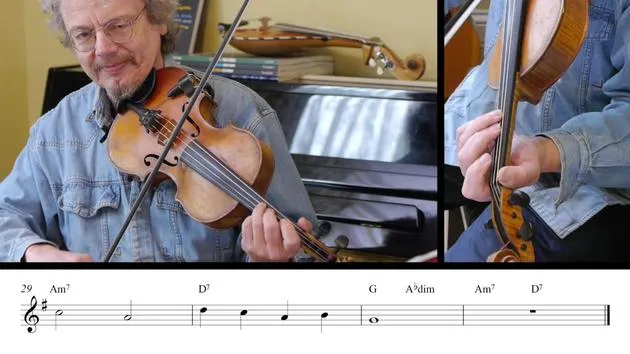
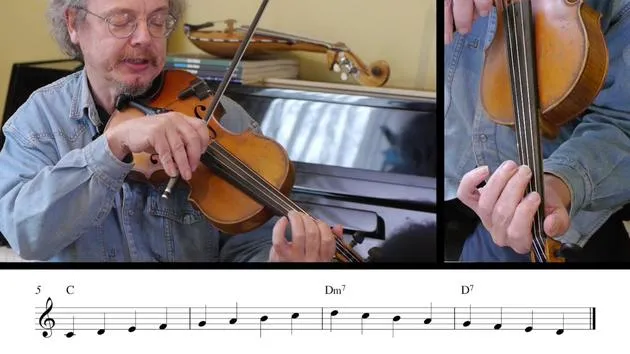
A tune that we can use to practice all of these different patterns is one I've written called Swinging the Sc.
When you're playing improvisations, you will use these patterns, but you won't generally use scales in the way that we've just practiced them (from bottom to top and back down again). Instead, you'll use fragments of scales and patterns based on scales.
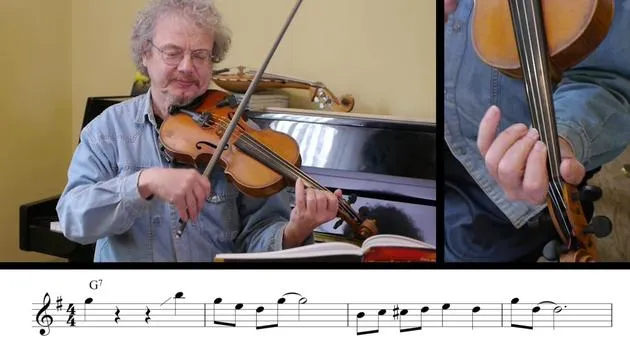
Here's an example of a Stefan Grappelli type phrase where he creates a pattern known as a descending cascade using a scale.
26 lecciones
1h 53m de lecciones en vídeo estructuradas
Funciones de vídeo avanzadas
Ralentiza, repite un pasaje, sigue la partitura
Móvil, tablet y ordenador
Practica donde quieras
Garantía de satisfacción 100%
30 días de garantía de devolución
Conoce a tu gurú
Conoce a tu gurú
Chris Haigh es violinista profesional desde hace 25 años, con experiencia en muchos géneros distintos. Ha tocado en más de 75 álbumes, trabajando con artistas como Alison Moyet, Bob Geldof, All About Eve, Michael Ball, David Soul, Oumou Sangare, The Quireboys, Riverdance, Morcheeba, James Galway y Steps.
Ha tocado swing y jazz con The Kimbara Brothers, Diz Disley, Le Jazz, The Hot Club of London y los Quecumbar Allstars, y lidera una banda de swing soviético de siete integrantes, The Kremlinaires.
Chris imparte clases y talleres sobre técnica de violín de jazz y ha enseñado violín de jazz en las universidades de Middlesex, Brunel y Newcastle y en el Truro College. Entre sus créditos como autor figuran nueve libros de violín, entre ellos The Fiddle Handbook.
También dirige Fiddling Around (fiddlingaround.co.uk), probablemente la fuente de información sobre violín más completa y visitada de la red.







