



Escalas pentatónicas parte 2
Con
Chris HaighChris Haigh va más allá de recorrer las escalas pentatónicas de arriba abajo y las convierte en patrones que puedes usar de verdad al improvisar.
Qué incluye el curso
26 lecciones (1h 53m) · 1 gratis
Transcripción de la lección
Exploring Pentatonic Scales
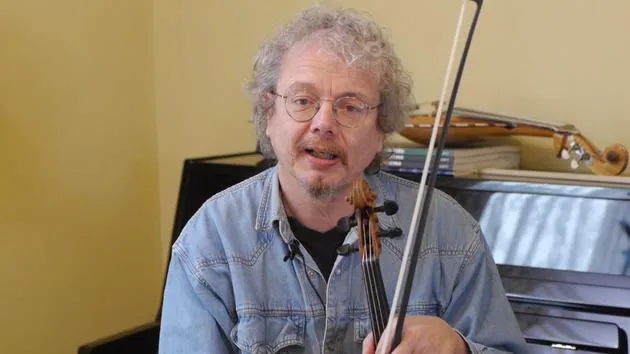
In this lesson, we're going to delve deeper into the use of pentatonic scales.
So far, we've used them simply as scales. This is something you would rarely do when you're actually improvising. Therefore, we're going to find ways to make them more interesting and useful.
Scale Patterns
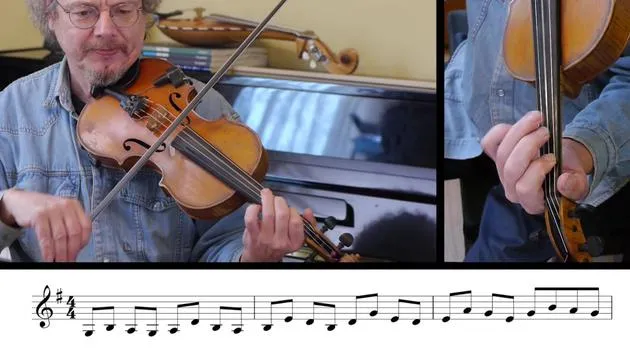
As with the major scale, we saw that you can create scale patterns, and that's something we'll have a go at. Here are some examples:
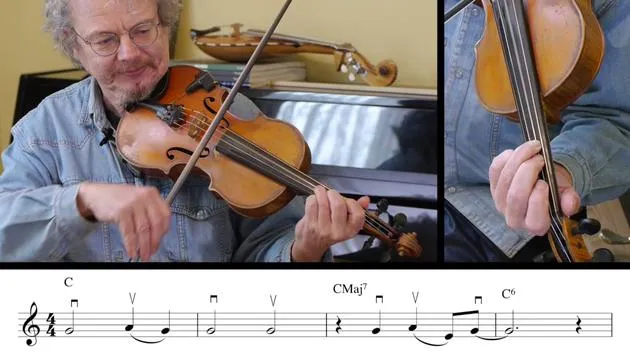
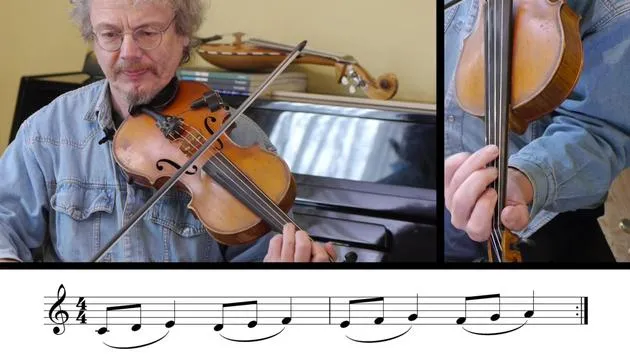
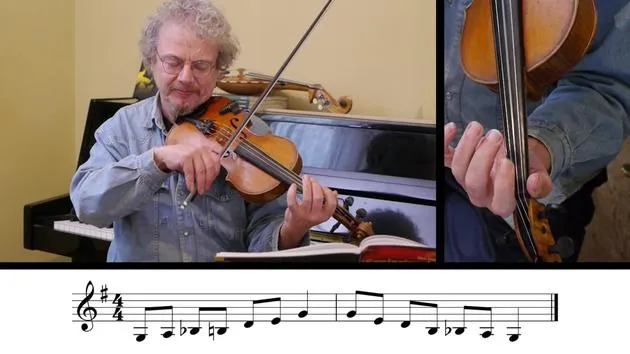
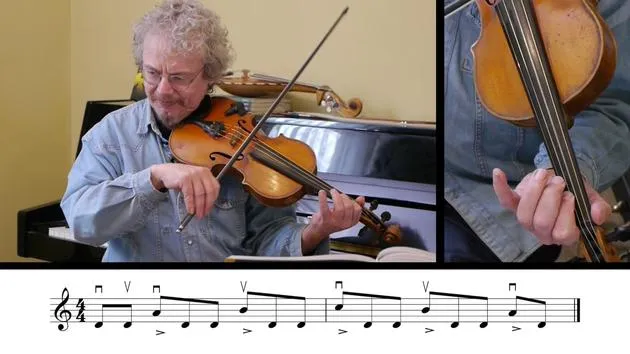
- Basic Pattern: Miss out a note each time, like this.
- Ascending and Descending: Take a step up and then three steps down.
Interestingly, the downward pattern often seems more useful and musical than the upward one.
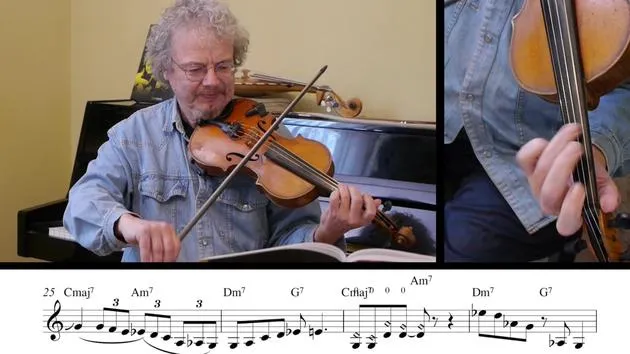
To add more speed and movement, we can use triplets. You can achieve an even greater sense of movement with a semiquaver pattern, such as this.
Practicing with "Mind the Gap"
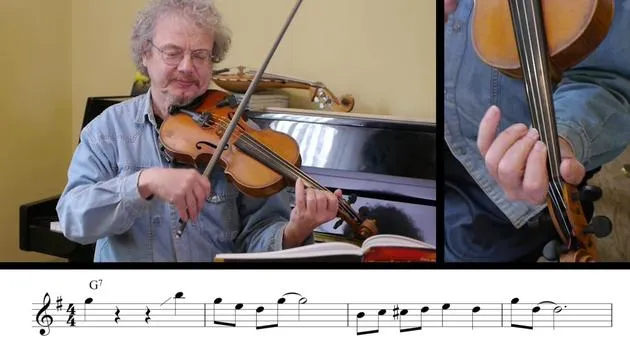
Now, let's try applying these pentatonic patterns. We'll go back to the tune "Mind the Gap," and I'll demonstrate some of these patterns.
Major and Minor Pentatonics
There are minor as well as major pentatonics, but fortunately, you don't have to learn a whole different set of scales.
- Every major pentatonic has a relative minor that starts a minor third below, just as every major scale has a relative minor scale.
- For example, for G major, the relative minor is E minor.
Thus, the E minor pentatonic scale and the G major pentatonic scale coincide, which is very helpful.
Creating Melodic Patterns
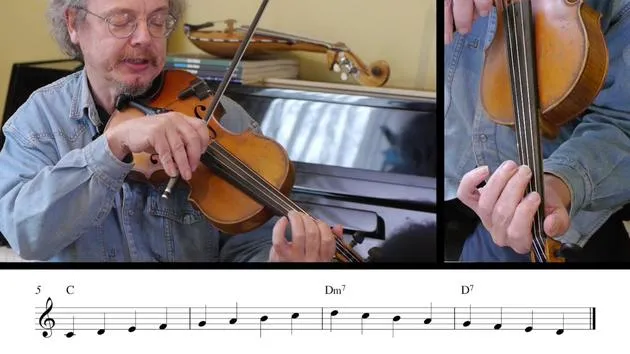
So far, we've looked at the scales themselves. With the pentatonic scale, any adjacent group of notes will create an acceptable melodic pattern.
Example Patterns
- Here's a simple pattern: (insert your example).
- Lastly, here's a tune with a much more challenging chord sequence.
Exploring "Glass Slippers"
Unlike "Mind the Gap," you can't play the same scale all the way through for this tune, "Glass Slippers." This piece effectively has three different keys:
-
A Section: All in D
- The D major pentatonic will work fine throughout this section.
-
B Section:
- First four bars: In E flat
- Second four bars: In D flat major
Soloing Over Chord Sequences
So, how are we going to solo over this chord sequence?
- For the A section, play fragments of the scale or melodic fragments in D major pentatonic. That should be fairly straightforward.
- For the first four bars of the B section, switch to the E flat major pentatonic.
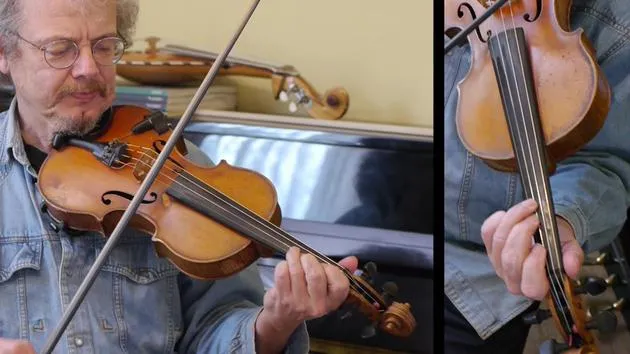
- Then for the D flat major, this is a very difficult key. Unless you use the pentatonic finger patterns we described earlier, you might find it quite challenging.
However, using that finger pattern starting on the first finger on the D flat, you should find it relatively easy.
At this stage, you don't need to understand or worry about the chords. Just make sure you play the right pentatonics in the right places.
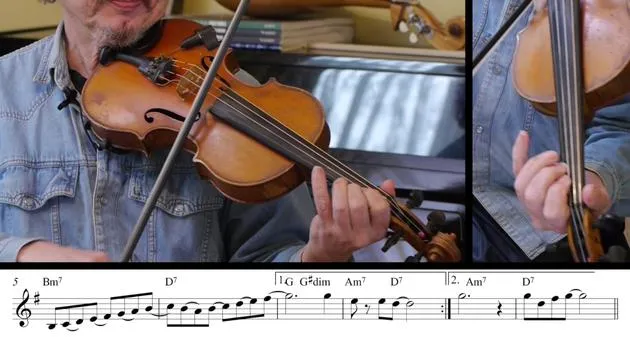
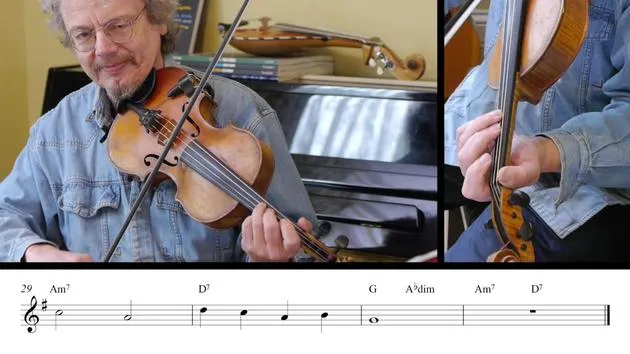
Here's an example of that approach to soloing played over "Glass Slippers."
26 lecciones
1h 53m de lecciones en vídeo estructuradas
Funciones de vídeo avanzadas
Ralentiza, repite un pasaje, sigue la partitura
Móvil, tablet y ordenador
Practica donde quieras
Garantía de satisfacción 100%
30 días de garantía de devolución
Conoce a tu gurú
Conoce a tu gurú
Chris Haigh es violinista profesional desde hace 25 años, con experiencia en muchos géneros distintos. Ha tocado en más de 75 álbumes, trabajando con artistas como Alison Moyet, Bob Geldof, All About Eve, Michael Ball, David Soul, Oumou Sangare, The Quireboys, Riverdance, Morcheeba, James Galway y Steps.
Ha tocado swing y jazz con The Kimbara Brothers, Diz Disley, Le Jazz, The Hot Club of London y los Quecumbar Allstars, y lidera una banda de swing soviético de siete integrantes, The Kremlinaires.
Chris imparte clases y talleres sobre técnica de violín de jazz y ha enseñado violín de jazz en las universidades de Middlesex, Brunel y Newcastle y en el Truro College. Entre sus créditos como autor figuran nueve libros de violín, entre ellos The Fiddle Handbook.
También dirige Fiddling Around (fiddlingaround.co.uk), probablemente la fuente de información sobre violín más completa y visitada de la red.







