



El Georgia Shuffle
Con
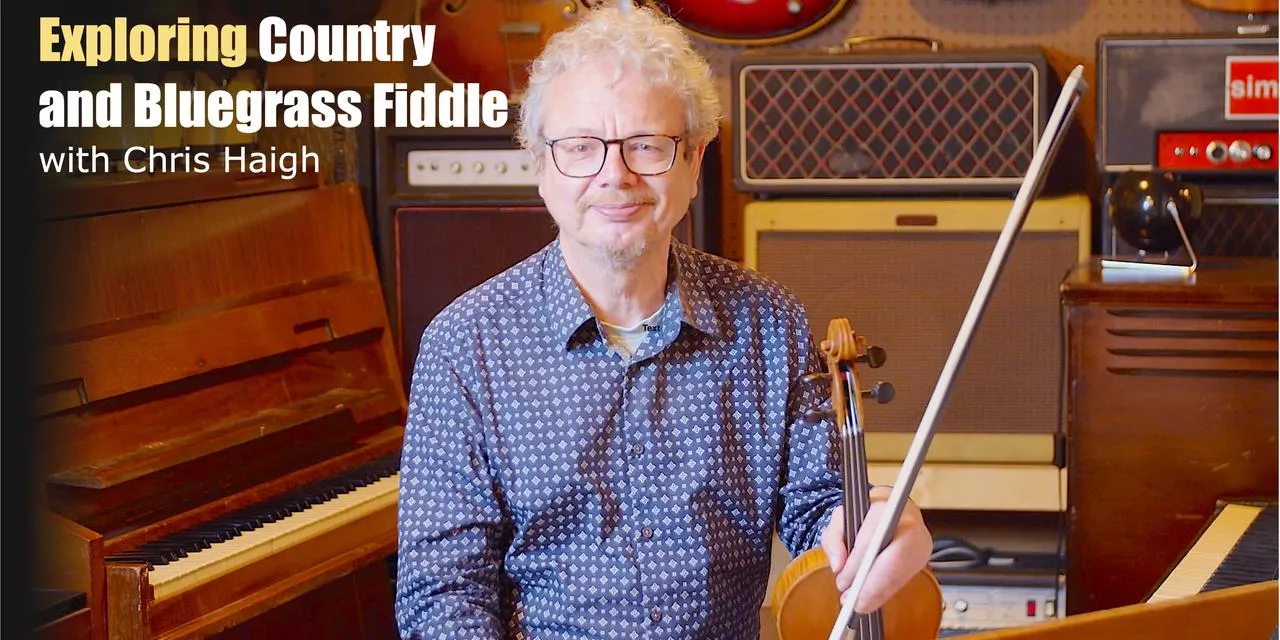
Chris HaighAprende el Georgia Shuffle, un patrón de arco más suave y sofisticado que el Nashville Shuffle, popularizado por el violinista Clayton McMichen.
Qué incluye el curso
25 lecciones (1h 30m) · 1 gratis
01. El Georgia Shuffle
Estás aquí5:42
02. Whiskey Before Breakfast (Interpretación)
0:44
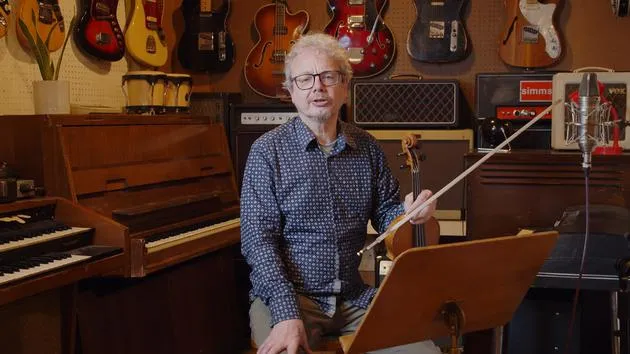
03. Dobles cuerdas en Wednesday Night Waltz
8:34
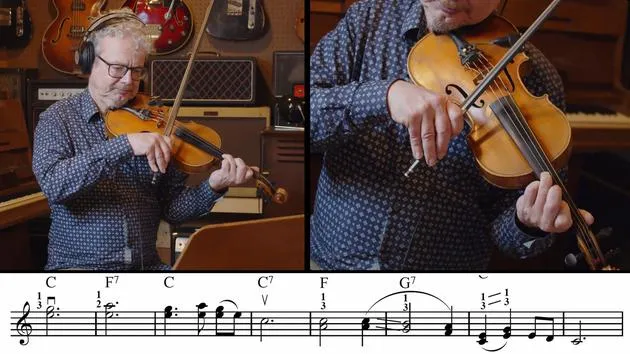
04. Wednesday Night Waltz (interpretación)
0:54
05. Más dobles cuerdas: Cheatem County Breakdown
4:06
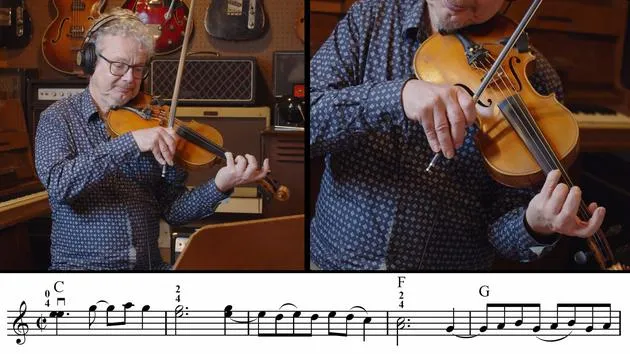
06. Cheatem County Breakdown (Interpretación)
0:44
07. Vaqueros cantantes: Yellow Rose of Texas
5:34
08. Yellow Rose of Texas (Interpretación)
0:22
01. Western swing: Beaumont Rag
9:50
02. Beaumont Rag (interpretación)
1:12
03. Bob Wills - Red River Valley
5:25
04. Red River Valley (Interpretación)
0:33
05. Violín a dos voces: escala, Goodbye Liza Jane
3:35
06. Improvisación de Western Swing
5:06
07. Goodbye Liza Jane (interpretación en solo)
1:17
08. Licks de Western swing
9:19
09. Girl I Left Behind Me (análisis del solo)
2:33
10. Girl I Left Behind Me (interpretación en solitario)
0:28
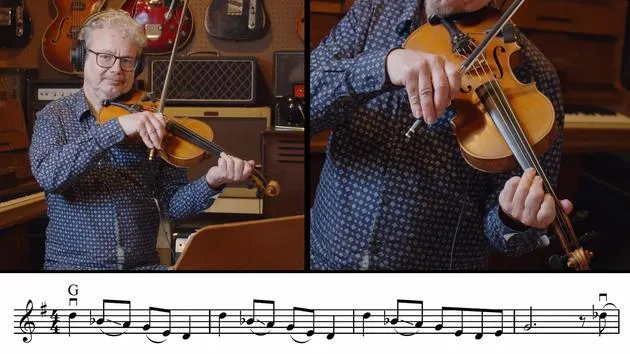
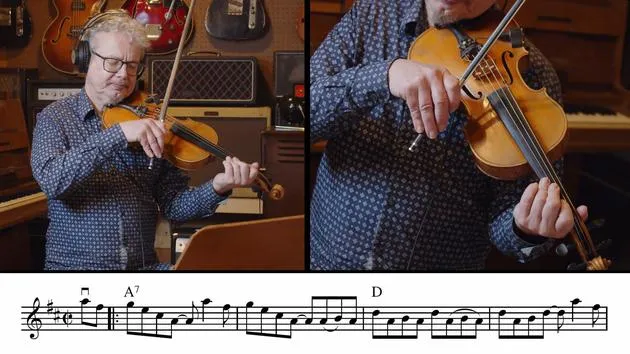
Transcripción de la lección
Georgia Shuffle Music Lesson
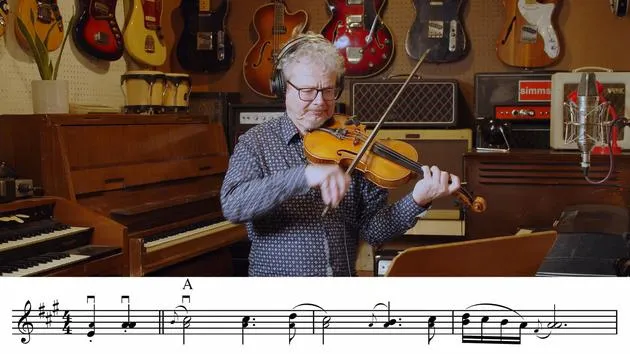
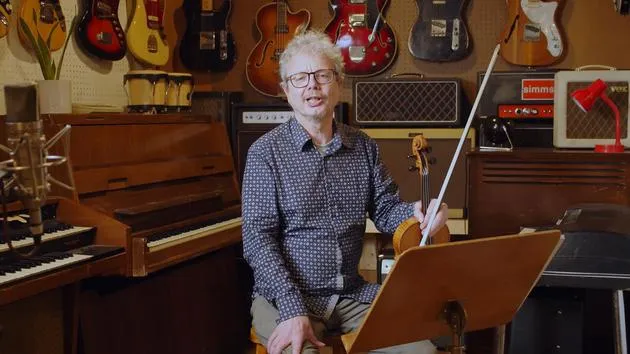
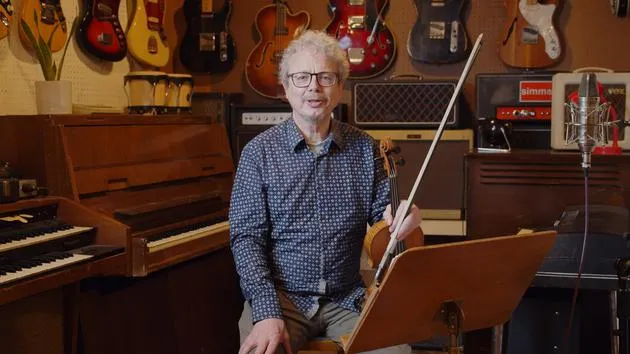
Now, in one of the earliest lessons, we talked about the Nashville Shuffle, and now we're going to discuss a different shuffle: the Georgia Shuffle.
This is one that I use a lot more than the Nashville Shuffle. It's smoother, more sophisticated, and a really useful technique to know.
Historical Context
The Georgia Shuffle was popularized by Clayton McMitchen, a fiddler with the Skillet Liquors back in the 20s and 30s. It's worth checking out the way that he plays, which is nice and smooth and lacks that jagged feel of the Nashville Shuffle.
Getting Started with the Georgia Shuffle
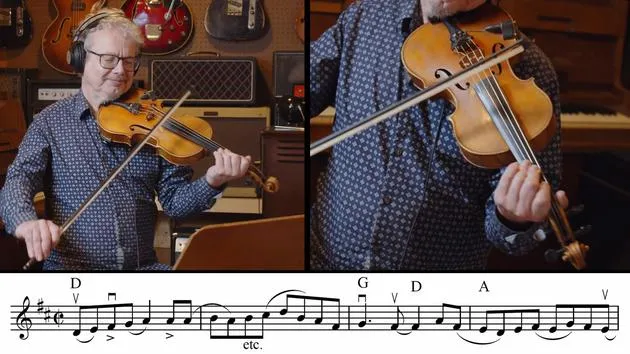
I'll give you a few exercises to help you get into the groove of the Georgia Shuffle:
- Exercise Structure:
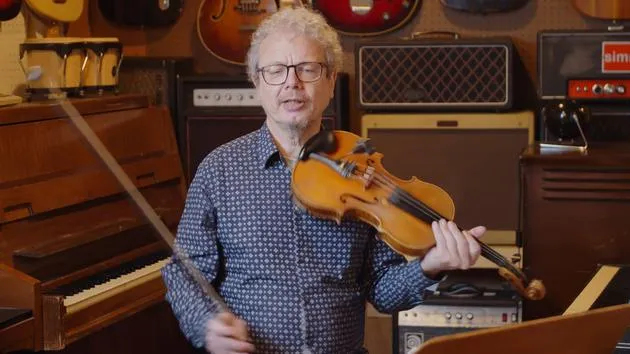
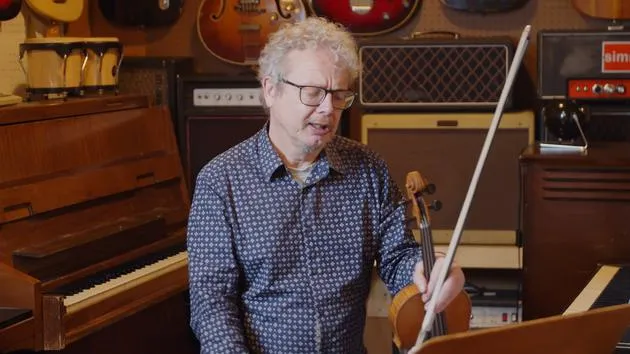
- Start with an up bow and two slurs.
- Follow with an accent on a down bow.
- End with three notes slurred on an up bow.
You'll notice that the accent is in the same place as it is with the Nashville Shuffle. However, instead of alternating between the down and up bows, it's now always coming on the up bow.
Why the Georgia Shuffle?
- The fact that the accent consistently occurs on the same bow, rather than alternating, makes it stronger and more consistent.
- Additionally, with more slurring, the shuffle feels smoother.
Experimenting with Accents
Now, let's try the same exercise, but this time we will place the accent on the up bow instead of the down bow.
- Both accents work: either on the down or the up bow.
- I typically do the accent on the down bow, and I recommend initially trying both. If one feels better than the other, go with that.
If you can't decide, then use the accent on the down bow. I think it's just a bit easier.
Final Exercise
In this final exercise, we are going to do a slight drone on each of the accented notes. By digging in a little more, we'll play an extra D note.
- When playing this phrase, on each of the accents, just press down a little harder so that we get the open D.
Practice Tips
It's always a good idea to try these exercises really slowly to start with, and then gradually speed up.
Tunes That Fit the Georgia Shuffle
Like with Old Joe Clark and the Nashville Shuffle, there are some tunes that naturally fit into the Georgia Shuffle.
A good example is Whisky Before Breakfast. It's a very well-known tune, so it's well worth learning. Not all of the tune, but a lot of it naturally fits into the Georgia Shuffle.
Practice Approach
- Let's first play the tune nice and slow and without the backing.
- Then, we will add the backing and speed it up.
Okay, now let's try it with the backing.
Assignment
Your assignment for this lesson is:
- First of all, keep practicing the Georgia Shuffle until you've got it feeling really natural.
- Then, try applying it to some other tunes.
Advanced Practice Idea
It's quite a good idea to try forcing the Georgia Shuffle onto a tune where it doesn't naturally belong. This will help you balance between playing the exact tune and employing the shuffle itself.
- Sometimes the shuffle will override bits of the melody, and sometimes the melody will override bits of the shuffle.
25 lecciones
1h 30m de lecciones en vídeo estructuradas
Funciones de vídeo avanzadas
Ralentiza, repite un pasaje, sigue la partitura
Móvil, tablet y ordenador
Practica donde quieras
Garantía de satisfacción 100%
30 días de garantía de devolución
Conoce a tu gurú
Conoce a tu gurú
Chris Haigh es violinista profesional desde hace 25 años, con experiencia en muchos géneros distintos. Ha tocado en más de 75 álbumes, trabajando con artistas como Alison Moyet, Bob Geldof, All About Eve, Michael Ball, David Soul, Oumou Sangare, The Quireboys, Riverdance, Morcheeba, James Galway y Steps.
Ha tocado swing y jazz con The Kimbara Brothers, Diz Disley, Le Jazz, The Hot Club of London y los Quecumbar Allstars, y lidera una banda de swing soviético de siete integrantes, The Kremlinaires.
Chris imparte clases y talleres sobre técnica de violín de jazz y ha enseñado violín de jazz en las universidades de Middlesex, Brunel y Newcastle y en el Truro College. Entre sus créditos como autor figuran nueve libros de violín, entre ellos The Fiddle Handbook.
También dirige Fiddling Around (fiddlingaround.co.uk), probablemente la fuente de información sobre violín más completa y visitada de la red.







